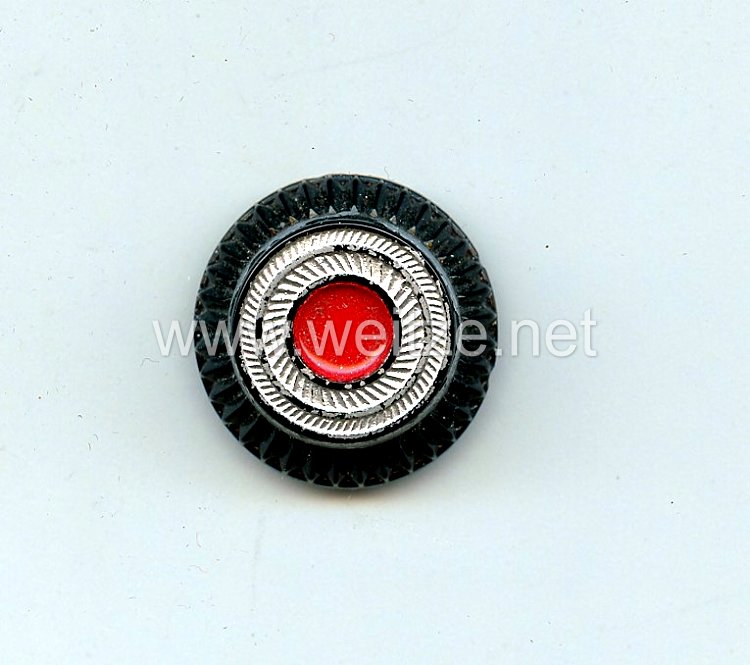
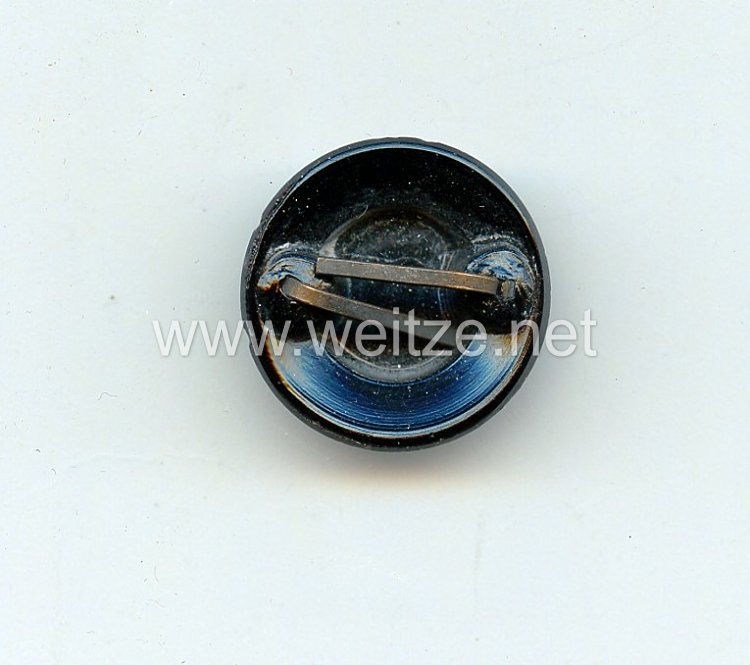
Kriegsmarine Cockade for Enlisted Men's Peaked Cap
The Kriegsmarine cockade for the enlisted men's peaked cap represents a fascinating example of the material adaptations that the German Navy was forced to make during World War II. This particular specimen from approximately 1943/44 is especially noteworthy as it was manufactured from glass – an unusual material choice directly related to wartime conditions and the increasing scarcity of resources in the German Reich.
The Tellermütze (peaked cap or visor cap) was part of the official Kriegsmarine uniform and worn by enlisted personnel on duty. The cockade, mounted as a central insignia on the front of the cap, served for identification purposes and symbolized membership in the German Navy. In traditional manufacture, cockades were made from metal, typically non-ferrous alloys that were enameled or painted to display the characteristic colors of the Reich.
From 1943 onwards, the raw material situation in the German Reich deteriorated dramatically. Non-ferrous metals such as copper, brass, and bronze were urgently needed for armaments production – particularly for ammunition, artillery pieces, and other war-critical equipment. This led to a systematic search for substitute materials (Ersatzstoffe) in nearly all areas of military equipment. The use of glass for cockades was one of these innovative, albeit unconventional, solutions.
The manufacture of glass cockades required specialized production techniques. The glass was molded, then painted in color to represent the required national colors – typically the black-white-red colors associated with German military traditions. The rear mounting pins enabled secure attachment to the cap. These pins were usually made from wire or other available materials.
The fact that this specimen is unworn makes it a particularly valuable object for study. It allows detailed examination of manufacturing techniques and condition without the wear and tear that would result from daily use. The indicated condition grade 2 suggests very good preservation, with possibly only minimal signs of aging.
Production of such substitute-material cockades intensified during the final war years. Various manufacturers, often smaller companies or converted civilian firms, were commissioned with production. Quality varied considerably, depending on available materials and manufacturer expertise. Glass productions were relatively rare compared to other substitute materials such as zinc, iron, or even pressed cardboard.
In the context of Kriegsmarine uniform regulations, the basic requirements for cockade appearance remained largely intact even when substitute materials were used. The cockade had to display the correct colors and be properly positioned on the peaked cap. Naval regulations were continuously updated to accommodate changing production conditions.
The historical significance of such objects lies not only in their military function but also in their testimonial value regarding the economic and industrial conditions of the war in its total stage. The necessity of resorting to glass as a material illustrates the increasing desperation and the limits of the German war economy in 1943/44. While propaganda continued to proclaim the “final victory,” such objects tell the story of an armed force increasingly dependent on improvisation.
For collectors and historians, glass cockades are particularly sought-after objects today, as they are relatively rare. Many were never issued, others were lost or destroyed during the war or in the post-war period. The fragility of the material additionally contributed to their rarity.
These artifacts serve as tangible reminders of the material culture of the Second World War and the impact of total war on even the smallest details of military equipment. They represent a intersection of military history, industrial history, and social history, offering insights into how nations adapted to extreme circumstances.