Italian Dagger of the MVSN M 1935/36 for Anti-Aircraft Officers
The Italian MVSN Dagger Model 1935/36 for Anti-Aircraft Officers represents a fascinating and extremely rare example of Fascist militaria from the pre-war period of the Italian regime. This piece belonged to the equipment of the Milizia Volontaria per la Sicurezza Nazionale (MVSN), the Fascist militia founded by Benito Mussolini in 1923 as a paramilitary organization.
The MVSN, often referred to as the Blackshirts, evolved from the original Fascist combat squads of the post-World War I period and became a central pillar of the Fascist state. The organization was divided into various specialized units, including the Anti-Aircraft units (Contraerea), which gained importance during the 1930s as Fascist Italy expanded its military capabilities.
The Model 1935/36 was introduced during a period when Italy under Mussolini's leadership pursued an aggressive expansionist policy. Following the successful, though internationally controversial, Abyssinian War (1935-1936), the Fascist regime reached its zenith. Military equipment and uniforms were standardized and modernized during this period, with great emphasis placed on symbolic elements representing Fascist ideology.
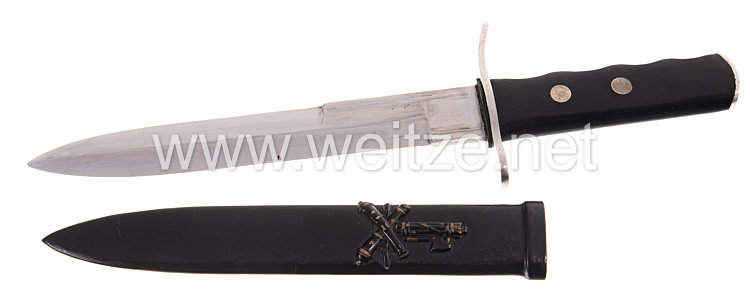
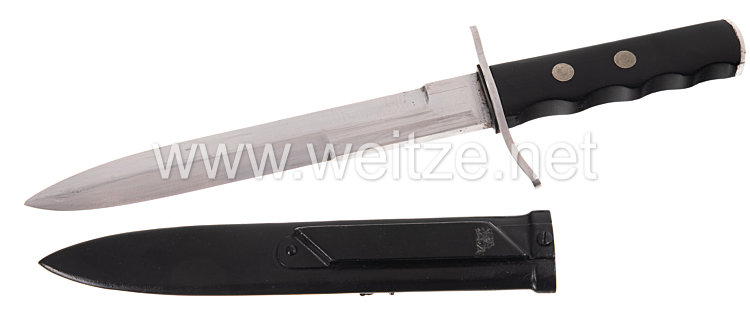
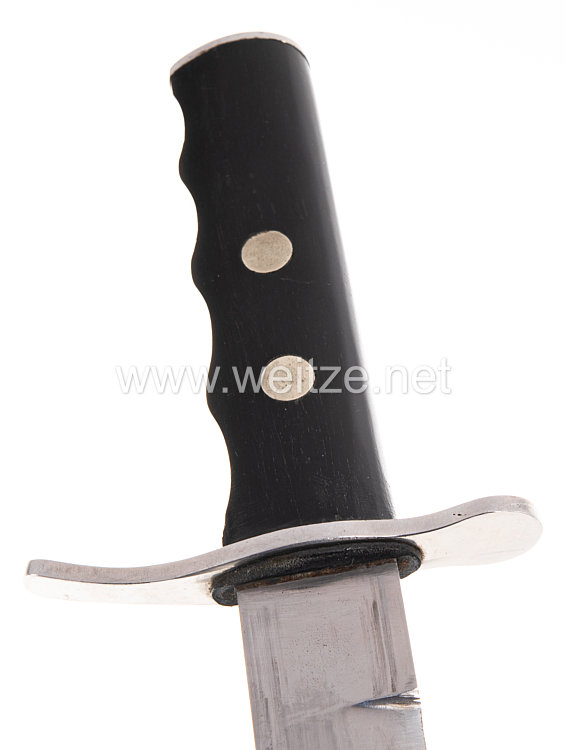
The blade of this dagger exhibits a characteristic construction: initially single-edged, then double-edged in the lower half. This design was typical of Italian military daggers from this era, combining practical functionality with ceremonial significance. The absence of a manufacturer's mark on the blade is not unusual, as various manufacturers produced for the Italian military and not all marked their products.
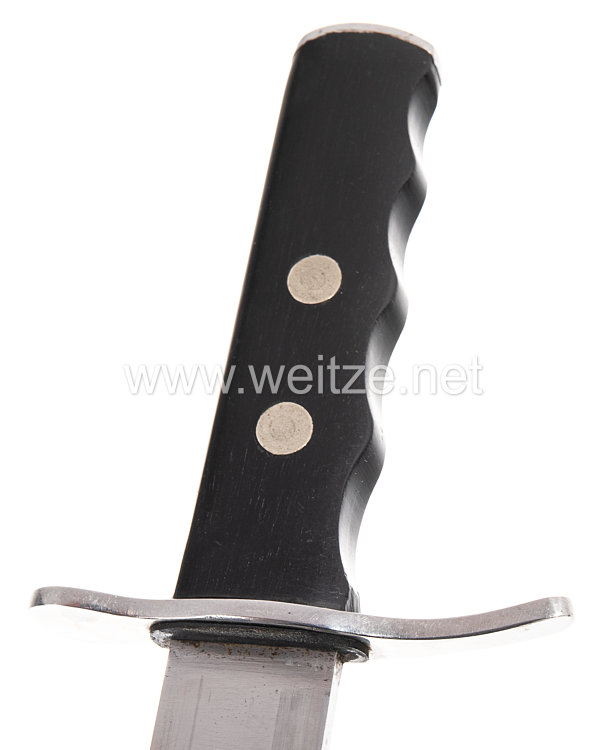
The riveted ebony grip emphasizes the quality and status of this officer's weapon. Ebony was a preferred material for higher-ranking equipment items, offering both aesthetic and practical advantages through its hardness and durability. The iron crossguard with its characteristic asymmetrical design—one side slightly curved upward, the other rounded—followed the design specifications of Italian military regulations of the time.
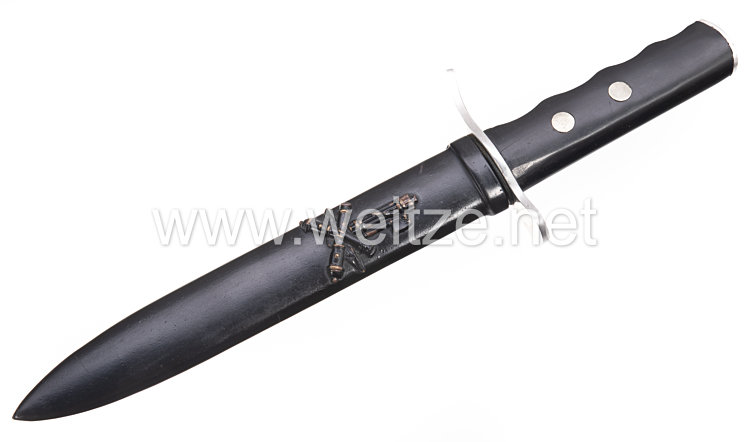
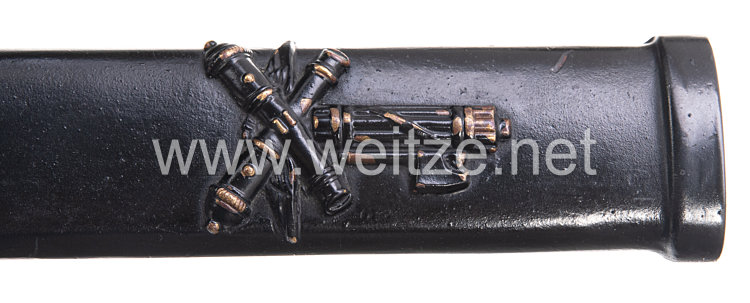
Particularly noteworthy are the symbols on the black-lacquered scabbard: The Fasces (Fascio Littorio) was the central symbol of Italian Fascism, borrowed from Roman antiquity where it symbolized the power of magistrates. The wing with crossed cannons clearly identifies the wearer as a member of the MVSN anti-aircraft units. This combination of symbols makes this dagger a highly specific and extremely rare specimen.
The anti-aircraft units of the MVSN played an important role in the defensive structure of Fascist Italy. During the 1930s, as aerial warfare gained increasing importance, specialized anti-aircraft formations were established and equipped. These units were responsible for protecting strategically important targets against enemy air attacks and received appropriate training and equipment.
Officers of the MVSN anti-aircraft units wore their daggers as part of the parade uniform and at official occasions. These weapons were less practical combat tools than rank insignia and symbols of belonging to the Fascist power apparatus. The very good condition of the described specimen suggests it was primarily worn for ceremonial purposes.
The extreme rarity of such daggers for MVSN anti-aircraft officers is explained by several factors: First, the anti-aircraft units of the MVSN were relatively small; second, the production of specialized equipment for different service branches was conducted only in limited numbers; and third, many such objects did not survive the turbulent years of World War II and the post-war period.
After Mussolini's fall in July 1943 and the Italian capitulation, the MVSN was dissolved. Many equipment items of the organization were destroyed, hidden, or confiscated by the Allies. This makes preserved specimens, especially in good condition, important historical documents of a dark period in Italian history.
For collectors and historians, such a dagger offers valuable insights into the military organization, symbolism, and material culture of Italian Fascism. It serves as a reminder of a time when military power and political ideology were closely intertwined and manifested in every detail of equipment.
The rarity of this particular variant—specifically marked for anti-aircraft officers—makes it an exceptional piece. While standard MVSN daggers are relatively well-documented, the specialized versions for particular service branches were produced in much smaller quantities and fewer examples survive today. The combination of the Fascist symbolism, the specialized service insignia, and the excellent preservation makes this type of dagger highly significant for understanding the hierarchy and organization of Mussolini's militia forces during the height of Fascist power in Italy.