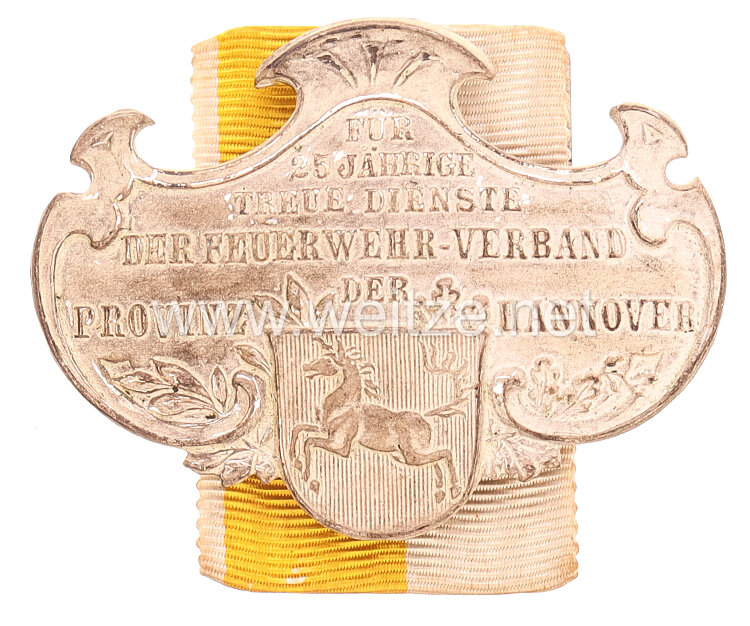
Hannover Fire Brigade Association of the Province of Hannover 1902 - 1918

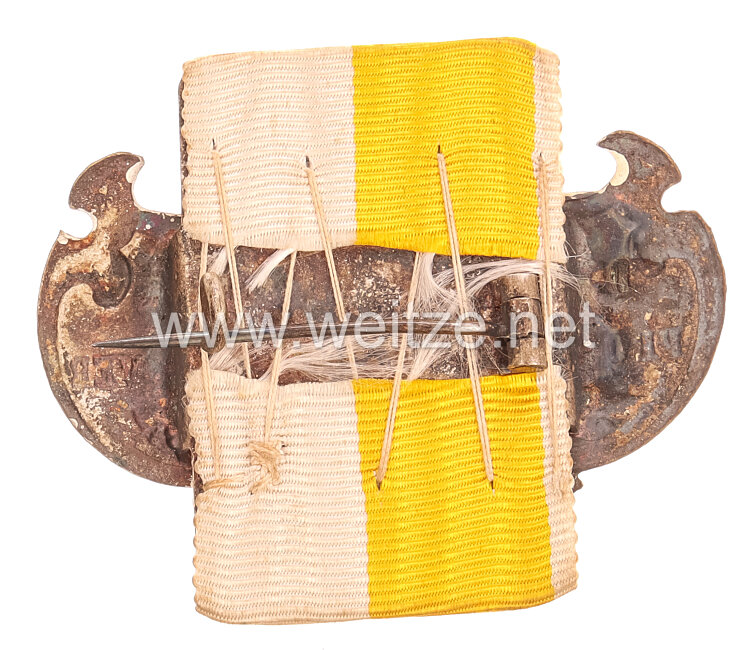
Badge for 25 years of faithful service, silver-plated metal badge on ribbon bar with yellow-white ribbon, pin back, condition 2.
454498
50,00

Hannover Fire Brigade Association of the Province of Hannover 1902 - 1918

The Honor Badge of the Fire Brigade Association of the Province of Hanover for 25 years of loyal service represents a significant testament to the development of German fire services during the Imperial era. The Province of Hanover, which existed as a Prussian province from 1866 to 1946, developed a comprehensive fire service system after its incorporation into the Kingdom of Prussia, encompassing both urban professional fire brigades and the far more numerous volunteer fire departments in rural areas.

The Fire Brigade Association of the Province of Hanover was founded in 1902, during a period when the professionalization and organization of fire services in Germany made considerable progress. After the foundation of the German Empire in 1871, there developed an increased awareness of the need for coordinated fire protection measures. Industrialization brought new dangers: factories, densely built workers' quarters, and the increasing use of hazardous materials required a professional approach to fire protection.

The badge described here was awarded for 25 years of loyal service, honoring the extraordinary dedication of firefighters who devoted a quarter-century of their lives to voluntary service to their community. Most members of volunteer fire departments pursued their regular occupations throughout this entire period while remaining available for deployments day and night. This long period of service demonstrates a deep sense of responsibility and close connection with the local community.

The design of the badge follows the typical heraldic traditions of the Imperial period. The silver-plated tin badge on a ribbon bar with yellow-white ribbon corresponds to the colors of the Province of Hanover. The choice of these materials was characteristic of the time: while the highest military decorations were often made from more precious metals, civil honors frequently used silver-plated tin, which enabled cost-effective production while maintaining a dignified appearance.

The yellow-white colors of the ribbon have particular historical significance. They refer to the former Kingdom of Hanover, which existed as an independent state until 1866 and was closely connected to the British royal house. After annexation by Prussia, the Province of Hanover retained these colors as a symbol of its regional identity and historical tradition.

The period from 1902 to 1918 encompasses a dramatic epoch in German history. The badge was introduced during the reign of Kaiser Wilhelm II, in a period of economic prosperity and technological progress. Fire services benefited from new technologies such as motorized fire engines, improved equipment, and modern communication systems. Simultaneously, the honor badge system was expanded to strengthen the motivation and prestige of firefighters.

The end of this period in 1918 marks the end of World War I and the collapse of the monarchy. During the war, fire brigades played an important role in maintaining civil defense on the home front, while many of their members served at the front. After 1918, fire service organizations had to adapt to the changed political circumstances of the Weimar Republic.

The pin on the reverse enabled the badge to be worn on the uniform or on civilian clothing. Such honors were typically worn on special occasions, firefighter festivals, and official events, demonstrating the status and merits of the wearer within the firefighting community.

The awarding of such badges followed strict criteria. In addition to pure length of service, the nature of services rendered, participation in operations, and general conduct were also evaluated. The 25-year service period was a special threshold achieved by only a few and deserving of the highest recognition.

Today, such badges are important historical documents providing insight into the social history of the German Empire. They document not only the history of fire services but also the values of a society that highly valued duty fulfillment, loyalty, and voluntary commitment. The badge of the Fire Brigade Association of the Province of Hanover stands as an example of the development of modern fire protection in Germany and the professionalization of volunteer fire departments in the late 19th and early 20th centuries.

r