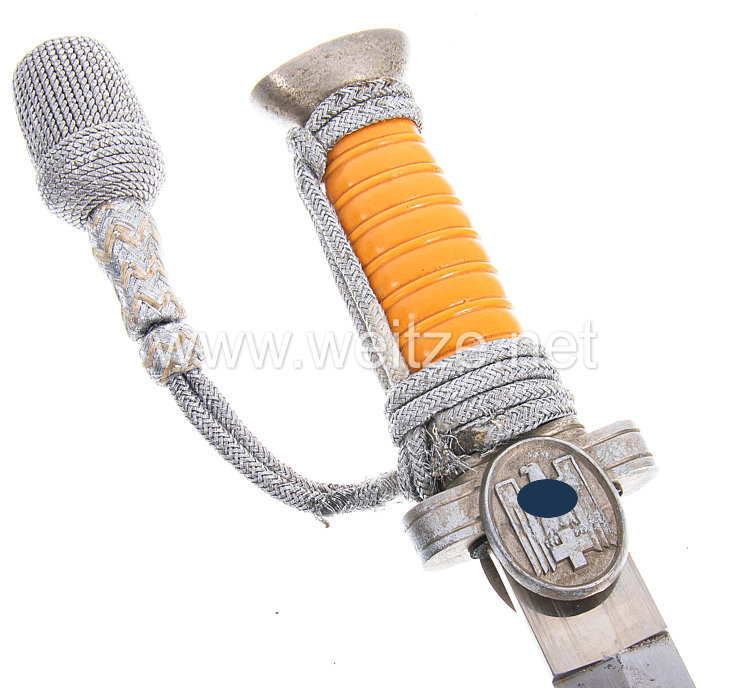
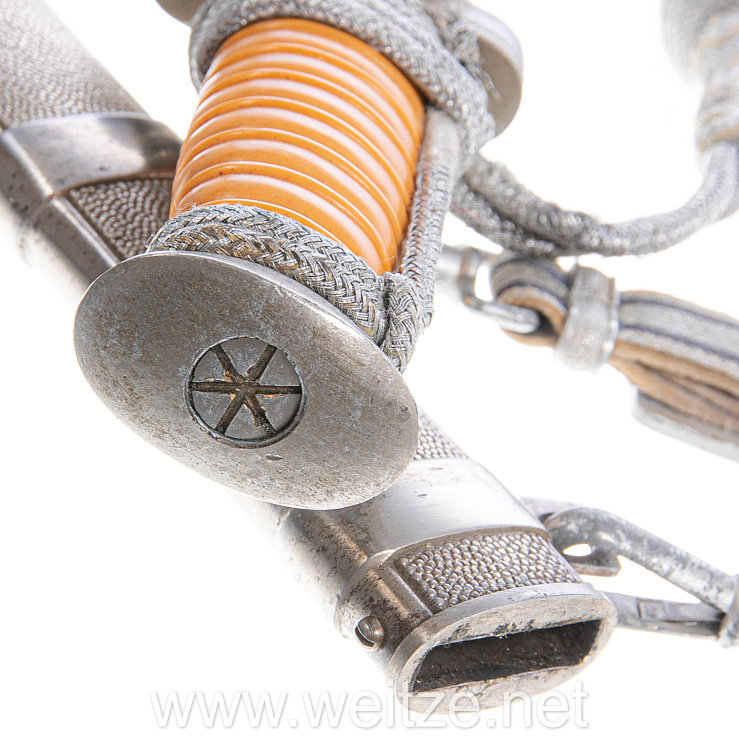
German Red Cross (DRK) Dagger for Leader
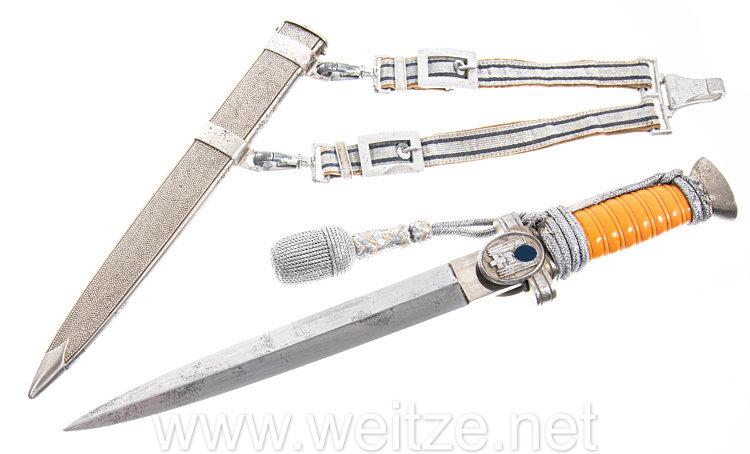
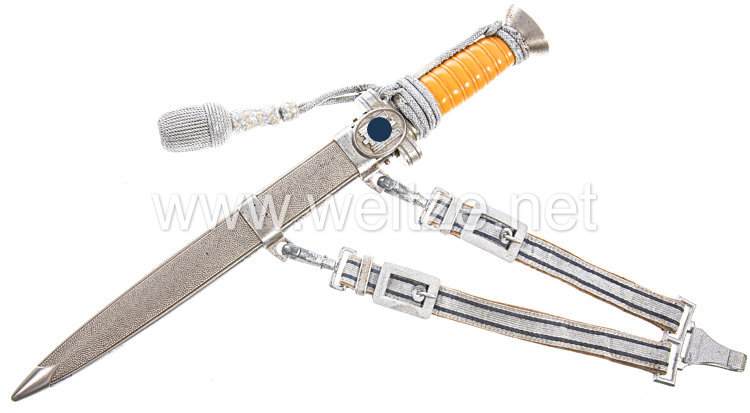
The German Red Cross (DRK) Leader's Dagger represents a significant collector's item from the National Socialist era and documents the complex intertwining of charitable organizations with the Nazi regime. This particular dagger belongs to the rare variant manufactured for the National Socialist People's Welfare (NSV), making it an especially noteworthy historical artifact.
The German Red Cross was quickly brought into line after the Nazi seizure of power in 1933 and placed under NSDAP control. In December 1937, the DRK was officially subordinated to the NSDAP through a decree by Adolf Hitler. The organization thereby lost its independence and became an instrument of National Socialist health and social policy. Leadership positions were filled with party members, and the humanitarian principles of the Red Cross were subordinated to the regime's ideological goals.
The introduction of service daggers for DRK leaders occurred within the framework of the general uniformization and militarization tendencies of the Nazi era. These daggers did not serve as weapons in the actual sense, but rather as badges of rank and symbols of authority. They were worn exclusively by leadership personnel in higher positions and were part of the service uniform at official occasions.
The variant described here for the NSV is particularly remarkable. The National Socialist People's Welfare was founded in 1933 and developed into the largest mass organization after the German Labor Front. Under the leadership of Erich Hilgenfeldt, the NSV organized social services, mother and child care, as well as diverse welfare programs. The close connection between the DRK and NSV manifested itself in joint activities and the overlap of leadership personnel.
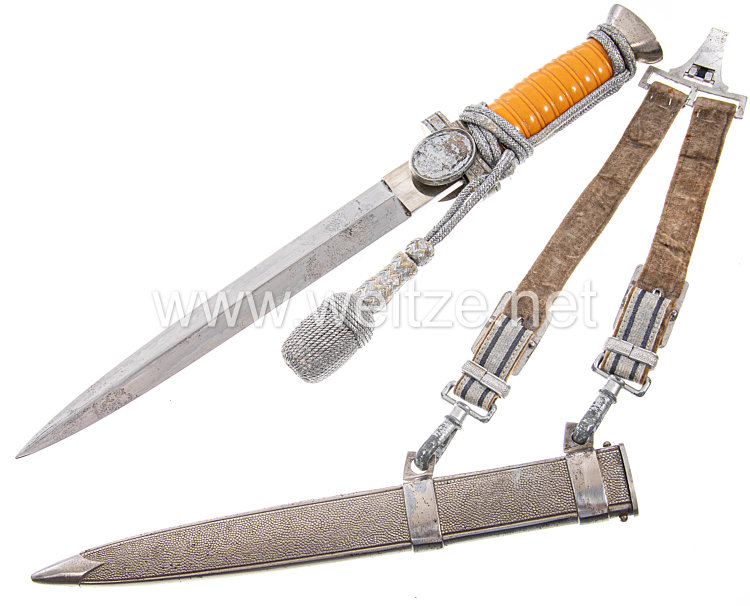
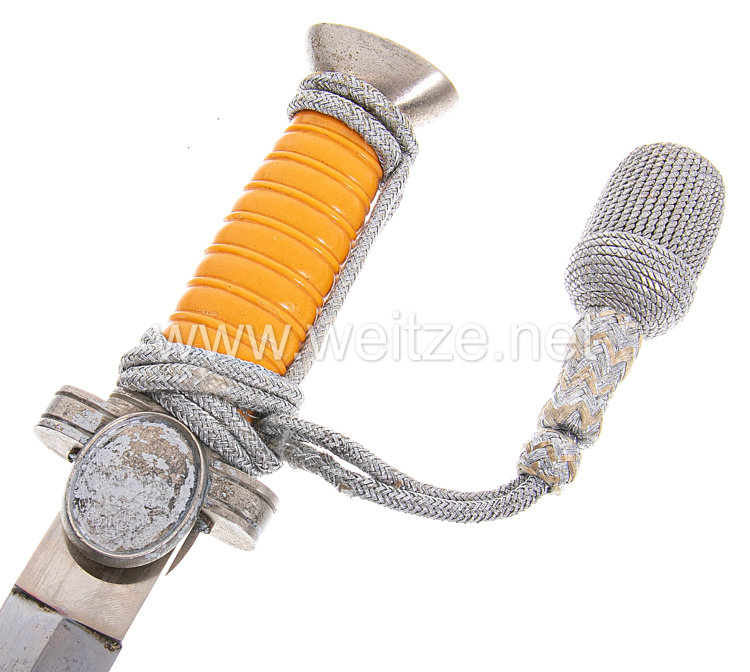
The technical characteristics of the dagger conform to prescribed standards. The blade was manufactured without maker's marks as per regulations, which was common for DRK daggers. The orange grip is characteristic and clearly distinguishes itself from other organizational daggers of the Nazi era. This coloring was specific to the DRK and symbolized the international color of the Red Cross. The nickel-plated fittings and the likewise nickel-plated scabbard with rounded suspension loops follow the technical specifications for this service weapon.
The Army portepee belonging to this dagger illustrates the military orientation of the organization. A portepee was traditionally a carrying device for edged weapons and evolved over time into a rank insignia. The knotted Army portepee indicates the military character of the wearer's position and underscores the militarization of civilian organizations in the Third Reich.
The manufacture of such daggers was subject to strict regulations. Various Solingen blade makers were commissioned with production, with quality standards being high. The fact that no manufacturer's marks were applied distinguishes DRK daggers from many other organizational daggers of the time, where manufacturers such as Eickhorn, Carl Eickhorn, or WKC applied their marks.
The historical context of these objects is complex and burdened. The DRK was involved during World War II in various activities that went far beyond traditional Red Cross work. The organization was integrated into warfare and in some cases also implicated in crimes of the regime. After 1945, the German Red Cross had to refound itself and return to its humanitarian roots.
From a collector's perspective, such daggers are today significant military-historical objects. They document the uniformization and hierarchization of Nazi organizations and are testimonies to the comprehensive penetration of society by National Socialist structures. The rare NSV variant makes this specimen particularly interesting for museums and serious collectors of military-historical objects.
The preservation of such historical artifacts serves the documentation and processing of this dark period of German history. They enable historians and the public to understand the mechanisms of totalitarian rule and serve as warnings to remain vigilant against similar developments.
These daggers represent tangible evidence of how the Nazi regime transformed and corrupted charitable and humanitarian organizations, turning them into instruments of state control and ideological indoctrination. Their study contributes to our understanding of totalitarian systems and the importance of maintaining the independence of civil society organizations.