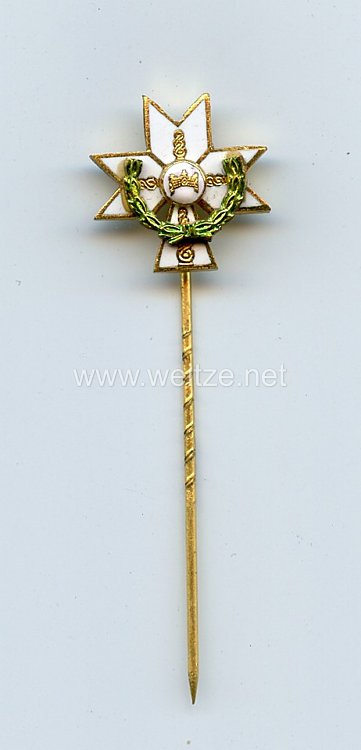
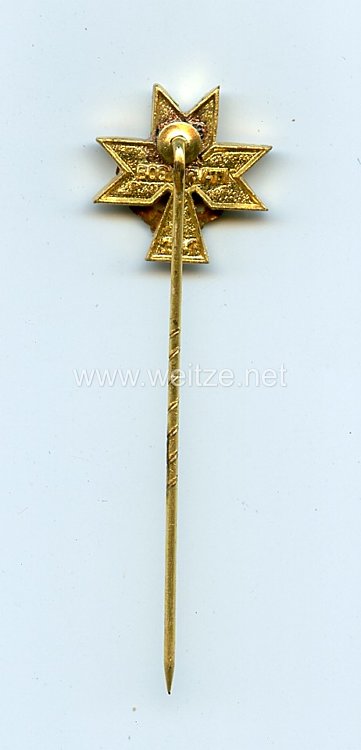
Order of the Crown of King Zvonimir: Cross 2nd Class with War Decoration - Miniature

Gilt and enameled base metal, on long pin bar.
433097
145,00

Order of the Crown of King Zvonimir: Cross 2nd Class with War Decoration - Miniature

The Order of the Crown of King Zvonimir (Croatian: Red kralja Zvonimira) was a significant military and civil decoration of the Kingdom of Croatia during the Second World War. This particular miniature version of the 2nd Class Cross with War Decoration represents one of the higher grades of this prestigious award.

The order was officially established on December 14, 1941, by Poglavnik Ante Pavelić in the Independent State of Croatia (Nezavisna Država Hrvatska), though it referenced Croatian historical traditions dating back to the 11th century. King Dmitar Zvonimir (reigned 1076-1089) was one of the most significant Croatian rulers of the medieval period, who received the royal crown from Pope Gregory VII. His name was chosen for this decoration to emphasize the historical continuity and legitimacy of the Croatian state.

The order comprised several classes and was awarded for both civil and military merit. The 2nd Class was a high distinction reserved for significant officers and high-ranking civil officials. The order's hierarchy typically included the Grand Cross, Grand Officer's Cross, Commander's Cross, Officer's Cross, and Knight's Cross, though the exact classification could vary.

The War Decoration (Croatian: Ratna Počasnica) was an additional element that marked the award for military merit during wartime service. This special distinction was conferred during World War II and significantly enhanced the prestige of the order. The War Decoration typically consisted of crossed swords attached to the order's cross.

The present object is a miniature of the order, crafted from gilt base metal and enameled. Miniatures of orders and decorations were traditionally worn on civilian clothing or evening uniforms when wearing the full order decoration was inappropriate. They were attached with a long pin, as described with this specimen, and typically worn on tail coats, dinner jackets, or other formal attire.

The enameling of these miniatures required considerable craftsmanship. The enamel work had to faithfully reproduce the colors and symbols of the original order, albeit on a reduced scale. The gilding of the base metal gave the miniature a dignified and representative appearance that reflected the wearer's status.

The design of the Order of the Crown of King Zvonimir typically featured Croatian historical symbols. The order's cross often displayed the characteristic elements of Croatian heraldry, including the checkerboard coat of arms (šahovnica), which has been Croatia's symbol for centuries. The royal crown, which gave the order its name, was also a central element of the design.

During World War II, such decorations were awarded to members of the Croatian Armed Forces, the Home Guard (Domobranstvo), and allied troops. The criteria for award included brave conduct in combat, outstanding military leadership, and significant contributions to the Croatian war effort.

After the end of World War II and the establishment of socialist Yugoslavia under Josip Broz Tito, the decorations of the Independent State of Croatia were officially abolished and their wearing prohibited. Many of these orders and decorations were destroyed or hidden, making surviving examples significant historical artifacts today.

In modern military-historical research, these decorations are viewed as important testimonies to a complex and tragic period of Croatian and European history. They document military organizational structure, the symbolic representation of state power, and the ways in which the regime attempted to create legitimacy and loyalty through traditional systems of awards.

Collectors and museums today preserve such miniatures as part of the military and cultural history of the 20th century. They offer valuable insights into the craftsmanship of order production, iconographic traditions, and the complex political circumstances of wartime in Southeast Europe.

The miniature format itself reflects the sophisticated culture of military honors that existed throughout Europe. These reduced versions allowed officers and officials to display their achievements in settings where full-size decorations would be impractical or ostentatious. The long pin attachment mentioned in the description was the standard method of securing such miniatures to civilian dress, allowing them to be easily worn and removed without damaging the garment.

The use of gilt base metal rather than precious metals was practical for miniatures, keeping costs manageable while maintaining an appropriate appearance. The enameling technique preserved the distinctive colors and details that made each order recognizable, ensuring that even in miniature form, the decoration clearly identified the honor bestowed upon its wearer.