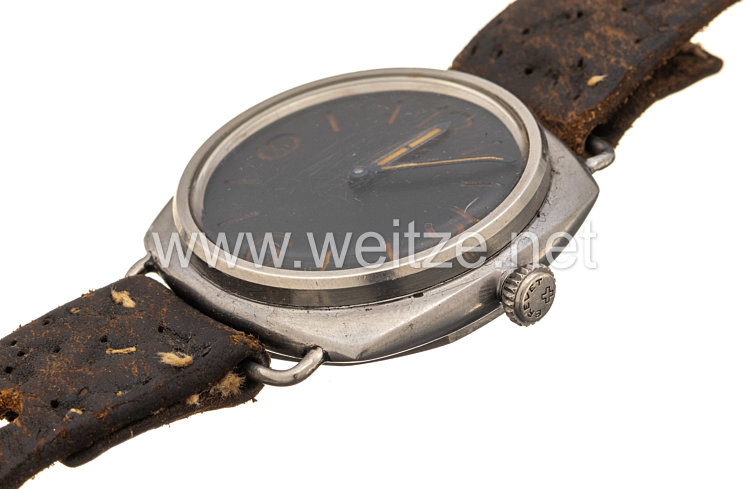
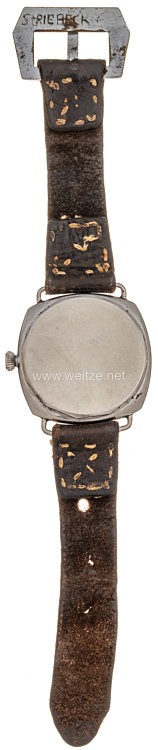
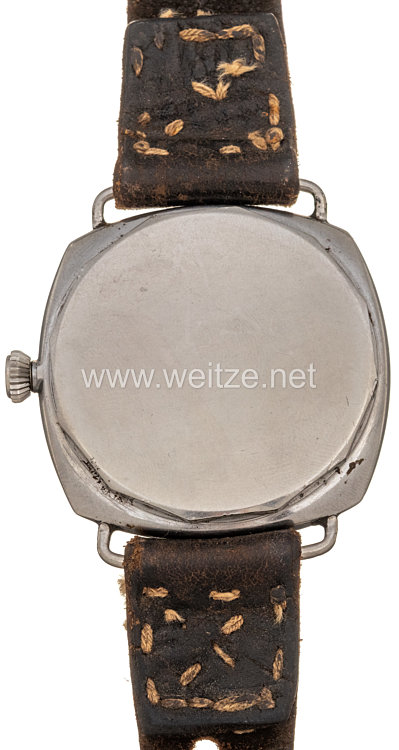
Kriegsmarine Panerai Uhr für Kampfschwimmer
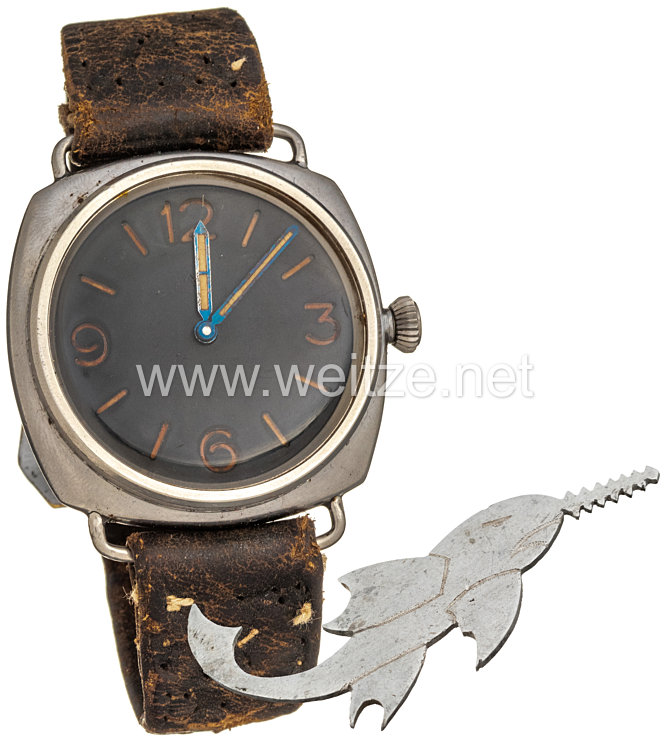
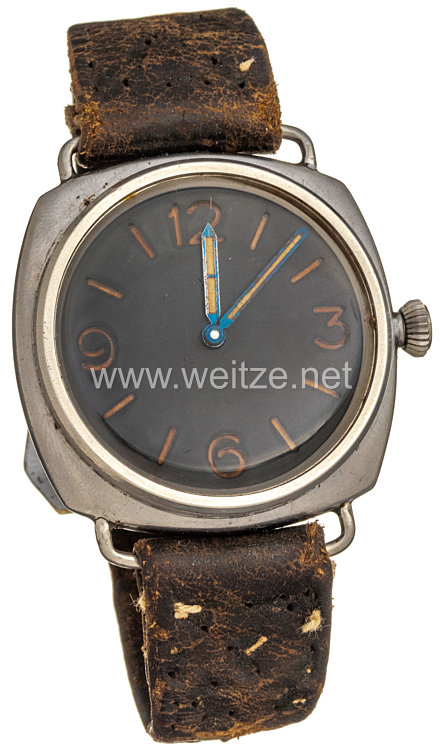
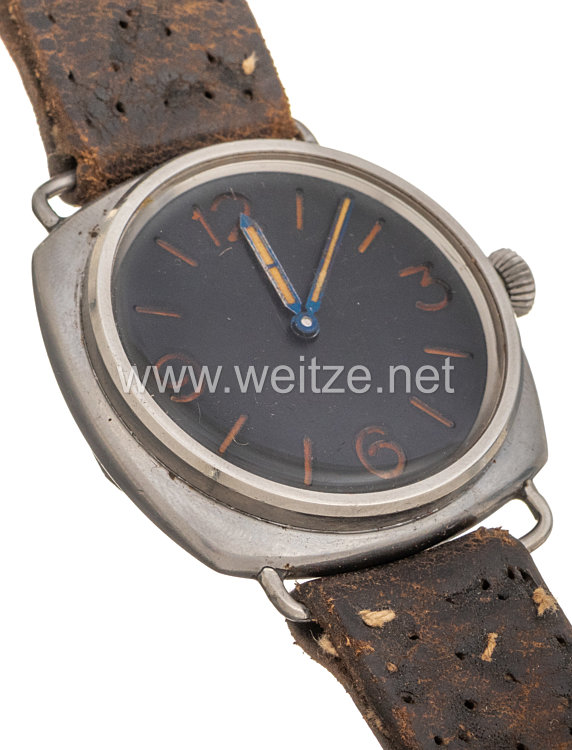
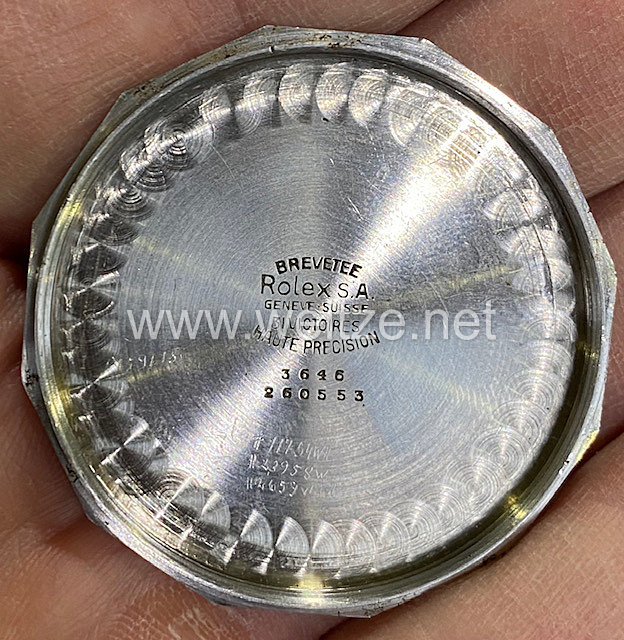
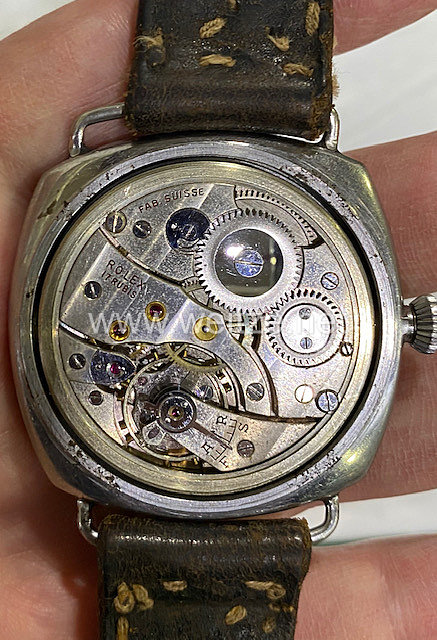
Officine Panerai Brevetee "Radiomir", Rolex SA-Genève, Suisse, 31 Victoires, Haute Precision, Gehäuse Nr. 260553, Referenz Nr. 3646 / Typ D, Rolex Cal. 618 / Typ 1, 47 x 47 mm, hergestellt circa 1944. Diese Uhren wurden von Panerai in Zusammenarbeit mit Rolex hergestellt.
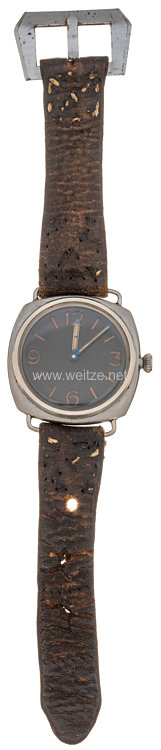
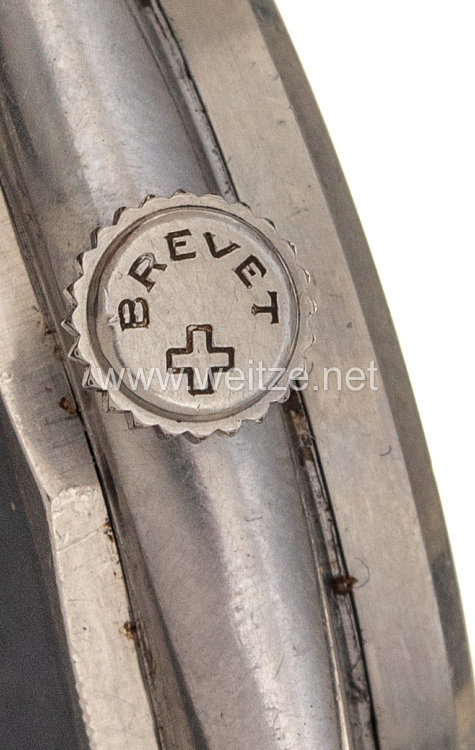
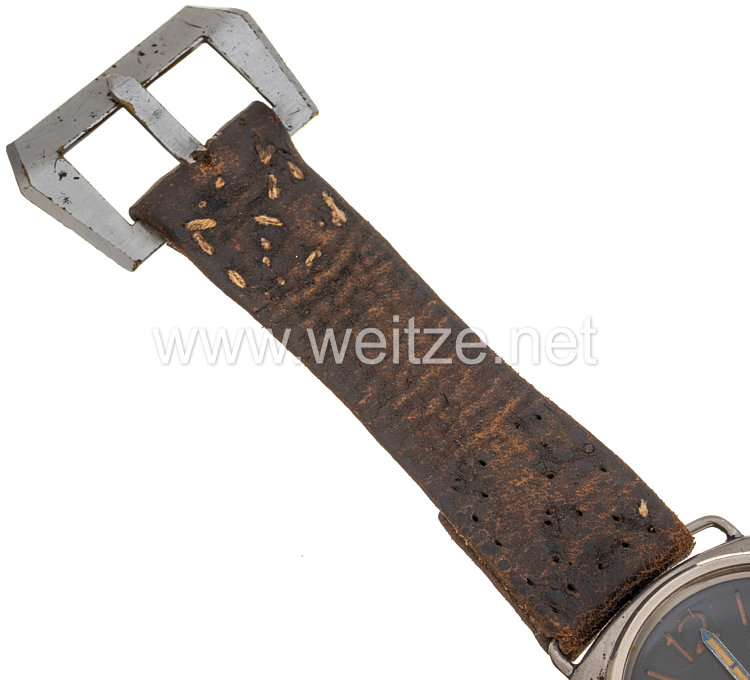
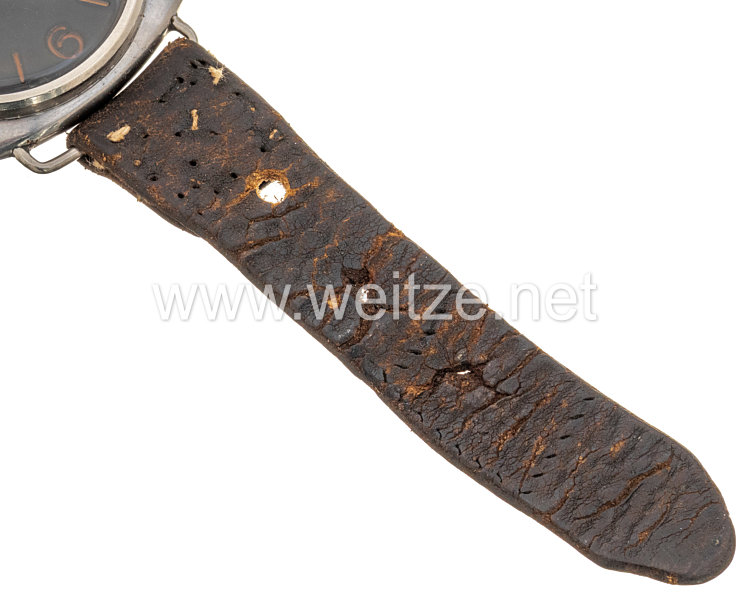
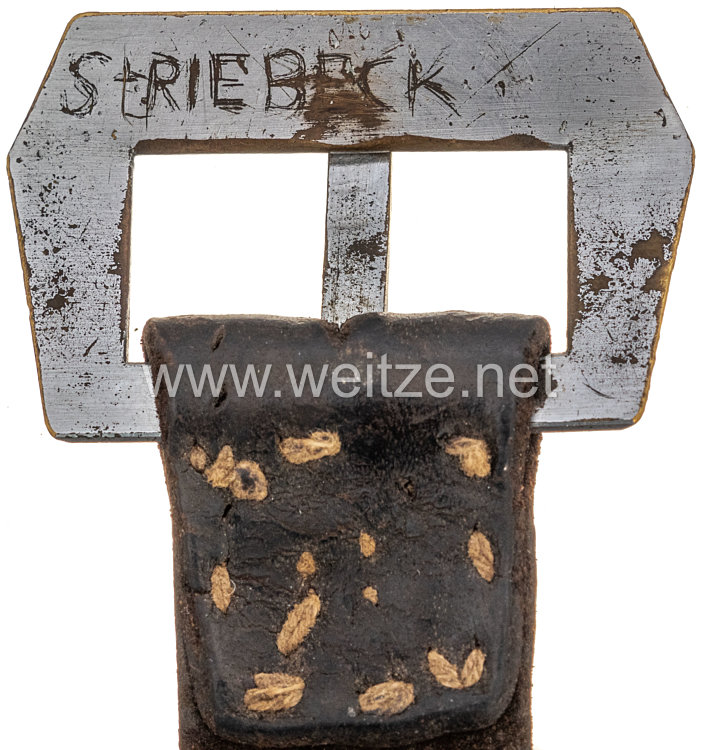
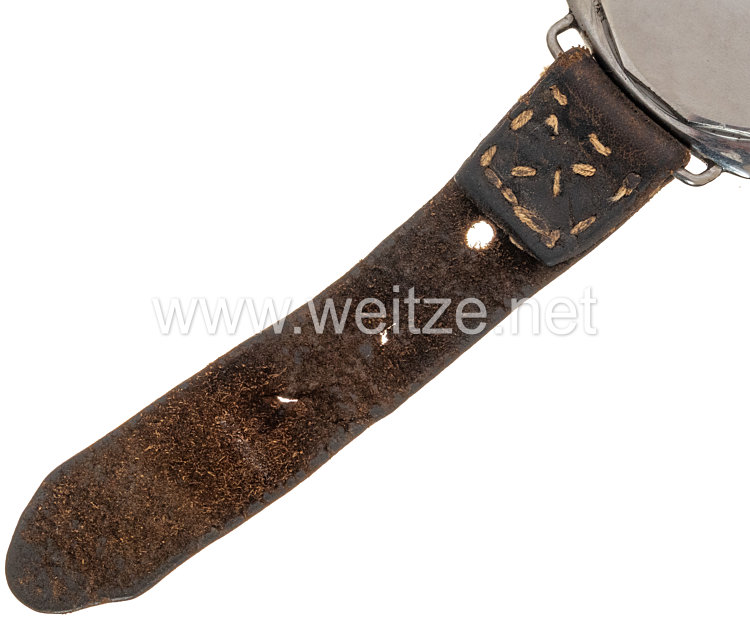
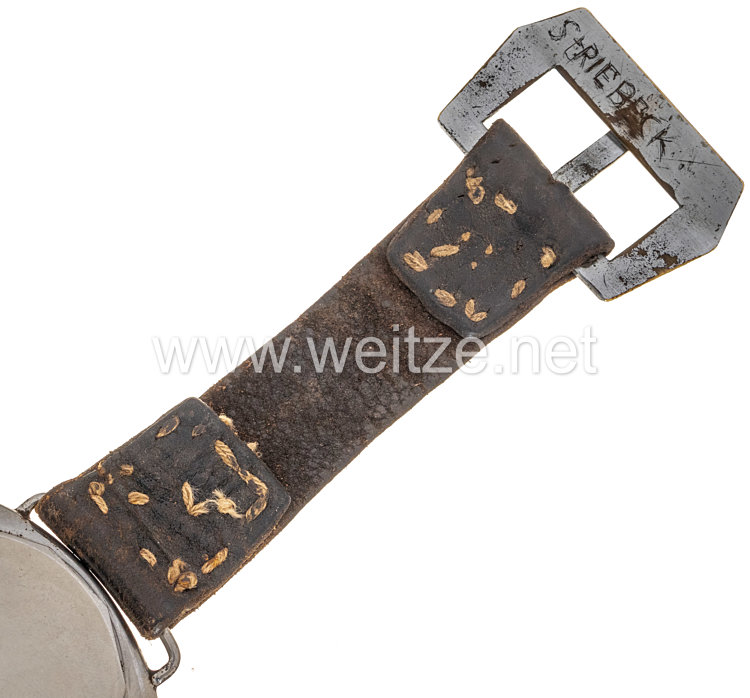
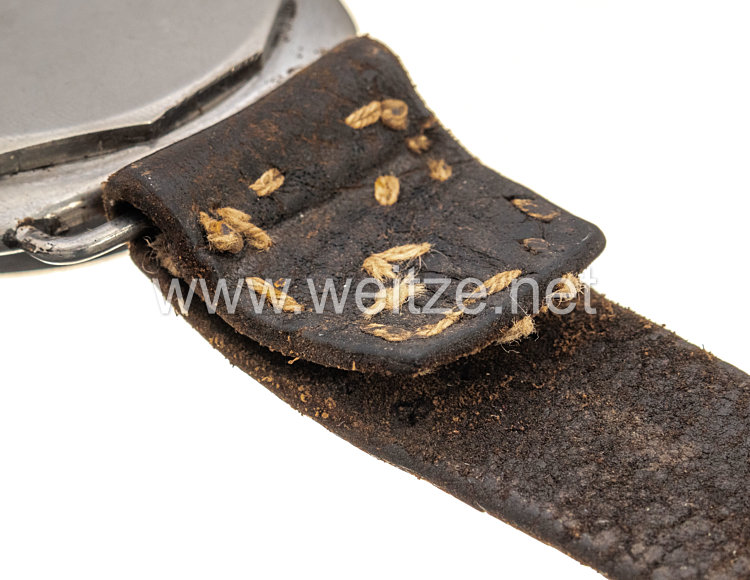
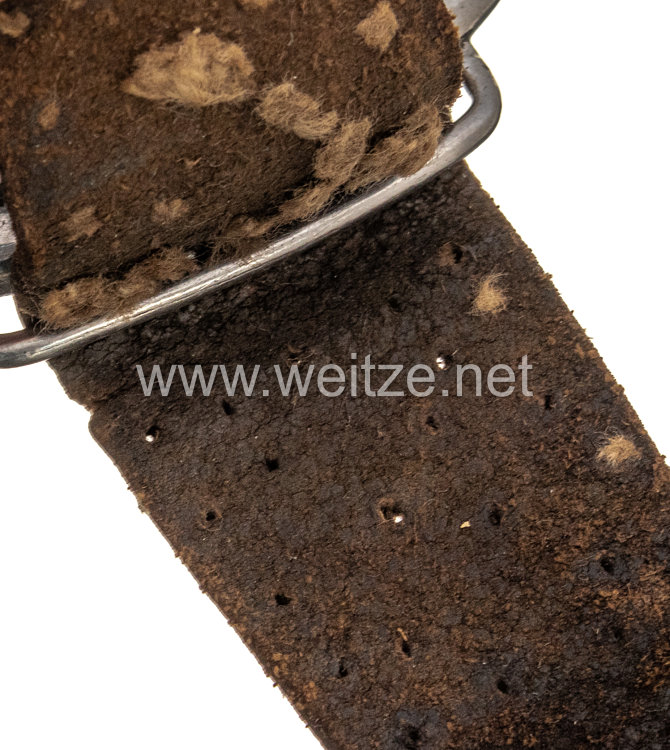
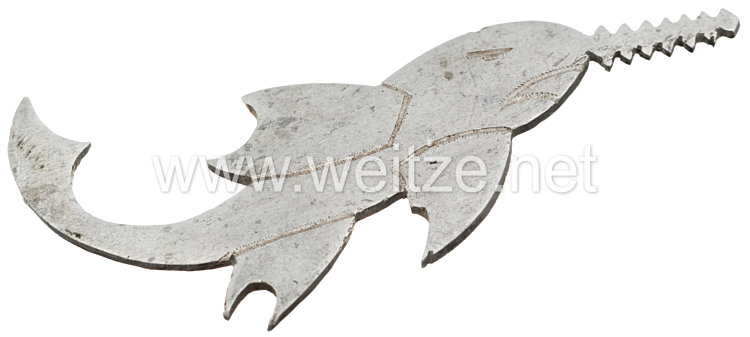
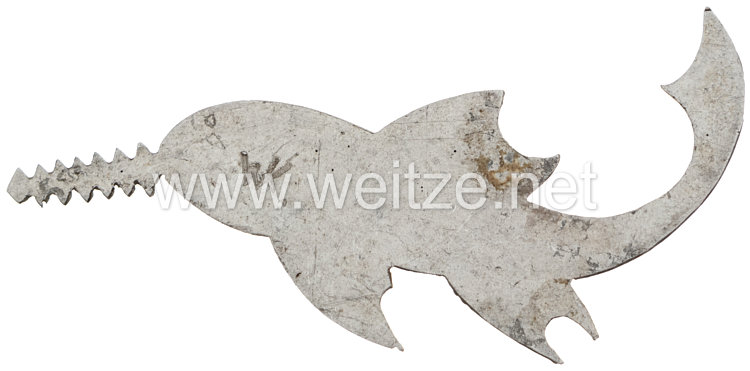
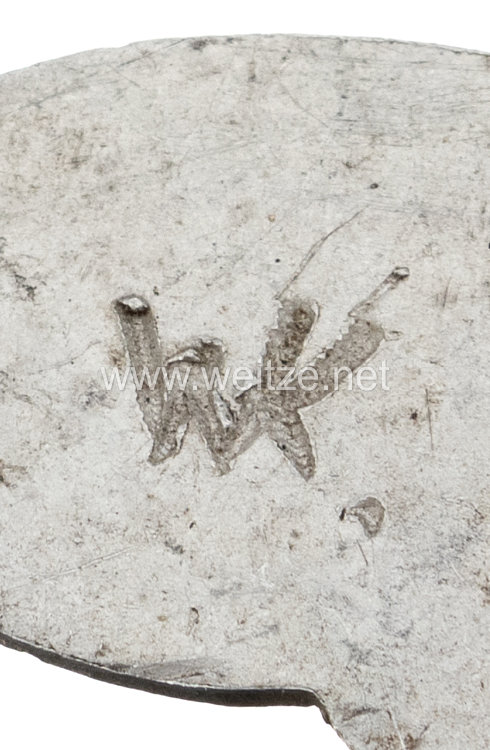
Bedeutende Kampfschwimmeruhr der deutschen Kriegsmarine mit Originalschließe und originalem Lederarmband - bis heute sind weniger als 80 Uhren dieses Typs nachgewiesen. Das Gehäuse aus Stahl, auf der Unterseite der Schließe des Lederarmbands mit eingekratztem Trägernamen "Striebeck", die original Krone mit Beschriftung "Brevet" und Schweizer Kreuz. Das Zifferblatt aus Messing geschwärzt, die Zeiger sowie die Zahlen und Striche auf dem Zifferblatt mit Leuchtmase "Radomir" original lackiert. Werk: Brückenwerk, monometallische Schraubenunruh. Deutlich getragene Uhr, voll funktionsfähig, im Originalzustand. Dazu aus gleichem Besitz ein Mützenabzeichen für die Angehörigen der Kleinkampfverbände, der berühmte Sägefisch, aus Aluminium per Hand gefertigt, rückseitig mit kleiner Signatur des Soldaten, der den Sägefisch hergestellt hat. Diese Abzeichen wurden seitlich auf das Schiffchen genäht. Getragen, Zustand 2.
Weitere Uhren der Referenz 3646 / Typ D sind in dem Buch "Vintage Panerai - The References" von Ralf Ehlers & Volker Wiegmann in Kapitel II.IV (Seite 398-531) aufgeführt, welches auch ein historisches Foto eines Kampfschwimmers mit einer Panerai Ref. 3646 mit Messing-Zifferblatt enthält (Seite 475). In diesem Teil des Buches ist eine Übersicht über verschiedene dekorative Polituren auf den Innenseiten der Gehäuse (Typ A-Typ G) abgebildet (Seite 486).
Radiomir Panerai
Dank der 1914 erfundenen Leuchtmasse "Radiomir"- einem Gemisch aus Zinksulfat und Radiumbromid - waren die Panerai-Zifferblätter in der Nacht und tief unter Wasser besonders gut abzulesen. Diesen Vorteil wusste Panerai auch für Uhren auszunutzen, und so wurde er mit der Produktion der ersten Armbanduhr für Kampftaucher, genannt "Radiomir", beauftragt. Die ersten Prototypen wurden noch direkt bei Rolex gefertigt, später entstanden die Uhren mit ihrem Gehäuse nach dem Prinzip der Oyster bei Panerai. 1936 wurde die Panerai Radiomir zum geheimen Ausrüstungsgegenstand der Italienischen Kriegsmarine.
Quelle: "Armbanduhren Klassik Katalog", Königswinter 2005, Seite 146.
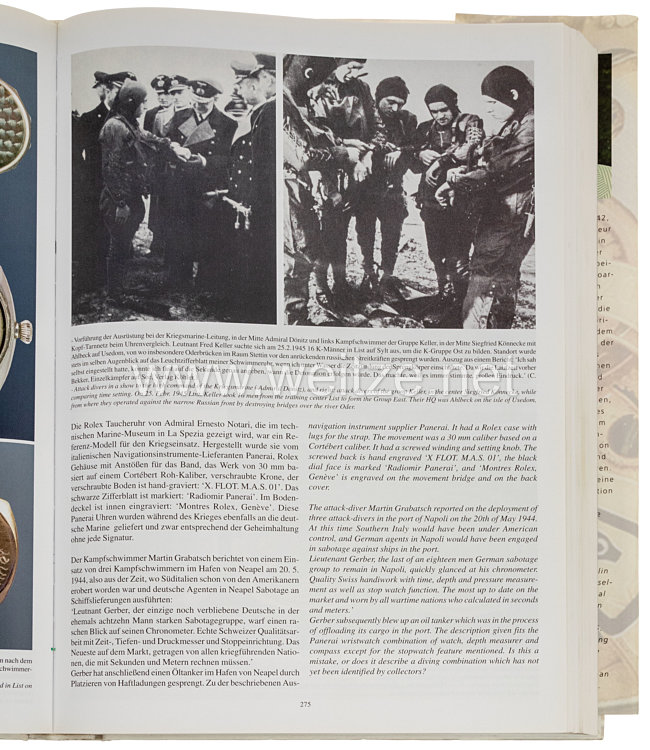
Die Entscheidung, in der deutschen Kriegsmarine Kampfschwimmer-Gruppen nach Vorbild der italienischen Marine zu bilden, fiel 1943. Die Idee stamme von Admiral Heye, der die Erfahrungen der verbündeten Italiener nutzen wollte. Sechs Deutsche wurden an die italienische Schule nach Valdagno geschickt, wo die italienische Kampfschwimmer-Basis in Norden Italiens unter der Leitung von Borghese und Eugenio Wolk stand. Diese deutschen Taucher wurden einerseits von der Abwehr des Reichs-Sicherheits-Hauptamtes und andererseits von der Kriegsmarine (von Wursian und Ritchie Reimann) entsandt. Nach dem ersten Kurs übernahm die Kriegsmarine die Führung in der Beziehung zu den Italienern und führte auch die Männer des Geheimdienstes, die in das italienische Trainings-Zentrum von Valdagno und Venedig gingen. Die Geheimdienstmänner kamen von Spezialeinheiten der Division ‘Brandenburg’ und von SS Kommandos der von Otto Skorzeny geführten Spezialeinheit. Die ersten Kriegsmarine Männer bildeten die K-Einheit (Kommando für Kleinkampfmittel) als deutsche Marine-Kampfschwimmer-Einheit. Die Abwehr wollte ihre Autonomie als Geheimdienst behalten und gründete ihre eigene Kampf-Taucher-Schule unter der Leitung von Hauptmann Helmers von den Spezial-Einheiten Otto Skorzenys. Ein bekannter später Einsatz der Kampfschwimmer war die Zerstörung der von den Alliierten eroberten Brücke von Nymwegen in Holland durch K-Männer der Marine im September 1944. Von den von den deutschen Kampfschwimmern benutzten Uhren sind einige Modelle in verschiedenen Sammlungen in Deutschland, Frankreich und Japan erhalten. Sie sind identisch zu den ersten Modellen, die vom italienischen Importeur Panarai stammten, mit Ausnahme einiger Details des Zifferblattes oder der Gravuren auf der Rückseite. Dies ist verständlich, da das Training und die erste Ausbildung der Kampfschwimmer 1943 in Italien bei der Gruppe ‘Dezima MAS’ (‘Mezzi d’Assalto Subacqueo’) begann. Diese Männer hatten bereits zehn Jahre Erfahrung und viele erfolgreiche Einsätze zu Anfang des Krieges. Da war es selbstverständlich, daß das Material der Ausbilder für diese kleinen Einheiten genutzt wurde. Die Männer wußten, daß die italienischen Kollegen das zu der Zeit modernste und effektivste Material nutzten. Selbst wenn sich der geplante Einsatz unterschied, konnte doch von der Strategie und Erfahrung profitiert werden. Eine Rolex Taucheruhr vom italienischen Navigationsinstrumente-Lieferanten Panerai, die im technischen Marine-Museum in La Spezia gezeigt wird, war das Referenz-Modell für den Kriegseinsatz. Diese Uhr wurde dem Museum von Admiral Ernesto Notari gegeben, welcher als junger Offizier bei den italienischen Kampfschwimmern gedient hat. Diese Uhr hat folgende Merkmale: Rolex Gehäuse mit Anstößen für das Band, das Werk mit einen Durchmesser von 30 mm basiert auf einem Cortébert Kaliber mit 15 Steinen und einer Gangdauer von ca. 48 Stunden, verschraubte Krone zur Zeigerverstellung, der verschraubte Boden ist hand-graviert: ‘X. FLOT. M.A.S. 01’. Dies scheint die erste an diese ‘10. Flotilla’ ausgegebene Uhr zu sein. Das schwarze Zifferblatt ist markiert: ‘Radiomir Panerai’ .Im Bodendeckel ist innen eingraviert: ‘Montres Rolex, Geneve’. Mit hoher Wahrscheinlichkeit wurden all diese Uhren von Panarai fertiggestellt und an die deutsche Marine während des Krieges geliefert und zwar entsprechend der Geheimhaltung ohne jede Signatur.
Bedeutende Kampfschwimmeruhr der deutschen Kriegsmarine mit Originalschließe und originalem Lederarmband - bis heute sind weniger als 80 Uhren dieses Typs nachgewiesen. Das Gehäuse aus Stahl, auf der Unterseite der Schließe des Lederarmbands mit eingekratztem Trägernamen "Striebeck", die original Krone mit Beschriftung "Brevet" und Schweizer Kreuz. Das Zifferblatt aus Messing geschwärzt, die Zeiger sowie die Zahlen und Striche auf dem Zifferblatt mit Leuchtmase "Radomir" original lackiert. Werk: Brückenwerk, monometallische Schraubenunruh. Deutlich getragene Uhr, voll funktionsfähig, im Originalzustand. Dazu aus gleichem Besitz ein Mützenabzeichen für die Angehörigen der Kleinkampfverbände, der berühmte Sägefisch, aus Aluminium per Hand gefertigt, rückseitig mit kleiner Signatur des Soldaten, der den Sägefisch hergestellt hat. Diese Abzeichen wurden seitlich auf das Schiffchen genäht. Getragen, Zustand 2.
Weitere Uhren der Referenz 3646 / Typ D sind in dem Buch "Vintage Panerai - The References" von Ralf Ehlers & Volker Wiegmann in Kapitel II.IV (Seite 398-531) aufgeführt, welches auch ein historisches Foto eines Kampfschwimmers mit einer Panerai Ref. 3646 mit Messing-Zifferblatt enthält (Seite 475). In diesem Teil des Buches ist eine Übersicht über verschiedene dekorative Polituren auf den Innenseiten der Gehäuse (Typ A-Typ G) abgebildet (Seite 486).
Radiomir Panerai
Dank der 1914 erfundenen Leuchtmasse "Radiomir"- einem Gemisch aus Zinksulfat und Radiumbromid - waren die Panerai-Zifferblätter in der Nacht und tief unter Wasser besonders gut abzulesen. Diesen Vorteil wusste Panerai auch für Uhren auszunutzen, und so wurde er mit der Produktion der ersten Armbanduhr für Kampftaucher, genannt "Radiomir", beauftragt. Die ersten Prototypen wurden noch direkt bei Rolex gefertigt, später entstanden die Uhren mit ihrem Gehäuse nach dem Prinzip der Oyster bei Panerai. 1936 wurde die Panerai Radiomir zum geheimen Ausrüstungsgegenstand der Italienischen Kriegsmarine.
Quelle: "Armbanduhren Klassik Katalog", Königswinter 2005, Seite 146.
Die Entscheidung, in der deutschen Kriegsmarine Kampfschwimmer-Gruppen nach Vorbild der italienischen Marine zu bilden, fiel 1943. Die Idee stamme von Admiral Heye, der die Erfahrungen der verbündeten Italiener nutzen wollte. Sechs Deutsche wurden an die italienische Schule nach Valdagno geschickt, wo die italienische Kampfschwimmer-Basis in Norden Italiens unter der Leitung von Borghese und Eugenio Wolk stand. Diese deutschen Taucher wurden einerseits von der Abwehr des Reichs-Sicherheits-Hauptamtes und andererseits von der Kriegsmarine (von Wursian und Ritchie Reimann) entsandt. Nach dem ersten Kurs übernahm die Kriegsmarine die Führung in der Beziehung zu den Italienern und führte auch die Männer des Geheimdienstes, die in das italienische Trainings-Zentrum von Valdagno und Venedig gingen. Die Geheimdienstmänner kamen von Spezialeinheiten der Division ‘Brandenburg’ und von SS Kommandos der von Otto Skorzeny geführten Spezialeinheit. Die ersten Kriegsmarine Männer bildeten die K-Einheit (Kommando für Kleinkampfmittel) als deutsche Marine-Kampfschwimmer-Einheit. Die Abwehr wollte ihre Autonomie als Geheimdienst behalten und gründete ihre eigene Kampf-Taucher-Schule unter der Leitung von Hauptmann Helmers von den Spezial-Einheiten Otto Skorzenys. Ein bekannter später Einsatz der Kampfschwimmer war die Zerstörung der von den Alliierten eroberten Brücke von Nymwegen in Holland durch K-Männer der Marine im September 1944. Von den von den deutschen Kampfschwimmern benutzten Uhren sind einige Modelle in verschiedenen Sammlungen in Deutschland, Frankreich und Japan erhalten. Sie sind identisch zu den ersten Modellen, die vom italienischen Importeur Panarai stammten, mit Ausnahme einiger Details des Zifferblattes oder der Gravuren auf der Rückseite. Dies ist verständlich, da das Training und die erste Ausbildung der Kampfschwimmer 1943 in Italien bei der Gruppe ‘Dezima MAS’ (‘Mezzi d’Assalto Subacqueo’) begann. Diese Männer hatten bereits zehn Jahre Erfahrung und viele erfolgreiche Einsätze zu Anfang des Krieges. Da war es selbstverständlich, daß das Material der Ausbilder für diese kleinen Einheiten genutzt wurde. Die Männer wußten, daß die italienischen Kollegen das zu der Zeit modernste und effektivste Material nutzten. Selbst wenn sich der geplante Einsatz unterschied, konnte doch von der Strategie und Erfahrung profitiert werden. Eine Rolex Taucheruhr vom italienischen Navigationsinstrumente-Lieferanten Panerai, die im technischen Marine-Museum in La Spezia gezeigt wird, war das Referenz-Modell für den Kriegseinsatz. Diese Uhr wurde dem Museum von Admiral Ernesto Notari gegeben, welcher als junger Offizier bei den italienischen Kampfschwimmern gedient hat. Diese Uhr hat folgende Merkmale: Rolex Gehäuse mit Anstößen für das Band, das Werk mit einen Durchmesser von 30 mm basiert auf einem Cortébert Kaliber mit 15 Steinen und einer Gangdauer von ca. 48 Stunden, verschraubte Krone zur Zeigerverstellung, der verschraubte Boden ist hand-graviert: ‘X. FLOT. M.A.S. 01’. Dies scheint die erste an diese ‘10. Flotilla’ ausgegebene Uhr zu sein. Das schwarze Zifferblatt ist markiert: ‘Radiomir Panerai’ .Im Bodendeckel ist innen eingraviert: ‘Montres Rolex, Geneve’. Mit hoher Wahrscheinlichkeit wurden all diese Uhren von Panarai fertiggestellt und an die deutsche Marine während des Krieges geliefert und zwar entsprechend der Geheimhaltung ohne jede Signatur.