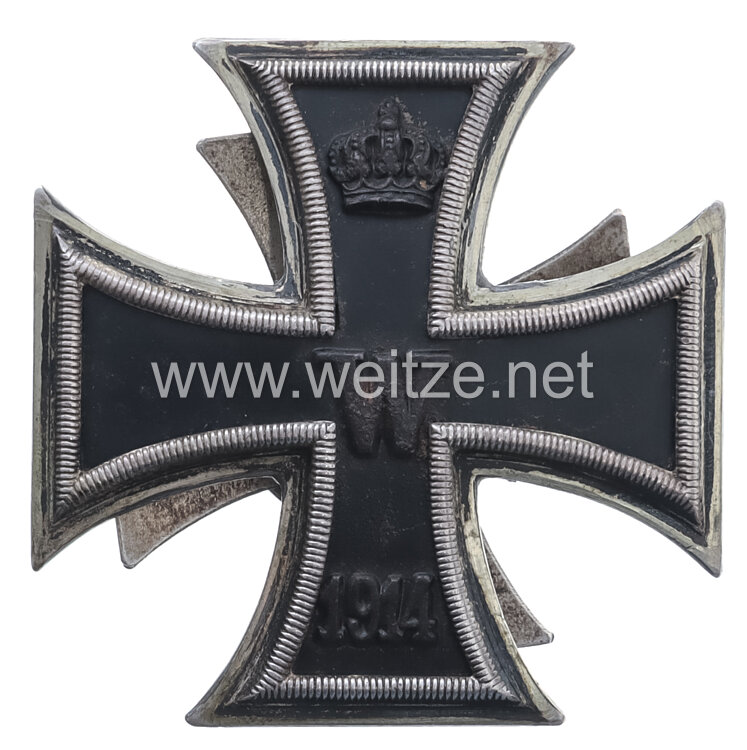
Prussia Iron Cross 1914 1st Class - Paul Meybauer with Screw Mount

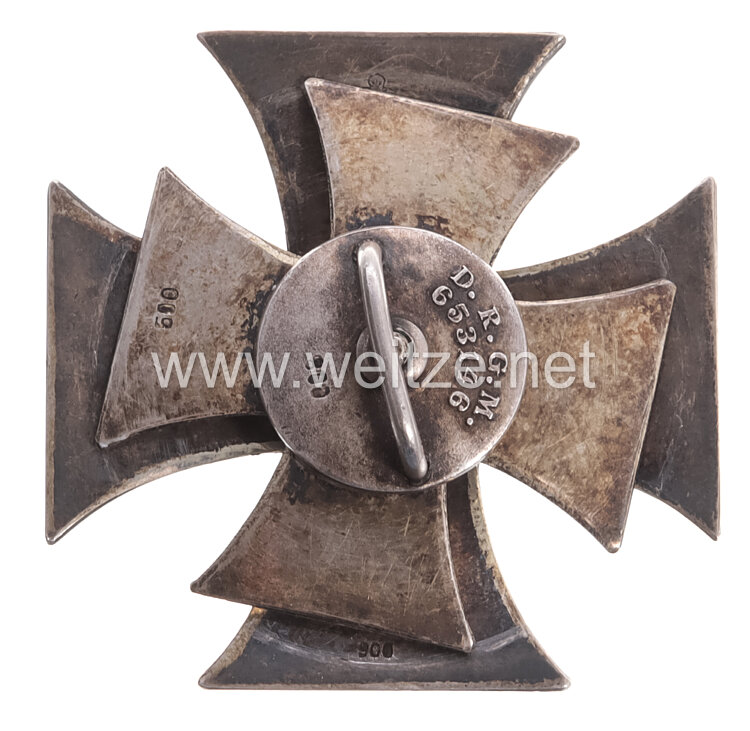
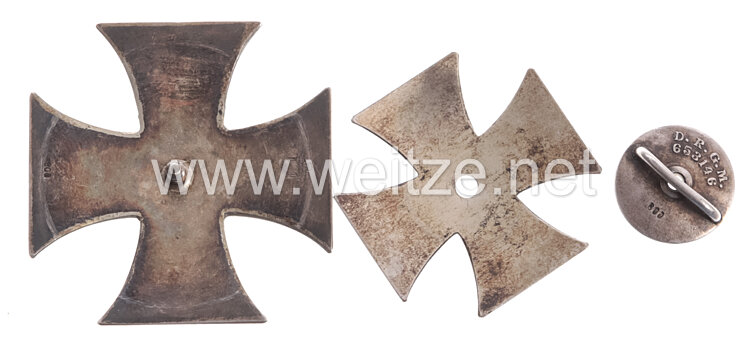
Iron core slightly convex. Back plate with threaded post and hallmarks 800 and coat of arms shield, Iron Cross-shaped washer with hallmark 500, wing nut with hallmarks 800 and D.R.G.M. 653146.

468394
650,00

Prussia Iron Cross 1914 1st Class - Paul Meybauer with Screw Mount

The Prussian Iron Cross 1st Class of 1914 represents one of the most significant military decorations of the German Empire during World War I. This particular variant was manufactured by the renowned Berlin-based maker Paul Meybauer, one of the most important producers of military orders and decorations during the Wilhelmine era.

The Iron Cross was originally instituted on March 10, 1813 by King Frederick William III of Prussia during the Wars of Liberation against Napoleon. The decoration was revolutionary for its time, as it could be awarded regardless of military rank, making it accessible even to common soldiers. With the outbreak of World War I, Kaiser Wilhelm II renewed the institution of the Iron Cross on August 5, 1914 through an All-Highest Cabinet Order.

The 1st Class of the Iron Cross differed substantially from the more commonly awarded 2nd Class. While the 2nd Class was worn on a ribbon, the 1st Class was designed as a pin-back cross and was attached directly to the uniform. The award of the 1st Class generally required prior possession of the 2nd Class and was given for outstanding bravery or significant military achievements.

This specimen displays the characteristic features of Meybauer production. The slightly vaulted iron core is typical of this manufactory's high-quality workmanship. The back plate features a threaded post for attachment and several hallmarks: the silver hallmark 800 and a coat of arms serving as the maker's mark. The EK-shaped washer bears the hallmark 500, indicating a lower silver alloy. The wing nut also carries the 800 hallmark and the Reich utility model number D.R.G.M. 653146.

Paul Meybauer operated his workshop on Breite Strasse in Berlin and was among the privileged court suppliers. His firm was known for precise workmanship and the use of high-quality materials. The various silver hallmarks on this piece document the careful material selection and comply with the legal requirements for precious metal goods in the German Empire.

The screw-back attachment was the preferred system for the 1st Class Iron Cross, as it enabled secure and permanent mounting on the uniform. Unlike pin fastenings, the screw system offered greater stability, which was particularly important in front-line service. The EK-shaped washer distributed pressure on the uniform fabric and prevented tearing.

The D.R.G.M. number (Deutsches Reichsgebrauchsmuster - German Reich Utility Model) documents that this particular construction was protected by design rights. The Reichsgebrauchsmuster was a simplified protection right that existed between 1891 and 1945 in the German Empire and protected technical innovations that did not meet the requirements for a full patent.

During World War I, approximately 218,000 examples of the Iron Cross 1st Class were awarded, which, compared to the over 5 million 2nd Class crosses awarded, underscores the rarity and significance of this decoration. Recipients came from all branches of service: infantry, cavalry, artillery, as well as increasingly from new technical troops such as aviators and tank soldiers.

The combination of different silver alloys in one piece was quite common with Meybauer. The higher-quality 800 alloy was used for visible and mechanically stressed parts, while the 500 alloy sufficed for less exposed components. This practice allowed cost optimization without quality loss in the essential components.

After the end of World War I and the collapse of the monarchy in 1918, the Iron Cross initially lost its official significance but remained present in public perception as a symbol of military valor. Recipients were allowed to continue wearing their decorations even in the Weimar Republic, documenting the enduring social recognition of this honor.

Today, Iron Crosses 1st Class by Paul Meybauer are sought-after collectibles and historical documents. They testify to the craftsmanship quality of German orders manufactories and the military culture of the Empire. The detailed hallmarking and marking enables precise attribution and dating, making these pieces valuable sources for military-historical research.

r