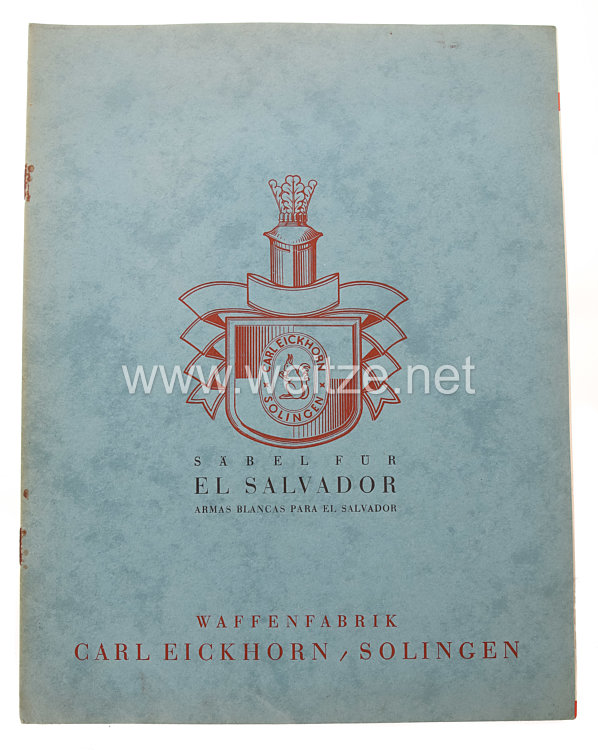
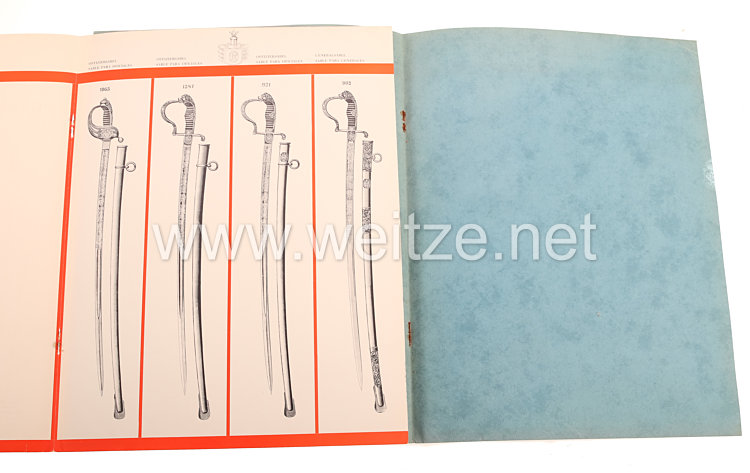
Third Reich Carl Eickhorn Solingen Original Sales Brochure "Sabers for El Salvador"

circa 1931. Sales folding brochure with illustrations of available edged weapons.
Condition 2 
424894
70,00

Third Reich Carl Eickhorn Solingen Original Sales Brochure "Sabers for El Salvador"

The Carl Eickhorn company of Solingen was among the most significant German manufacturers of edged weapons in the 20th century. This sales brochure from 1931, advertising sabers and other bladed weapons for El Salvador, documents a fascinating aspect of German arms exports during the interwar period.

Carl Eickhorn was founded in the 19th century in Solingen, the traditional German center for blade manufacturing. The company specialized in producing high-quality edged weapons for military and ceremonial purposes. During the Weimar Republic and later in the Third Reich, Eickhorn supplied not only German armed forces but also exported extensively abroad.

The early 1930s marked a transitional period in German history. The Weimar Republic was nearing its end, and 1933 would see the Nazi seizure of power. During this time, German arms manufacturers actively sought international markets, partly to circumvent the restrictions of the Treaty of Versailles, which severely limited German weapons production.

El Salvador maintained close trade relations with Germany during this period. Many Latin American states oriented themselves militarily toward the German model and acquired weapons, equipment, and military instructors from Germany. The Salvadoran army underwent modernization in the 1920s and 1930s, with German influences playing a significant role.

Such sales brochures were important marketing tools for weapons manufacturers. They presented the product range with detailed illustrations and technical specifications. For government representatives and military procurement officers, they served as catalogs from which they could select standardized or customized edged weapons. The brochures were often multilingual or specifically produced for particular export markets.

The sabers offered in such catalogs typically included various types: officers' sabers for different branches of service, parade swords, naval sabers, and cavalry broadswords. Each design followed military regulations and could be adapted to the specific requirements of the purchasing country, such as through national emblems, coats of arms, or inscriptions.

The Solingen cutlery industry had enjoyed a worldwide reputation for high-quality blades for centuries. Companies like Eickhorn, but also others such as WKC (Weyersberg, Kirschbaum & Co.), Ernst Pack & Söhne, or Robert Klaas competed for international contracts. The quality of Solingen steel processing and the artisanal tradition made these products highly sought after.

The historical context of this brochure must also be viewed against the background of political developments in Latin America. El Salvador experienced political unrest in the early 1930s, culminating in the 1932 Matanza uprising and its bloody suppression. The modernization and equipment of the armed forces was of strategic importance to the Salvadoran government.

Documents like this sales brochure are valuable historical sources today. They document not only a manufacturer's product range but also international trade relations, military procurement practices, and the global networking of the arms industry. For collectors and historians, they offer insights into design, manufacturing techniques, and the commercial side of military history.

The preservation of such ephemeral materials is rare. Sales brochures were considered utilitarian items and often discarded after use. Surviving examples in good condition are therefore sought-after collectibles that offer a unique glimpse into the history of the arms trade and military equipment.

Eickhorn continued its production during the Third Reich, manufacturing edged weapons for various organizations, including the Wehrmacht, Luftwaffe, Navy, and paramilitary organizations. After World War II, production continued under changed conditions, with a stronger focus on civilian products and export business.

This brochure represents a snapshot of an era when international arms trade operated through direct commercial relationships between manufacturers and foreign governments, often facilitated by diplomatic channels and military attachés. It reflects the globalization of military technology and the role of European manufacturers in equipping armed forces worldwide during the interwar period.