Third Reich Parade Bandolier for Officers of the Schutzpolizei

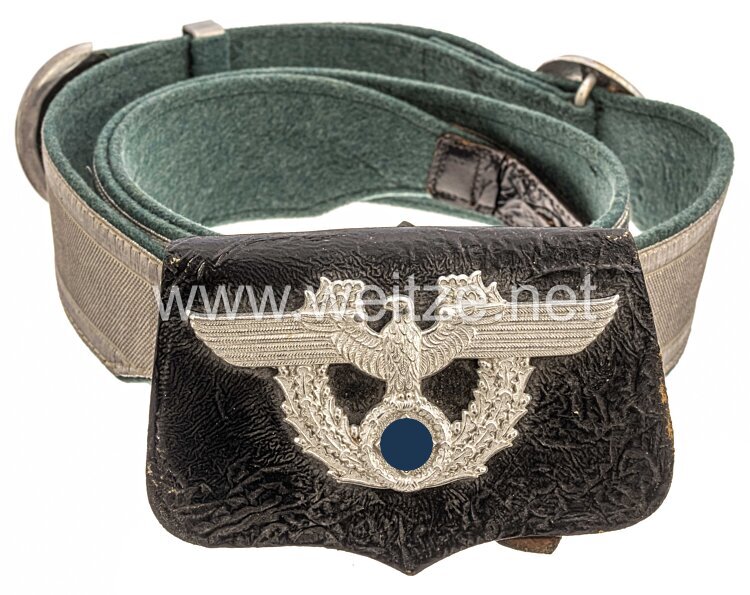
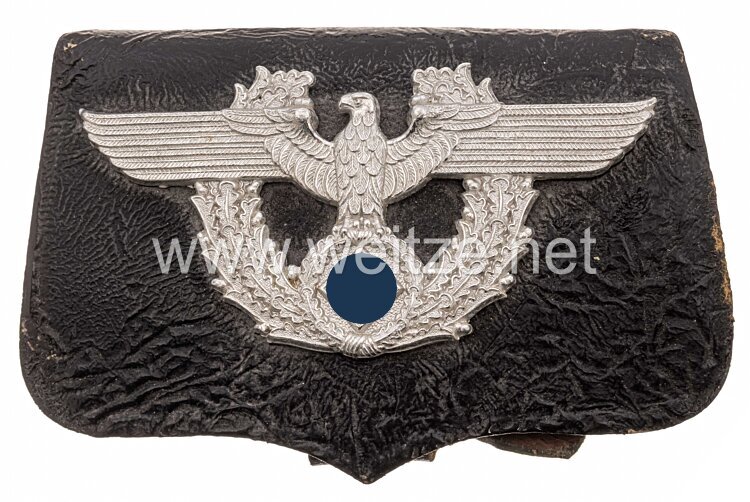
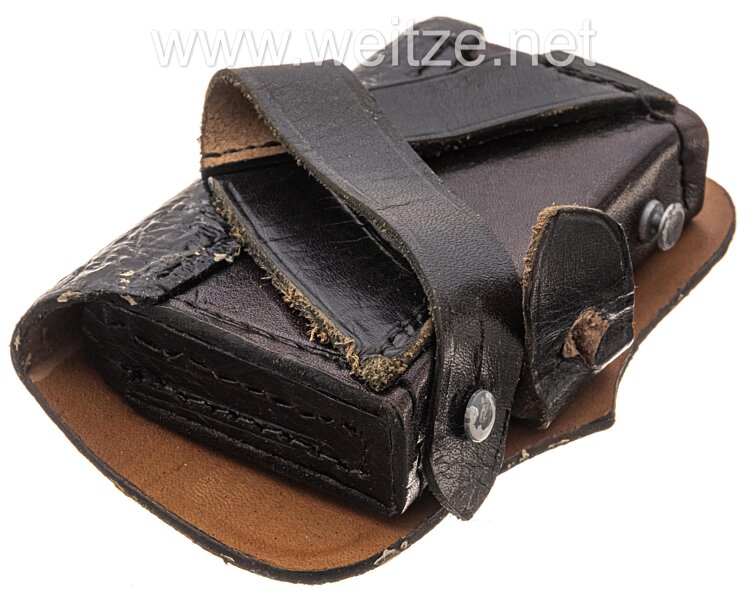
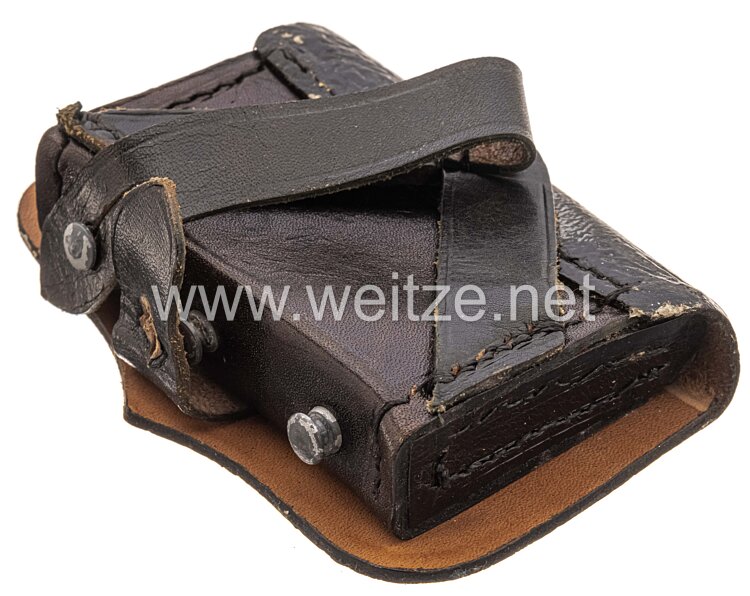
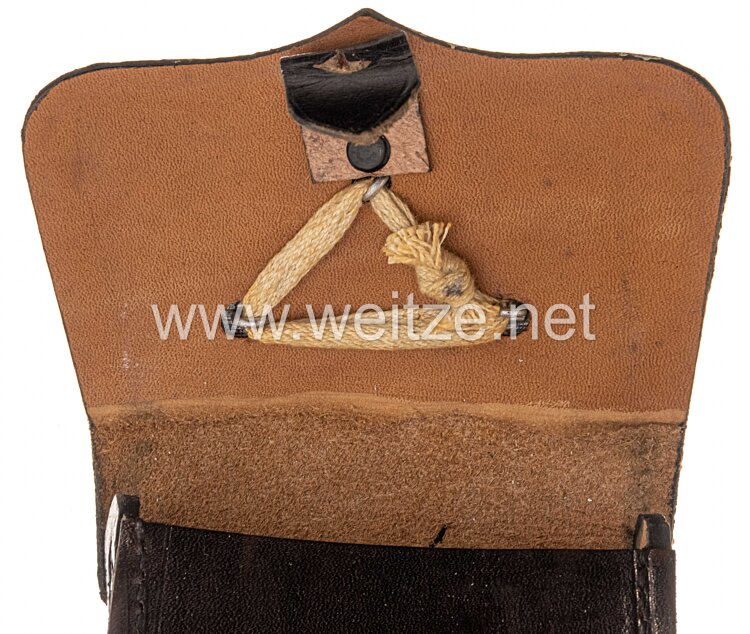
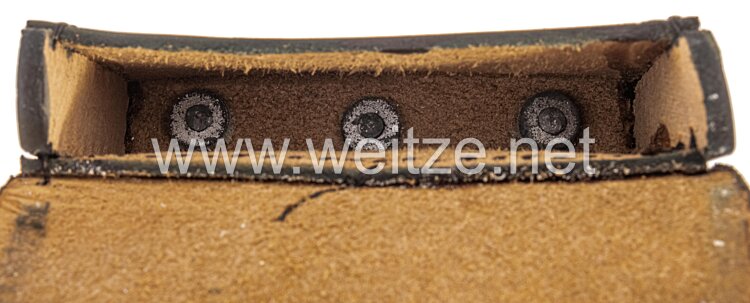
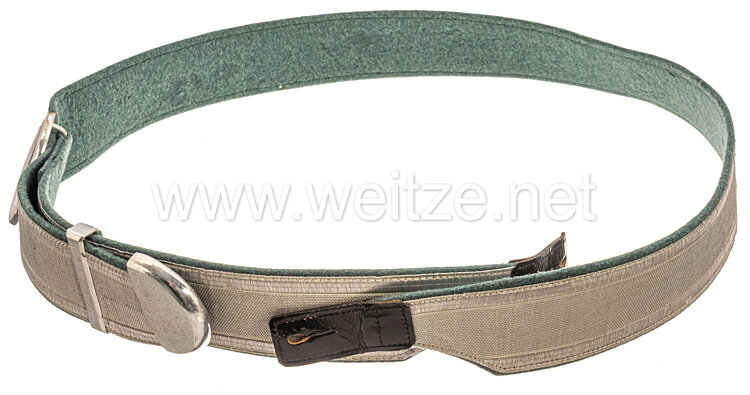
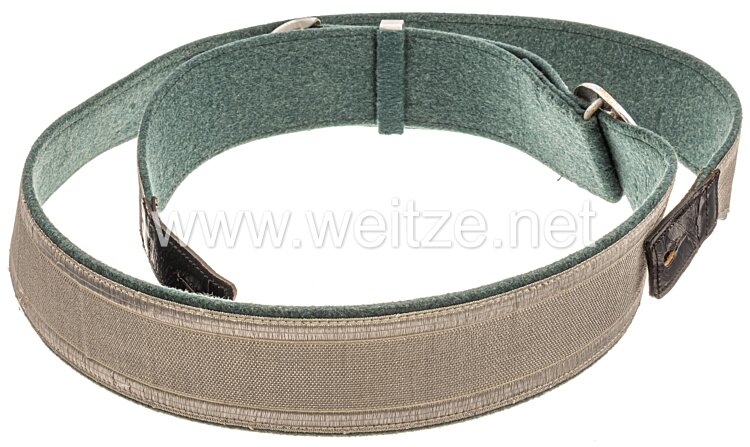
Bandolier with silver braid on police-green cloth backing, aluminum fittings, cartridge box of black leather with applied aluminum police eagle. 
463993
750,00

Third Reich Parade Bandolier for Officers of the Schutzpolizei

The parade bandolier for officers of the Schutzpolizei (Protection Police) from the Third Reich era represents a significant example of police uniform equipment between 1933 and 1945. These items of equipment were not merely functional components of the uniform but also served representative and ceremonial purposes during official occasions and parades.

The Schutzpolizei formed the uniformed order police in the German Reich during the Nazi period. Following the National Socialist seizure of power in 1933, the entire German police system was fundamentally restructured. Through Heinrich Himmler's decree of June 17, 1936, the police were organized uniformly across the Reich and placed under SS control. The Schutzpolizei was responsible for maintaining general public order and security.

The described bandolier is characterized by several distinctive features: The basic construction consists of silver braid on a police-green cloth backing, which was typical for officer versions. The police-green color was the official identifying mark of the Ordnungspolizei (Order Police) and distinguished it from other organizations of the Nazi state. The use of silver braid was reserved for officers and demonstrated their rank within the hierarchy.

The aluminum fittings correspond to the material regulations of the time. While during the Weimar Republic gilded or silver-plated metal fittings were still frequently used, the Third Reich increasingly turned to more cost-effective materials. Aluminum offered the advantage of being easy to process while still conveying a representative appearance through its silvery look.

The cartridge box made of black leather with an applied police eagle made of aluminum forms the central element of the bandolier. The cartridge box originally served to store ammunition or documents. However, in parade bandoliers, it had mainly decorative character. The police eagle mounted on the cartridge box displayed the national emblem of the German Reich in the version typical for the police. Unlike the Party eagle of the NSDAP, which looked to the left, the Reich eagle looked to the right.

Parade bandoliers were worn on various occasions: at official state receptions, parades on May 1st or November 9th (commemoration day of the Hitler Putsch of 1923), at oath-taking ceremonies, and other ceremonial events. They belonged to the dress uniform and were a sign of the wearer's dignity and authority.

The manufacture of such bandoliers was carried out by specialized companies licensed as military suppliers. These companies had to maintain strict quality standards, and their products complied with the precise regulations of the dress code for the Ordnungspolizei. Officers generally had to procure their equipment themselves, which represented a considerable financial investment for high-quality parade pieces.

The manner of wearing the bandolier was precisely regulated: It was worn from the right shoulder to the left hip, with the cartridge box positioned on the left side. This wearing method had historical roots and derived from the tradition of the Prussian army, where officers wore similar bandoliers.

After the end of World War II in 1945, such uniform pieces were confiscated by the Allied occupation powers or destroyed by their wearers to avoid prosecution. The use of Nazi symbols was banned in Germany. Today, such objects have exclusively historical and museum value and serve the documentation and scholarly examination of this era.

The study of such equipment items provides historians with important insights into the organizational structure, self-representation, and ceremonial culture of the National Socialist police. They demonstrate how the regime attempted to demonstrate authority and create a sense of community through uniform appearance, symbolism, and ceremony.

These artifacts serve as tangible evidence of the militarization and ideologization of the German police force during the Nazi period, illustrating how everyday objects became carriers of political ideology and instruments of state representation.