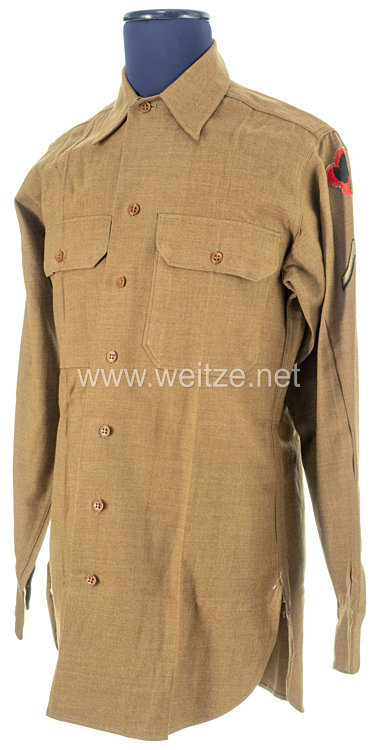
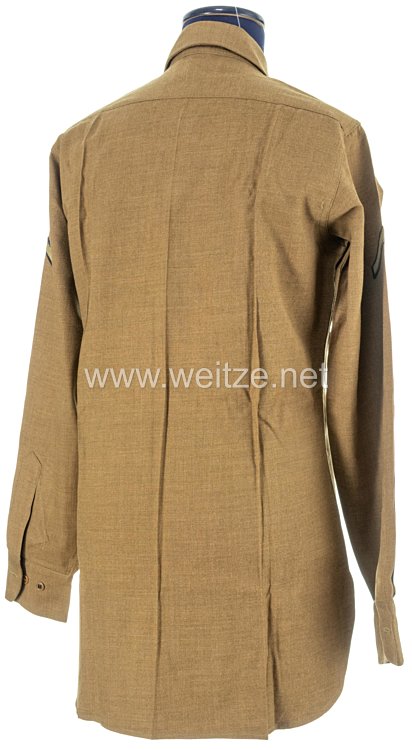
USA World War 2: US Army Winter Service Shirt for a Private First Class of the 43rd Infantry Division

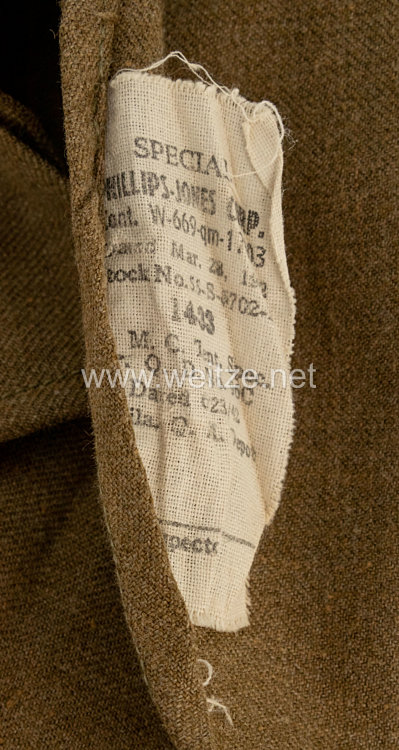
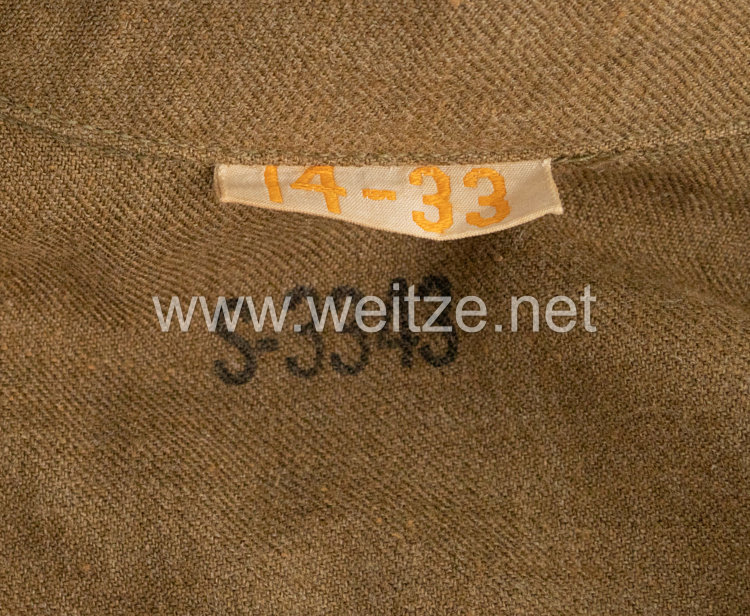
brown serge wool, size tag "14-33", with arm insignias, quartermaster etiquette is dated, March 1942, arm length 63 cm, chest circumference  cm, length 85 cm, in overall good condition, condition 2
401591
125,00

USA World War 2: US Army Winter Service Shirt for a Private First Class of the 43rd Infantry Division

This US Army Winter Service Shirt from World War II represents an important element of American military uniform during the global conflict of 1939-1945. This particular specimen, manufactured in March 1942, dates from a crucial phase of the American war effort, just months after the Japanese attack on Pearl Harbor on December 7, 1941.

The shirt is made from brown serge wool, a material prized for its durability and warming properties. The choice of wool for winter uniforms was standard during World War II, as synthetic materials were not yet widely available. The size designation “14-33” followed the numbering system of the US Army Quartermaster Corps, where the first number indicated neck circumference and the second indicated sleeve length in inches.

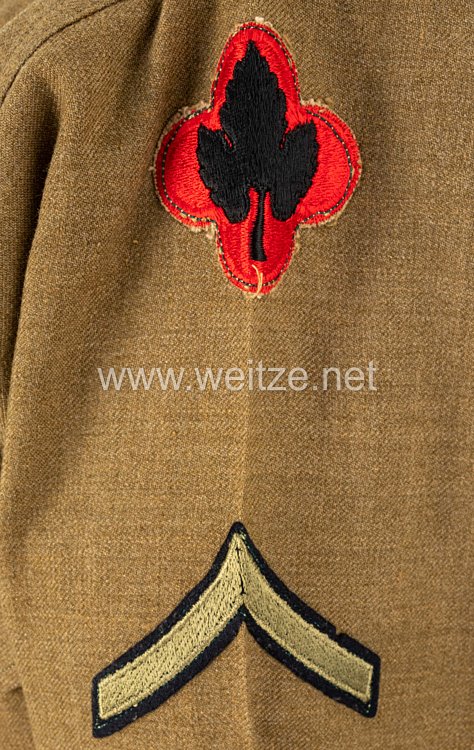
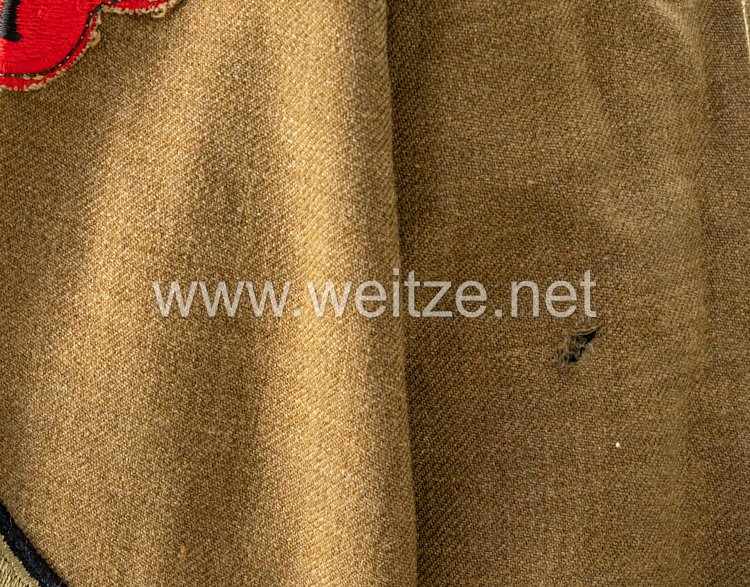
The insignia affixed to the shirt identify the wearer as a Private First Class (PFC) of the 43rd Infantry Division. The 43rd Infantry Division, nicknamed the “Winged Victory Division” due to its distinctive red patch with four golden leaves, had a significant history. The division was reactivated in 1941 from National Guard units of Connecticut, Maine, Rhode Island, and Vermont, and served primarily in the Pacific Theater during World War II.

The Quartermaster Corps of the US Army was responsible for the procurement, storage, and distribution of all uniforms and equipment. The labeling with the manufacturing date of March 1942 corresponds to a phase of massive expansion of the American armed forces. At this time, the US Army was intensively preparing for its first major combat operations of the war. The 43rd Infantry Division itself was called into active service in February 1941 and underwent intensive training throughout 1942.

The uniform regulations of the US Army during World War II were established in various Army Regulations (AR), particularly AR 600-40, which governed the wearing and placement of badges and insignia. The service shirt, also known as the “Wool Shirt” or “Service Shirt,” was part of the Class A Uniform and was worn both as garrison and dress uniform.

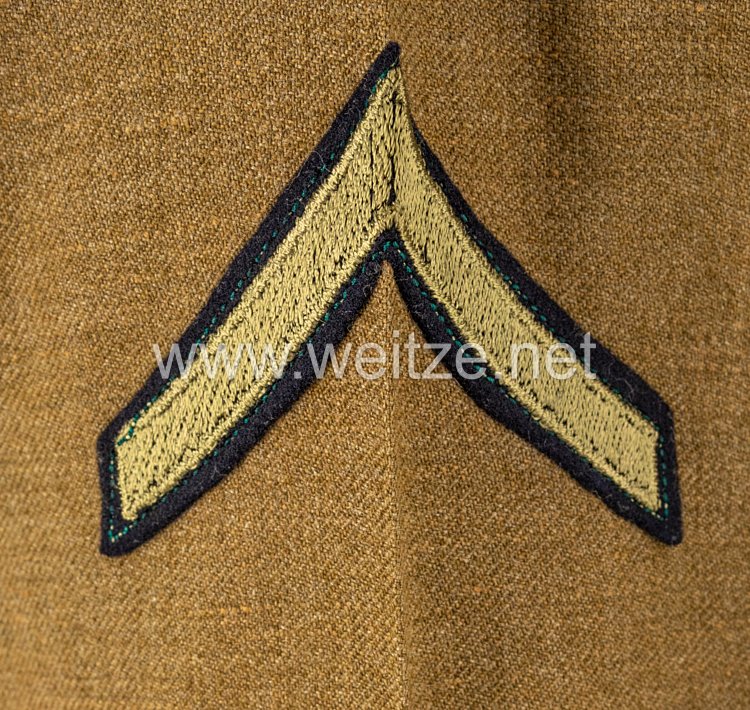
The position of Private First Class, marked by a single chevron, was the second enlisted rank in the US Army hierarchy. PFCs received slightly higher pay and often additional responsibility compared to basic Privates. This rank structure was essential for maintaining military discipline and organization in a rapidly expanding army.

The 43rd Infantry Division departed the United States in October 1942 and arrived in New Zealand in January 1943. From there, it participated in several major campaigns in the Southwest Pacific, including battles in New Guinea, the Northern Solomons, and the Philippines. The division earned a reputation for bravery in jungle warfare under extremely difficult conditions.

The brown color of US Army uniforms, officially designated as “Olive Drab,” was maintained throughout the war and was characteristic of American forces. This color choice provided practical camouflage and became an iconic symbol of American military presence worldwide.

From a conservation perspective, the preserved condition of this shirt is remarkable. Wool uniforms from this period are often compromised by moth damage, wear, or improper storage. The presence of original Quartermaster labeling significantly increases the historical and collector value, as these details enable precise dating and authentication.

Such uniform pieces serve today as important material witnesses to World War II history. They connect us with the individual soldiers who wore them and remind us of the enormous industrial and logistical efforts required to equip millions of men and women for military service. The shirt represents not only military history but also social history, textile manufacturing, and American home front production during the war.

For collectors and historians, garments like this provide tangible connections to the past. Each thread, stitch, and insignia tells a story of the period's material culture, manufacturing techniques, and the daily lives of servicemen. The fact that this shirt was produced early in America's involvement in the war makes it particularly significant, representing the initial mobilization period when the United States transformed from a peacetime to a wartime footing.