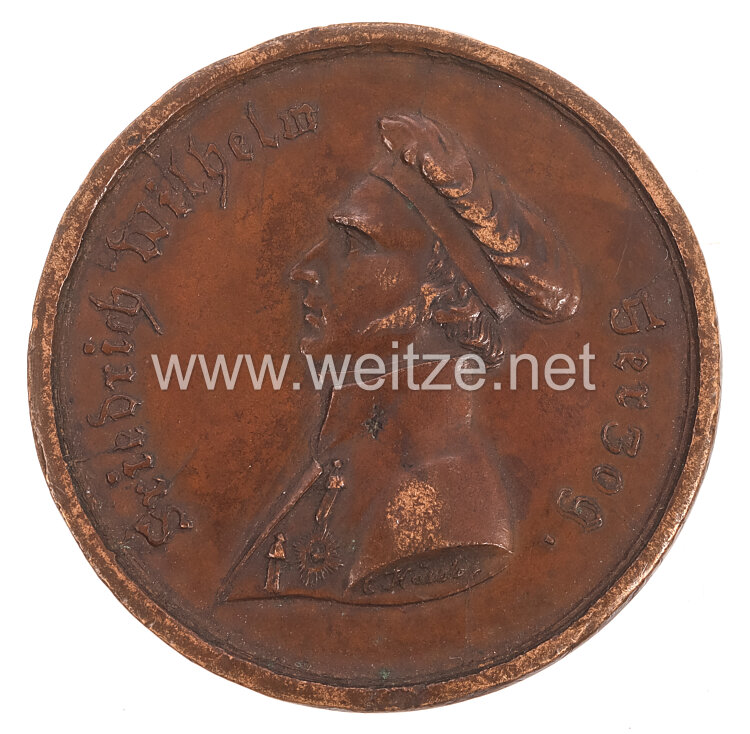
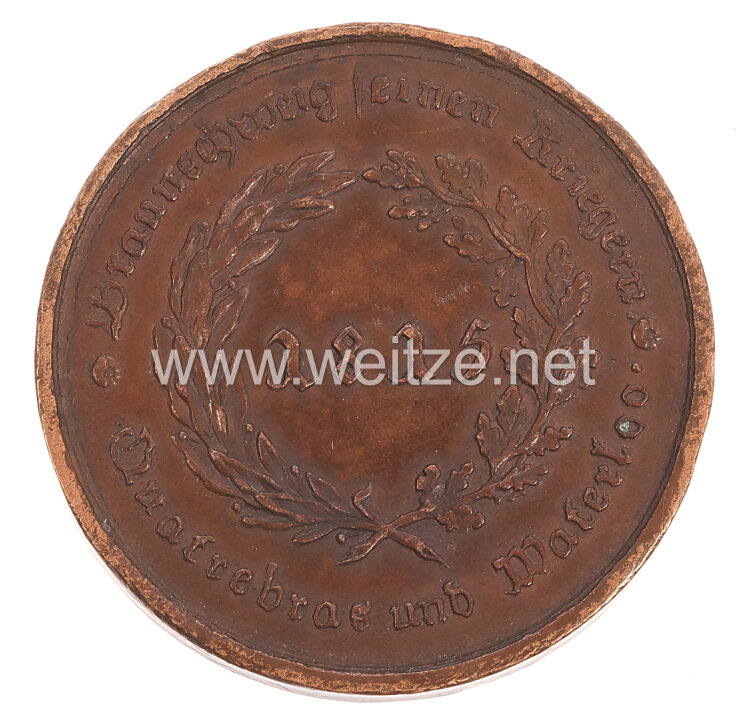
Brunswick Waterloo Medal 1818 - without Edge Inscription

Manufactured from cannon bronze, die engraver: C. Häseler, without suspension loop and ring.

452791
450,00

Brunswick Waterloo Medal 1818 - without Edge Inscription

The Brunswick Waterloo Medal of 1818 represents one of the most significant German military decorations from the Napoleonic era. This medal without edge inscription was created to honor the Brunswick soldiers who participated in the Wars of Liberation against Napoleon Bonaparte, particularly at the Battle of Waterloo on June 18, 1815.

Duke Friedrich Wilhelm of Brunswick, known as the “Black Duke,” had already formed a free corps against Napoleonic rule in 1809. After his heroic death at the Battle of Quatre-Bras on June 16, 1815, two days before Waterloo, his son Karl II continued the tradition and instituted this commemorative medal.

The medal was designed and executed by the die-cutter C. Hästeler, a talented engraver who served the Duchy of Brunswick. A particularly symbolic feature of this decoration is its material: the medal was made from captured cannon bronze, presumably from French artillery pieces seized during the campaign. This practice gave the medal not only material but also symbolic value as a trophy of victory.

Various versions of this medal exist. The version described here without edge inscription differs from other issues that bore the recipient's name on the rim. This unnamed variant could have been either an earlier issue or a version for specific recipient groups. The absence of suspension loop and ring suggests that this is either a specimen that was subsequently altered, or a special striking, possibly intended as an honorary gift or for archival purposes.

The obverse of the medal typically displays the portrait of the fallen Duke Friedrich Wilhelm, while the reverse frequently references the Battle of Waterloo. The artistic execution reflects the neoclassical style of the period, with clear lines and a dignified representation befitting the solemnity of the occasion.

The Brunswick troops played a remarkable role in the Battle of Waterloo. The black-clad corps, wearing the mourning color for the fallen Duke, fought under the command of Colonel Olfermann as part of the Allied forces under the Duke of Wellington. Their bravery and discipline were widely praised by contemporaries.

The institution of the medal in 1818, three years after the battle, occurred during a period when many German states began systematically honoring their veterans of the Wars of Liberation. These decorations served not only for individual recognition of military merit but also for consolidating collective memory and legitimizing the restored princely houses.

From a numismatic perspective, the Brunswick Waterloo Medal is a sought-after collector's item. The use of cannon bronze, the craftsmanship of the striking, and the historical significance make it an important testimony to German military history. Specimens without edge inscription are particularly interesting to researchers as they raise questions about award practices and different emissions.

The medal must be viewed in the context of the broader culture of remembrance surrounding the Napoleonic Wars. It is part of a larger European phenomenon of veteran commemoration and battle remembrance that shaped the political and cultural landscape of the 19th century. In Brunswick itself, the memory of the Black Duke and his soldiers became a central element of regional identity.

Today, specimens of this medal are held in various museums and collections, where they are preserved as important historical artifacts of the Napoleonic era and the German Wars of Liberation. They serve research and the communication of this significant epoch in European history.

r