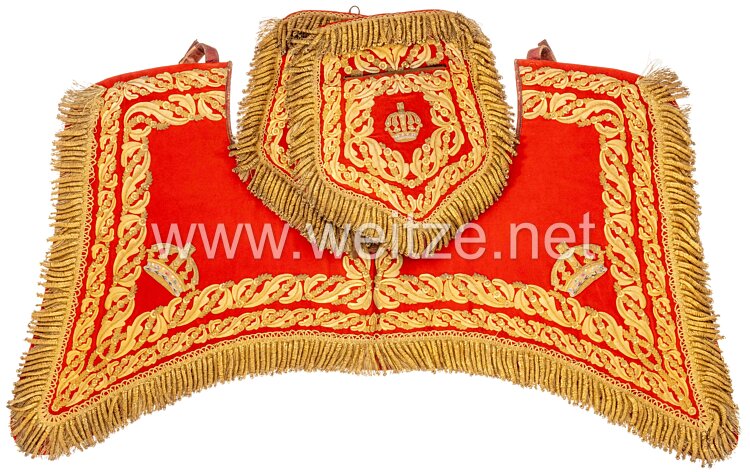
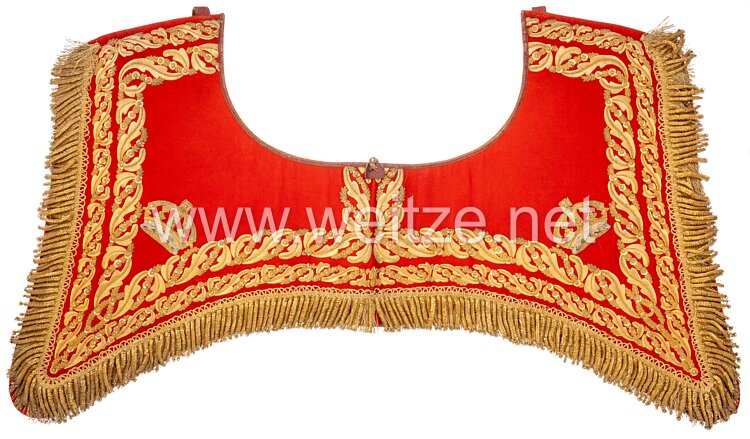
Königreich Hannover Gala-Schabracke und Pistolentaschen aus dem Besitz des Feldmarschalls Ernst August I. von Hannover
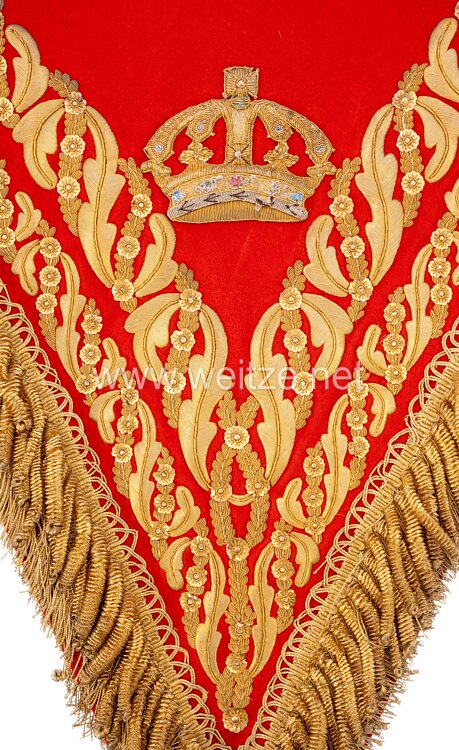
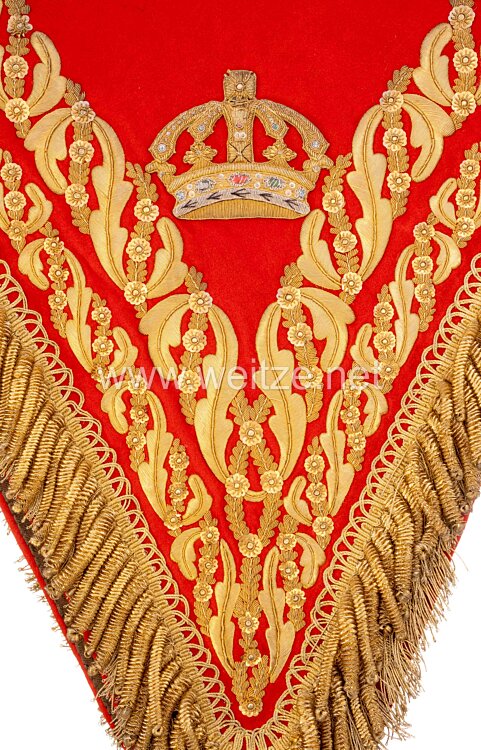
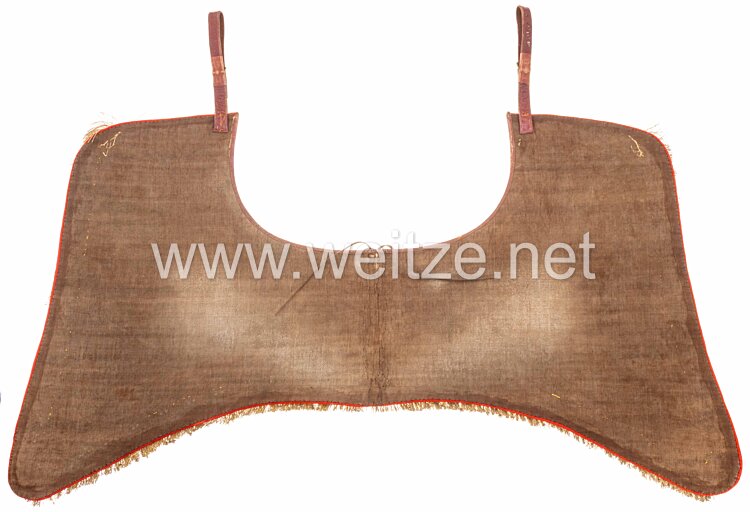
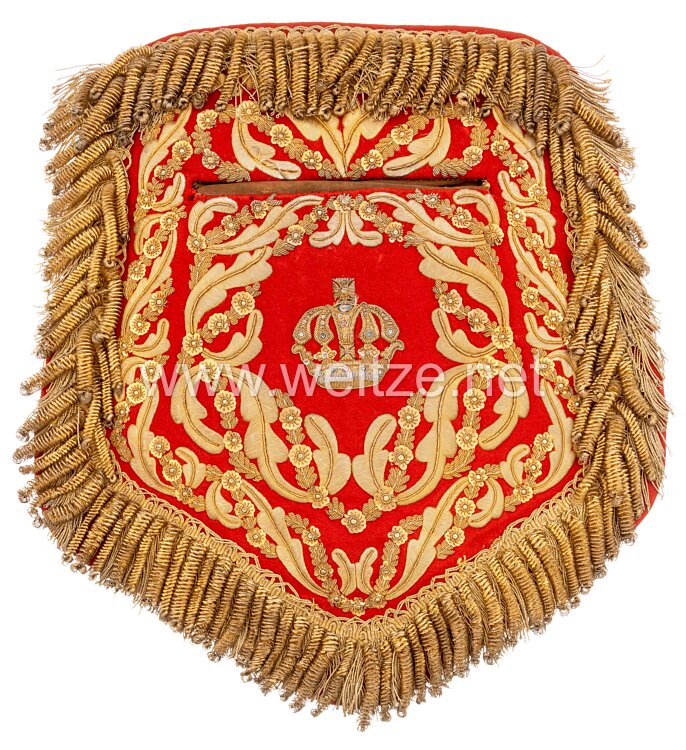
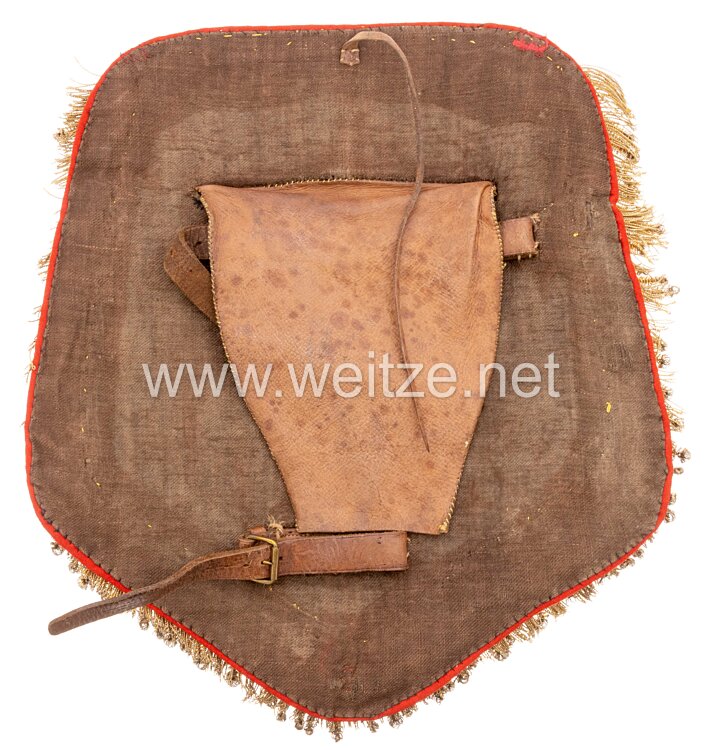
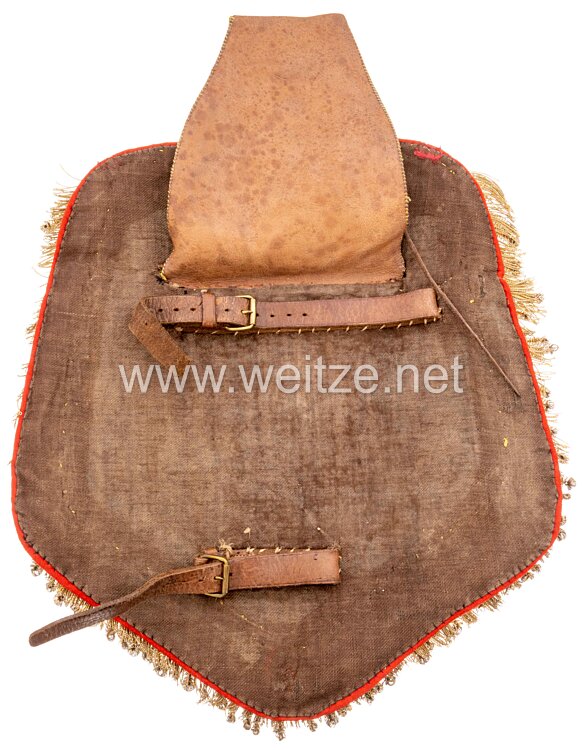
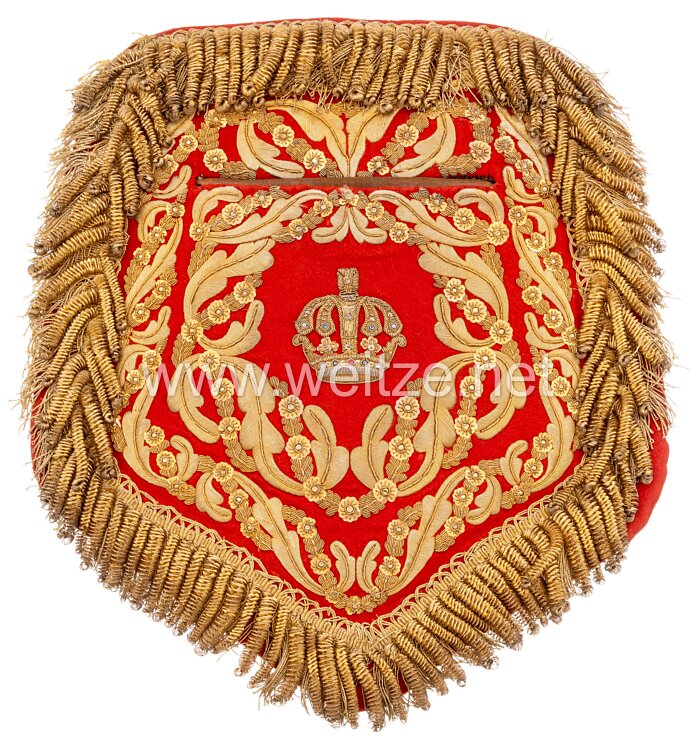
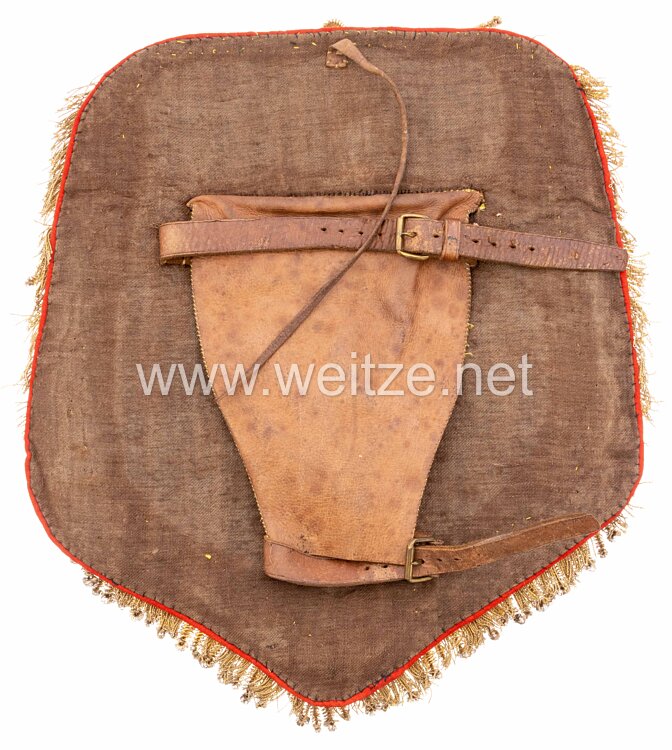
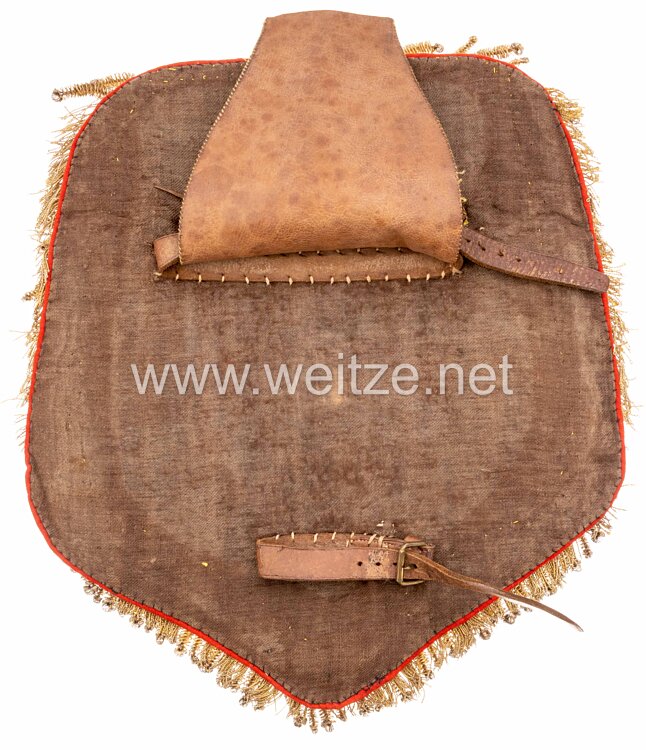
Um 1830/40. Hochelegante und exquisit gefertigte Satteldecke und Pistolentaschen aus Leder, die Schauseiten mit rotem Tuch besetzt, die Oberkante eingefasst in Saffianleder, das Tuch besetzt mit reichen Goldstickereien, Pailletten und Kantillen, die Schabracke in den Ecken mit großen aufgestickten Kronen, bei den Pistolentasche diese im Zentrum. Auf der Unterseite die Stücke mit braunem Leinentuch. Zustand 2.
Die Schabracke und die Pistolentaschen stammen aus der "Welfen-Auktion" von Sotheby's im Jahre 2005, in der die persönlichen Besitztümer des Hauses Hannover verauktioniert wurden.
Bei der Schabracke und den dazugehörigen Pistolentaschen handelt es sich um ein Unikat, ein weiteres Stück dieser Art ist nicht bekannt. Für den König wurde eine besonders hochqualitative Fertigung und die wertvollsten Materialien verwendet.
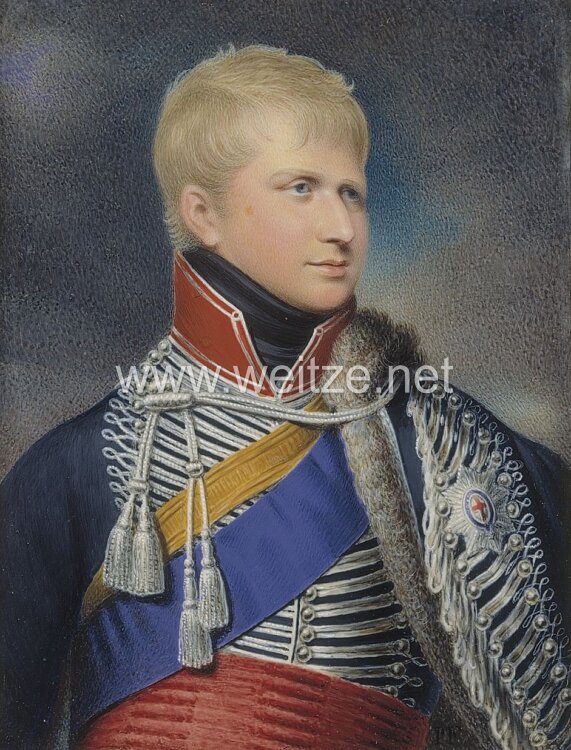
Von 1760 bis 1820 war Georg der III. in Personalunion Kurfürst (später König) von Hannover und König von England. Sein Sohn Ernst August I. (*1771, †1851) trat 1791 in die hannoversche Armee ein und stieg schnell in deren Rängen auf. Während des ersten Koalitionskrieges (1793-97) diente er in Flandern als Kommandeur der 1. Kavalleriebrigade in dem vereinigten Heer welches aus britischen, hannoverschen und österreichischen Truppen bestand. Bereits 1798 wurde er zum Generalleutnant und 1803 zum General ernannt. Während der Besetzung Hannovers von 1803 bis 1813 diente er in der britischen Armee. 1813 war er bei der Völkerschlacht von Leipzig anwesend und wurde am 26. November 1813 zum Feldmarschall ernannt. Es ist davon auszugehen, dass er später die prächtige Schabracke als Zeichen seines herausragenden Standes als Feldmarschall angefertigt bekam.
Die Schabracke und die Pistolentaschen stammen aus der "Welfen-Auktion" von Sotheby's im Jahre 2005, in der die persönlichen Besitztümer des Hauses Hannover verauktioniert wurden.
Bei der Schabracke und den dazugehörigen Pistolentaschen handelt es sich um ein Unikat, ein weiteres Stück dieser Art ist nicht bekannt. Für den König wurde eine besonders hochqualitative Fertigung und die wertvollsten Materialien verwendet.
Von 1760 bis 1820 war Georg der III. in Personalunion Kurfürst (später König) von Hannover und König von England. Sein Sohn Ernst August I. (*1771, †1851) trat 1791 in die hannoversche Armee ein und stieg schnell in deren Rängen auf. Während des ersten Koalitionskrieges (1793-97) diente er in Flandern als Kommandeur der 1. Kavalleriebrigade in dem vereinigten Heer welches aus britischen, hannoverschen und österreichischen Truppen bestand. Bereits 1798 wurde er zum Generalleutnant und 1803 zum General ernannt. Während der Besetzung Hannovers von 1803 bis 1813 diente er in der britischen Armee. 1813 war er bei der Völkerschlacht von Leipzig anwesend und wurde am 26. November 1813 zum Feldmarschall ernannt. Es ist davon auszugehen, dass er später die prächtige Schabracke als Zeichen seines herausragenden Standes als Feldmarschall angefertigt bekam.