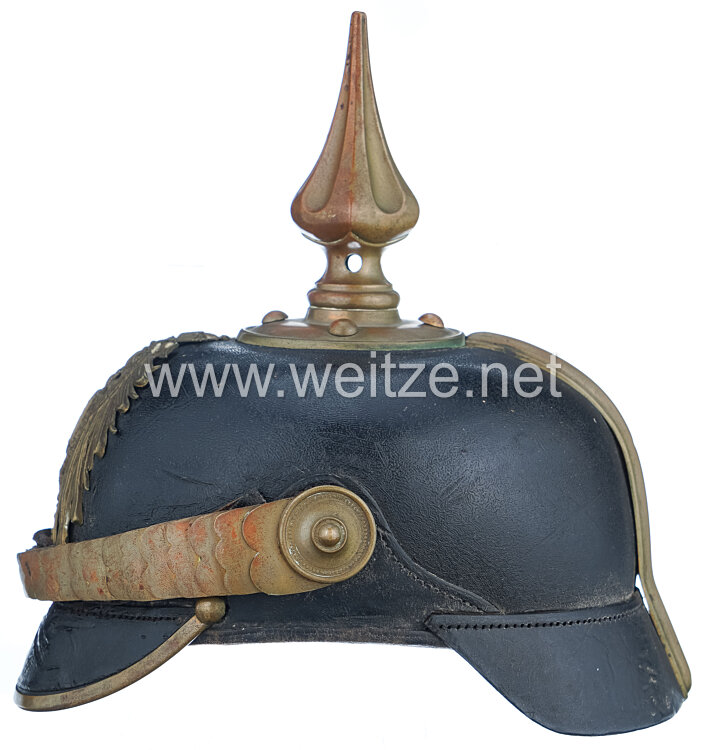
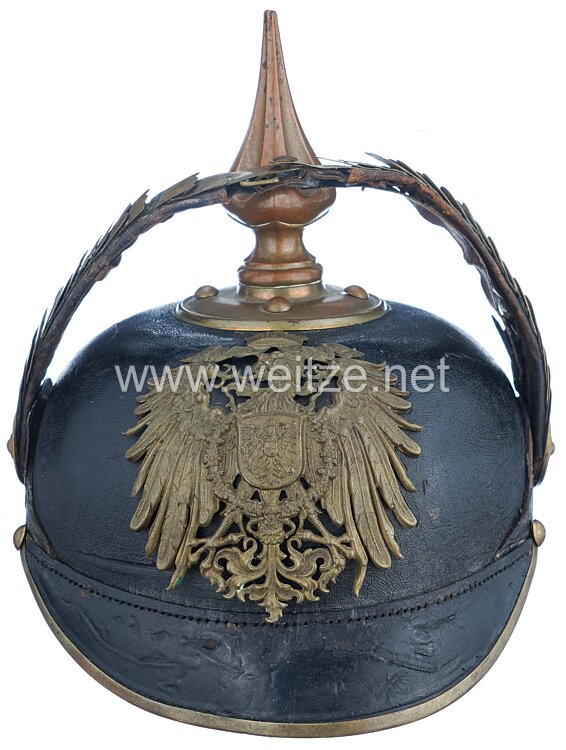
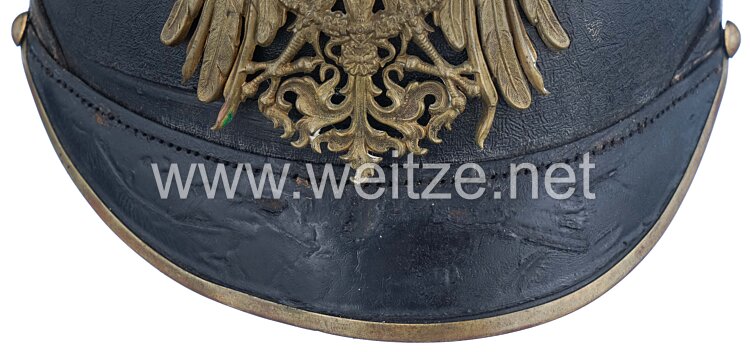
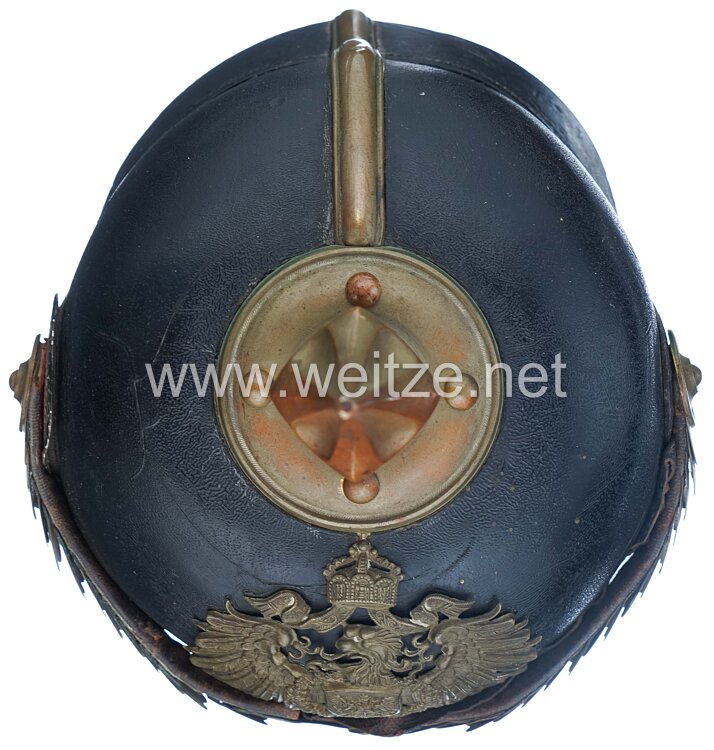
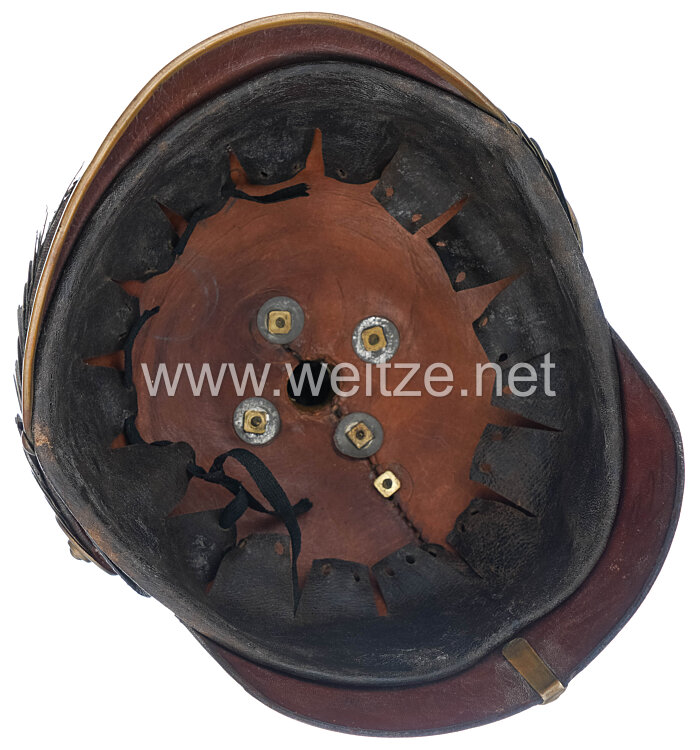
German Empire Pickelhaube for Middle-Grade Civil Servants in the Imperial Territories of Elsass and Lothringen
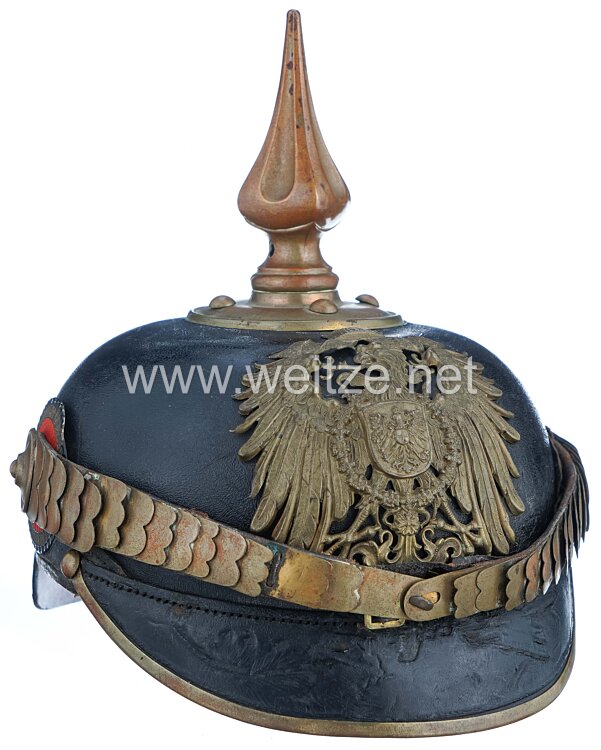
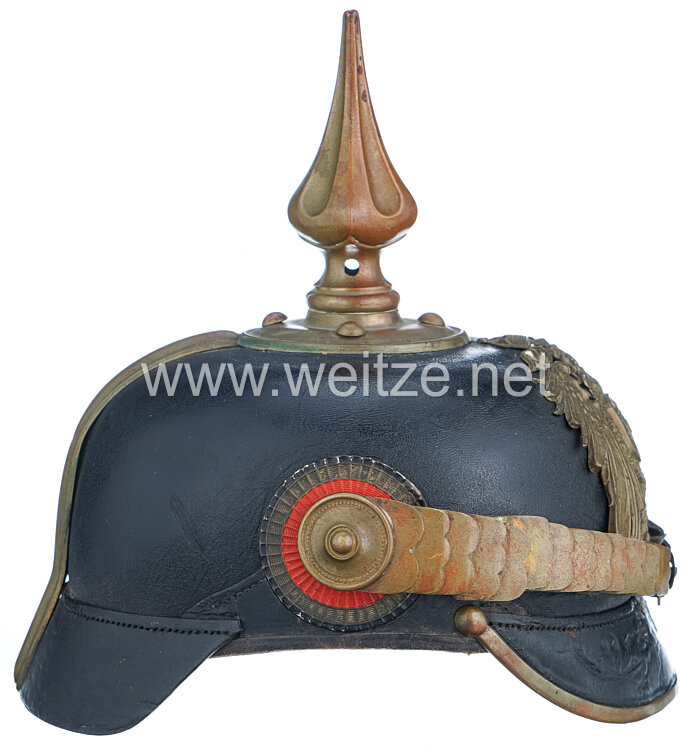
The wearer was most likely a Baden civil servant, as the Reich cockade is in the pattern for Baden officers.
The Pickelhaube for civil servants in the middle service of the Imperial Territories of Alsace-Lorraine represents a fascinating testimony to German administrative history around 1900. Following the Franco-Prussian War of 1870/71, the formerly French territories of Alsace and Lorraine were placed directly under the German Empire as an Imperial Territory (Reichsland) and received a special administrative status.
The Pickelhaube, originally introduced in Prussia in 1842, developed into the characteristic symbol of German state power throughout the Empire. While military Pickelhauben are already well documented, civil service Pickelhauben deserve special attention as they represented the extension of state authority into civil administration. In the German Empire, not only soldiers but also postal, railway, forestry, and administrative officials wore various versions of the Pickelhaube as their service cap.
The Imperial Territories of Alsace-Lorraine constituted an administrative special case. Without the status of a full federal state, they had an administration appointed by the Kaiser that was directly subordinate to the Reich. Middle service civil servants formed the backbone of this administration and were responsible for the practical implementation of imperial policy in the culturally French-influenced territories.
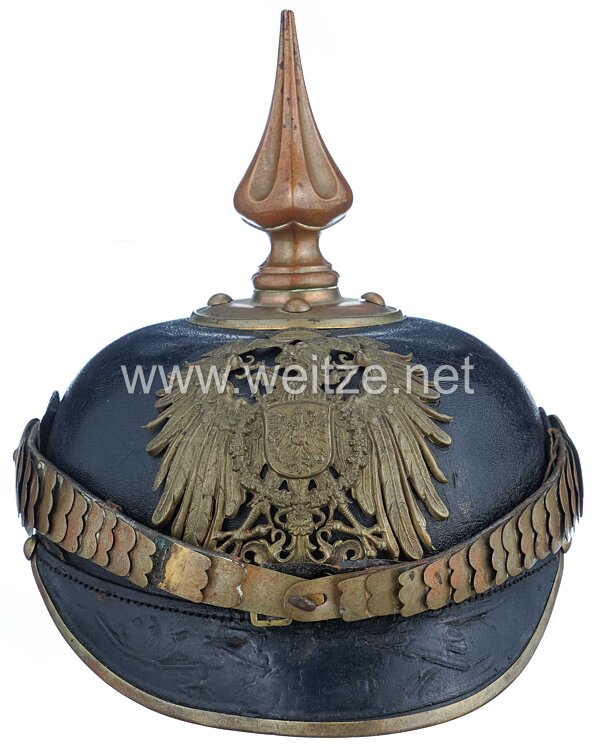
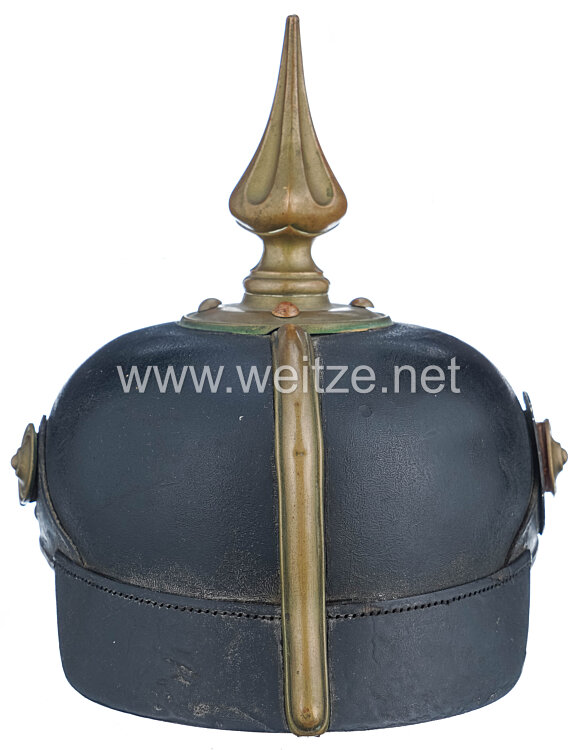
The technical features of this Pickelhaube reveal much about the rank and status of its wearer. The Imperial Eagle on the front symbolized direct allegiance to the Reich, in contrast to the state coats of arms of other German states. The flat scale chains on rosettes were typical of civil service versions and differed from the chin straps used on military helmets. Particularly significant is the fixed service spike on a round base with ball-head screws, which specifically identified civil servants, while military personnel wore removable spikes that could be replaced with plume holders for parades.
The presence of the Reich cockade in officer quality raises interesting questions. The cockade, in the black-white-red imperial colors, was normally manufactured in various quality grades: simple cloth versions for enlisted men, lacquered tin versions for officers. The use of officer quality on this civil service helmet indicates elevated status within the middle service. The connection to Baden, as noted in the description, is plausible since Badensian officials were frequently deployed in the Imperial Territories to strengthen the administration.
The lasched leather lining in officer quality underscores the high-quality character of this headgear. The lasching process, in which leather strips were attached to a textile backing, offered better wearing comfort and ventilation than simple versions. The handwritten size notation “57” corresponds to the German hat sizing system and shows individual fitting.
Historically considered, this Pickelhaube reflects the efforts of the German Empire to establish a functioning administration in the newly acquired territories and to advance integration into the imperial structure. The civil servants who wore such helmets were visible representatives of German state power in a region that never fully relinquished its French identity.
The period around 1900 marked the height of the Wilhelmine era, when the German Empire under Kaiser Wilhelm II consolidated its power. The Pickelhaube became a worldwide symbol of German militarism, but its use in the civil service demonstrates the penetration of military aesthetics into all areas of the state apparatus.
After World War I and the return of Alsace-Lorraine to France in 1918, such objects became historical relics of a vanished epoch. Today, well-preserved civil service Pickelhauben from the Imperial Territories are rare and document a specific aspect of German administrative history in a contested border region.