Tin Toy - War Tank

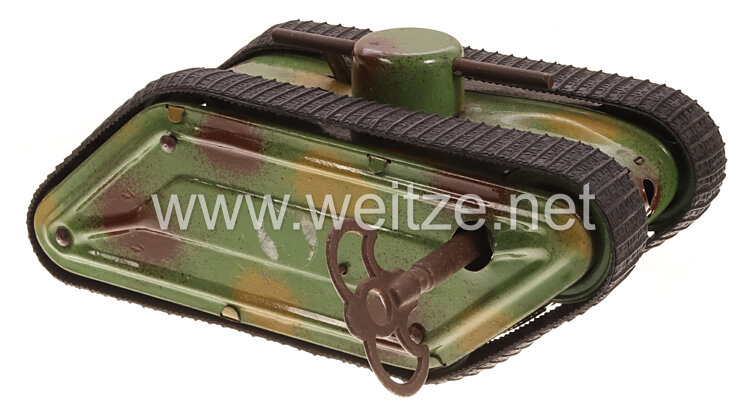
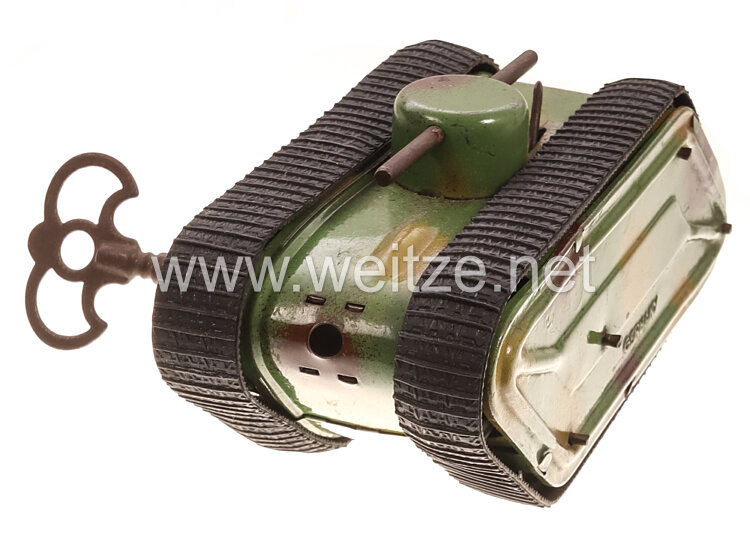
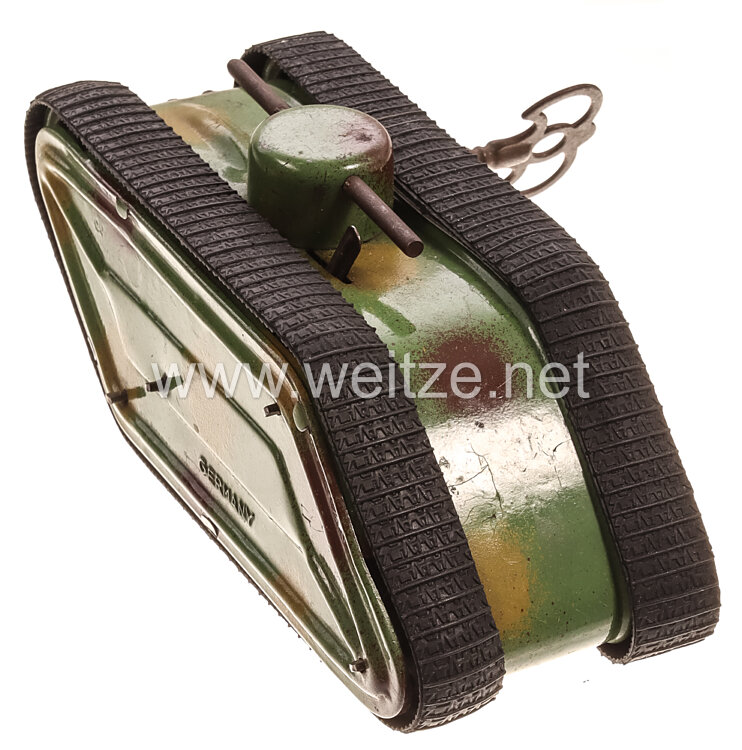
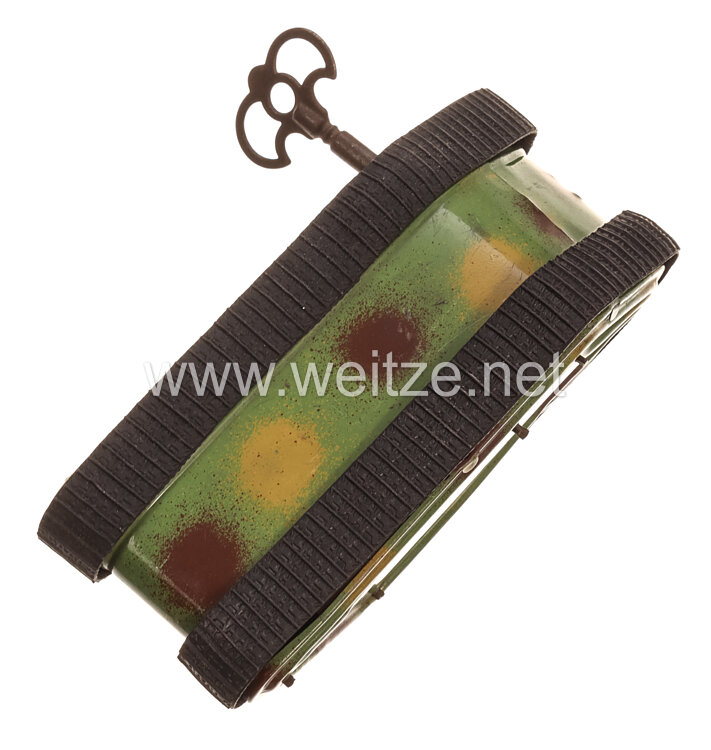
, marked GERMANY, in mimicry camouflage paint finish, 17 x 7.5 cm, with key, functional, with original rubber tracks, condition 2-.
456689
140,00

Tin Toy - War Tank

Tin Toy Tanks: Between Children's Playthings and Military Propaganda in the 20th Century

The present object, a mechanical tin toy tank marked “GERMANY,” represents a fascinating intersection between the toy industry, military aesthetics, and societal indoctrination. With its dimensions of 17 x 7.5 cm, functional wind-up mechanism, and original rubber tracks, this piece embodies the highly developed German toy-making tradition of the early to mid-20th century.

The German Tin Toy Industry

Germany established itself as early as the 19th century as the world's leading manufacturer of tin toys. Cities such as Nuremberg, Fürth, and the Thuringian toy-making centers around Sonneberg developed into internationally renowned production sites. Companies like Märklin, Bing, Günthermann, Tipp & Co., and Arnold created technically sophisticated toys distinguished by precision and attention to detail.

The manufacture of military toys had a long tradition in Germany. Even before World War I, German manufacturers produced tin soldiers and military toys that served both the domestic market and export. The mimicry camouflage paint (also called disruptive camouflage) on the present tank suggests a production period during or after World War I, when camouflage patterns were first systematically employed in military operations.

Military Toys in the Interwar Period

After World War I, the German toy industry experienced remarkable continuity despite the economic difficulties of the Weimar Republic. While the Treaty of Versailles of 1919 drastically restricted German military power, it had no direct impact on the production of toy tanks. Ironically, the manufacture of military toys flourished precisely during this period, as Germany itself was permitted only limited actual tank forces.

Mechanical wind-up toys with spring drives and key mechanisms reached their technical zenith in the 1920s and 1930s. The use of rubber tracks instead of tin tracks represented an innovation that enabled better traction and more realistic movement.

The Third Reich and Toy Tanks

With the Nazi seizure of power in 1933, military toys acquired a new ideological dimension. Nazi propaganda deliberately used toys to militarize youth. Toy tanks became part of a comprehensive strategy to prepare children for a militarized society. The Hitler Youth and other Nazi organizations explicitly promoted “martial toys.”

Many manufacturers adapted their production to political directives and produced models based on real German tank types such as the Panzer I, Panzer II, or later the Panzer IV. The marking “GERMANY” on the present piece indicates export goods, as “Deutschland” or the manufacturer's name was typically used for the German domestic market.

Technical and Aesthetic Features

The tank's mimicry camouflage paint reflects real military developments. During World War I, all belligerent nations experimented with camouflage patterns, with broken color patterns in green, brown, and gray predominating. This “disruptive” camouflage was intended to break up the vehicle's outline and make it less visible in the landscape.

Construction with rubber tracks was both practical and cost-effective. Rubber was more flexible than stamped tin tracks and produced less noise during play. The wind-up mechanism with key typically used a clockwork spring that stored energy after winding and transmitted it to the drive wheels through gearing.

Collector and Documentary Value

The indicated condition grade 2- according to the standard collector rating scale suggests a very well-preserved example with only minimal signs of use. Particularly valuable is the completeness with original rubber tracks and functional clockwork mechanism. Many of these toys were intensively played with by children and have not survived or show considerable damage.

Such objects today are important historical documents that provide insight into production techniques, material usage, societal values, and the role of childhood in militarized societies. They document the normalization of military symbolism in everyday life and the systematic introduction of children to martial themes.

Conclusion

The tin toy tank stands as an example of the complex history of German toy production in the 20th century. It combines artisanal quality, technical innovation, and problematic ideological instrumentalization. As a collector's item and historical document, it provides insights into an era when the boundaries between childhood and military preparation were deliberately blurred.