Schaumburg-Lippe Princely House Order Cross 1st Class with Crown, 1890-1918

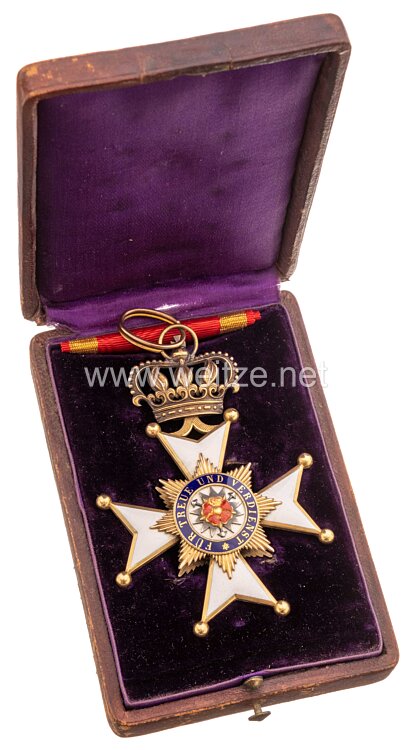
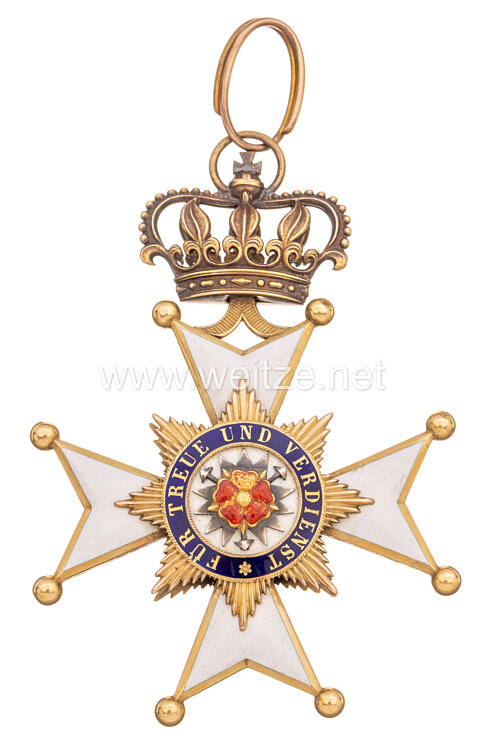
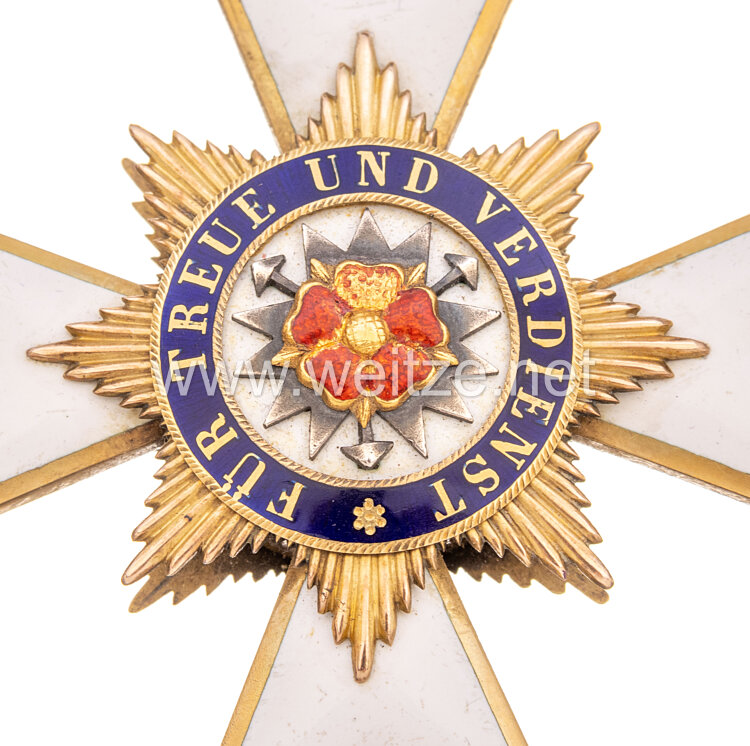
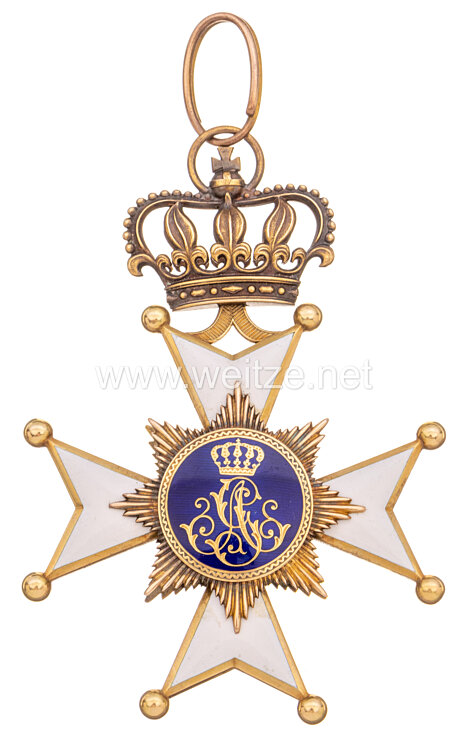
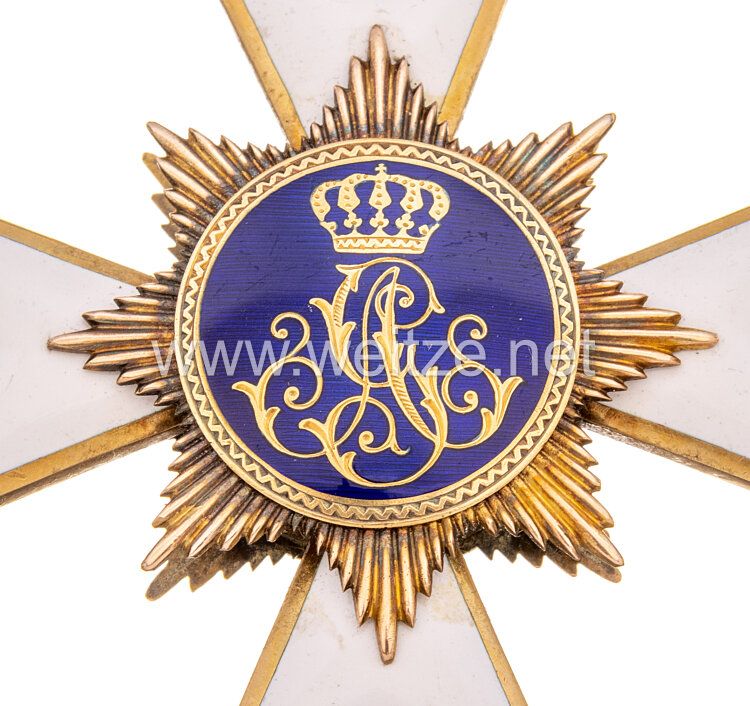
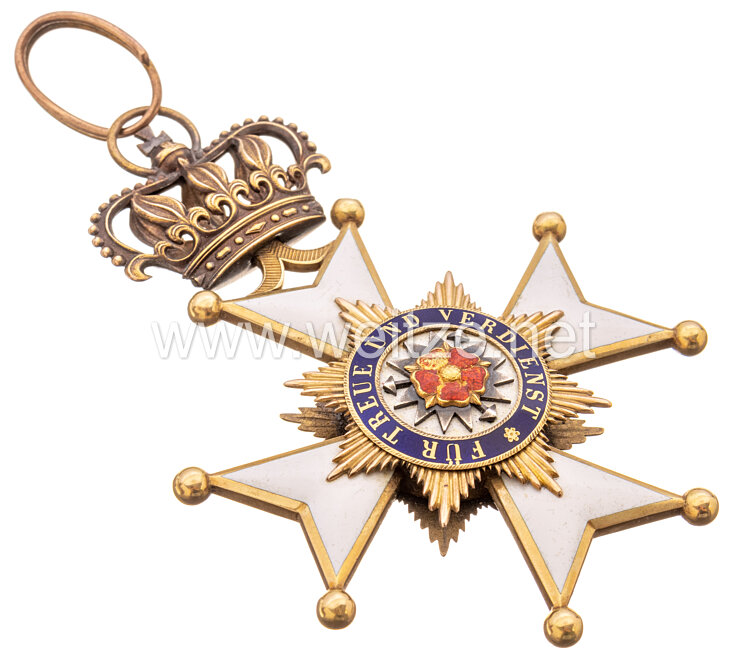
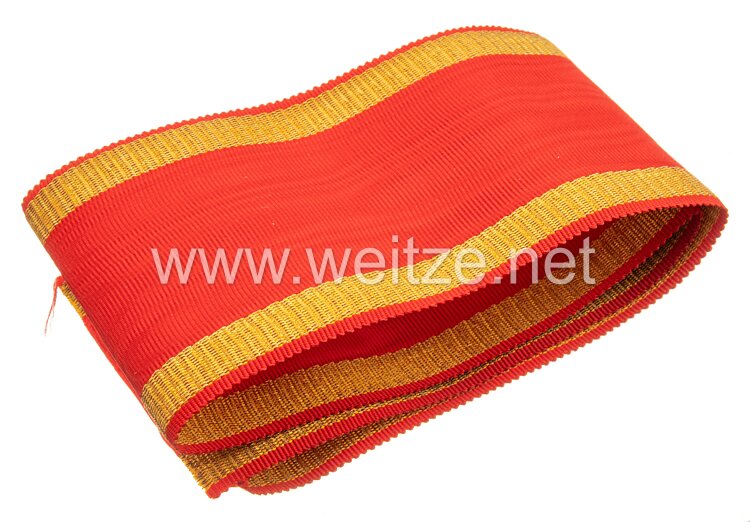
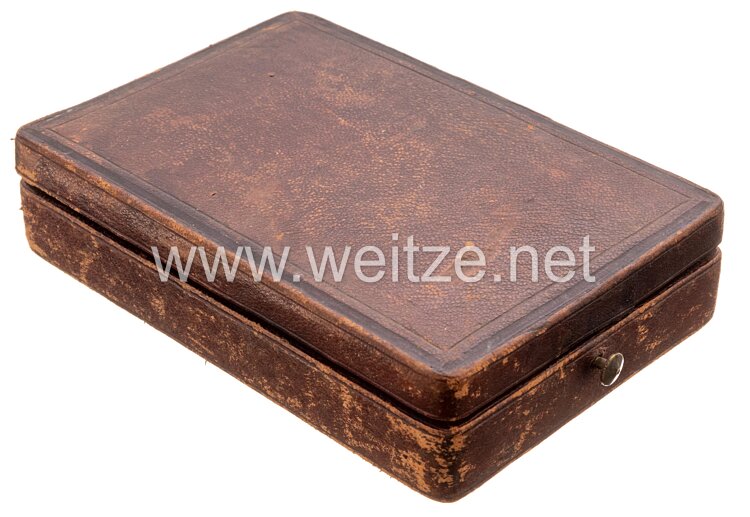
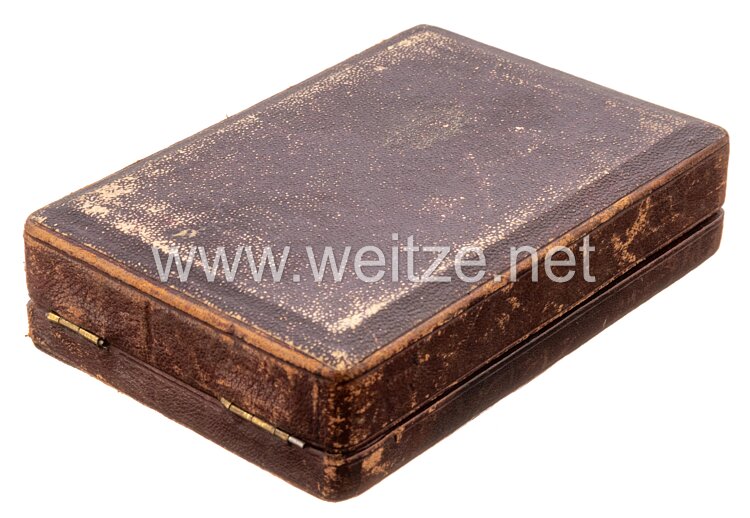
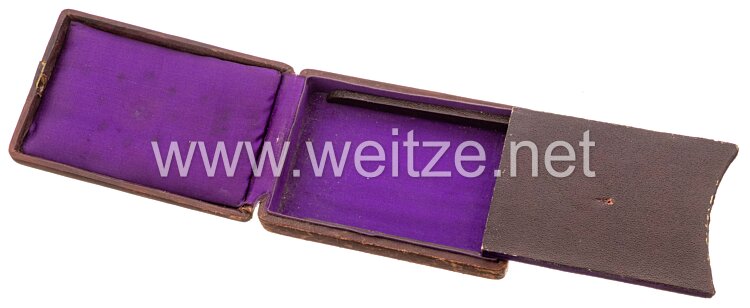
Neck cross. Crafted in gold, finely enameled on both sides, finely worked medallion, the rose in the center with minimal damage, movable pierced crown. Complete with long unworn original neck ribbon in the presentation case. Condition 2+.
452388
8.500,00

Schaumburg-Lippe Princely House Order Cross 1st Class with Crown, 1890-1918

The Princely House Order of Schaumburg-Lippe represents a significant decoration from one of the smaller German principalities that existed until the end of World War I. This 1st Class Cross with Crown embodies the highest grade of this prestigious order and provides unique insights into the order culture of German minor states during the Imperial era.

The Principality of Schaumburg-Lippe was one of the smallest member states of the German Empire, with an area of only approximately 340 square kilometers. Despite its modest size, the princely house maintained an independent order policy and conferred its own decorations, which enjoyed high esteem both within and beyond the principality. The House Order represented the most distinguished decoration that the reigning prince could bestow.

The order was conferred in several classes, with the 1st Class with Crown reserved exclusively for high-ranking personalities. This decoration was worn as a neck order, distinguishing it from lower classes worn as breast orders. The crown above the cross symbolized princely dignity and reinforced the exclusive character of this award.

The artistic craftsmanship of such order decorations reached its zenith during the period from 1890 to 1918. Specialized manufactories and court jewelers produced these awards with meticulous handwork. The present example demonstrates the typical characteristics of this era: The gold construction met the standards of princely house orders, while the bilateral enameling required the highest level of artistic craftsmanship. The enamel technique, in which pulverized glass was fused onto the gold substrate at high temperatures, demanded extraordinary skill and experience.

The central medallion with the rose references the symbolic significance of this flower in the heraldry and iconography of the House of Schaumburg-Lippe. The rose traditionally symbolized purity, virtue, and noble character – qualities expected of order recipients. The pierced movable crown represents a special technical feature that underscores the high quality of manufacture. This movable construction prevented damage during wear while simultaneously demonstrating the technical mastery of the goldsmiths.

The original neck ribbon and the presentation case complete this decoration as a historical ensemble. Such complete sets are extremely rare today, as many orders have been separated from their original presentation accessories over the decades. The unworn neck ribbon suggests that this decoration may have been conferred shortly before the end of the monarchy or remained as a reserve example in princely possession.

The conferral practice of such high decorations followed strict protocol rules. The 1st Class with Crown was typically awarded to members of reigning houses, high government officials, generals, and diplomats who had acquired special merit for the princely house or the country. Conferral was made personally by the reigning prince and documented through a bestowal certificate.

With the end of the monarchy in November 1918 and the abdication of the German princes, the official conferral practice of these orders also ended. The House of Schaumburg-Lippe continues to exist today, but the historical house orders are no longer conferred as state decorations. This makes examples from the Imperial era significant historical documents of a vanished epoch.

From a cultural-historical perspective, this order cross represents the complex hierarchy and pronounced class consciousness of the German Empire. The various order classes precisely reflected the social ranking and served as visible signs of status, merit, and princely favor. For the bearers, such decorations meant not only personal honor but also social and often economic advantages.

The excellent preservation of this example with the condition rating of 2+ makes it a valuable study object for phaleristics and an authentic testimony to German artistic craftsmanship of the Wilhelmine era.