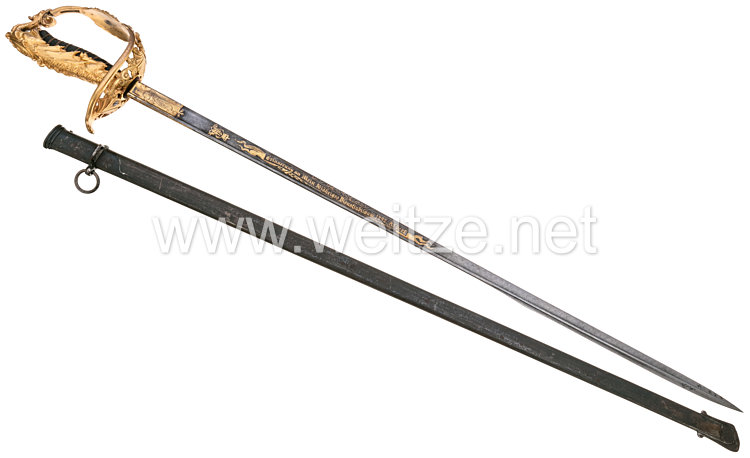
Königreich Sachsen: Prunkvoller Drachenkopfdegen mit Rosendamastklinge als Geschenk König Alberts von Sachsen an General Georg von Criegern aus dem Jahre 1893
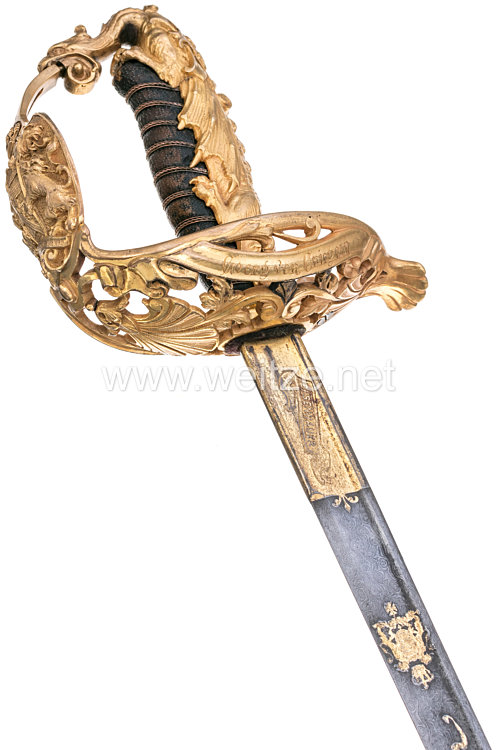
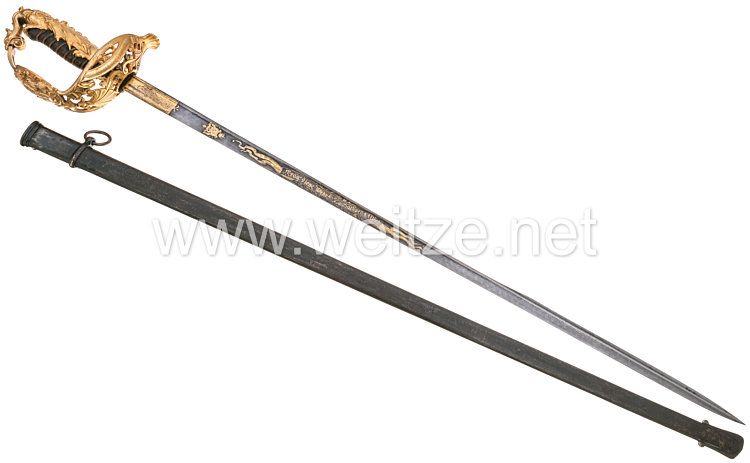
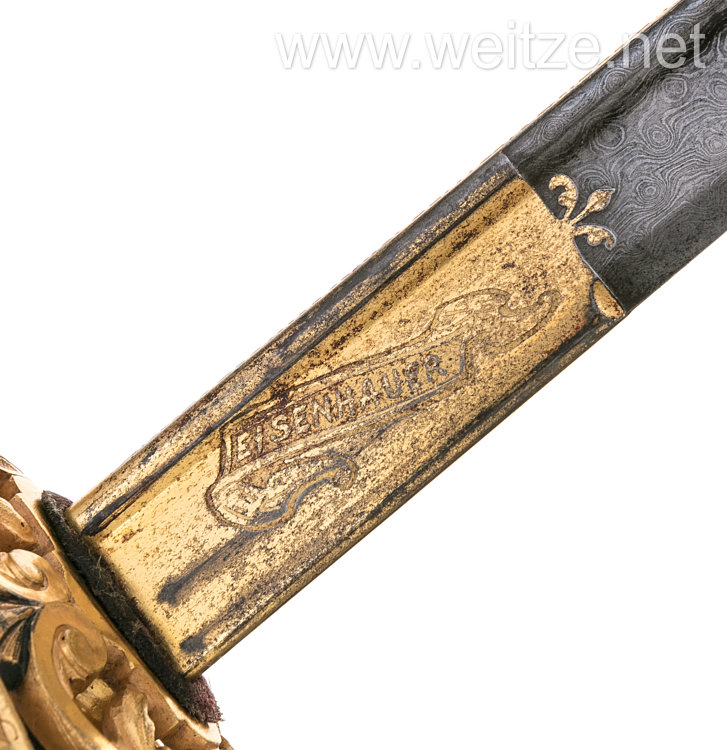
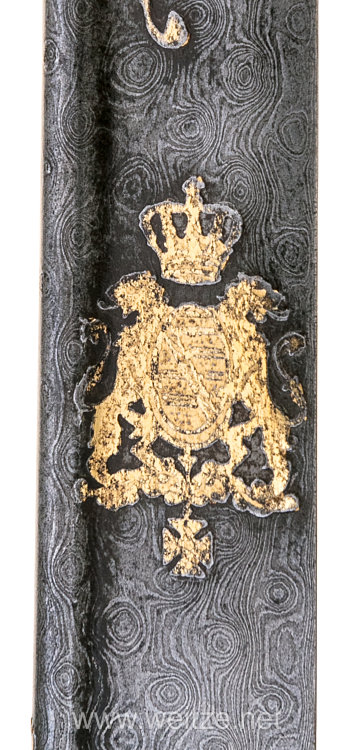
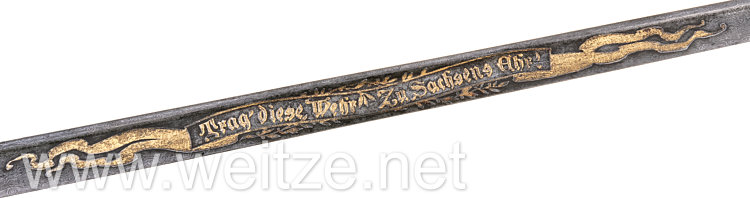
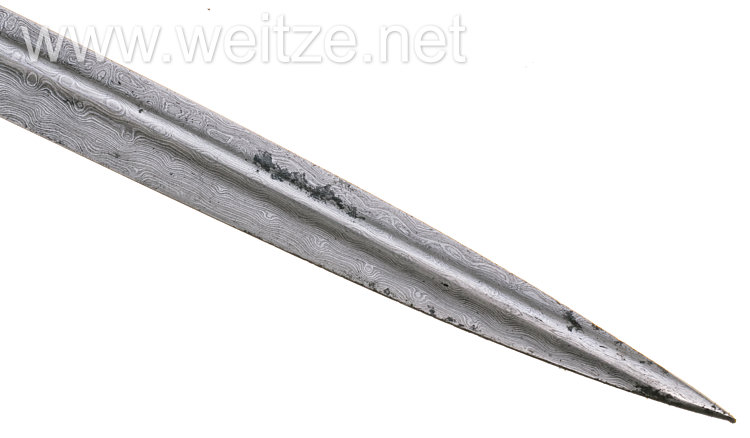
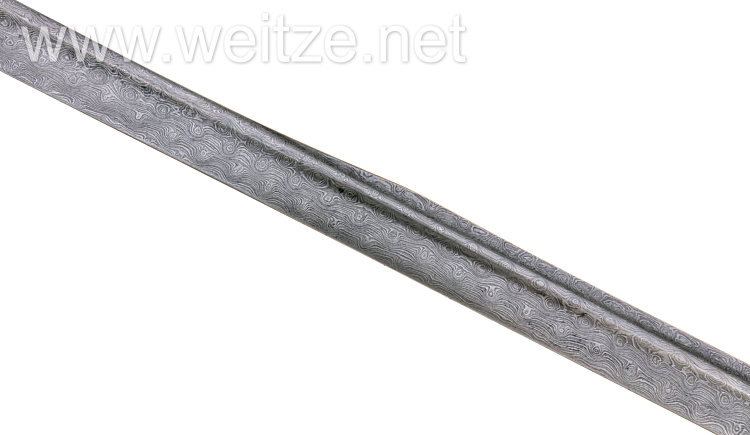
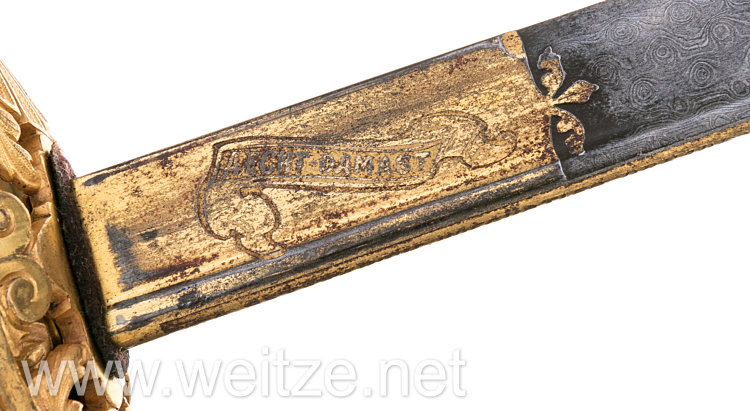
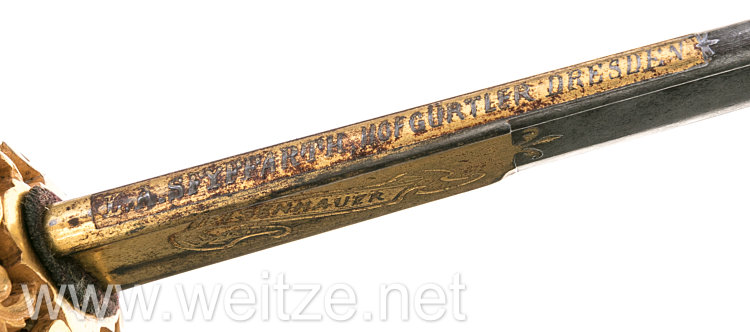
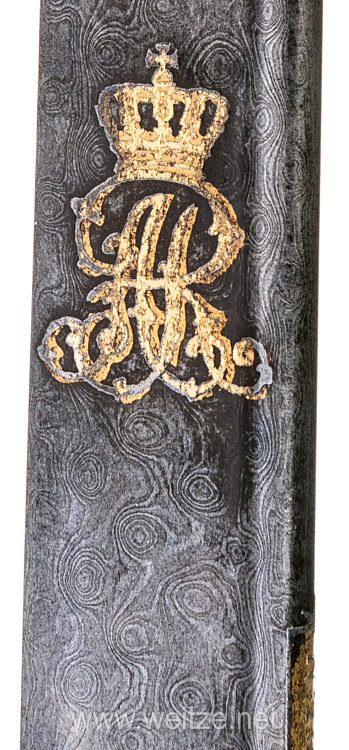
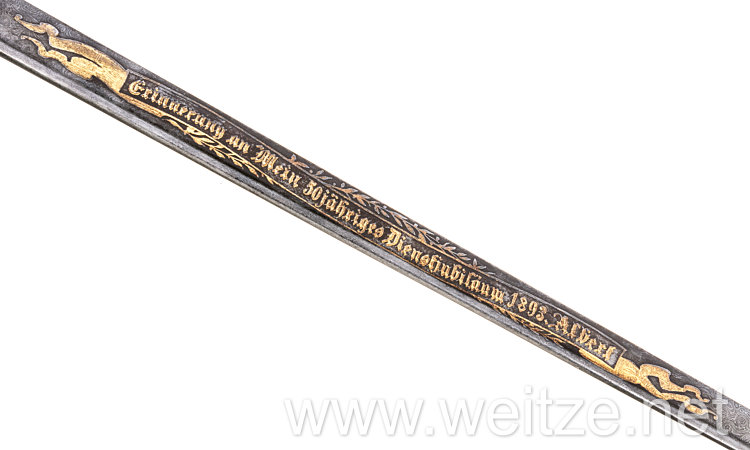
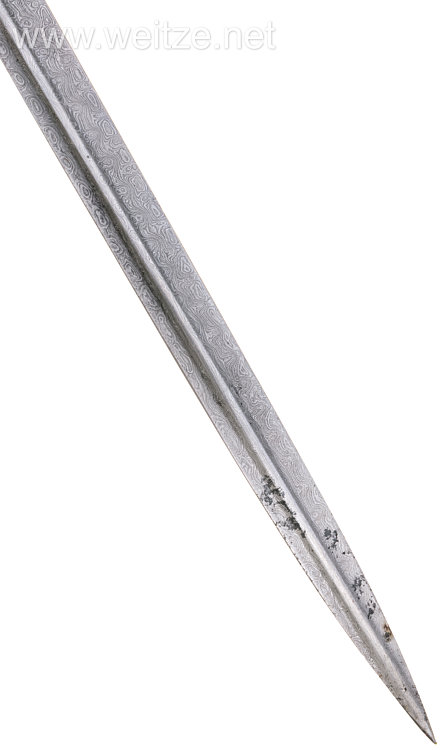
Relativ schmale, echte Damast-Steckrückenklinge mit Schör, Durchmesser an der Klingenwurzel ca. 2,3 cm, der Damast mit feinen Rosen. Die Klinge beidseitig geätzt und vergoldet, terzseitig mit der Devise "Trag' diese Wehr zu Sachsens Ehr!" und quartseitig die Widmung "Erinnerung an Mein 50jähriges Dienstjubiläum 1893. Albert", jeweils im Bandeau. Unterhalb des Widmungsbandeaus die gekrönte Chiffre König Alberts von Sachsen "Krone AR", auf der Gegenseite das Sächsische Staatswappen. Auf der Fehlschärfe umlaufend der Qualitätsnachweis "Eisenhauer Aecht Damast". Auf dem Rücken die Bezeichnung des Lieferanten, bzw. Schwertfegers "L. A. Seyffarth, Hofgürtler Dresden". Die Klinge mit nur wenigen kleinen Flecken, die Vergoldung gut erhalten.
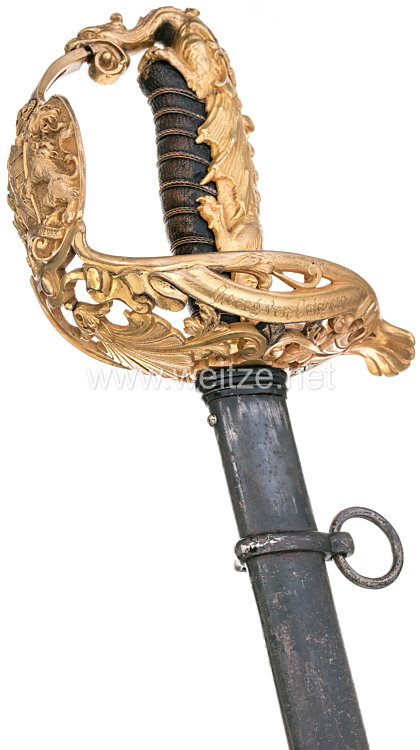
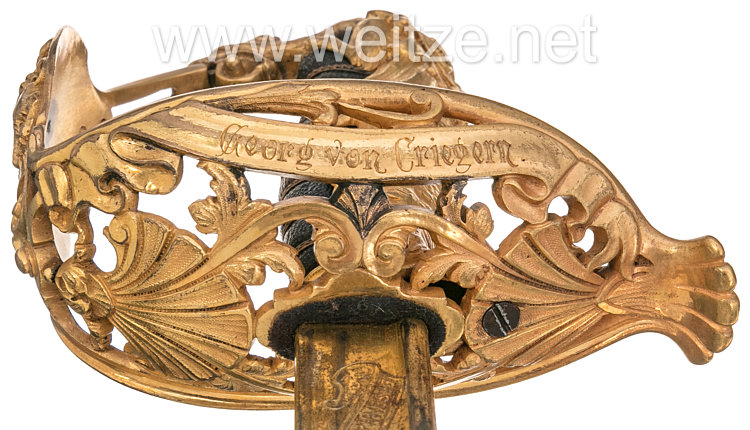
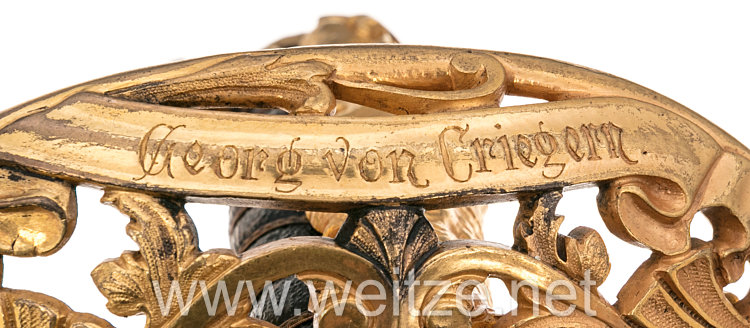
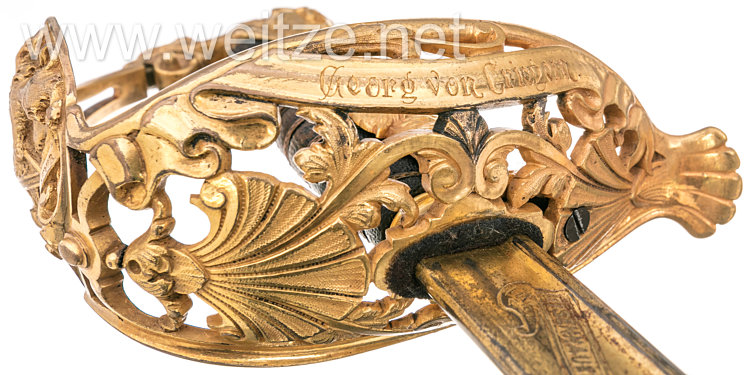
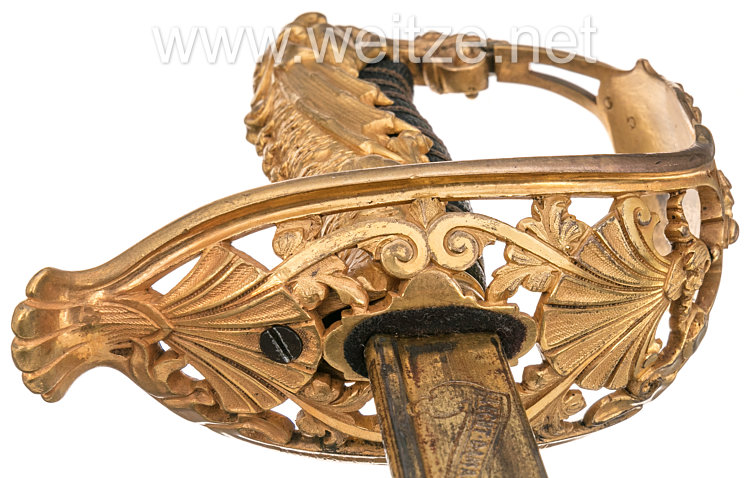
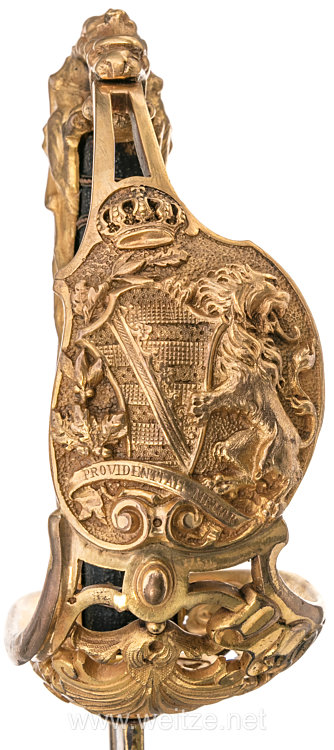
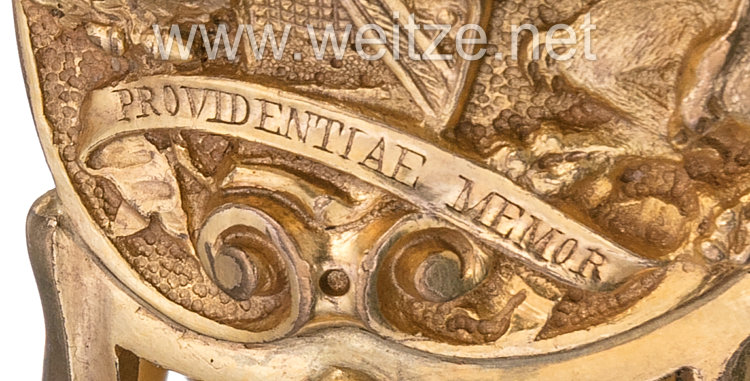
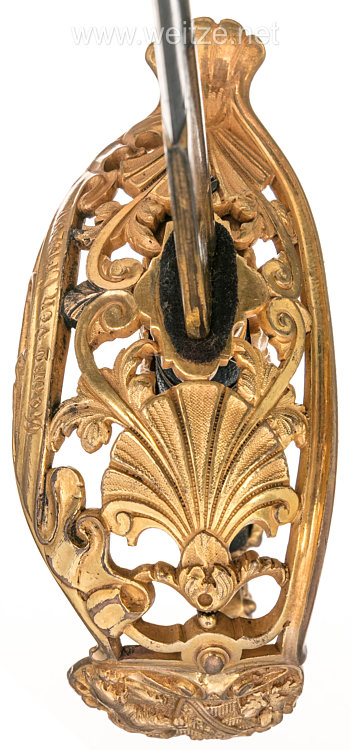
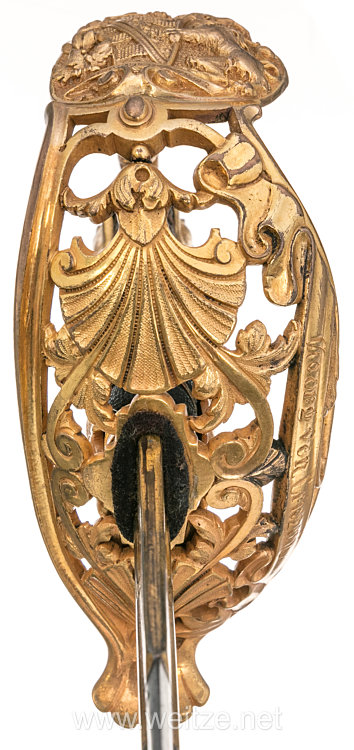
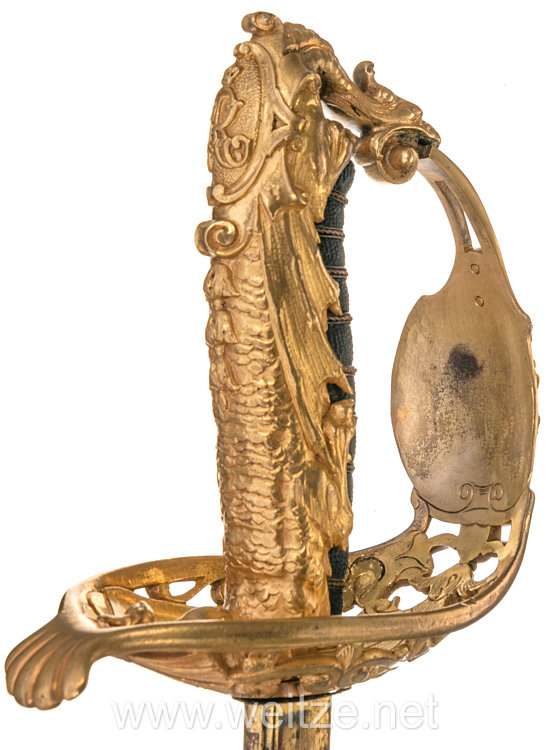
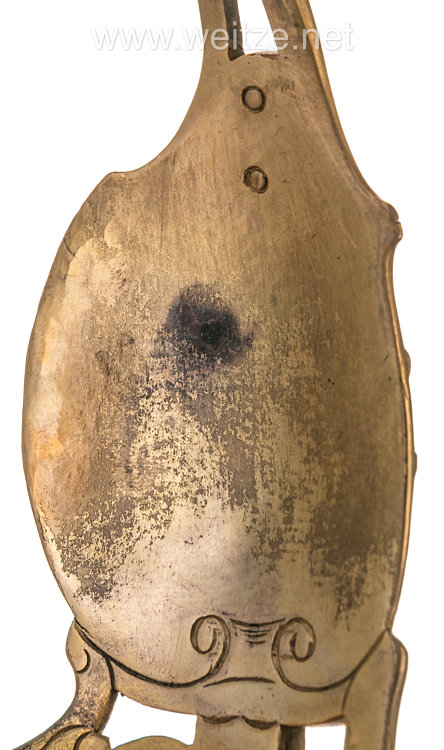
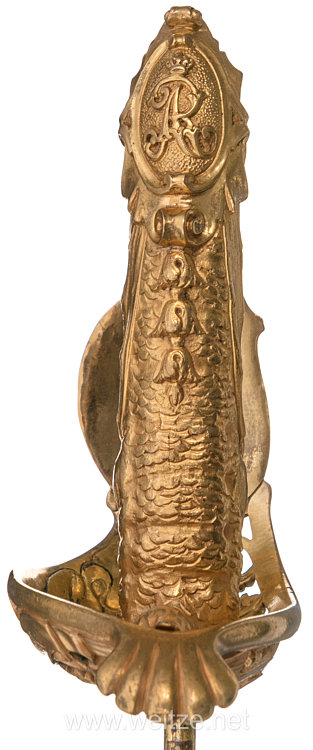
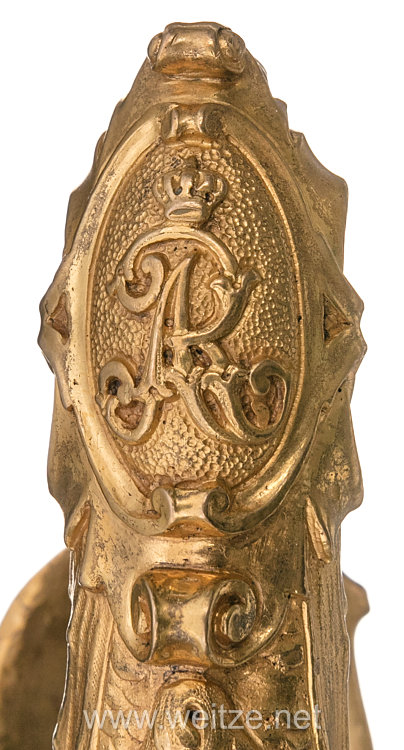
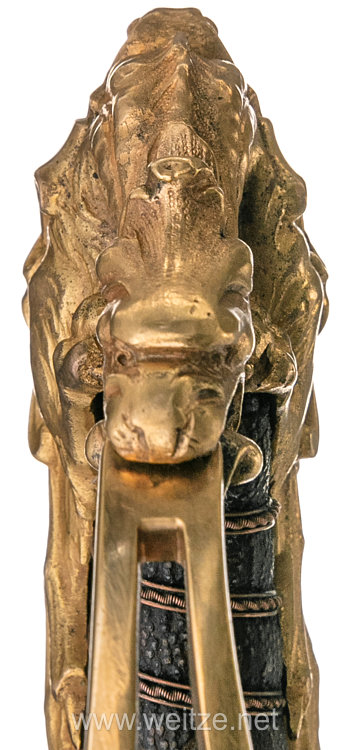
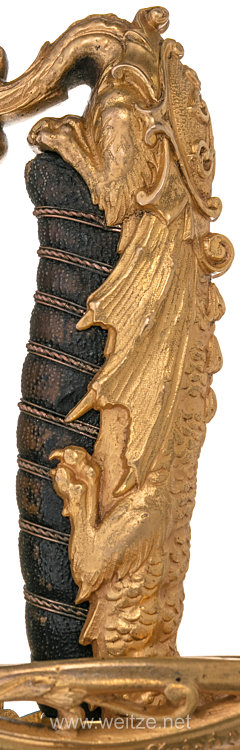
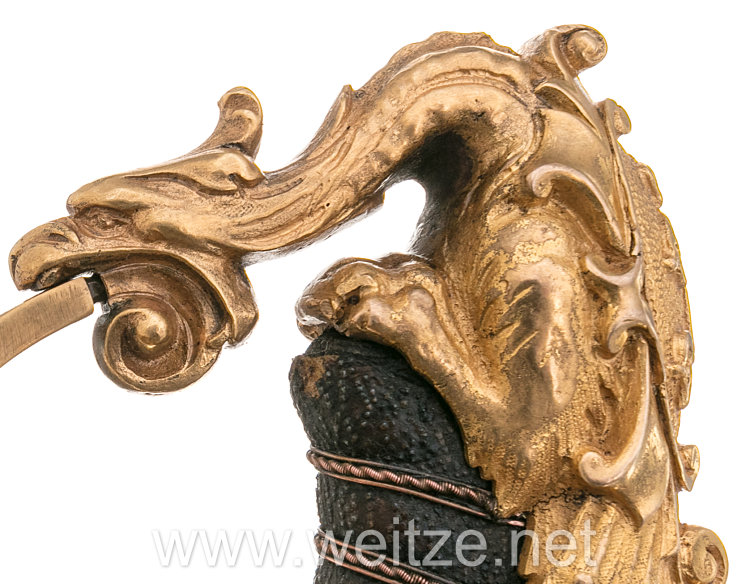
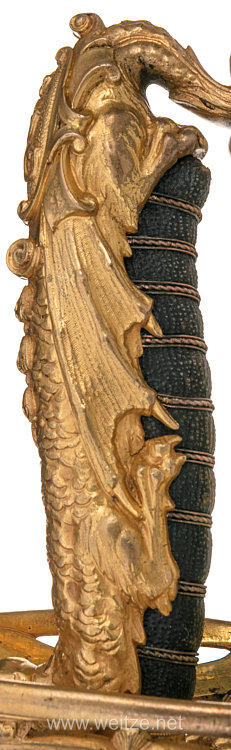
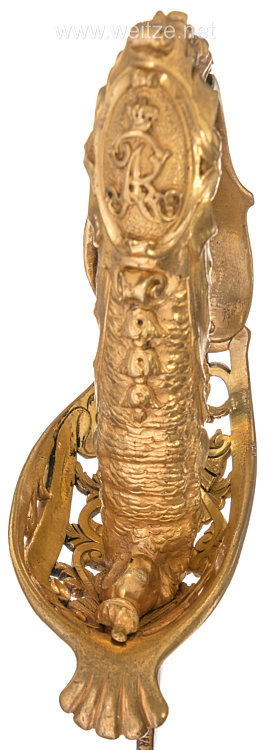
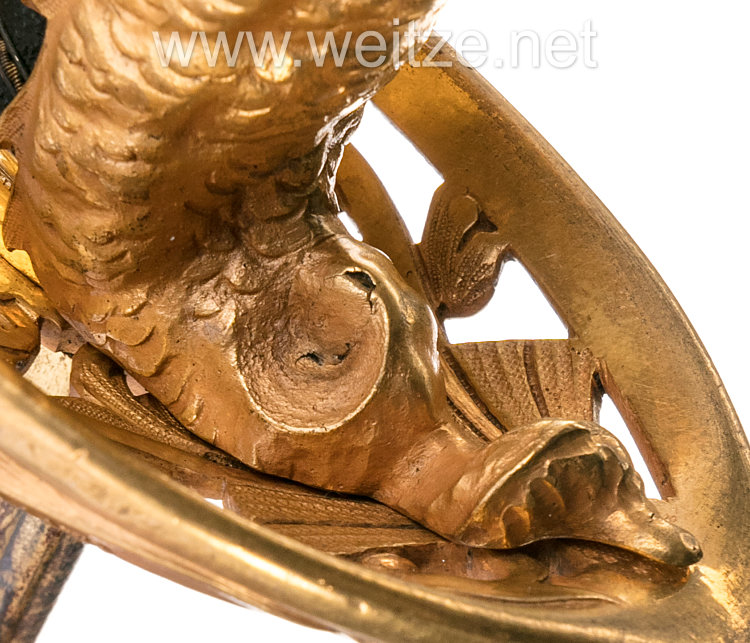
Durchbrochen gearbeitetes, feuervergoldetes und teils poliertes Gefäß. Der Griffrücken in Form eines geflügelten Drachens, der Kopf des Drachens als Knauf gearbeitet, den Griffbügel im Maul aufnehmend, auf dem Rücken der Griffkappe wiederum das Herrscherchiffre König Alberts von Sachsen "Krone AR", der Schwanz des Drachen mit dem Korb verschraubt. Der mit floralen Mustern und Palmetten verzierte Korb vorne mit großem, erhaben gearbeiteten sächsischem Wappen, terzseitig von einem Löwen gehalten, mit dem Spruchband "Providentiae Memor", die Krone separat vernietet, terzseitig im Korb mit Namenszug des Beschenkten "Georg von Criegern". Der Griff mit Fischhauthilze und intakter Drahtwicklung. Die Hilze nur leicht berieben.
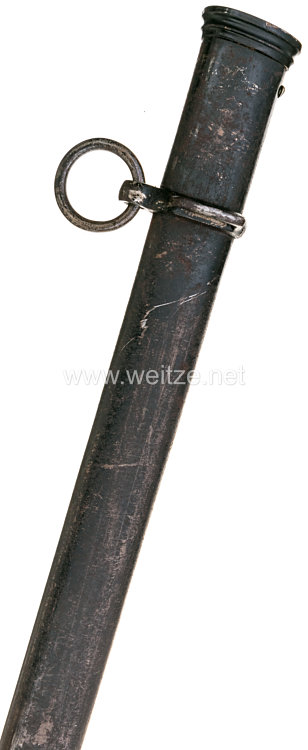
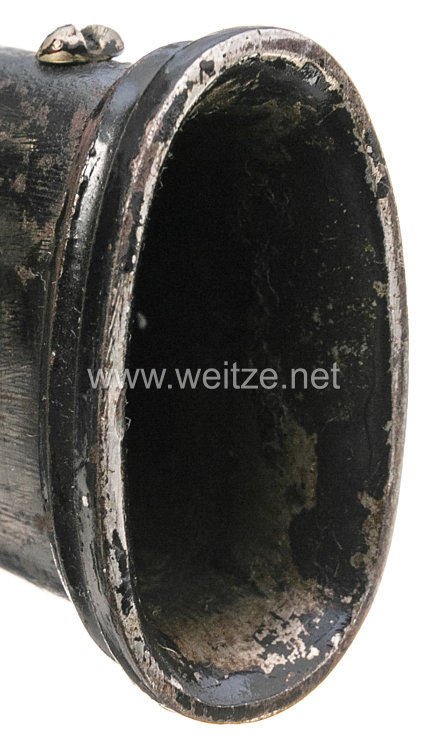
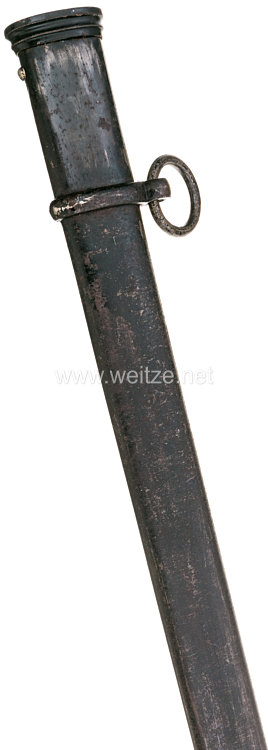
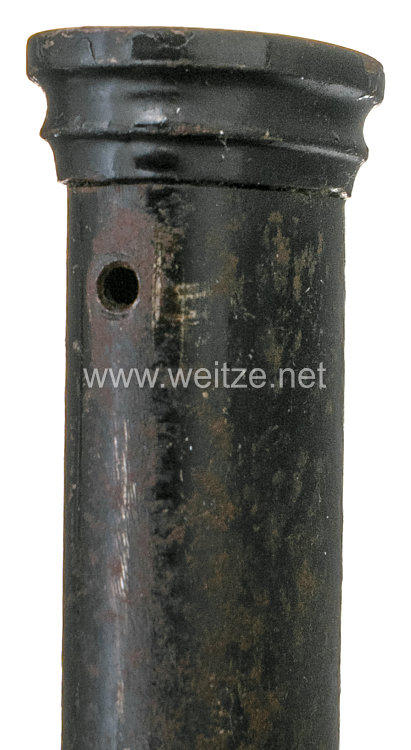
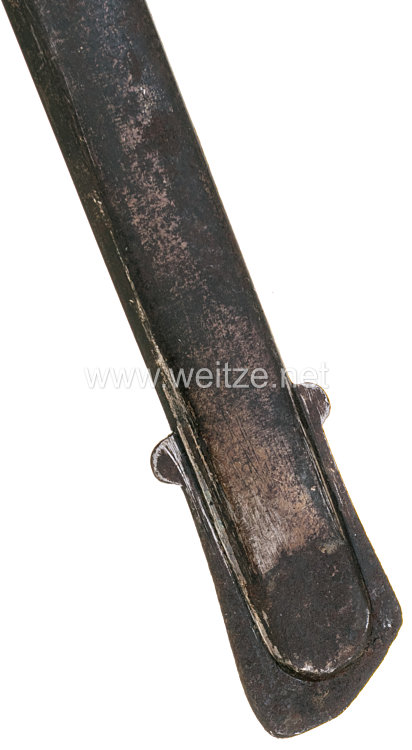
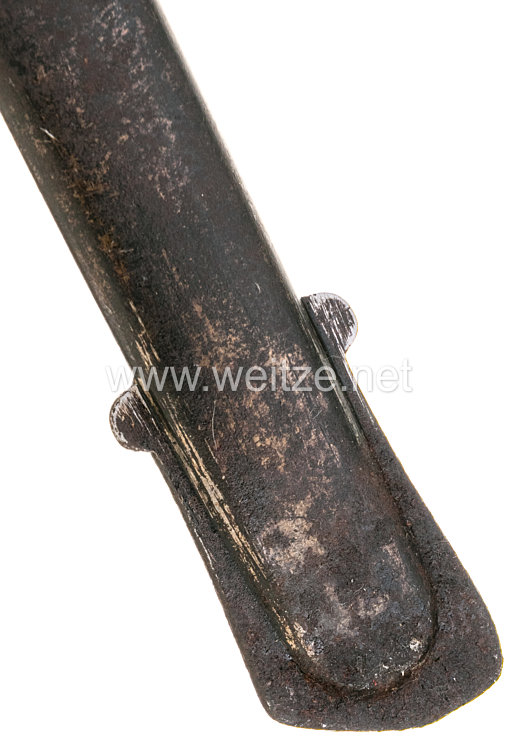
Schwarz brünierte Stahlscheide mit einem Ringband und beweglichen Tragering. Die Lackierung zu ca. 70% erhalten, eine Mundblechschraube fehlt.
Gesamtlänge 105 cm.
Georg von Criegern (*1852, †1941) war Adjutant der Könige Albert, Georg und Friedrich August III. von Sachsen. 1906 wurde er zum Generalleutnant befördert.
Albert von Sachsen (*1828, †1902) aus dem Haus der albertinischen Wettiner war von 1873 bis zu seinem Tode König von Sachsen. Er begann schon früh eine militärische Karriere und nahm an den wichtigsten Kriegen Mitteleuropas im 19. Jahrhundert teil. Schon 1849 zeichnete er sich im Schleswig-Holsteinische Krieg 1848/51 beim Sturm auf die Düppeler Schanzen aus. 1866, im Deutsch-Deutschen Krieg, leitete er die Mobilmachung der sächsischen Armee. Nach dem Friedensschluss 1866 übernahm er das das Kommando über das XII. (I. Königlich Sächsische) Armee-Korps, welches er im Deutsch-Französischen Krieg 1870-71 befehligte. Noch während des Krieges übernahm er den Befehl der Maas-Armee. 1871 wurde er von Wilhelm I. zum ersten nicht-preußischen Generalfeldmarschall ernannt.
Durchbrochen gearbeitetes, feuervergoldetes und teils poliertes Gefäß. Der Griffrücken in Form eines geflügelten Drachens, der Kopf des Drachens als Knauf gearbeitet, den Griffbügel im Maul aufnehmend, auf dem Rücken der Griffkappe wiederum das Herrscherchiffre König Alberts von Sachsen "Krone AR", der Schwanz des Drachen mit dem Korb verschraubt. Der mit floralen Mustern und Palmetten verzierte Korb vorne mit großem, erhaben gearbeiteten sächsischem Wappen, terzseitig von einem Löwen gehalten, mit dem Spruchband "Providentiae Memor", die Krone separat vernietet, terzseitig im Korb mit Namenszug des Beschenkten "Georg von Criegern". Der Griff mit Fischhauthilze und intakter Drahtwicklung. Die Hilze nur leicht berieben.
Schwarz brünierte Stahlscheide mit einem Ringband und beweglichen Tragering. Die Lackierung zu ca. 70% erhalten, eine Mundblechschraube fehlt.
Gesamtlänge 105 cm.
Georg von Criegern (*1852, †1941) war Adjutant der Könige Albert, Georg und Friedrich August III. von Sachsen. 1906 wurde er zum Generalleutnant befördert.
Albert von Sachsen (*1828, †1902) aus dem Haus der albertinischen Wettiner war von 1873 bis zu seinem Tode König von Sachsen. Er begann schon früh eine militärische Karriere und nahm an den wichtigsten Kriegen Mitteleuropas im 19. Jahrhundert teil. Schon 1849 zeichnete er sich im Schleswig-Holsteinische Krieg 1848/51 beim Sturm auf die Düppeler Schanzen aus. 1866, im Deutsch-Deutschen Krieg, leitete er die Mobilmachung der sächsischen Armee. Nach dem Friedensschluss 1866 übernahm er das das Kommando über das XII. (I. Königlich Sächsische) Armee-Korps, welches er im Deutsch-Französischen Krieg 1870-71 befehligte. Noch während des Krieges übernahm er den Befehl der Maas-Armee. 1871 wurde er von Wilhelm I. zum ersten nicht-preußischen Generalfeldmarschall ernannt.