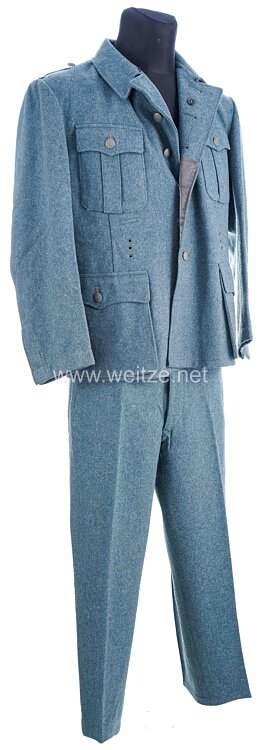
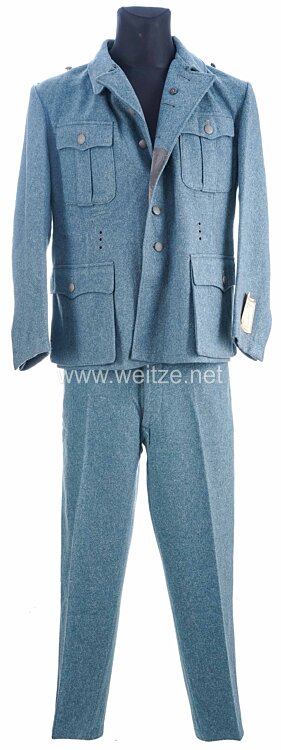
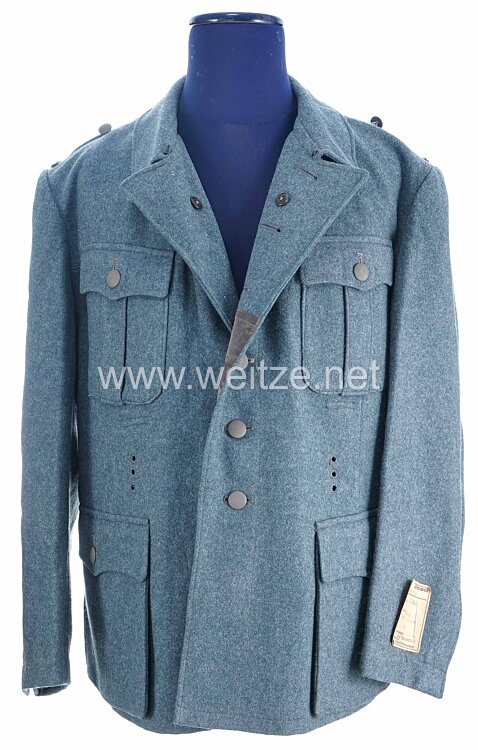
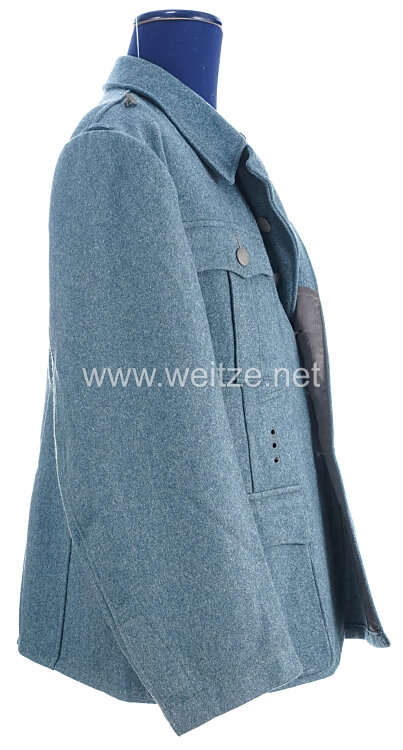
Police Field Division Field Tunic and Trousers for Enlisted Men

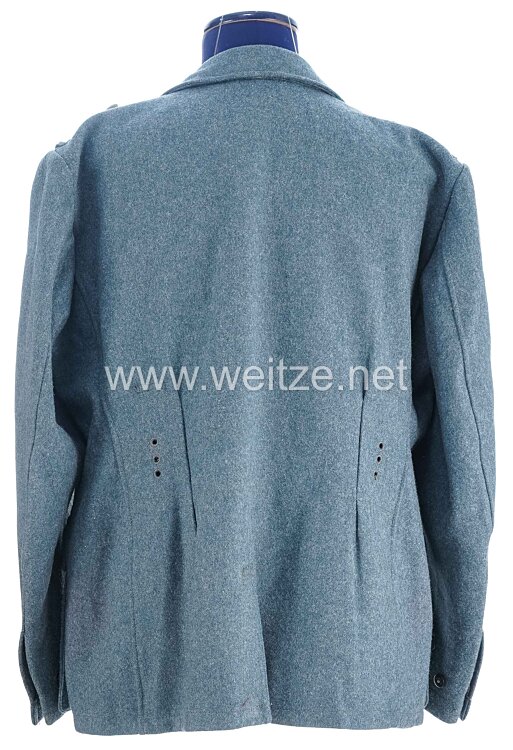
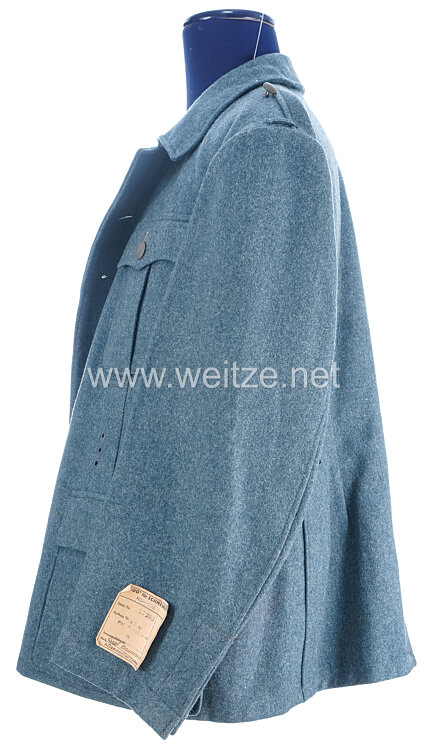
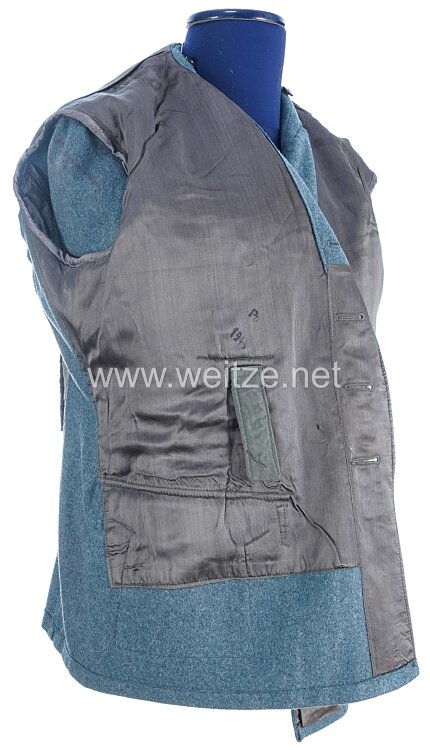
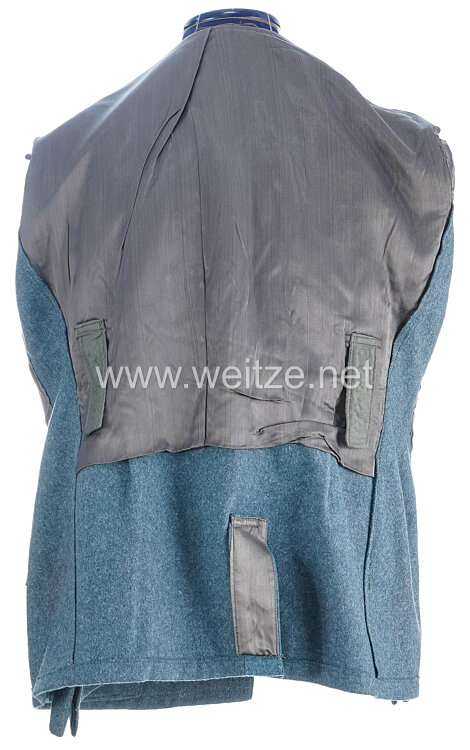
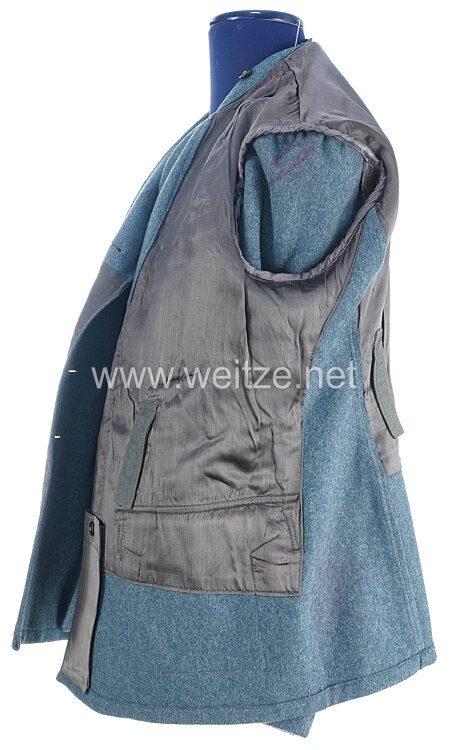
Depot piece, field tunic in Wehrmacht cut, in field-gray police cloth, all buttons present, insignia not yet sewn on. Left forearm with manufacturer's label “Lago Nürnberg”. Interior with depot stamp “Po 1944, as well as Lago Nürnberg 10/43”. Measurements: shoulder width approx. 48 cm, outer sleeve length approx. 58 cm, overall length approx. 65 cm. Condition 1.
In mint condition........
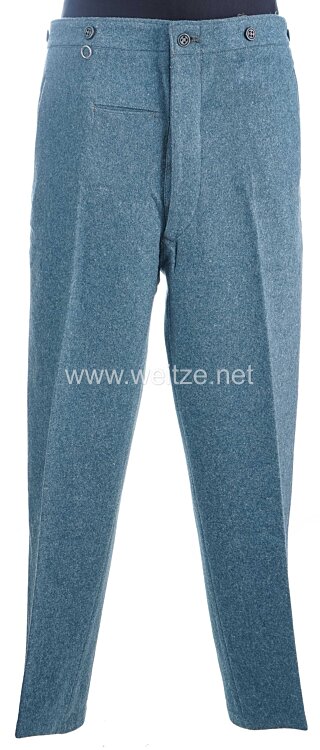
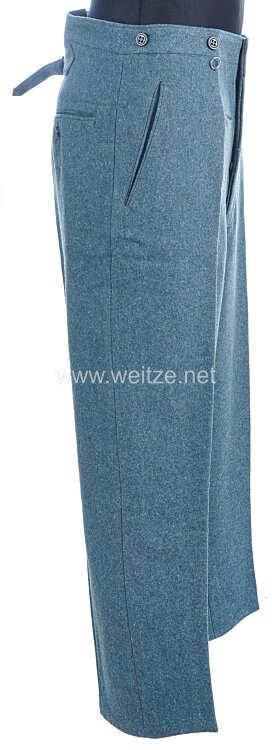
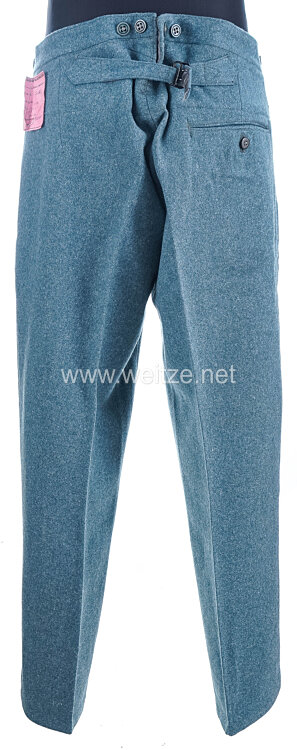
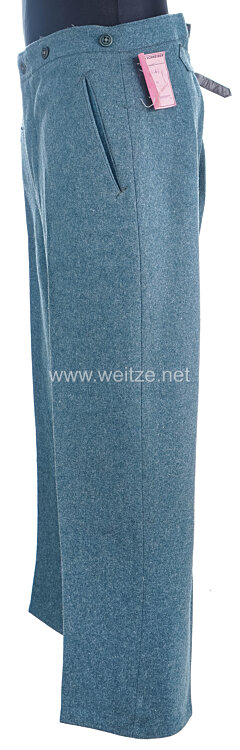
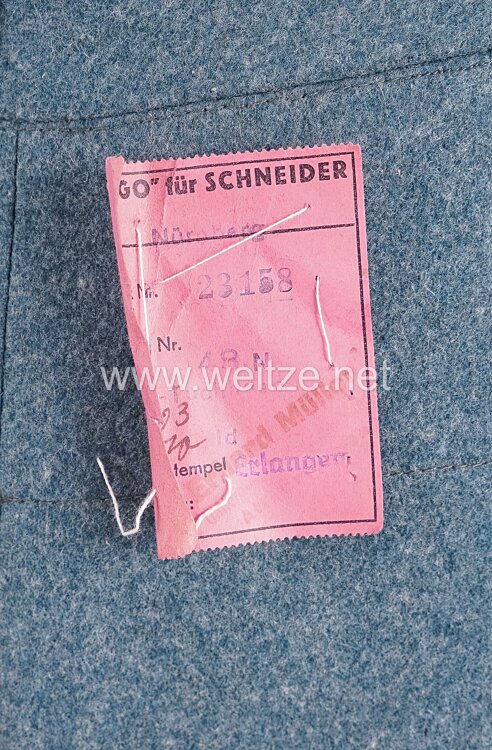
Together with matching long trousers, with manufacturer's label “Lago für Schneider Nürnberg”. Interior with stamp “Lago Nürnberg 10/43”. Waist circumference 90 cm, length 102 cm, condition 1.
In mint condition.....
459886
3.000,00

Police Field Division Field Tunic and Trousers for Enlisted Men

The Polizei-Felddivision (Police Field Division) represents a remarkable chapter in the history of German police units during World War II. This uniformed unit exemplifies the increasing militarization of the police force in Nazi Germany and their direct participation in military operations.

The present field tunic in Wehrmacht style and matching trousers originate from production in 1943, as evidenced by the manufacturer's stamps “Lago Nürnberg 10/43”. The Lago company was a significant supplier of uniforms and clothing items for the Wehrmacht and other military organizations during the war. The additional chamber stamp “Po 1944” indicates storage or issue in 1944.

The Police Field Divisions were established from 1939 onwards from members of the Ordnungspolizei (Order Police). The first Police Division was formed in September 1939 and deployed in occupied Poland. Throughout the course of the war, several such divisions were formed, fighting on both the Eastern Front and other theaters of war. These units were initially subordinate to Reichsführer SS Heinrich Himmler but were operationally placed under Wehrmacht command.

The uniform displays the typical Wehrmacht-style field tunic cut, but manufactured from field-gray police cloth. This was characteristic of the Police Field Divisions, which wore a hybrid form between military and police equipment. The field tunic was originally intended to be fitted with corresponding insignia (badges, collar tabs, shoulder boards), but this was never carried out on this depot piece. This indicates that the uniform was never issued or worn and remained as warehouse stock.

The measurements of the field tunic (shoulder width approximately 48 cm, outer sleeve length approximately 58 cm, total length approximately 65 cm) correspond to a standardized size for enlisted men. Uniforming followed established size charts to enable efficient mass production. The matching trousers with a waist circumference of 90 cm and a length of 102 cm complete the field uniform.

The designation “Kammerstück” (depot piece) is of particular significance: it identifies uniform items that originated from military depots or clothing stores and were never used. Such pieces were either never issued, or they remained as warehouse stock after the war's end. The excellent condition (Condition 1) impressively confirms this.

Production in 1943 falls within a phase of the war when material shortages were increasingly felt. Nevertheless, the complete fitting with all buttons and the quality workmanship show that standard uniforms could still be manufactured at this time. The label “für Schneider” (for tailors) on the trousers indicates that these were possibly intended for individual adjustment.

The Police Field Divisions suffered considerable losses during the course of the war, particularly on the Eastern Front. Many of these units were decimated and had to be reconstituted multiple times. The soldiers of these formations were mostly members of the Ordnungspolizei who had received basic police training but were retrained for military deployment.

From a historical perspective, such uniform pieces document the organizational structure and material culture of the German armed forces in World War II. They demonstrate the connection between civilian police forces and military operations that was characteristic of the National Socialist system. The fact that this uniform was never worn makes it an authentic witness to wartime production and logistics.

This unissued uniform set represents not only a piece of military material culture but also a tangible link to the complex history of German police militarization during the Second World War. Its pristine condition offers researchers and collectors alike an invaluable glimpse into the manufacturing standards and organizational systems of the period.