Kingdom of Saxony “Royal Saxon Flag” - Large Presence Standard of the King

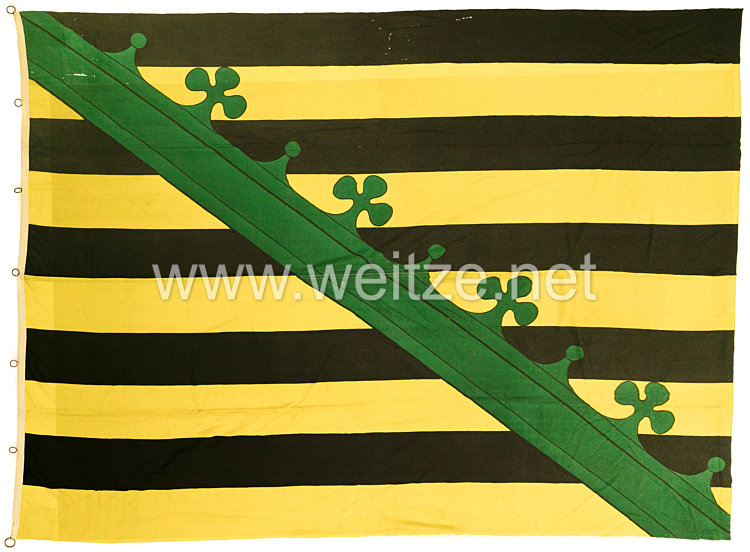
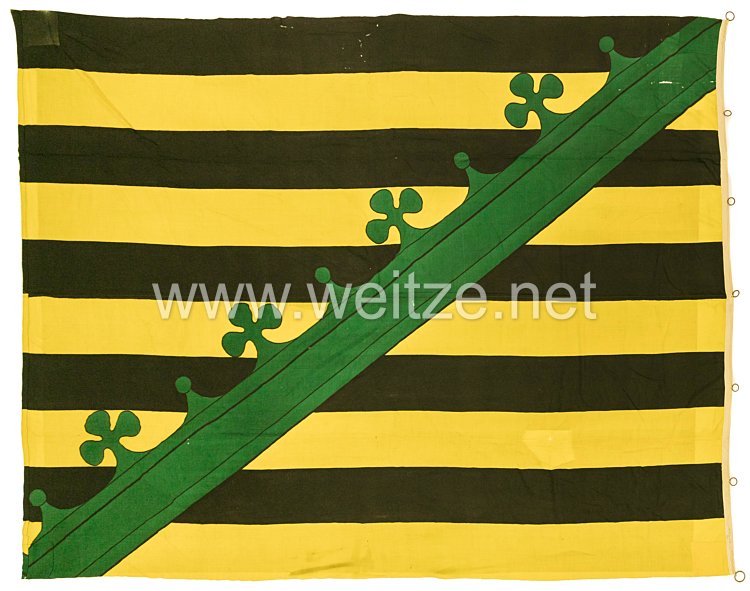
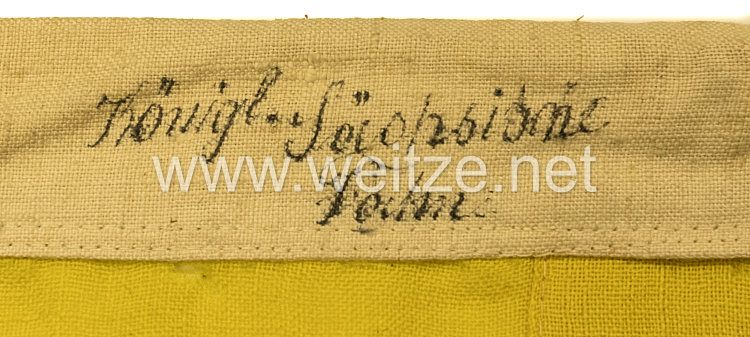
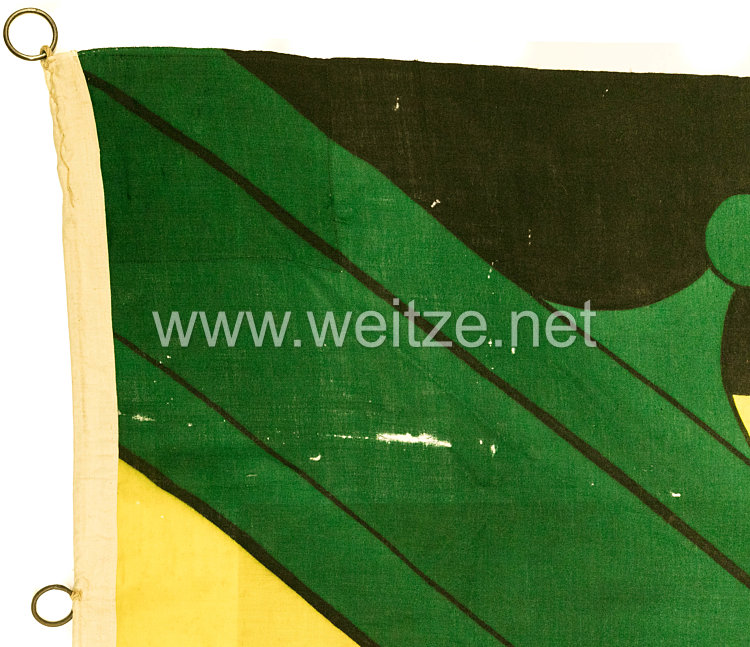
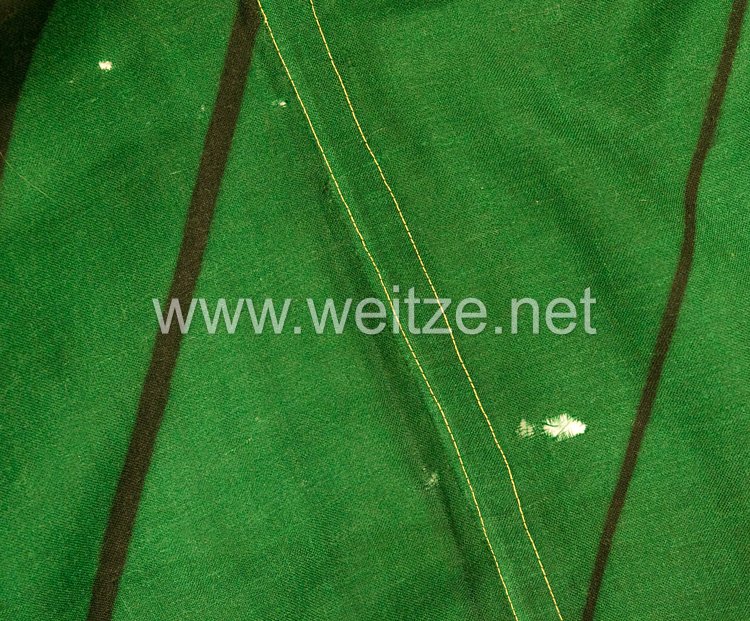
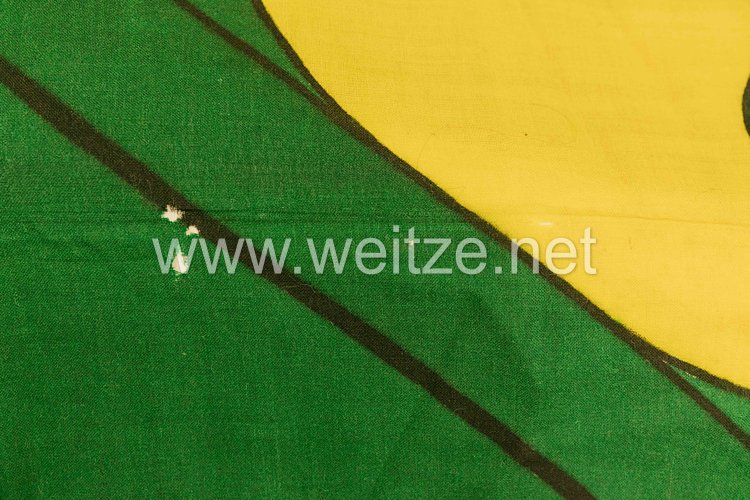
Version for the King's official residence/palace, circa 1900. Flag cloth with horizontal black and yellow stripes, with the green diamond wreath running from the upper left corner to the lower right corner, reinforced on the sides with rings for suspension, inscribed “Königl. Sächsische Fahne”, dimensions 3 x 4 m. Only slight signs of aging, minor tears. Condition 2.

The flag originates from the “Baden” auction at Sotheby's. Very rare!


322786
3.000,00

Kingdom of Saxony “Royal Saxon Flag” - Large Presence Standard of the King

The Royal Saxon Flag as a large presence standard of the King represents a significant symbol of the monarchical tradition of the Kingdom of Saxony in the late 19th and early 20th centuries. This monumental flag, manufactured around 1900, served as an official presence standard and was hoisted at the King's official residence or palace to indicate the physical presence of the monarch.

The Kingdom of Saxony was one of the most important federal states of the German Empire after the founding of the Reich in 1871. The Saxon monarchy under the Wettin dynasty maintained remarkable autonomy and its own state identity despite integration into the German Empire. The use of distinct royal symbols and standards was an important expression of this continuing independence.

The design of this presence standard follows traditional Saxon heraldry. The horizontal black and yellow stripes represent the state colors of Saxony, which have their roots in the Duchy of Saxony. The characteristic green rue wreath (Rautenkranz), running diagonally from the upper left to the lower right corner, is the dynastic symbol of the Wettins and one of the oldest ruling symbols in Europe. This rue wreath has been documented since the 13th century and became the unmistakable identifying mark of the Saxon ruling family.

The impressive dimensions of 3 x 4 meters of this standard underscore its representative function. Such large-format flags were specially manufactured for display at significant royal residences, including the Dresden Royal Palace, Pillnitz Castle, or Moritzburg. The size was intended to make the King's presence visible from afar and demonstrate the dignity of the monarchy.

The technical execution with lateral reinforcements and rings for hanging shows the practical use of this standard. The inscription "Königl. Sächsische Fahne" (Royal Saxon Flag) served for clear identification and assignment within the royal court administration. The production of such standards was subject to strict regulations and was only carried out by authorized court suppliers.

Around 1900, when this standard was created, King Georg of Saxony reigned (1893-1902), followed by King Friedrich August III (1904-1918), the last King of Saxony. This period was characterized by the high industrialization of Saxony, which belonged to the most economically advanced regions of the German Empire. At the same time, the monarchy preserved its traditional ceremonies and symbols.

The use of presence standards was a centuries-old European tradition. They served not only to inform about the monarch's whereabouts but also to legitimize his rule and make state continuity visible. The royal court protocol precisely regulated when and where such standards were to be hoisted.

The end of the Saxon monarchy came with the November Revolution of 1918. On November 13, 1918, King Friedrich August III abdicated, and Saxony became a Free State. The royal insignia, flags, and standards lost their official function and became part of historical collections or remained in family possession.

The provenance of this standard from the famous "Baden Auction" at Sotheby's gives it additional historical significance. This auction included important objects from German princely houses and is legendary in collector circles. The rarity of such large-format royal standards on the market is remarkable, as most are kept in museums or archives.

The condition with only slight signs of aging and minimal tears is exceptionally good for a textile piece of this size and age. This suggests that the standard was either carefully preserved or only used on special occasions.

Today, such objects are important testimonies to German regional history and monarchical tradition. They document the diversity of state structures in the German Empire and the importance of symbolic representation for the legitimation of rule. For Saxon history, this standard is direct material evidence of the Wettin monarchy and its centuries-long tradition.