Reichsmarine Saber for Officers
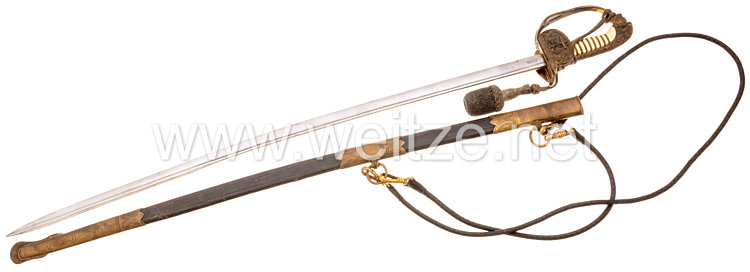
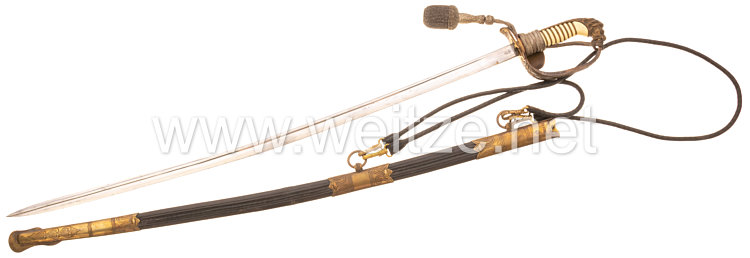
Overall length: 905mm
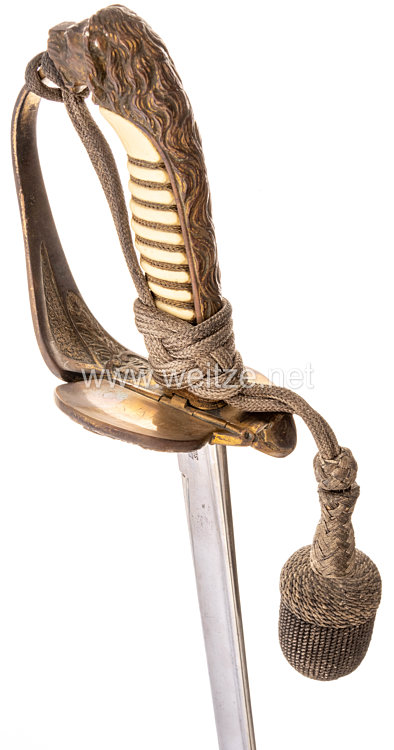
The Reichsmarine Officer's Sabre represents a significant phase in German naval history between 1919 and 1935. Following World War I and the abdication of Kaiser Wilhelm II, the Imperial Navy was transformed into the Reichsmarine, the naval force of the Weimar Republic. This transformation brought changes to uniform and equipment regulations, although many traditional elements were retained.
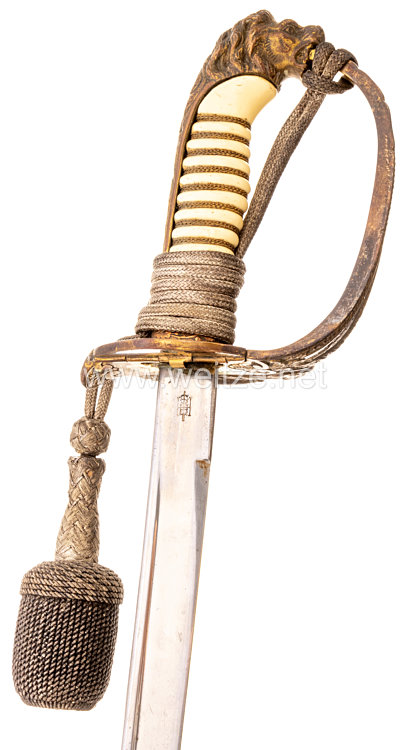
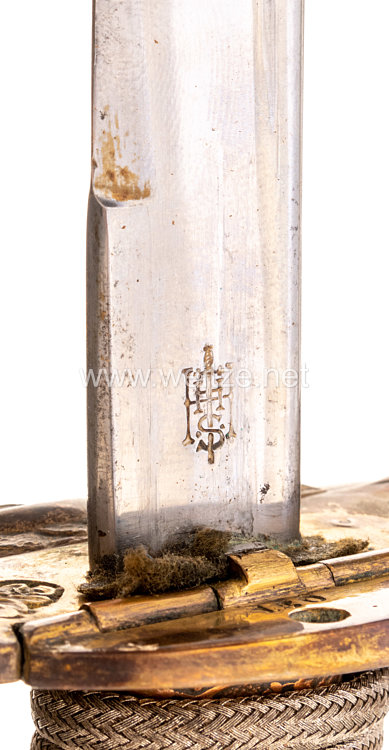
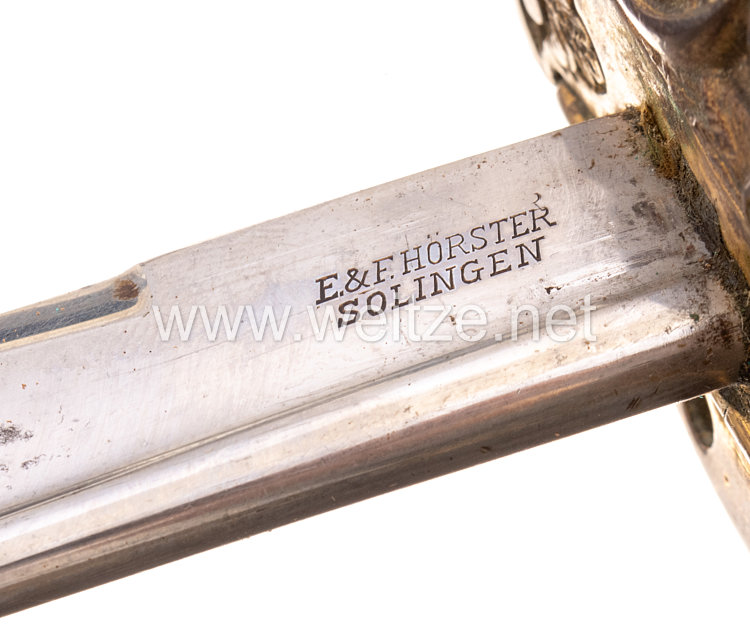
E & F Hörster of Solingen was among the most prestigious manufacturers of edged weapons in Germany. The city of Solingen, often called the “City of Blades,” had been the center of German blade production for centuries. The Hörster firm produced high-quality sabres and swords for various branches and ranks of the German armed forces. Marking the ricasso with the manufacturer's logo was common practice for quality assurance and authentication.
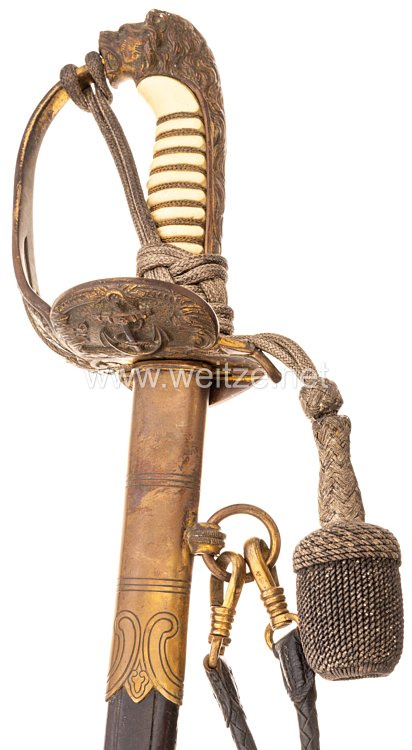
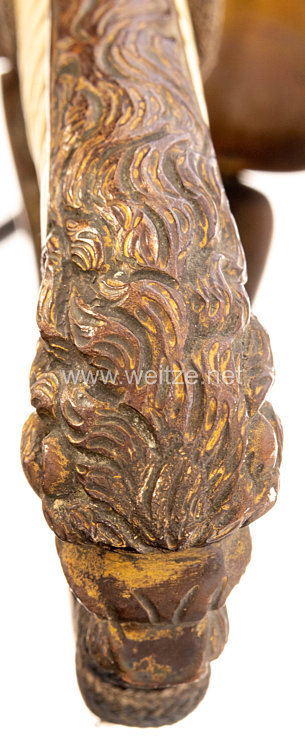
The lion's head grip was a characteristic feature of German naval sabres of this era. The lion symbolized strength, courage, and military virtues. Early Reichsmarine models featured lion heads without glass eyes; later, versions with glass eyes were sometimes introduced. The darkened brass fittings indicate either use or deliberate patination, common with naval weapons due to corrosive sea air.
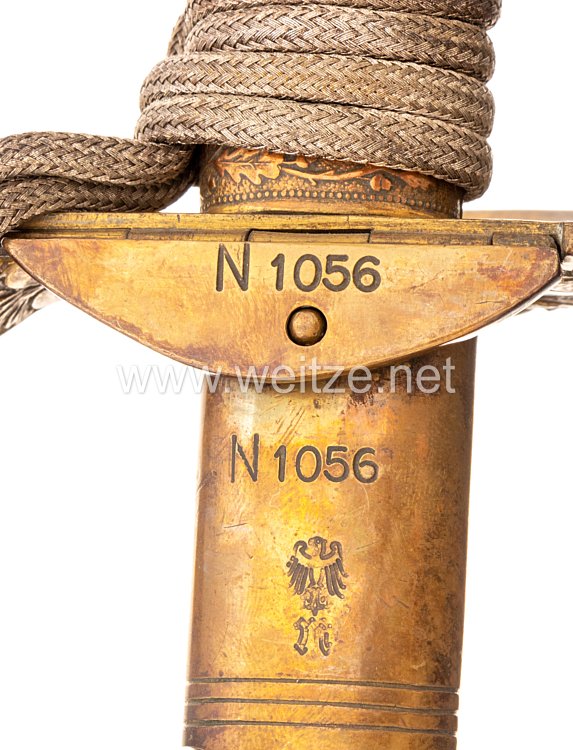
The stamp “N 106” refers to Station North Sea, an important administrative and operational unit of the Reichsmarine. The Reichsmarine organized its coastal defense and fleet operations into various stations. Station North Sea encompassed major naval bases such as Wilhelmshaven and Cuxhaven. Such stamps served for inventory purposes and assignment of equipment to specific units. The numbering enabled precise administration of issued equipment.
The white grip with wire wrapping was typical for naval officer sabres. The wrapping, usually of silver-plated or tinned wire, provided secure grip even in wet conditions. The white base typically consisted of fishskin, bone, or a special grip compound. This combination was not only functional but also aesthetically pleasing and complied with regulations for officer edged weapons.
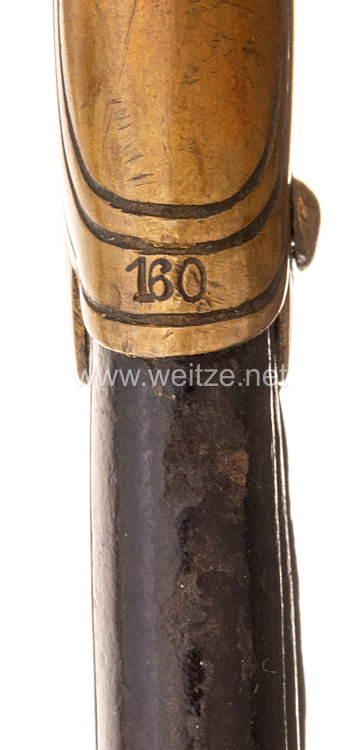
The black leather scabbard with brass fittings was standard for naval officer sabres. Unlike army versions, which often had steel scabbards, the navy preferred leather scabbards as these were lighter and more practical for shipboard duty. The carrying rings enabled attachment to the sword knot and shoulder belt, which belonged to the complete carrying equipment.
The sword knot (Portepee) was an important rank insignia. For officers, it consisted of high-quality materials with silver or gold elements, depending on rank and service branch. The shoulder belt (Peitschengehänge) was the typical carrying method for naval officers and differed from army belt hangers. It was worn over the shoulder and allowed more comfortable handling aboard ships.
The slightly curved blade without etching is characteristic of later productions or service weapons. While parade pieces often featured elaborate etching with maritime motifs, anchors, the Reich eagle, or dedications, service weapons were frequently more plainly designed. The edge on Reichsmarine officer edged weapons was usually functional, even though the weapons had primarily ceremonial significance.
After 1935, the Reichsmarine was renamed the Kriegsmarine, and new regulations led to modified weapon designs. Reichsmarine sabres remained partially in use or were modified. The preservation of complete examples with original accessories such as sword knot and shoulder belt is relatively rare today, as many pieces were lost or left incomplete after World War II.
For collectors and historians, such sabres offer valuable insights into the material culture and organizational structures of the Weimar Navy. The specific stamps and markings enable attribution to particular units and periods, supporting historical research. The craftsmanship quality of Solingen blade smiths is impressively documented in these objects.