Wehrmacht Heer Portrait Photograph, Soldier with Ribbon Bar
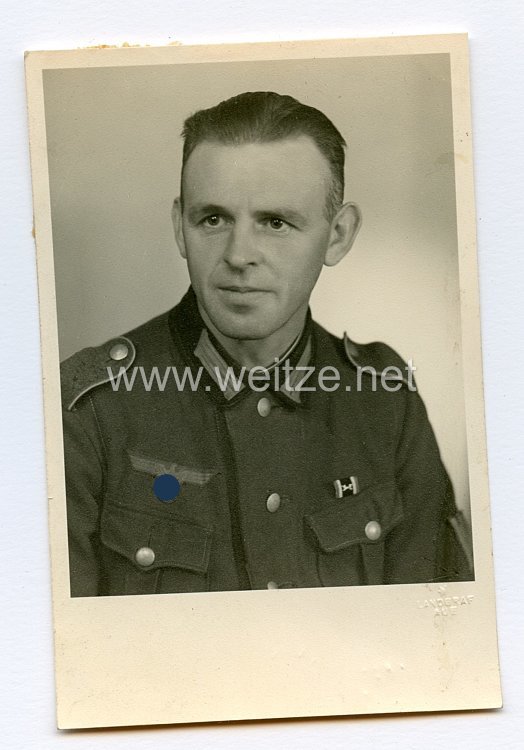
The present object is a portrait photograph in postcard format of a soldier from the Wehrmacht Heer (German Army) from the period of World War II (1939-1945). The soldier wears a ribbon bar (Bandspange) on the photograph, indicating his military decorations. Such photographs were extremely common during the war and served both personal and propaganda purposes.
The Wehrmacht was officially established on March 16, 1935, after Nazi Germany reintroduced conscription, openly violating the provisions of the Treaty of Versailles. The Heer (Army) formed one of the three branches of the Wehrmacht, alongside the Kriegsmarine (Navy) and the Luftwaffe (Air Force). During World War II, approximately 18 million men served in the Wehrmacht, with the Heer accounting for the largest portion with about 13.6 million soldiers.
Portrait photographs in postcard format (typically 9 x 14 cm or 10 x 15 cm) were firmly established in German military culture. Soldiers frequently had themselves photographed in uniform, either in professional photo studios or by regimental photographers. These images served multiple functions: they served as personal mementos, were sent to family members and fiancées, and documented the soldier's military status and decorations.
The ribbon bar visible on the photograph was an essential element of the German military uniform. Ribbon bars were rectangular fabric strips that represented the ribbons of orders and decorations without requiring the full decorations to be worn. They were attached to the left breast side of the uniform above the breast pocket. Regulations for wearing ribbon bars were precisely defined in the Wehrmacht's dress regulations (Anzugsbestimmungen).
The colors and patterns of the ribbons corresponded to specific awards. Among the most common decorations were the Iron Cross (renewed in 1939 in two classes), the War Merit Cross (Kriegsverdienstkreuz), the Medal for the Winter Campaign in the East 1941/42 (also called “Ostmedaille”), as well as various Wehrmacht service awards. Veterans of World War I often also wore older decorations from the Imperial period, such as the Iron Cross of 1914 or wound badges.
The order of ribbons on the bar followed strict regulations according to the order of precedence for orders and decorations. Highest military awards such as the Knight's Cross or the German Cross were not worn as ribbon bars but always as complete decorations. The correct arrangement and wearing of decorations was an important aspect of military discipline and the code of honor.
Photographs like the present one document not only individual military service but are also important historical sources. They provide information about uniform details, rank insignia, branches of service (recognizable by collar patches and Waffenfarben), and the career paths of individual soldiers. For military historical research, such images are invaluable as they provide authentic details about uniforms and decoration practices.
The postcard format made it possible to send these photographs as field post (Feldpost). The field post was the most important connection between the front and home during the war. Millions of letters, cards, and photographs were transported through the field post system between 1939 and 1945. Portrait photos served to show relatives that the soldier was still alive and conveyed an image of bravery and duty fulfillment.
The stated condition 2 indicates, according to common collector grading, a well-preserved condition with minor signs of use. Today, such photographs have significance both as military historical documents and as collector's items. They provide personal insight into the lives of ordinary soldiers and complement official military history with the human dimension.