Prussia Iron Cross 1914 1st Class - Carl Dillenius

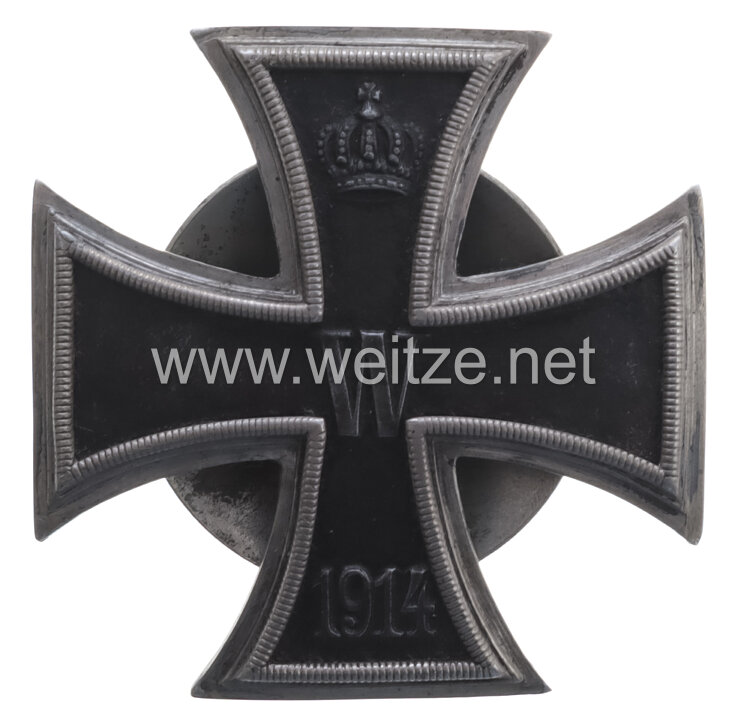
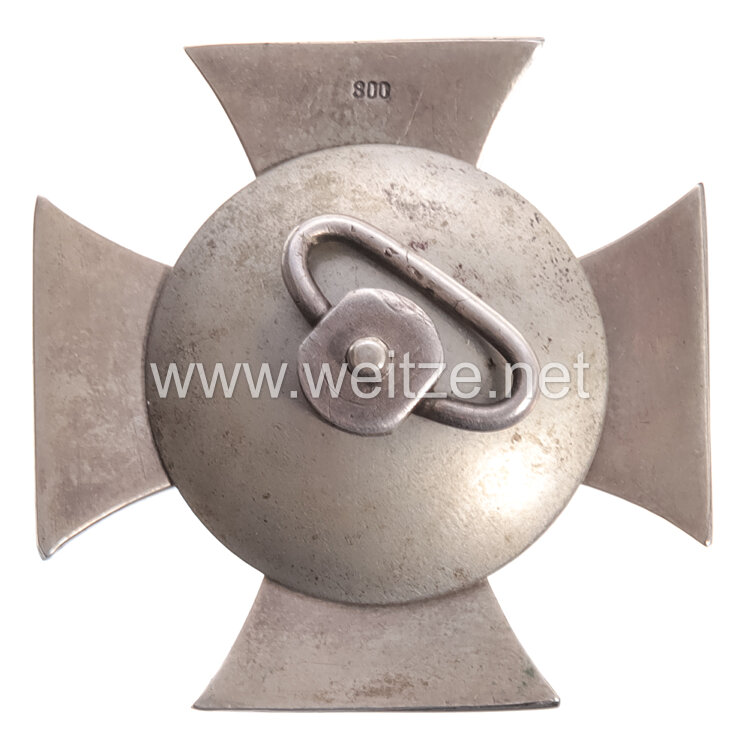
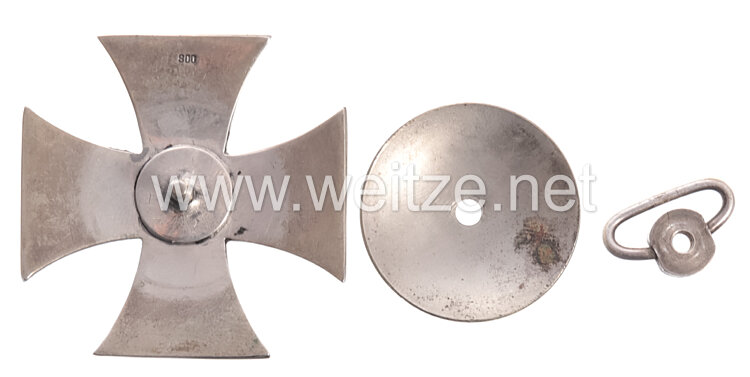
Iron core slightly convex. Reverse with threaded post, domed washer and wing nut, in upper cross arm with silver fineness hallmark 800
468380
550,00

Prussia Iron Cross 1914 1st Class - Carl Dillenius

The Iron Cross 1st Class from 1914 represents one of the most significant military decorations of the German Empire during World War I. This particular variant, manufactured by Carl Dillenius, a renowned producer of military insignia in Lüdenscheid, demonstrates the high craftsmanship quality of Prussian military awards of that era.

The Iron Cross was originally instituted on March 10, 1813, by King Friedrich Wilhelm III of Prussia during the Wars of Liberation against Napoleon. The decoration was awarded in three classes and symbolized a novel democratic conception of military honor, as it could be awarded regardless of the recipient's social standing. With the outbreak of World War I, Emperor Wilhelm II renewed the institution of the Iron Cross on August 5, 1914, through an Imperial decree.

The 1st Class of the Iron Cross was a considerably rarer decoration than the 2nd Class. During World War I, approximately 5.2 million Iron Crosses 2nd Class were awarded, but only about 218,000 of the 1st Class. The award of the 1st Class generally required prior possession of the 2nd Class and was given for outstanding bravery or exceptional leadership in combat.

The technical execution of the piece described here corresponds to typical characteristics of the period: the slightly convex iron core was set in a silver frame. The silver fineness hallmark 800 in the upper cross arm certifies a silver content of 800/1000, which was the standard for military decorations of that time. The reverse shows the characteristic attachment method of the 1st Class: a threaded pin with convex washer and wire loop nut. This construction enabled the firm attachment of the decoration to the left breast side of the uniform, in contrast to the 2nd Class, which was worn on a ribbon.

Carl Dillenius belonged to the significant manufacturers of military orders and decorations in the German Empire. The company was based in Lüdenscheid, which had developed since the 19th century into a center of German metal industry and particularly the production of orders and decorations. Dillenius produced numerous other Prussian and German awards besides the Iron Cross and competed with other renowned manufacturers such as Godet & Sohn in Berlin or the Royal Mint.

The design of the 1914 Iron Cross largely followed the 1813 model, with some characteristic differences: in the center of the obverse was the year “1914” surrounded by an oak leaf wreath. On the reverse were the initials “W” (for Wilhelm) with the royal crown and below it the year “1813”, commemorating the original institution. This connection between 1813 and 1914 symbolized the historical continuity of Prussian-German military tradition.

The materials – iron and silver – carried symbolic significance: the black iron represented modesty and military virtue, while the silver emphasized the royal dignity of the decoration. The combination of these materials reflected Prussian ideals of duty and sacrifice. However, during the economic constraints of the war years, the quality of materials and workmanship became increasingly compromised.

The wearing method of the 1st Class was precisely regulated: the decoration was attached directly to the left breast side of the uniform, usually at pocket height. The screw mounting ensured a secure fit, which was of practical importance given the rigors of front-line service. After the war, the Iron Cross could also be worn on civilian clothing, which emphasized its special position in the German order system.

After the end of World War I and the collapse of the monarchy, the Iron Cross retained its significance as a symbol of military bravery. Recipients of the decoration formed a respected group of veterans in the Weimar Republic. The decoration was later reinstituted during World War II, maintaining the basic design.

Today, original Iron Crosses 1st Class from World War I, particularly from documented manufacturers such as Carl Dillenius, represent sought-after collectibles. They are important witnesses to German military history and the study of orders and decorations. The preservation of such pieces, including the correct screw attachment and manufacturer characteristics such as the silver hallmark, is of great importance for historical research.