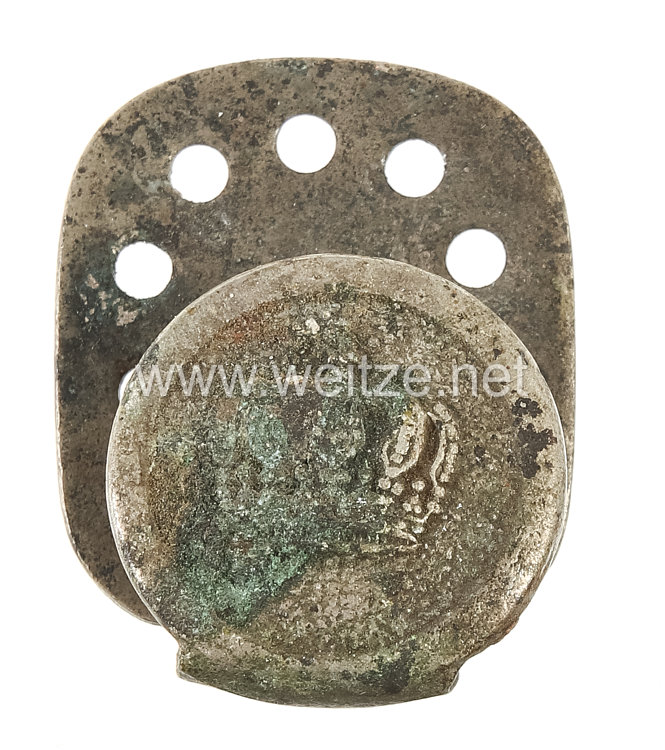
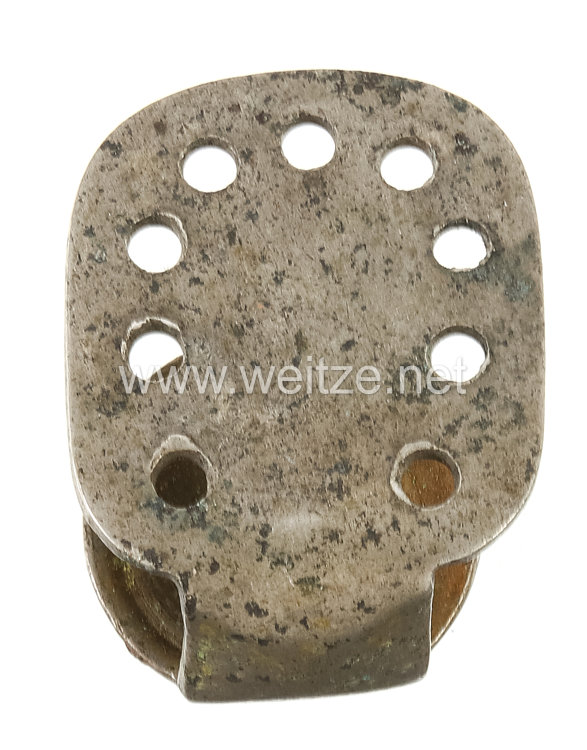
World War I Single Tunic Button for the Field Blouse

tarnished, condition 2
369279
15,00

World War I Single Tunic Button for the Field Blouse

The tunic button from a German field tunic of the First World War represents a small but significant piece of equipment that documents the military clothing history of the German Empire. These plain metal buttons were an indispensable component of German soldier uniforms between 1914 and 1918, reflecting both military regulations and the industrial production conditions of those war years.

The Feldbluse M1907/10, also known as the Waffenrock, became the characteristic garment of the German army with the introduction of the field-grey uniform. In contrast to earlier colorful parade uniforms, the field-grey version was intended to provide better camouflage on the modern battlefield. The field tunic was closed by a series of buttons on the front, typically using eight buttons. These buttons were not only functional but often bore regimental or branch insignia that identified the wearer's affiliation.

The manufacture of these buttons employed various materials and different processes. At the beginning of the war, brass buttons embossed with military emblems were frequently used. However, as the war progressed and metal shortages increased, production had to be adapted. Increasingly, iron buttons, zinc buttons, or even substitute materials such as pressed wood or synthetic resin were employed. Surface treatments varied accordingly, with many buttons being blued, lacquered, or otherwise protected against corrosion.

The tarnished condition of the button described here is typical of metal buttons that were exposed to weather and the rigors of field service. The natural patina and oxidation bear witness to the authentic aging of the material over more than a century. Such signs of use are of particular interest to collectors and historians, as they document the actual use of the object and have not been falsified by modern cleaning.

The standardization and normalization of uniform parts, including buttons, was part of the comprehensive clothing regulations of the German army. The Army Ordinance Sheets and Dress Regulations detailed the appearance, attachment, and specifications of all uniform components. This ensured a uniform appearance of the troops and facilitated industrial mass production, which became necessary in view of the million-strong armies of the First World War.

In the context of the material economy of the First World War, even such small items as uniform buttons played a significant role. The German war economy faced considerable raw material shortages, particularly of non-ferrous metals such as copper and tin, which were urgently needed for ammunition production. This led to various metal collection campaigns and the development of substitutes. Buttons made from inferior materials or with simplified designs became increasingly common as the war continued.

For military-historical collections, individual uniform buttons are valuable study objects. They allow conclusions about production periods, manufacturer companies, and the development of uniforms during the course of the war. Many buttons bear manufacturer marks or codes on the reverse, enabling precise attribution. The iconography of the obverse – whether state emblems, regiment numbers, or branch symbols – provides important information about the military organization of the Empire.

Condition 2, as stated in the description, corresponds in collector nomenclature to a well-preserved object with visible but not excessive signs of use. For militaria over a hundred years old, this is quite an acceptable and authentic state of preservation, showing the object neither over-restored nor heavily damaged.

In summary, a single button from a First World War field tunic represents far more than a simple clothing accessory. It is a tangible testimony to industrial warfare, military organization, and the material culture of an era that permanently changed Europe and the world.

r