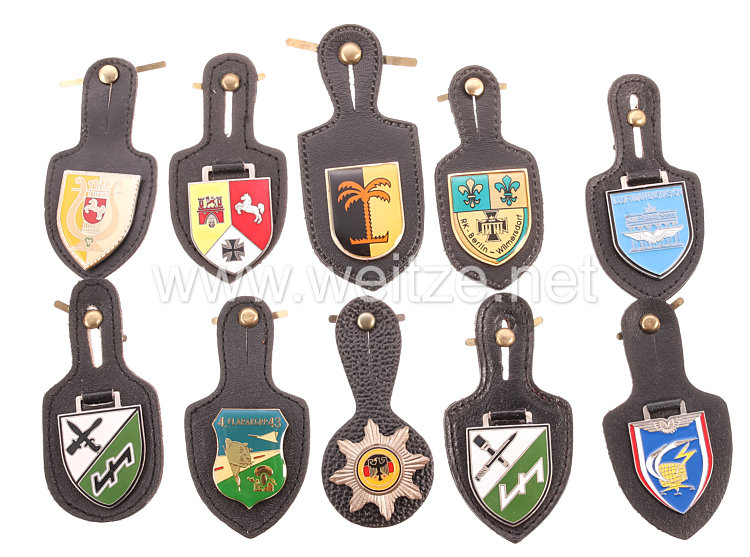
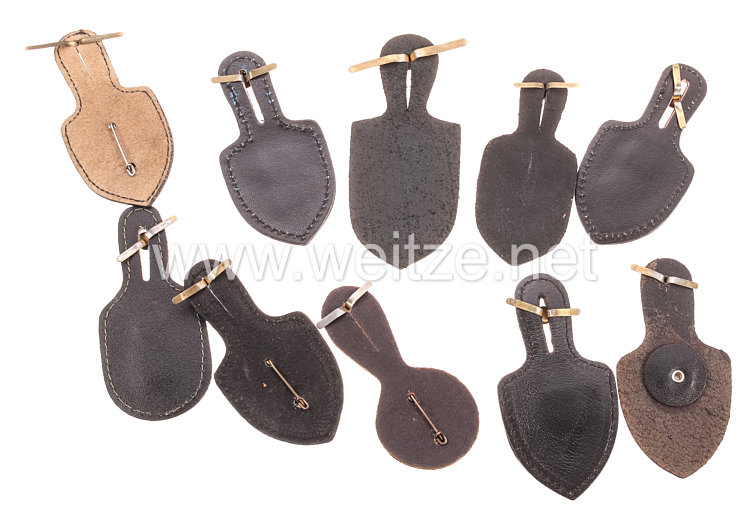
FRG / Bundeswehr: 10 Unit Insignia Patches for Breast Pocket


437279
75,00

FRG / Bundeswehr: 10 Unit Insignia Patches for Breast Pocket

Unit insignia of the Bundeswehr represent an important element of military tradition and identification in post-war German history. These small but significant cloth badges were worn on the breast pocket of uniforms and served to identify troop affiliation.

Following the founding of the Federal Republic of Germany in 1949 and the subsequent establishment of the Bundeswehr on November 12, 1955, it became necessary to create a new system of military identification. Unlike the Wehrmacht, the new German armed forces were to follow democratic principles and consciously distance themselves from the National Socialist past. The introduction of unit insignia occurred within the framework of Innere Führung (Internal Leadership), a concept that placed the “citizen in uniform” at its center.

The breast pocket unit insignia were typically worn on the right breast pocket of the field blouse or combat uniform. They were usually made of woven fabric and displayed characteristic symbols of the respective unit. The design drew on military traditions while deliberately avoiding National Socialist symbolism. Instead, the badges referenced older Prussian and German military traditions or employed modern, neutral symbols.

Regulations governing the wearing and design of unit insignia were established in various dress regulations (Anzugordnung - AO) and Central Service Regulations (Zentrale Dienstvorschriften - ZDv). The ZDv 37/10 “Dress Regulations for Soldiers of the Bundeswehr” defined in detail which insignia could be worn on which occasions and uniform parts. Unit insignia were optional and subject to approval by the Federal Ministry of Defense.

Over the decades, a great diversity of unit insignia developed. Each division, brigade, and many smaller units received their own badges. Particularly the armored and air-mobile units, as well as the Air Force and Navy, developed characteristic designs. The insignia frequently displayed heraldic animals such as lions, eagles, or griffins, military symbols like swords or anchors, or regional references to the units' garrison locations.

A collection of ten unit insignia represents the diversity of the Bundeswehr's organizational structure. Such collections were popular among soldiers who either served in different units themselves or traded badges with comrades. The exchange of unit insignia became an informal tradition within the Bundeswehr and fostered esprit de corps across unit boundaries.

With German reunification in 1990 and the integration of the East German National People's Army (Nationale Volksarmee - NVA), new challenges arose. Many NVA units were dissolved, though some traditions were adopted in modified form. The 1990s saw a comprehensive reorganization of the Bundeswehr, which was also reflected in new and modified unit insignia.

In the 21st century, especially after overseas deployments in Afghanistan, the Balkans, and other crisis regions, unit insignia gained additional significance as mementos of shared operational experiences. Special deployment badges complemented the traditional unit insignia.

The production of badges was carried out by specialized companies working according to precise military specifications. Quality and execution could vary, though official insignia were subject to strict standards. On the collectors' market today, Bundeswehr unit insignia are valued as historical documents of German military history.

From a historical perspective, these badges document the evolution of the Bundeswehr from a Cold War defense force to a modern operational army. They reflect organizational reforms, changing threat scenarios, and the transformation of military culture. For military historians, they are important sources for researching unit history, military symbolism, and identity formation within the armed forces.