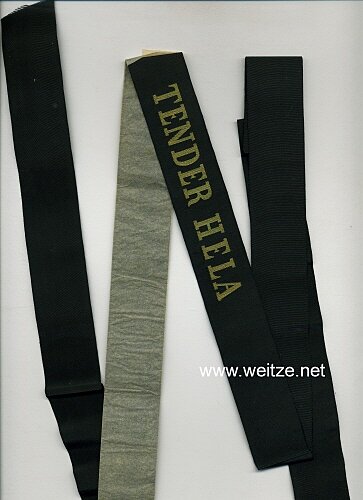
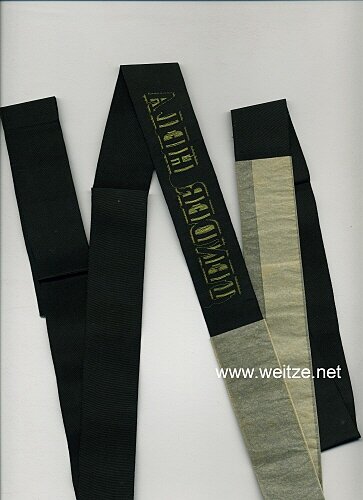
Reichsmarine Cap Tally "Tender Hela"
The Reichsmarine cap tally from the tender Hela represents a fascinating testimony to German naval history between the two World Wars. This example, woven in metal thread technique, represents the high craftsmanship quality that was characteristic of Reichsmarine uniform pieces.
The Reichsmarine was founded in 1919 after World War I as the successor to the Imperial Navy and existed until 1935, when it was renamed the Kriegsmarine. The Treaty of Versailles had severely restricted the German Navy: only 15,000 personnel, no submarines, no capital ships above a certain tonnage. Within this limited framework, the Reichsmarine had to fulfill its duties.
Cap tallies (or tally ribbons) had been an essential part of naval uniforms since the 19th century. They served identification purposes and were worn on the sailor's cap. Each ship, each unit had its own ribbon with specific lettering. The tradition originated with the British Royal Navy and was adopted by most navies worldwide.
The Tender Hela was an auxiliary vessel of the Reichsmarine, named after the island of Hela (now Hel in Poland) on the Bay of Danzig. Tenders were supply ships that supported larger units such as torpedo boats, minesweepers, or submarines. They carried out repairs, supplied ships with provisions, ammunition, and fuel, and served as floating workshops. The Hela was part of the auxiliary fleet that was indispensable for the operation of the Reichsmarine.
The metal thread weaving was a particularly high-quality manufacturing technique. Gold or silver metal threads were incorporated into the black base fabric. This technique created a characteristic luster and made the lettering clearly legible. Manufacturing was done on special looms by skilled craftsmen. Regular cap tallies bore inscriptions in gold letters on a black background, with lettering executed in Fraktur or Antiqua scripts.
The fact that this specimen is unworn and in its original wrapping paper makes it an exceptional collector's item. Most cap tallies were worn and therefore show signs of use. Such factory-new pieces are extremely rare, as they were either destroyed at the end of the war, scrapped, or lost in the turmoil of the post-war period.
The production of cap tallies was subject to strict regulations of naval uniform regulations. The exact font size, the spacing of letters, the quality of materials – everything was precisely regulated. Manufacturers had to be approved suppliers to the Navy. Well-known producers included companies like BEVO (Barmer Bandweberei), which specialized in military textiles.
The Tender Hela operated in the Baltic Sea, a traditional operational area of the German Navy. The Baltic was of strategic importance to the Reichsmarine, as training and exercises took place here. Proximity to the Bay of Danzig and to naval bases such as Kiel, Wilhelmshaven, or Swinemünde made tenders like the Hela important components of fleet infrastructure.
Collecting cap tallies has a long tradition. Naval personnel already exchanged ribbons among themselves as mementos. Today they are sought-after military-historical objects that provide insight into the organization and structure of historical navies. Each ribbon tells the story of a ship and its crew.
The cultural-historical significance of such objects lies in their documentation of military everyday culture. While large battleships and dramatic naval battles often take center stage, objects like cap tallies show the practical reality of naval service. Tenders and their crews performed less glamorous but absolutely necessary tasks.
In today's collector scene, cap tallies are evaluated according to rarity, condition, and historical significance. Ribbons from small or little-known units are often rarer than those from large battleships. The immaculate condition of this specimen makes it a museum-quality object that perfectly represents the craftsmanship and military tradition of the Reichsmarine.