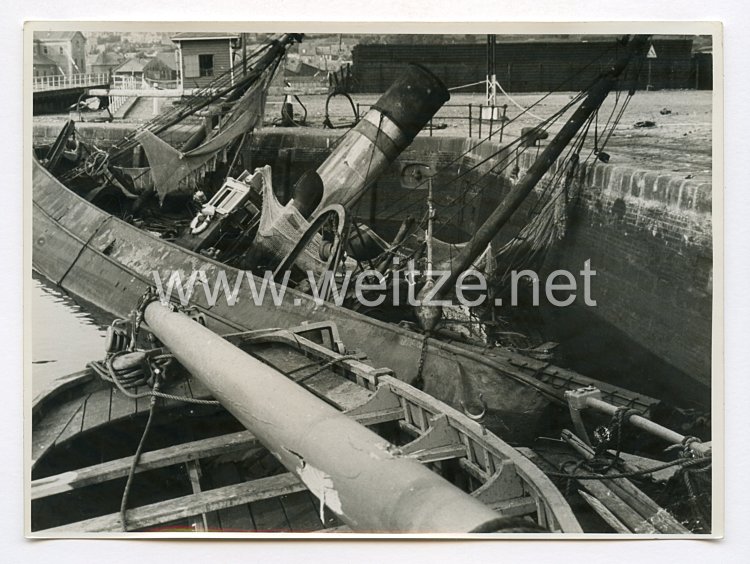
Press Photograph, Occupation of France 1940:
This press photograph from 1940 documents the German occupation of France during World War II, one of the most significant military and political turning points of the 20th century. Such press photographs played a central role in the propaganda and information policy of Nazi Germany and today represent important historical documents.
The Western Campaign (Westfeldzug), as the German offensive against France, Belgium, Luxembourg, and the Netherlands was called, began on May 10, 1940. After only six weeks of intense combat operations, France signed the armistice in the Forest of Compiègne on June 22, 1940. This rapid defeat of the supposedly strong French army shocked the world and marked the pinnacle of early German military successes.
The Wehrmacht's war reporting was strictly organized. The Oberkommando der Wehrmacht (OKW) and the Reich Ministry of Public Enlightenment and Propaganda under Joseph Goebbels controlled all information from the front. War correspondents (PK-men, Propaganda Companies) were specially trained soldiers deployed as photographers, cameramen, and journalists. They wore uniforms and were assigned to fighting troops but enjoyed special status.
Press photographs like this one served multiple purposes: they informed the German population about war events while simultaneously serving as propaganda tools to strengthen morale and the will to persevere. The images appeared in newspapers, illustrated magazines such as “Illustrierter Beobachter” or “Signal”, and were distributed through the German Press Agency.
The format of approximately 13 x 18 cm corresponds to a common press photo format of that era. Photographers typically used medium-format cameras like the Leica or Rolleiflex, which offered robust technology for front-line use. Prints were developed and processed in photo laboratories of the propaganda companies or in central photo offices.
The occupation of France in 1940 was comprehensively documented photographically. Typical subjects included: German troops marching through French cities, crossing major rivers and border installations, captured French fortifications of the Maginot Line, columns of prisoners, the armistice ceremony at Compiègne, and the subsequent occupation period with German soldiers before famous Parisian landmarks such as the Eiffel Tower or the Arc de Triomphe.
From a historical perspective, such press photographs are valuable sources for historical scholarship today. They document not only military events but also the propaganda and representation strategies of the Nazi regime. Historians use them to reconstruct events, analyze visual propaganda, and understand public perception of the war.
The condition rating of “2” indicates a well-preserved example with possibly minor signs of use. Many of these historical photographs show typical aging characteristics: yellowing, slight creases, or inscriptions on the reverse side that often contain date, location, or subject information as well as censorship stamps.
For collectors and historians, authentic press photographs from World War II are of particular interest. They provide direct visual access to historical events and complement written sources. However, the provenance and authenticity of such objects should always be carefully examined, as the market also includes reproductions and forgeries.
Engaging with such historical objects requires a critical and reflective attitude. They are witnesses to a time when media representations were heavily ideologically shaped and censored. Nevertheless, or precisely because of this, they form an important part of our historical memory and remind us to engage with the past.