German Red Cross (DRK) Dagger for Leader

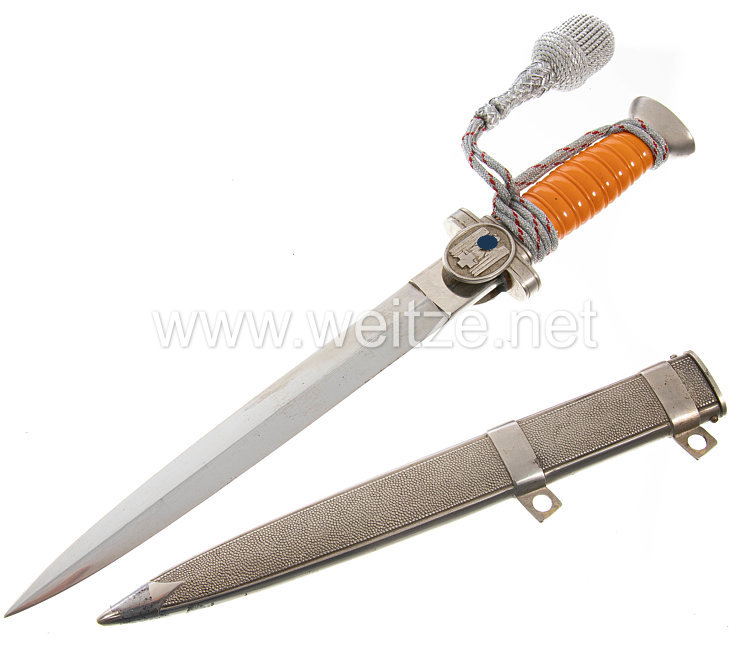
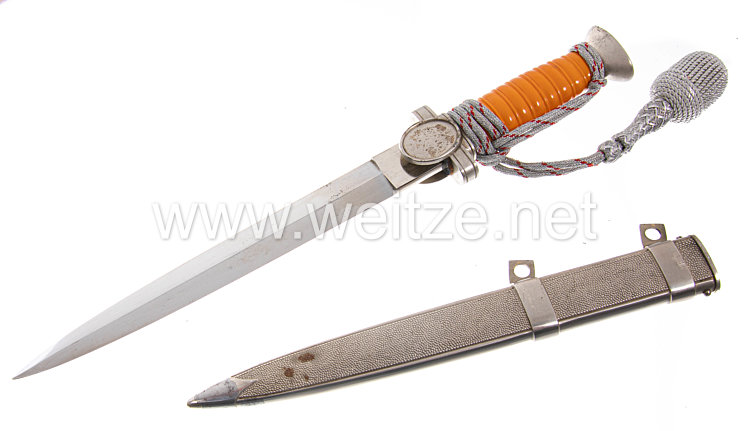
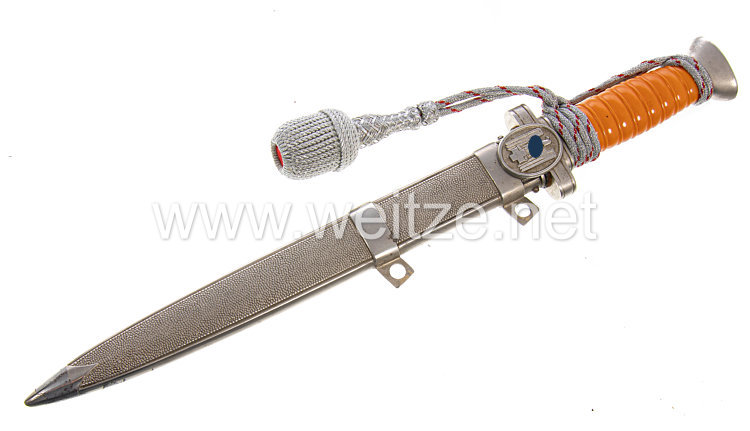
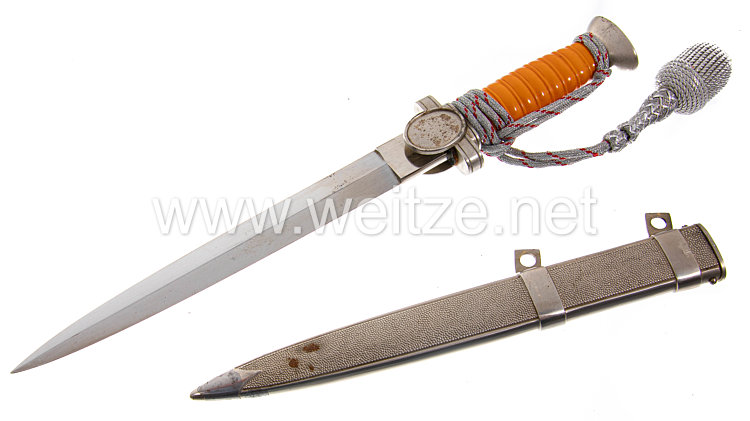
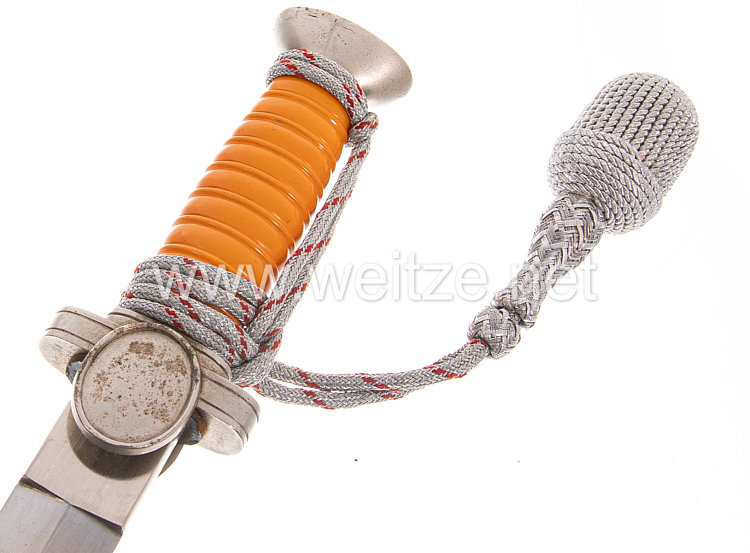
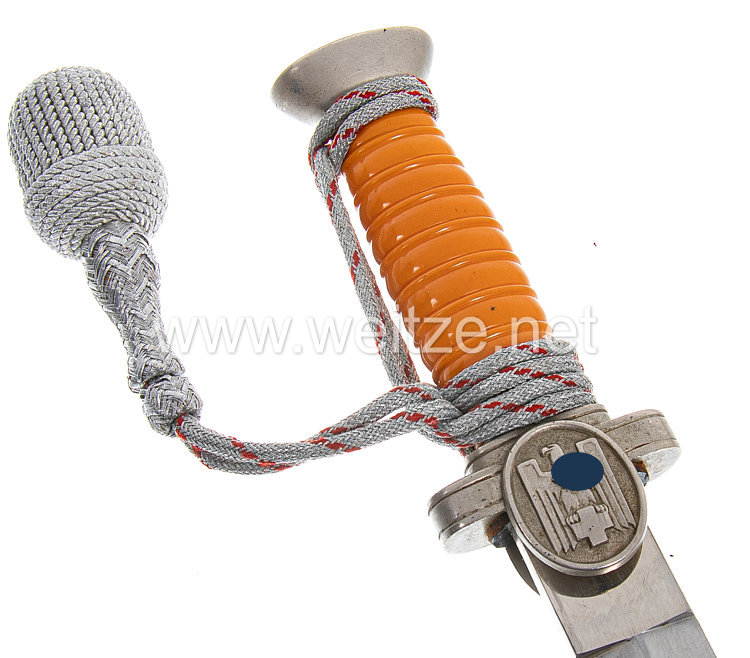
Very well preserved blade, regulation without maker's mark, orange grip, nickel-plated fittings, dent-free nickel-plated scabbard with rounded recessed suspension loops, with rare original portepee. A very well preserved dagger. Condition 2


448276
2.500,00

German Red Cross (DRK) Dagger for Leader

The dagger for leaders of the German Red Cross (Deutsches Rotes Kreuz, DRK) represents a significant example of paramilitary equipment used by humanitarian organizations during the Nazi era. This specialized weapon was introduced as part of the NS regime's policy of Gleichschaltung (coordination), when the German Red Cross was placed under direct state control in 1937 and incorporated into the National Socialist organizational structure.

The historical development of the DRK dagger began with the reorganization of the German Red Cross under the presidency of Duke Carl Eduard of Saxe-Coburg and Gotha, who was appointed president in 1933. With the increasing militarization and coordination of the organization, uniform regulations and equipment items modeled after military standards were introduced. The leader's dagger was established as a badge of rank and symbol of authority within the DRK hierarchy.

The design and construction of the dagger followed strict regulations. The blade was manufactured without maker's marks as prescribed, which was distinctive and possibly reflected the organization's humanitarian orientation. The characteristic orange grip was the most striking feature of the DRK dagger, clearly distinguishing it from other daggers of the period. The orange color held special symbolism, traditionally associated with the Red Cross and its humanitarian mission.

The nickel-plated fittings and scabbard conformed to the technical standards of the 1930s. The scabbard featured characteristic rounded suspension loops that enabled a specific carrying method. The portepee, a braided loop attached to the dagger, served not only practical purposes but also functioned as a rank insignia. The presence of an original portepee is rare today and significantly enhances the historical value of such an object.

The authorization to carry was strictly regulated. Only leaders and higher functionaries of the DRK were entitled to wear this dagger. This included district leaders, regional leaders, and higher ranks within the organization. The dagger was worn on official occasions, parades, and ceremonies as part of the dress uniform.

The role of the DRK during the war was complex. On one hand, the organization continued its traditional humanitarian duties; on the other, it was deeply embedded in the National Socialist war machinery. The DRK was responsible for medical care of wounded soldiers, ambulance services, and various auxiliary services. The leaders who carried such daggers played an important role in organizing these services.

After 1945, the DRK was dissolved in the occupation zones and later re-established in new form in the Federal Republic of Germany and the GDR. The daggers and other NS-era equipment were no longer used. Today, these objects are important historical witnesses to a problematic period in the history of the German Red Cross.

From a collecting perspective, well-preserved DRK leader's daggers are rare, especially with original portepees. The condition is crucial for historical evaluation. The fact that the blade was manufactured without maker's marks as prescribed makes dating and attribution to specific production sites difficult, but contributes to authenticity.

The scholarly significance of such objects lies in their testimonial value regarding the NS regime's coordination policy and the militarization of civilian organizations. They document how even humanitarian institutions were incorporated into the totalitarian system. For research on the organizational and everyday history of National Socialism, such objects are of considerable value.

These daggers serve as tangible reminders of how the Nazi regime systematically transformed all aspects of German society, including traditionally neutral humanitarian organizations, into instruments serving its ideological and military objectives.