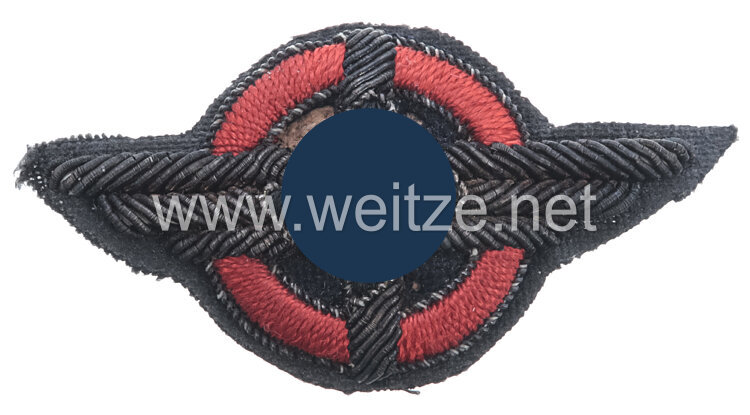
DLV Deutscher Luftsport Verband - Visor Cap Insignia for Leaders

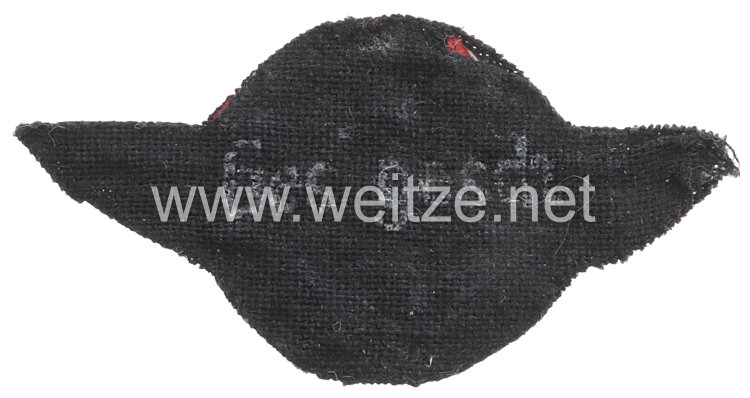
Metal thread hand-embroidered version, reverse stamped "Ges.gesch" (legally protected), approx. 58 mm wingspan, height approx. 29 mm, moth damage, the blue cloth backing was completely removed by moths, condition 2-
464176
350,00

DLV Deutscher Luftsport Verband - Visor Cap Insignia for Leaders

The DLV (Deutscher Luftsport-Verband - German Air Sports Association) cap badge for leaders represents a fascinating testament to German aviation history of the 1930s. This hand-embroidered metal-thread example embodies the organizational development of German aviation during the interwar period, when Germany operated under the restrictions of the Treaty of Versailles.

The German Air Sports Association was founded on March 25, 1933, serving as an umbrella organization for all civilian aviation sports activities in Germany. Its establishment occurred shortly after the Nazi seizure of power and was part of the systematic coordination (Gleichschaltung) of all associations. The DLV absorbed the functions of several previously existing aviation organizations, including the German Aviation Association. Under the leadership of Hermann Göring as Reich Aviation Minister, the DLV developed into a significant paramilitary training organization.

The present example as metal-thread embroidery marked “Ges.gesch” (Gesetzlich geschützt - legally protected) indicates official, high-quality manufacture. The dimensions of approximately 58 mm wingspan and 29 mm height correspond to standardized specifications for DLV leaders' cap badges. These hand-embroidered examples were significantly more elaborate than machine-made or stamped variants for lower ranks.

The badge typically displays the characteristic DLV eagle with outstretched wings, clutching a swastika in its talons. This symbolism combined traditional German eagle iconography with National Socialist ideology. The design followed strict guidelines established in DLV uniform regulations. The use of metal threads in gold or silver tones emphasizes the representative character of these leadership badges.

The DLV fulfilled several important functions: First, it served for paramilitary training of pilots and flight personnel, which was of strategic importance given the restrictions of the Treaty of Versailles. Second, it promoted the popularization of aviation among the German population. Third, it formed a recruitment pool for the secretly developing Luftwaffe, whose existence was initially kept secret.

The organization was divided into various sections: motor flight, gliding, model aircraft, and parachuting. By 1935, membership had grown to over 300,000. The association operated numerous flight schools throughout the Reich and organized competitions and events to promote air sports.

With the official announcement of the German Luftwaffe on March 1, 1935, and the associated lifting of the military restrictions of the Treaty of Versailles, the role of the DLV began to change. On April 1, 1937, the DLV was finally dissolved and its functions transferred to other organizations. Paramilitary training largely passed to the National Socialist Flyers Corps (NSFK), which had been founded in 1937.

The described moth damage with complete loss of the blue cloth backing is not unusual for textile pieces from this era. The use of natural materials like wool made these objects vulnerable to insect damage. The fact that the metal-thread embroidery itself survived while the fabric backing was destroyed corresponds to the typical damage pattern in such historical textiles.

The blue color of the backing had symbolic significance, representing the sky and aviation in general. This color scheme was later adopted by the Luftwaffe and other aviation-related organizations.

For collectors and historians, DLV badges are important documents of a transitional period in German military history. They represent the years when Germany systematically rebuilt its air forces, initially under the guise of civilian organizations. The various quality levels and manufacturing methods of the badges reflect the hierarchical structure of the organization.

Authentication of such pieces requires knowledge of manufacturing techniques, materials, and markings of the period. The “Ges.gesch” stamp was a common practice among officially authorized manufacturers, marking the use of protected emblems and designs.

Today, these badges serve as tangible artifacts documenting a crucial period in aviation history, when civilian organizations served as the foundation for what would become one of the most formidable air forces of World War II.