Naval - Small Sailor Doll Toy

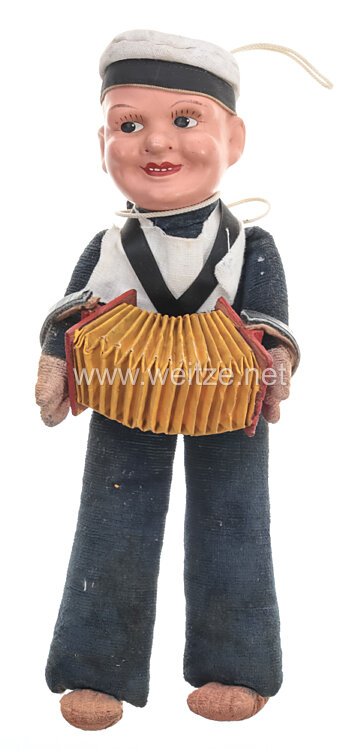
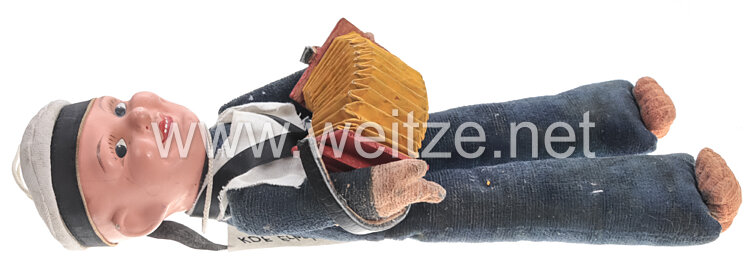
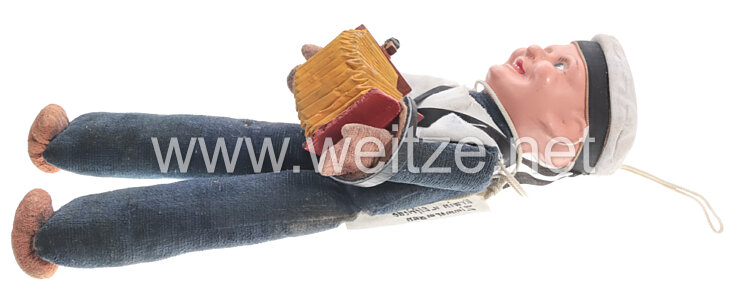
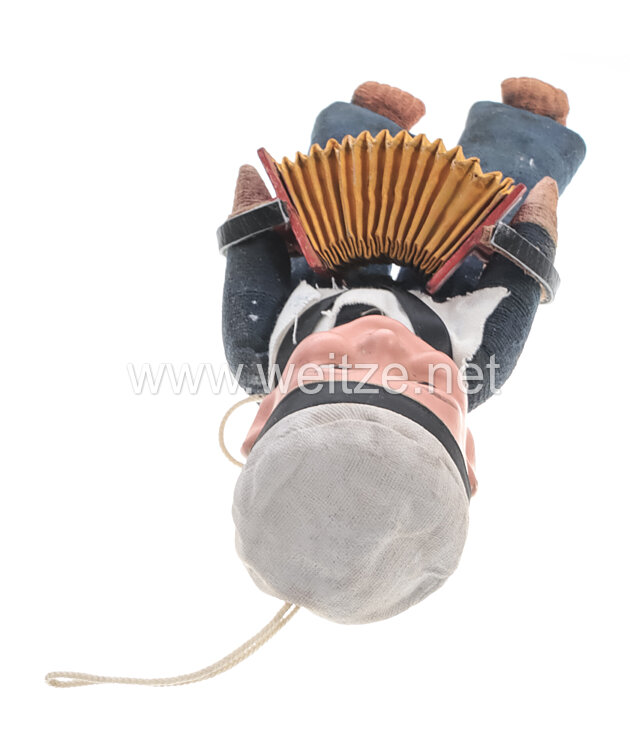
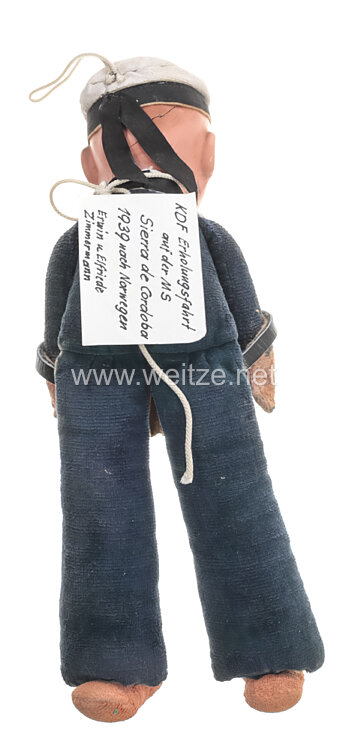
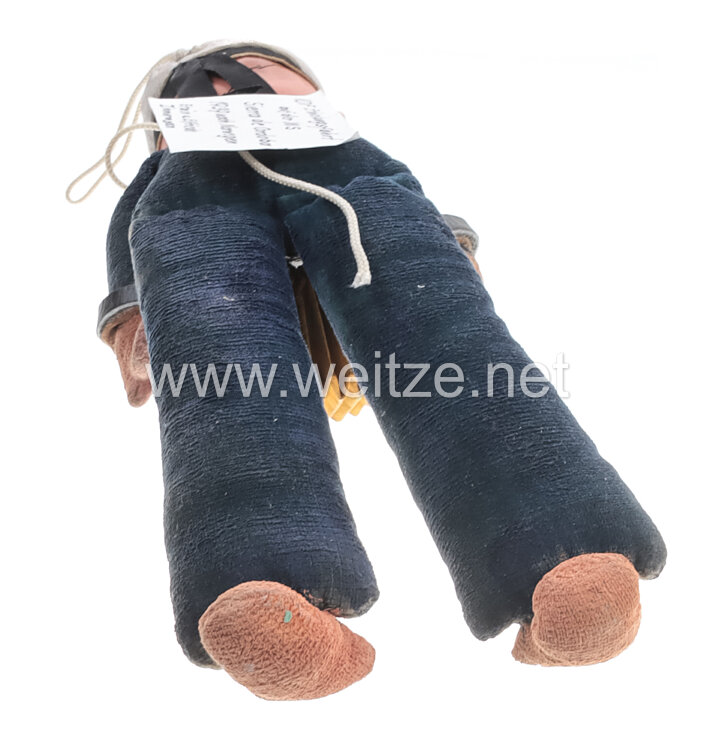
1930s, very lovingly crafted doll in blue sailor uniform with cap including cap tally Zinnowitz. The head made of hard plastic, overall height approx. 28 cm. Accordion is removable. Typical play and usage wear, Condition 2. 


464675
250,00

Naval - Small Sailor Doll Toy

This sailor doll from the 1930s represents a fascinating example of maritime toy culture in interwar Germany. Such dolls were not merely popular children's toys but also served to convey patriotic values and popularize the navy within German society.

During the 1930s, Germany under National Socialist rule experienced an intense phase of military remilitarization and propaganda. The Kriegsmarine, as the German navy was officially called from 1935 onwards, played a central role in National Socialist ideology. Toy dolls in naval uniforms were part of a broader cultural movement intended to instill military values from childhood.

The cap ribbon bearing the inscription "Zinnowitz" holds particular historical significance. Zinnowitz, a Baltic Sea resort on the island of Usedom, was a popular recreation destination for naval personnel and their families. Cap ribbons traditionally bore the name of the ship or naval base to which a sailor was assigned. The use of place names like Zinnowitz on toy dolls reflects the close connection between German coastal towns and maritime tradition.

The material composition of the doll reflects technological developments of the 1930s. The hard plastic head indicates the increasing use of Bakelite or similar early plastic materials that revolutionized the toy industry during the 1920s and 1930s. These materials were more durable and cost-effective than the traditional porcelain heads of earlier doll generations.

The blue sailor uniform corresponds to the authentic working uniform of the German navy of this period. The characteristic dark blue color, combined with the sailor's cap, was the recognizable symbol of the German naval forces. Such uniforms were deeply rooted in German maritime tradition, dating back to the Imperial Navy of the 19th century.

Particularly noteworthy is the removable accordion accompanying the doll. This references the important role of music in daily naval life. Musical instruments, especially the accordion, were widespread on German ships and served to entertain the crew during long voyages. The depiction of a music-playing sailor emphasizes the human side of naval life and was a popular motif in maritime folk culture.

The production of such toy dolls occurred primarily in German toy centers such as Thuringia and Nuremberg, which had centuries-old traditions in doll manufacturing. Companies like Schildkröt, Käthe Kruse, and other manufacturers produced a variety of character dolls during the 1930s, including professional representations such as soldiers, sailors, and other uniformed figures.

In the context of National Socialist educational policy, such toys also had an ideological function. They were intended to familiarize children, especially boys, with military structures from an early age and to generate enthusiasm for the Wehrmacht and Kriegsmarine. The romanticization of seafaring life was a recurring theme in the propaganda of this period.

From a collector's historical perspective, such sailor dolls from the 1930s are today sought-after objects that document not only toy history but also the social and military history of Germany. They offer insights into the material culture of the interwar period and the ways in which military themes were integrated into everyday life.

The signs of wear on the doll testify that it was actually used as a toy and not merely as a decorative object. This increases its historical value, as it bears authentic traces of interaction with children of the 1930s. Such objects are silent witnesses to a complex historical period and enable contemporary viewers to better understand the everyday culture of that time.

The combination of playful elements, such as the accordion, with the military uniform creates a curious juxtaposition that reflects the normalization of military presence in civilian life during this era. These dolls bridge the gap between childhood innocence and the militarization of German society in the prelude to World War II.