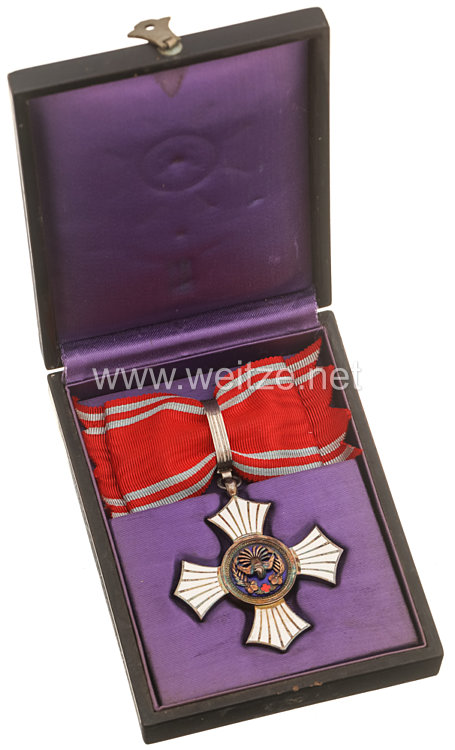
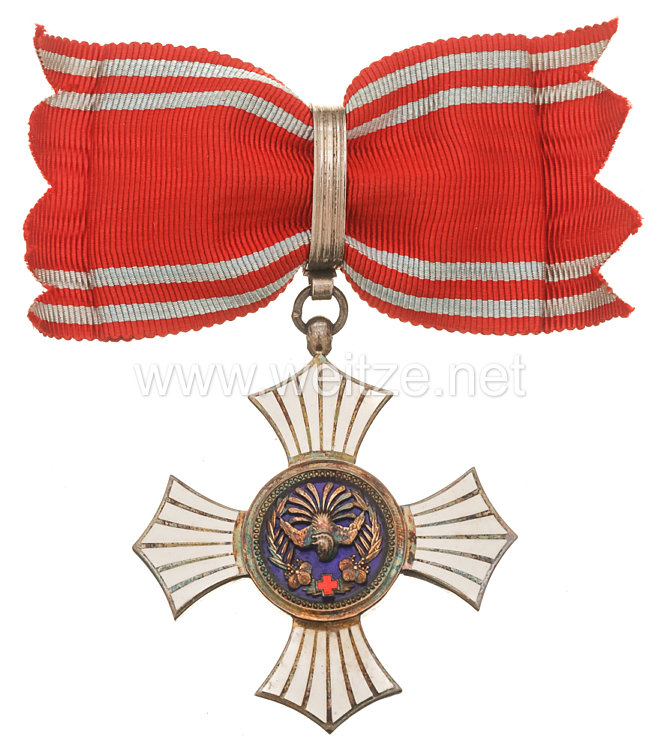
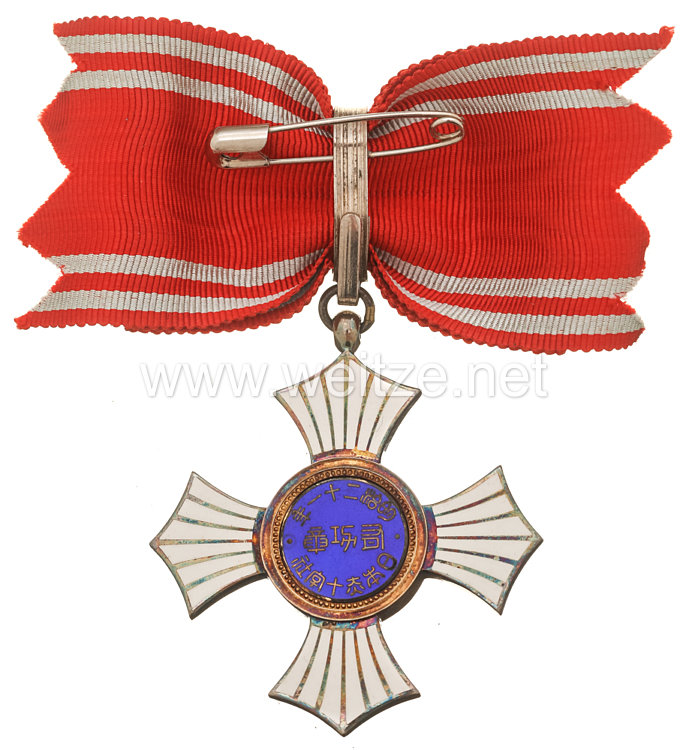
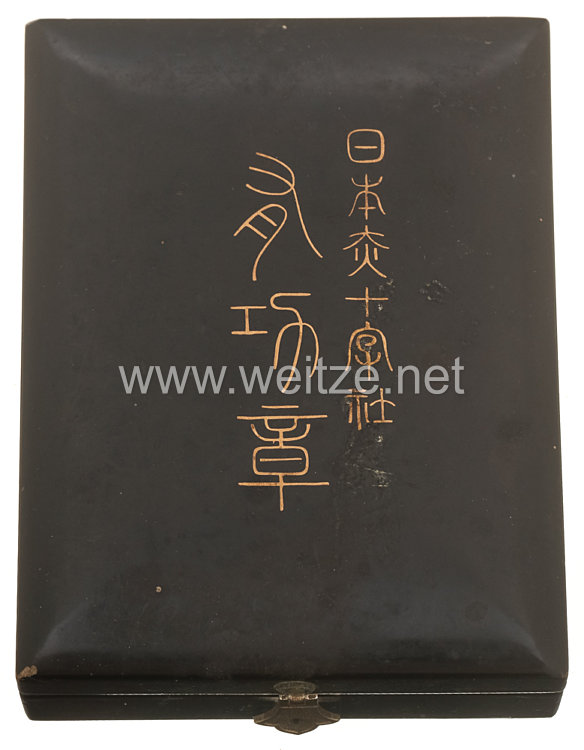
Japan, red cross gold medal for women

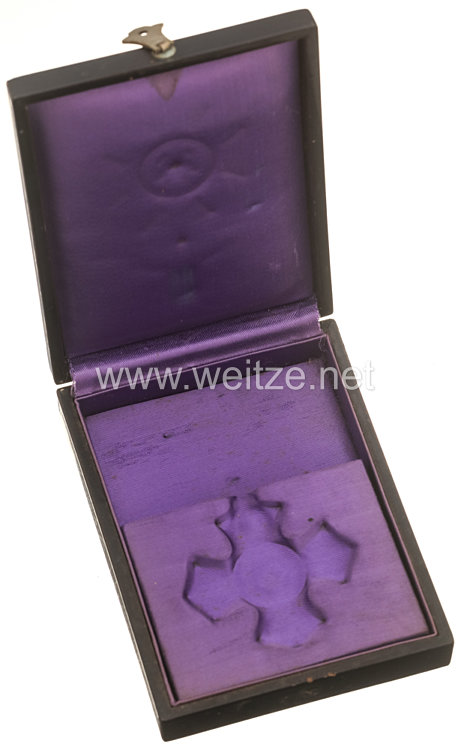
on ribbon bow, with buttonhole decoration, in black award case. Closure system of the case damaged, used condition.
353875
110,00

Japan, Red Cross Medal in Gold for Women

The Gold Red Cross Medal for Women of the Japanese Red Cross represents a significant decoration that must be understood within the context of Japanese military and social history of the late 19th and early 20th centuries. This award recognized the exceptional service of women in humanitarian work, particularly during military conflicts and national emergencies.

The Japanese Red Cross Society (Nippon Sekijūjisha) was founded in 1877 as the Hakuaisha (Society of Broad Benevolence) and was officially admitted to the International Red Cross in 1887. The organization rapidly developed into an important institution in modern Japan, especially under the patronage of the Imperial family. The Empress traditionally served as honorary president of the organization, underlining its social significance.

The introduction of Red Cross decorations for women occurred against the background of increasing female participation in nursing and humanitarian work. During the First Sino-Japanese War (1894-1895) and especially during the Russo-Japanese War (1904-1905), Japanese nurses and Red Cross volunteers played a crucial role in caring for wounded soldiers. These conflicts demonstrated the necessity of a professional medical auxiliary service and led to the formalization of award systems.

The Gold Medal represented the highest level of Red Cross decorations for women and was only awarded for exceptional merit. The award system typically comprised several grades, with gold signifying the highest honor, followed by silver and bronze. The award criteria were strict and required years of dedicated service or particular bravery under dangerous circumstances.

The described form as a ribbon bow with buttonhole decoration corresponds to the traditional Japanese style of female orders and decorations. Unlike male awards, which were often worn on a ribbon around the neck or as breast stars, women frequently received their decorations in the form of bows that could be attached to clothing. This corresponded to social conventions and dress codes of the Meiji, Taishō, and early Shōwa eras.

The black presentation case is typical of Japanese state decorations from this period. The presentation boxes were carefully designed and often featured the symbol of the Red Cross or imperial emblems. The fact that the medal is preserved in its original case underscores the appreciation shown to such awards, even though the damaged closure system indicates the age and history of the object.

During the Taishō era (1912-1926) and early Shōwa period (from 1926), the Japanese Red Cross expanded considerably. The organization operated hospitals, nursing schools, and relief programs throughout the Japanese Empire, including Korea, Taiwan, and Manchukuo. Women awarded the Gold Medal had often served for decades in these institutions or distinguished themselves during military campaigns in China and later in the Pacific War.

Red Cross medals for women are today important testimonies of Japanese social history. They document the role of women in an increasingly militarized state, with their contribution needing to be understood both as humanitarian service and as part of national mobilization. After 1945, the Japanese Red Cross was reorganized and separated from its military connections, but retained its importance as a humanitarian organization.

Collectors and historians value these decorations for their craftsmanship and historical significance. The gold medals were awarded in limited numbers, making them rare objects. Their condition, completeness with case and documentation, and the possibility of identifying the recipient significantly influence their historical and collectible value.

The bow configuration with buttonhole attachment reflects the distinctive Japanese approach to female honors during this period, distinguishing them from Western practices while maintaining the dignity appropriate to such significant recognition. These pieces represent not only individual achievement but also the broader evolution of women's roles in Japanese society during a period of rapid modernization and imperial expansion.