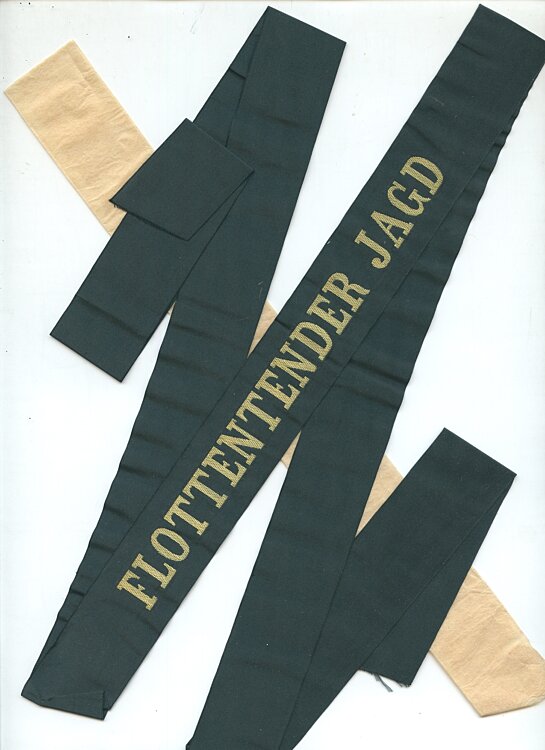
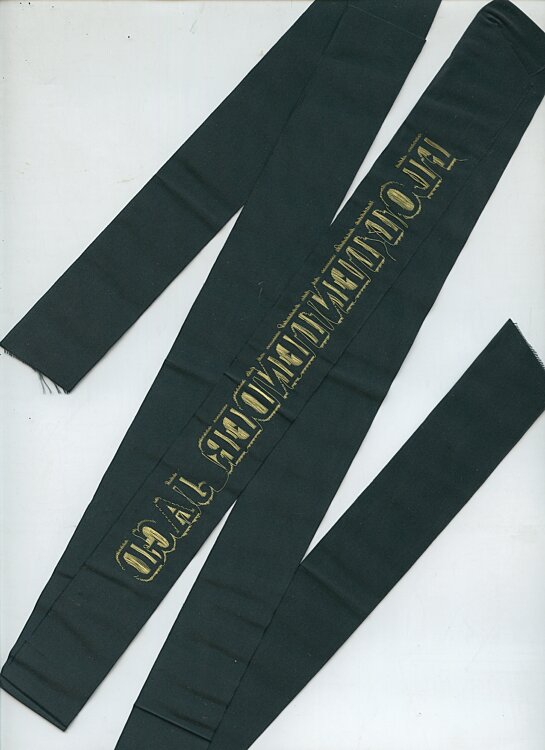
Reichsmarine Cap Tally "Flottentender Jagd"

Metal thread woven construction, mint condition. Condition 1a
205673
50,00

Reichsmarine Cap Tally "Flottentender Jagd"

The cap tally of the fleet tender “Jagd” of the Reichsmarine represents an authentic testament to German naval history between 1921 and 1935. This metal-thread woven example in mint condition embodies the time-honored practice of identifying naval personnel by their respective service units.

The Reichsmarine officially came into existence on January 1, 1921, emerging from the Imperial Navy following Germany's defeat in World War I. The Treaty of Versailles of June 28, 1919, imposed drastic maritime restrictions on Germany. The treaty limited the German Navy to a maximum of 15,000 personnel, six battleships, six cruisers, twelve destroyers, and twelve torpedo boats. Submarines were completely prohibited. Within this constrained framework, the Reichsmarine had to fulfill its duties of coastal defense and training.

Fleet tenders were specialized support vessels that played an essential role in supporting operational fleet units. These ships served for logistical supply, transport of personnel and materials, and various auxiliary services. The name “Jagd” (Hunt) fits into the maritime naming tradition, where tenders were frequently named after activities, regions, or traditional terms.

Cap tallies had been an integral part of the sailor's uniform since the Imperial Navy era. They were worn on the sailor's cap and displayed the name of the respective ship or unit in gold or silver letters. This tradition dates back to the 19th century and was adopted by most European navies. Cap tallies served not only for identification but also strengthened esprit de corps and the crew's connection to their ship.

The metal-thread woven execution presented here is particularly noteworthy. Such high-quality cap tallies were manufactured with gold or silver metal threads on a black or dark blue background. Production required specialized ribbon weavers, often located in traditional centers of textile production. The inscription typically followed an established format: the ship's name appeared in the center in Latin letters, framed by stylized anchors, oak leaves, or other maritime symbols.

The Reichsmarine maintained strict uniform regulations, which were laid down in various service regulations and rulebooks. The dress regulations defined precisely when and how uniform parts were to be worn. Cap tallies were integral components of the service uniform for enlisted men and non-commissioned officers without sword knots. Officers wore different headgear without ship names.

The condition described as “1a” and “mint” suggests that this cap tally may never have been worn or was only kept for representative purposes. Such unworn examples are particularly rare today, as most cap tallies were subject to natural wear during service. Many cap tallies were kept as mementos after ships were decommissioned or when sailors were transferred.

The Reichsmarine existed until 1935, when it was replaced by the Kriegsmarine. With the Nazi seizure of power in 1933, Germany began gradually ignoring the Versailles restrictions. On March 16, 1935, Adolf Hitler officially announced rearmament, and the Reichsmarine was renamed Kriegsmarine.

For collectors and historians, Reichsmarine cap tallies are important documents of naval history. They enable the reconstruction of ship histories, fleet structures, and personnel-historical contexts. The cap tally of the fleet tender “Jagd” is a material witness to a specific unit within a historically significant epoch of German naval history, positioned between the defeat of World War I and the reconstruction under National Socialist rule.

The preservation of such objects in museum collections and private holdings contributes to understanding maritime traditions, uniform studies, and general military history. They are silent witnesses to the service of thousands of naval personnel who fulfilled their duties under often difficult conditions.