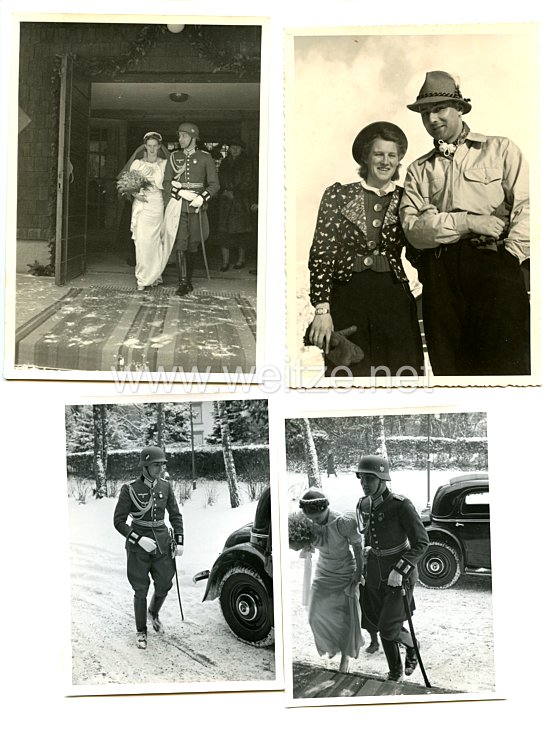
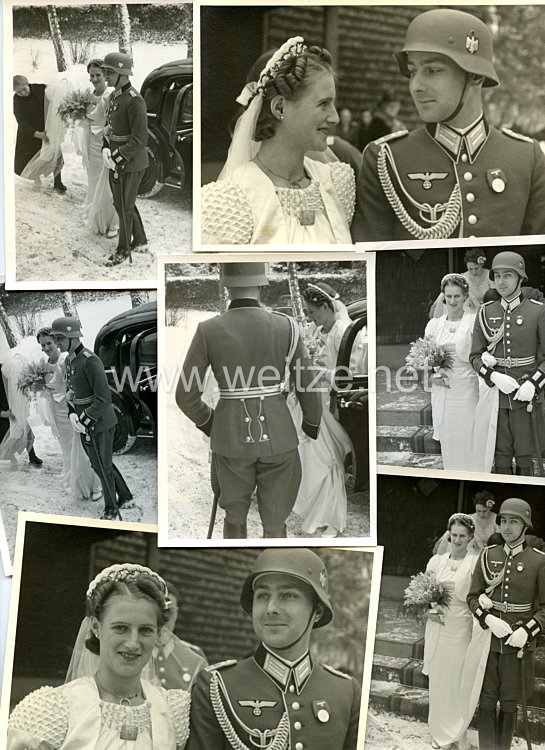
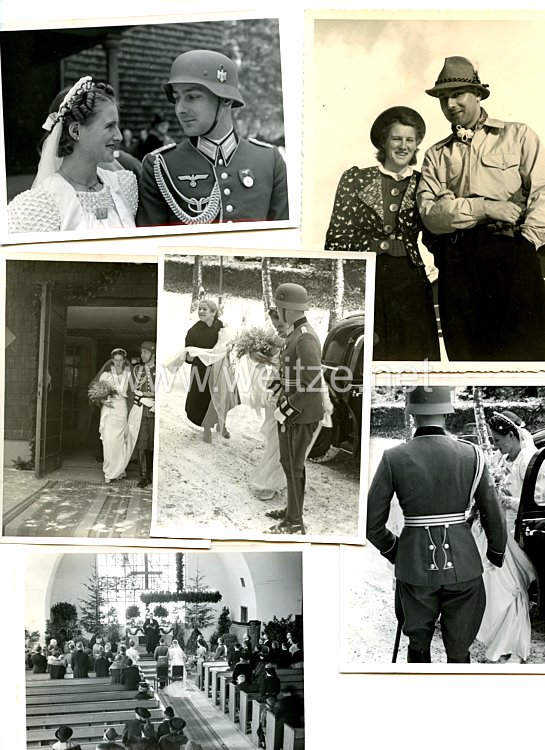
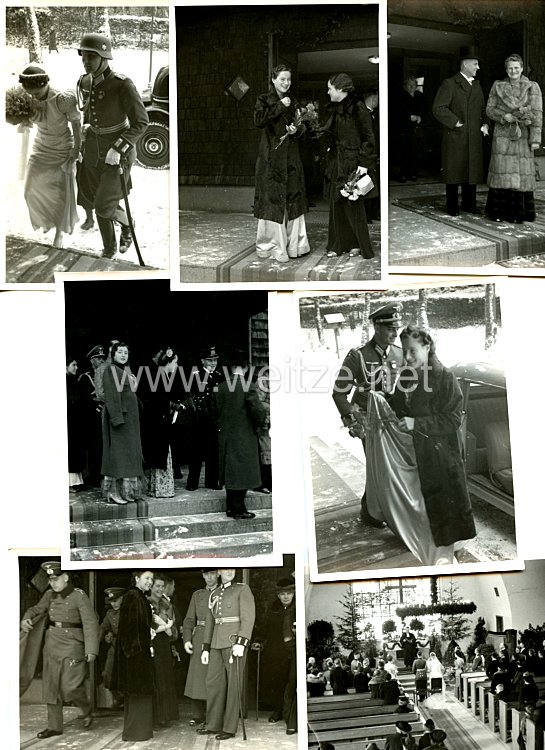
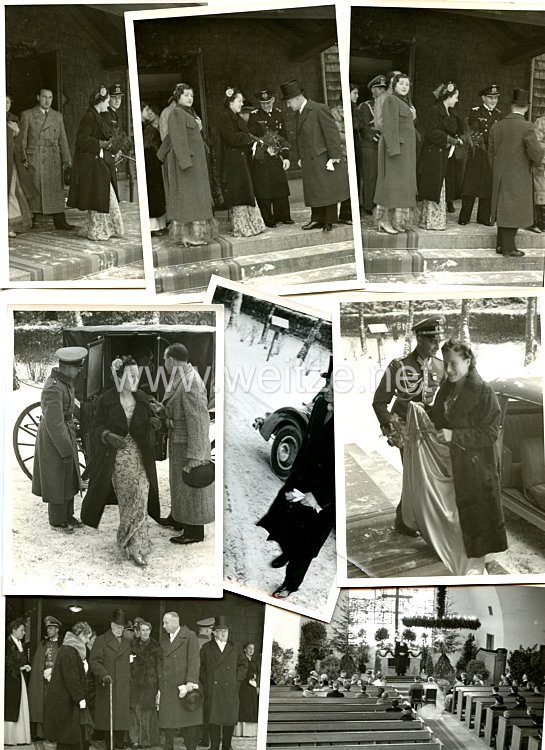
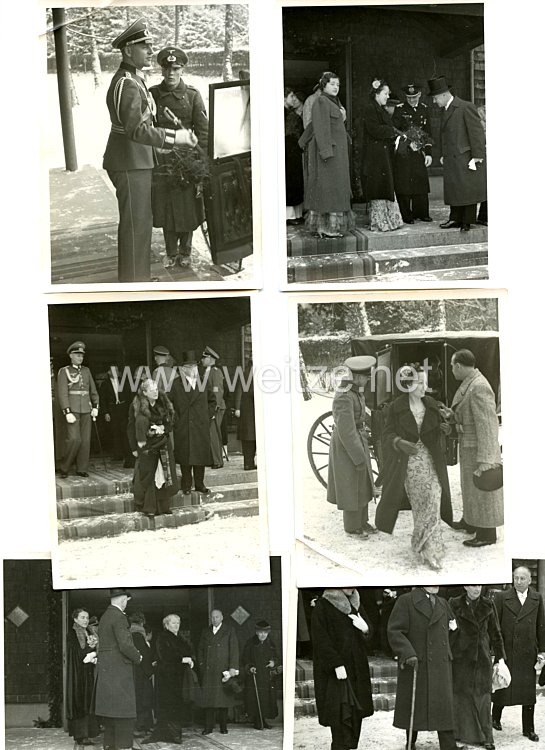
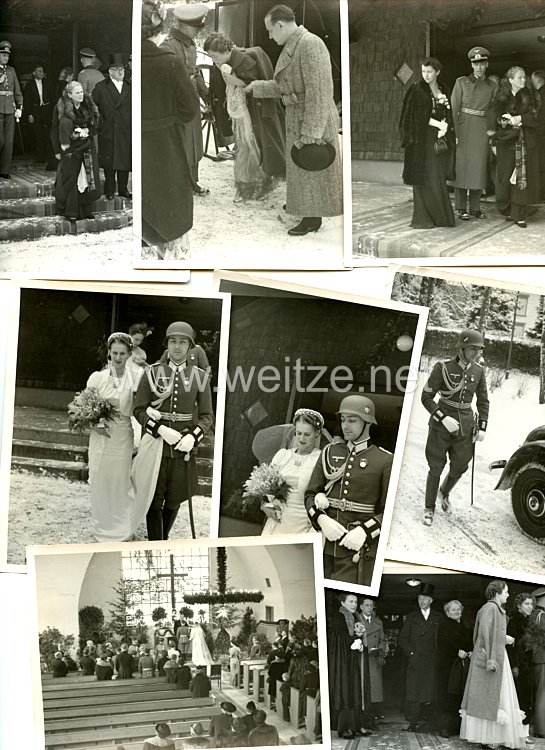
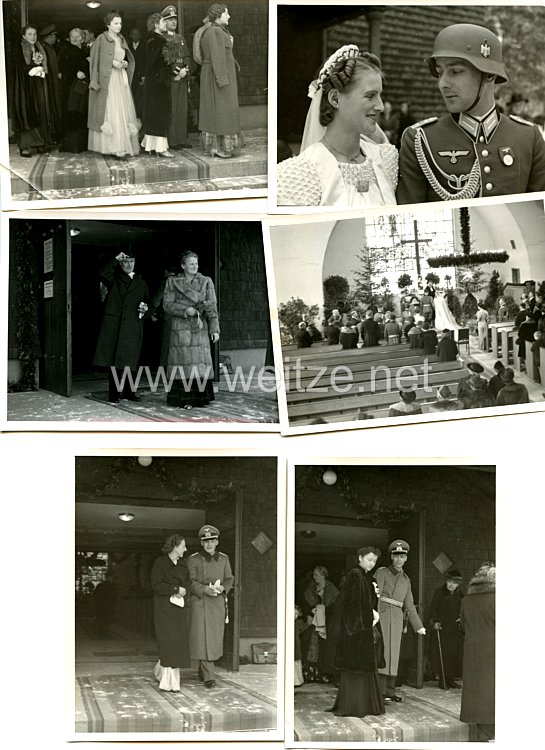
Wehrmacht Heer Photograph Collection, Wedding of a Wehrmacht Officer

Approximately 50 photographs. Condition 2.
370071
240,00

Wehrmacht Heer Photograph Collection, Wedding of a Wehrmacht Officer

This collection of approximately 50 photographs documents the wedding of a Wehrmacht officer during World War II and represents a remarkable testimony to everyday culture and social norms within the German armed forces between 1935 and 1945.

Historical Context of Wehrmacht Officer Weddings

Weddings of Wehrmacht officers followed strict protocol regulations and were of considerable military and social significance. According to the Army Regulation on Marriage Permission, officers up to the rank of captain required explicit approval from their superiors to marry. This regulation, rooted in Prussian military tradition, was intended to ensure that the officer's social standing and financial situation, as well as the “social appropriateness” of the bride, met military requirements.

Photographic Documentation of Military Events

The photographic documentation of personal events increased significantly during the interwar period and World War II. Wedding photographs were among the most important events to be recorded. For officers, a wedding was not only a private but also an official event that underscored their social position within the military hierarchy. Photo collections like this one were frequently produced by professional photographers or talented amateurs from among their comrades.

Uniforms and Ceremonial Aspects

Wehrmacht officers typically married in their parade uniform or dress uniform. The Army's parade uniform consisted of field-gray cloth with corresponding branch colors, shoulder boards, and decorations. At weddings, wearing the saber or sword was mandatory, serving as a traditional symbol of officer status. The honor guard, where comrades formed an archway with drawn swords through which the bridal couple walked, was a central ceremonial element of such weddings.

Social Significance

An officer's wedding was a social event that solidified integration into the officer community and their families. The photographs typically show not only the bridal couple but also comrades in uniform, family members, and festive decorations. Swastika flags and other National Socialist symbols were frequently present at such occasions between 1933 and 1945, reflecting the political permeation of military and civilian life.

Source Value for Historical Research

Such photo collections are of considerable value for historical research. They provide insights into everyday history, uniform studies, social structures, and the self-representation of the Wehrmacht. The images document fashion, hairstyles, interior design, and social conventions of the era. For uniform history, such photographs are particularly valuable as they show the actual wearing of uniforms and decorations in contrast to official regulations.

Photographic Technology of the Period

Most photographs from this period were taken with 35mm cameras such as the Leica or medium-format cameras. Development and printing frequently took place in commercial photo labs or military facilities. Image quality varied depending on the photographer's skill and available technical means. Approximately 50 photographs represent comprehensive documentation covering various aspects of the wedding celebration.

Preservation and Collector Interest

The stated condition 2 indicates well-preserved photographs with minimal signs of wear. Photo collections from the Wehrmacht era are sought after by collectors of military historical objects as they represent authentic contemporary documents. They complement understanding of military history with private and personal dimensions often absent from official documents.

Critical Perspective

When evaluating such objects, critical historical contextualization is essential. The Wehrmacht was an integral part of the National Socialist regime and involved in war crimes. Photographs from this period document a society at war and under dictatorship. Their value lies in authentic documentation of this era for research and education, not in glorification of the institution depicted.

r