Allgemeine-SS Photo Group, SS Member on a Cruise to Norway
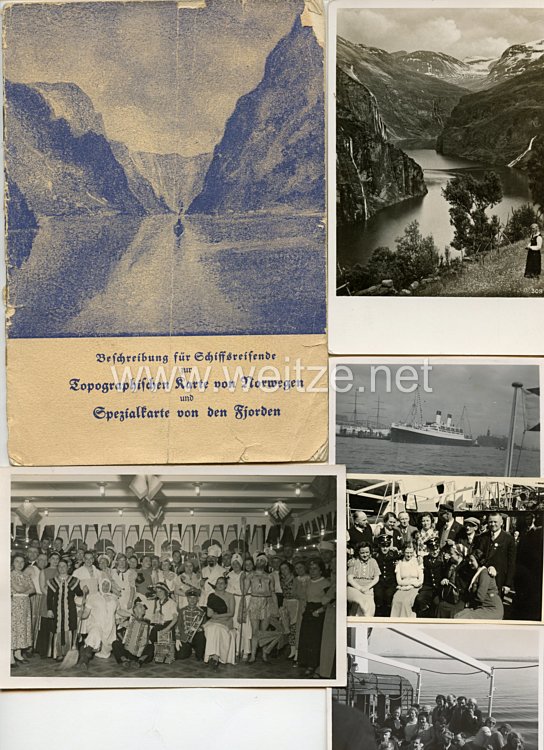
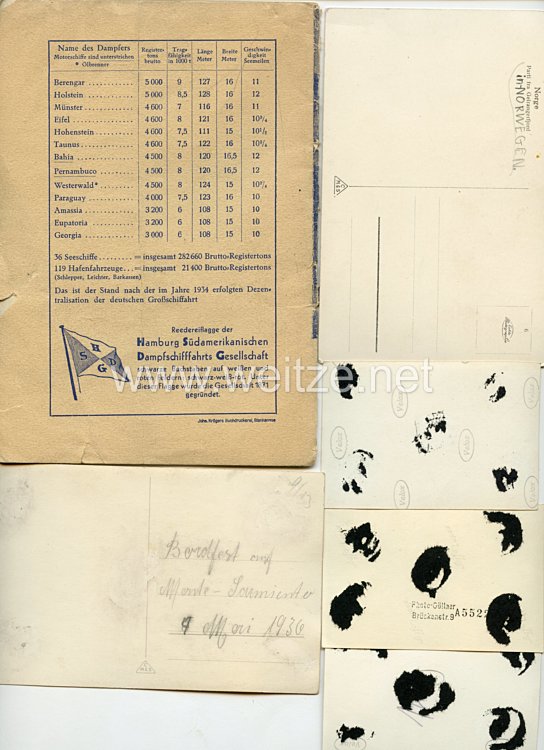
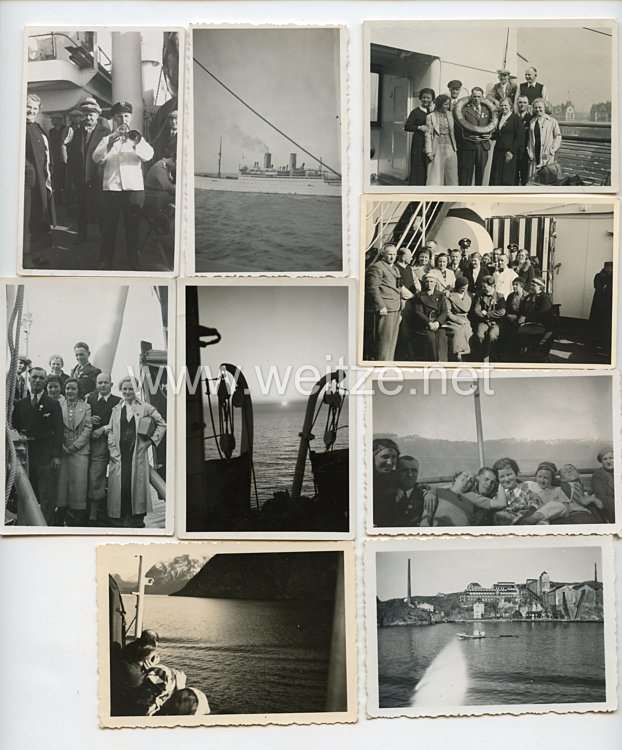
This collection of 14 photographs documents a remarkable episode from the pre-war history of the Allgemeine SS: a cruise to Norway in which SS members participated. Together with a booklet on the topographic map of Norway, this ensemble offers a fascinating glimpse into the leisure activities and strategic interests of the SS in the late 1930s.
The Allgemeine SS (General SS) formed the non-military branch of the Schutzstaffel, as opposed to the armed Waffen-SS. Founded in 1925 as Adolf Hitler's personal bodyguard, the SS developed under the leadership of Heinrich Himmler from 1929 into one of the most powerful organizations of the Nazi regime. The Allgemeine SS comprised various main offices and was responsible for political, ideological, and administrative tasks.
During the 1930s, the Nazi regime organized various trips and cruises for party members and functionaries. The best-known organization in this field was Kraft durch Freude (Strength Through Joy, KdF), the leisure organization of the German Labor Front. From 1934 onwards, KdF organized cruises intended to make holiday travel accessible to broad sections of the population, but which also served propagandistic purposes. SS members occasionally participated in such trips or organized their own journeys for their members.
Norway was a popular destination for German tourists during the interwar period. The spectacular landscape of the Norwegian fjords, the midnight sun, and Scandinavian culture attracted many visitors. At the same time, Norway already held strategic significance for Germany in the 1930s. The country was rich in raw materials, particularly iron ore from Swedish mines that was shipped through Norwegian ports. The Norwegian coast was also strategically important for access to the North Atlantic.
The accompanying booklet on the topographic map of Norway suggests an interest extending beyond mere tourism. Topographic maps were and are militarily relevant documents that depict terrain formations, elevations, transportation routes, and strategically important points. Taking such materials on a cruise could indicate intelligence activities or at least a pronounced strategic interest. It is known that German agencies were collecting information about Scandinavia years before Operation Weserübung – the German invasion of Norway and Denmark on April 9, 1940.
The photographic documentation of such trips was common in the 1930s. Photography had established itself as a mass medium, and many Germans owned cameras. For SS members, it was particularly important to document their membership in this elite organization. Photographs in uniform served self-representation and emphasized one's status. At the same time, such pictures were often kept in family albums and served as personal mementos.
Political relations between Germany and Norway in the 1930s were superficially correct but tense. Norway pursued a strict policy of neutrality, which it had already maintained during World War I. Nevertheless, there was a small National Socialist movement in Norway under Vidkun Quisling, who founded the fascist party Nasjonal Samling in 1933. German authorities maintained contacts with this movement, which, however, enjoyed only limited support among the Norwegian population.
After the outbreak of World War II in September 1939, Norway quickly gained strategic importance. Both Germany and the Allies recognized the importance of the Norwegian coast and ore deliveries. This eventually led to the German invasion in April 1940, which was successful despite Norwegian and Allied resistance. Norway remained under German occupation until May 1945.
Photo collections like this one are important historical sources today. They not only document the personal experiences of individual SS members but also provide insight into the mentality, leisure activities, and possibly the intelligence operations of this organization. For historians, they offer valuable material for researching SS history, German-Norwegian relations in the pre-war period, and the preparation of later military operations.
The evaluation of such objects requires historical sensitivity. They are testimonies of a criminal organization responsible for countless crimes during the Nazi regime. At the same time, they are irreplaceable historical documents that can contribute to education and research. Their preservation in museums and archives serves historical education and as a reminder of the crimes of National Socialism.