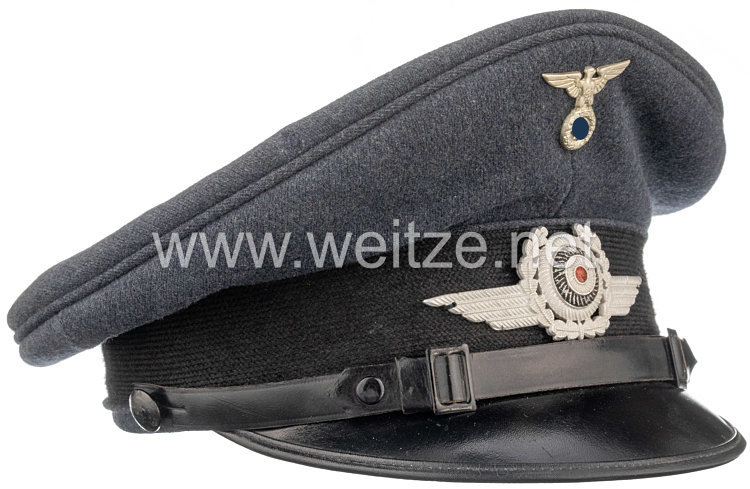
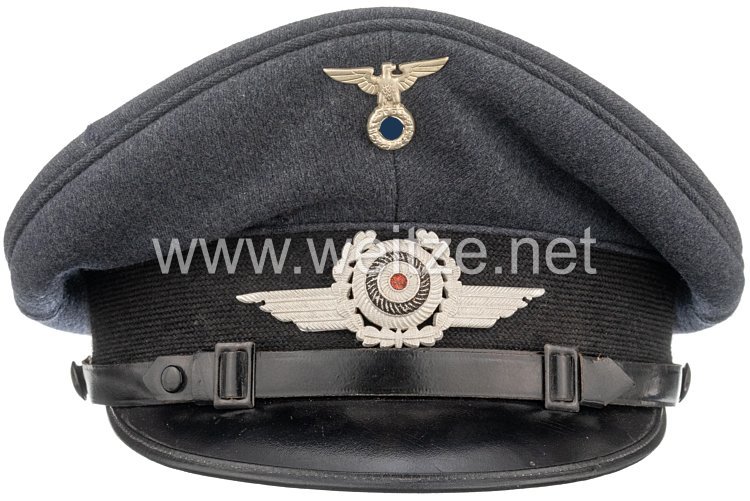
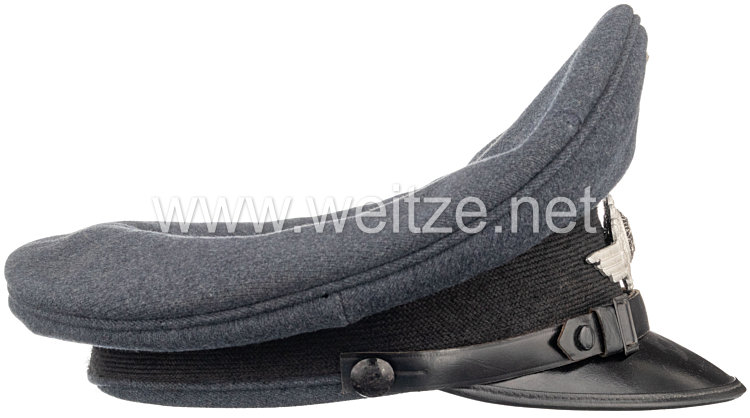
German Air Sports Association DLV: Visor Cap for Aviators

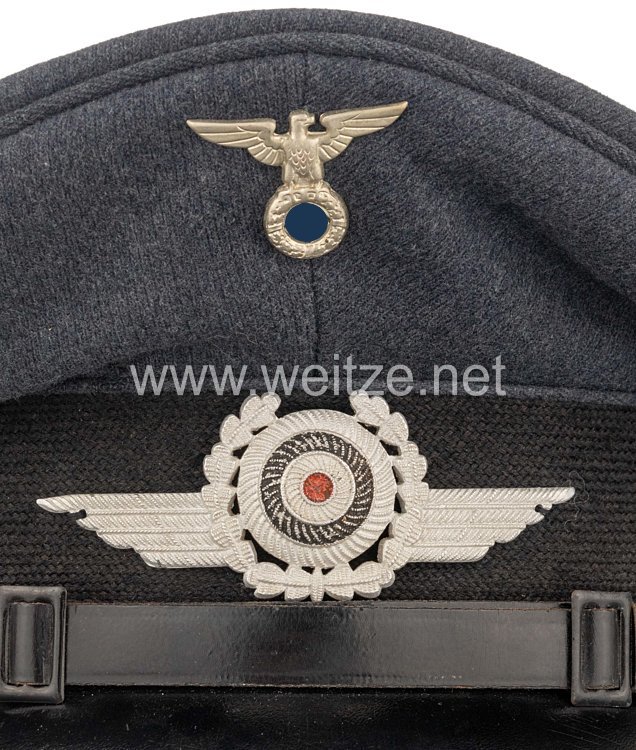
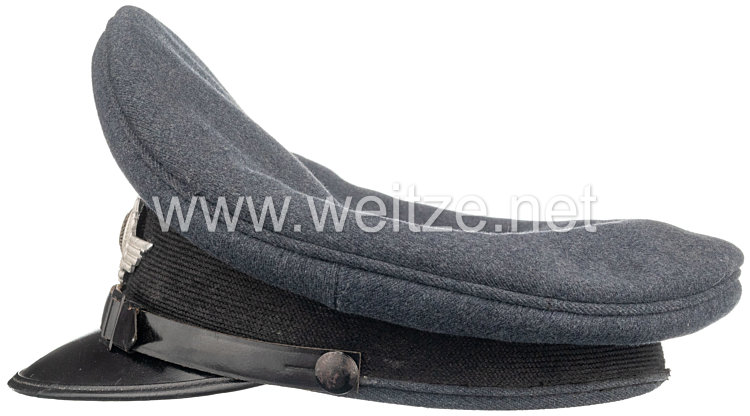
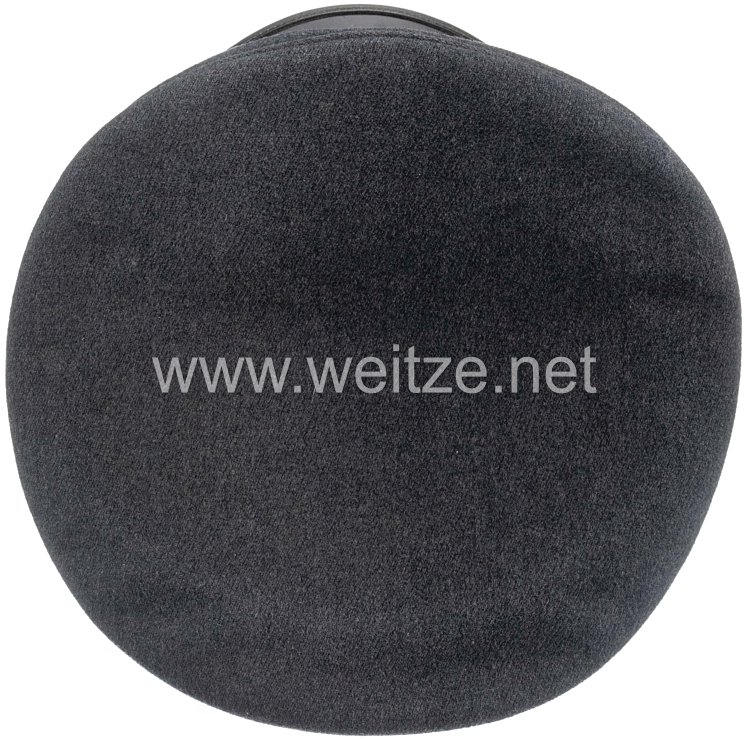
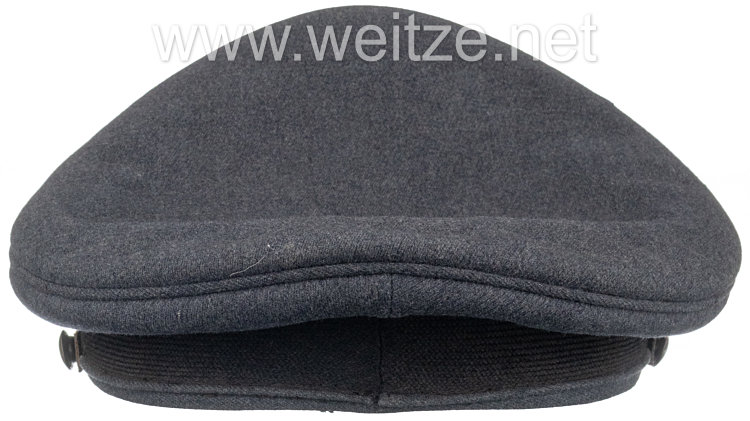
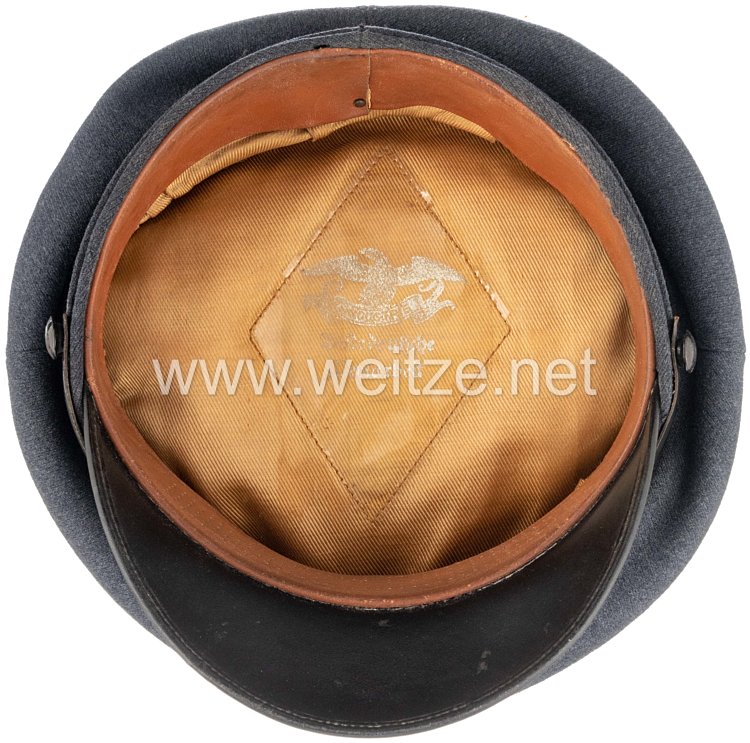
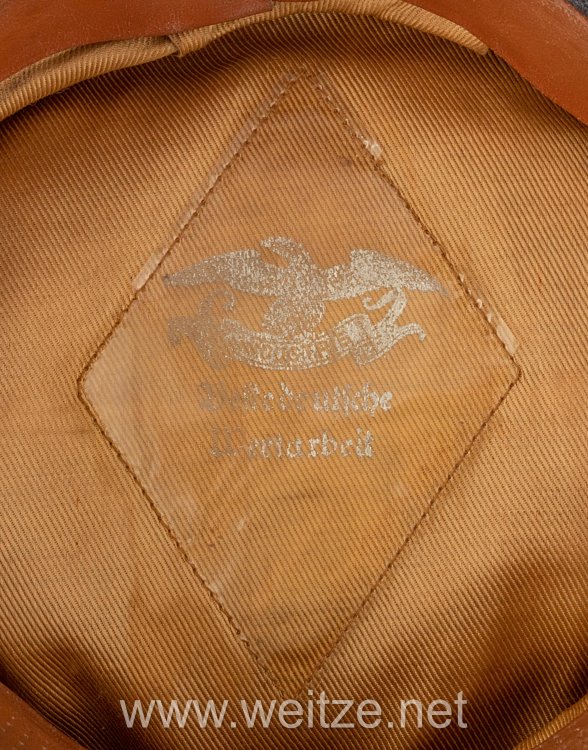
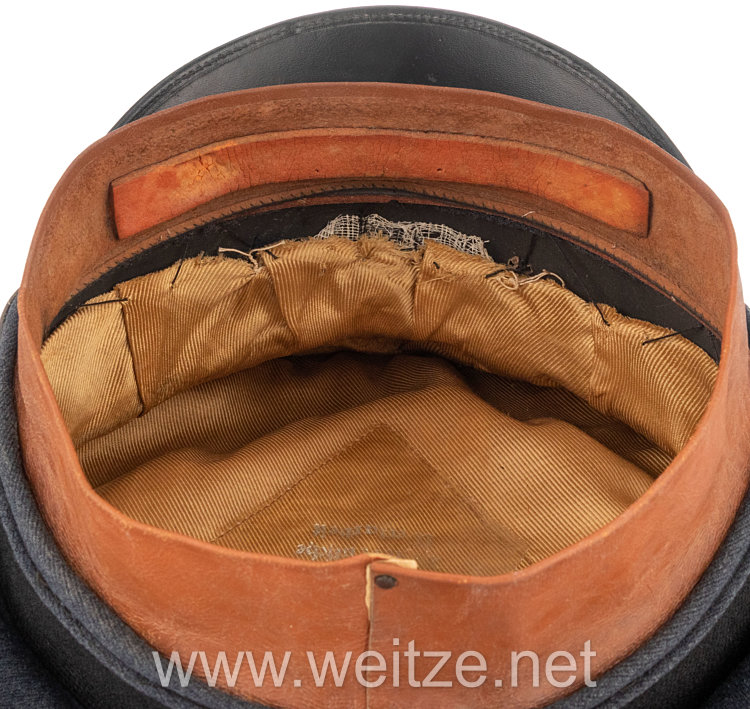
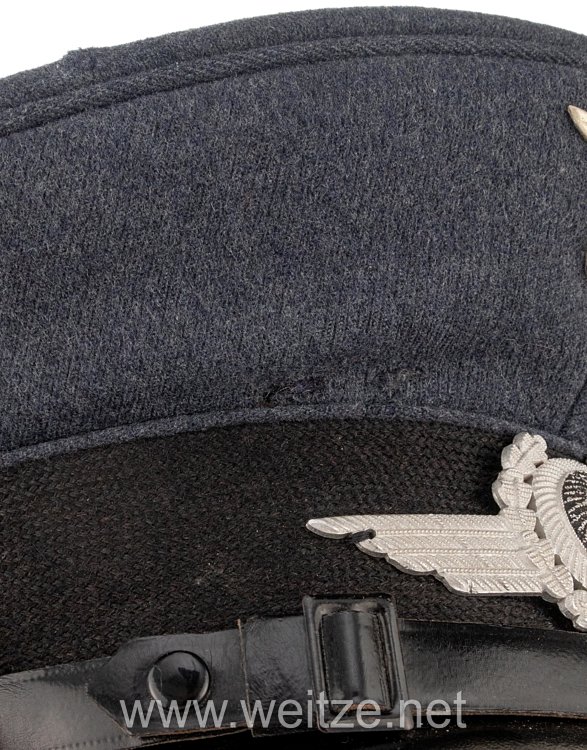
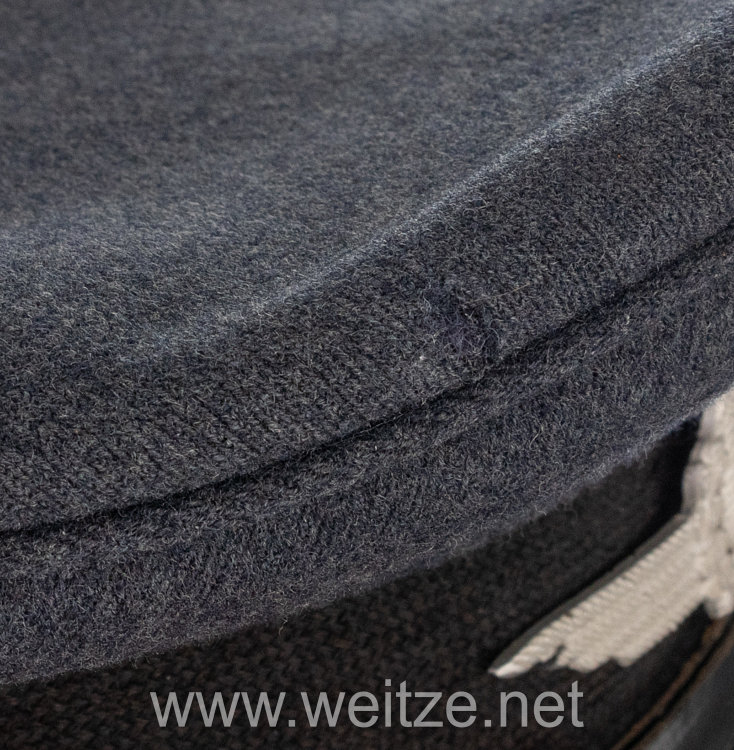
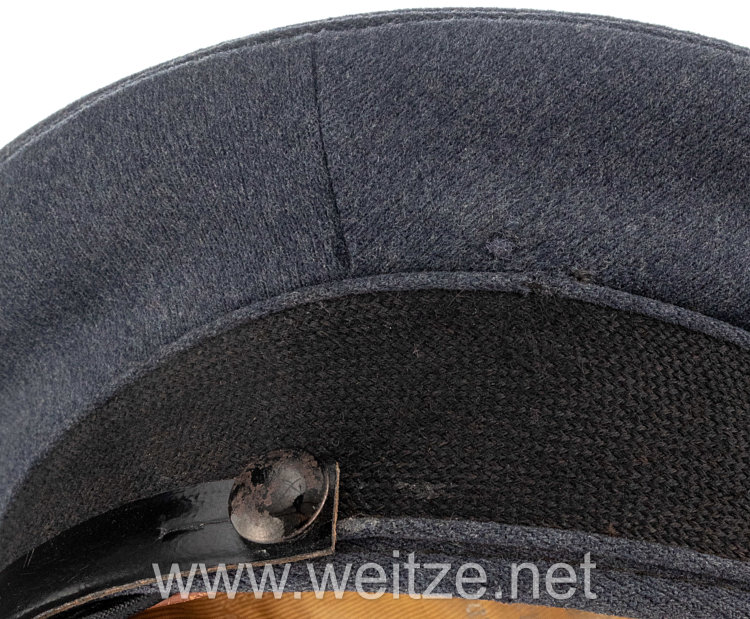
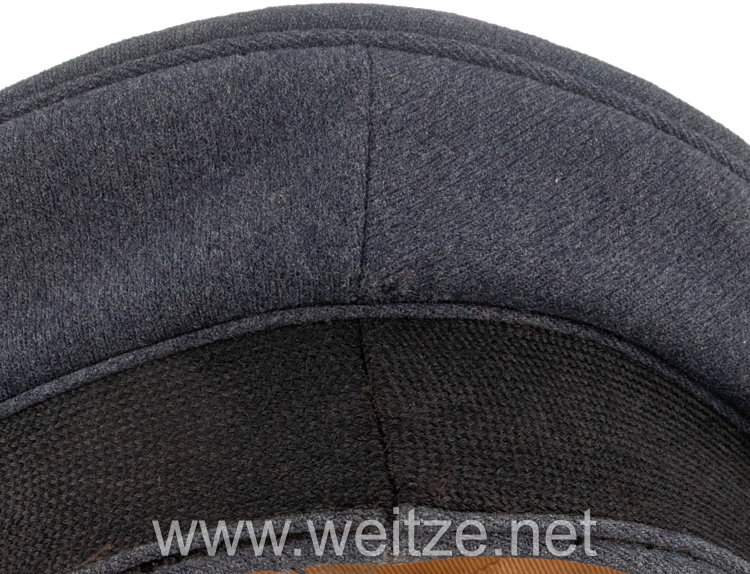
circa 1933/34. Private purchase item. Elegant high saddle-crown form, cloth in fine gabardine, complete with aluminum fittings, front with applied national eagle above the DLV wing insignia and cockade (wing insignia was added later, the split pins newly soldered). Interior with light brown sweatband, brown silk lining, beneath the celluloid diamond the maker's mark “Deutsche Wertarbeit”. Size approximately 55. Repaired spot on crown, and 2 moth holes on front at the height of the cap band, condition 2-
322570
1.000,00

German Air Sports Association DLV: Visor Cap for Aviators

The visor cap of the Deutscher Luftsport-Verband (DLV) for aviators from around 1933/34 represents a significant transitional period in German aviation history. This headgear symbolizes the years during which Germany systematically circumvented the restrictions of the Treaty of Versailles and built up a new air force.

The Deutscher Luftsport-Verband (German Air Sports Association) was officially founded on March 25, 1933, and served as a civilian cover organization for training future Luftwaffe pilots. After the Nazi seizure of power in January 1933, the DLV rapidly became an important instrument of covert military rearmament. Under the leadership of Hermann Göring, who simultaneously served as Reich Commissioner for Aviation, various German air sports clubs merged into this unified organization.

The visor cap described here is distinguished by its elegant high saddle shape, characteristic of early DLV uniforms. The fine gabardine fabric used was a high-quality material that emphasized the importance and status of aviation during this period. The headgear features aluminum fittings, typical of the early DLV period before silver-colored metal parts became standard in 1935 with the official founding of the Luftwaffe.

The cap's emblems are particularly revealing: the applied national eagle above the DLV wing and cockade symbolizes the national significance of the organization. The DLV wing, a stylized aircraft wing, was the official badge of the association and was worn on various uniform parts. The fact that the wing on this specimen was added later is not unusual, as uniform regulations during this transitional period were frequently changed, requiring wearers to modify their equipment accordingly.

The cap's interior with light brown sweatband leather and brown silk lining corresponds to the quality standards of the period. The manufacturer's mark “Deutsche Wertarbeit” (German Quality Work) beneath the celluloid diamond was a common designation of German manufacturers in the 1930s and emphasized the craftsmanship quality of the product. This marking is frequently found on uniform pieces from the Nazi era and was intended to demonstrate the superiority of German craftsmanship.

The DLV played a decisive role in preparing for official rearmament. Thousands of young men received their basic flight training through the association, which later seamlessly transitioned into military training in the newly founded Luftwaffe. On February 26, 1935, the existence of the Luftwaffe was officially announced, and on March 1, 1935, it was formally established as an independent branch of the armed forces.

The period from 1933 to 1935 was characterized by a certain ambiguity: officially, the DLV was a civilian sports association, but in reality, it was a military training instrument. This dual nature is also reflected in the uniforms, which had a military character but were not yet formally considered Wehrmacht uniforms.

After the official founding of the Luftwaffe, the DLV increasingly lost significance but continued to exist until 1937, before being absorbed into the National Socialist Flyers Corps (NSFK). The uniforms and badges of the DLV quickly became historical relics of a brief but significant transitional period.

Such visor caps were typically acquired as privately purchased items, meaning they had to be paid for by the wearer and became their personal property. This explains the sometimes varying quality and execution of different specimens, as not everyone could afford the most expensive versions.

The preservation of such historical headgear is often problematic, as textiles are particularly susceptible to damage. Moth holes and patches, as documented on this specimen, are typical signs of aging and confirm the object's authenticity. The fact that the split pins were re-soldered shows that the piece has undergone repairs and conservation measures over the decades.

Today, DLV uniform pieces from 1933/34 are relatively rare, as this organizational phase was brief and many wearers later exchanged their equipment for Luftwaffe uniforms. They represent important contemporary historical documents illustrating an often overlooked phase of German military history—the years of covert rearmament and systematic preparation for the coming conflict.

The cap serves as a tangible reminder of how the Nazi regime used ostensibly civilian organizations to rebuild military capabilities in violation of international agreements. The DLV was part of a broader strategy that included similar organizations in other military spheres, all working toward the goal of creating a modern, combat-ready Wehrmacht. The transition from DLV to Luftwaffe uniforms and insignia marks one of the most significant moments in interwar European military history, representing Germany's open rejection of the Versailles Treaty limitations and its emergence as a major military power once again.