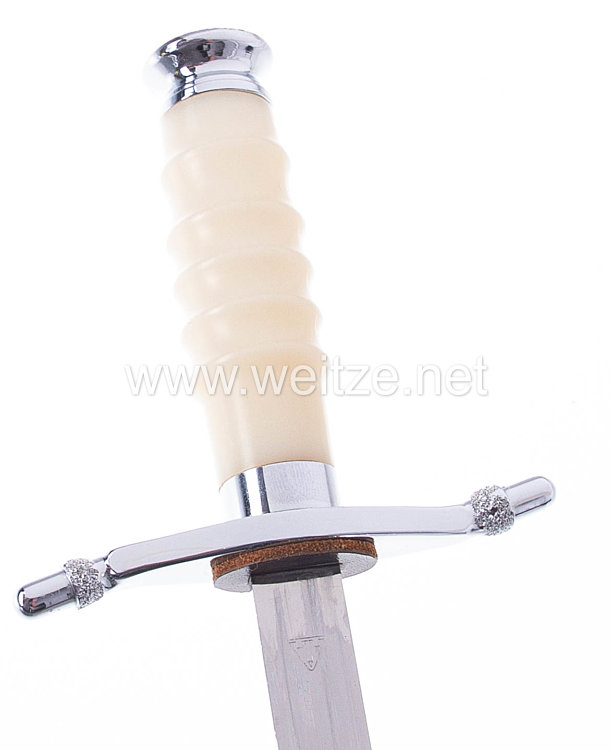
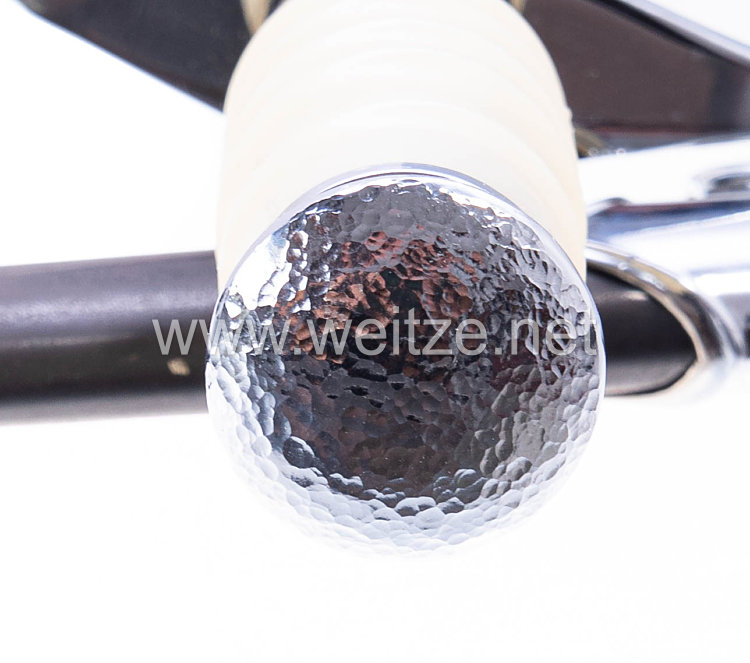
GDR NVA Dagger for Officers of the Ground Forces
The dagger for officers of the Land Forces of the National People's Army (NVA) of the German Democratic Republic represents an important testimony to the military tradition and representational culture of the socialist German state. As part of the official uniform, this dagger served not as a weapon in the true sense, but as a badge of rank and symbol of officer honor in the armed forces of the GDR.
The National People's Army was officially founded on March 1, 1956, formed from the already existing Kasernierte Volkspolizei (Barracked People's Police) units. From the beginning, the leadership of the GDR placed great emphasis on an independent military identity that deliberately distanced itself from Wehrmacht tradition while simultaneously integrating Prussian-German military elements. The introduction of edged weapons as part of the parade uniform followed this logic of maintaining tradition while reorienting toward socialism.
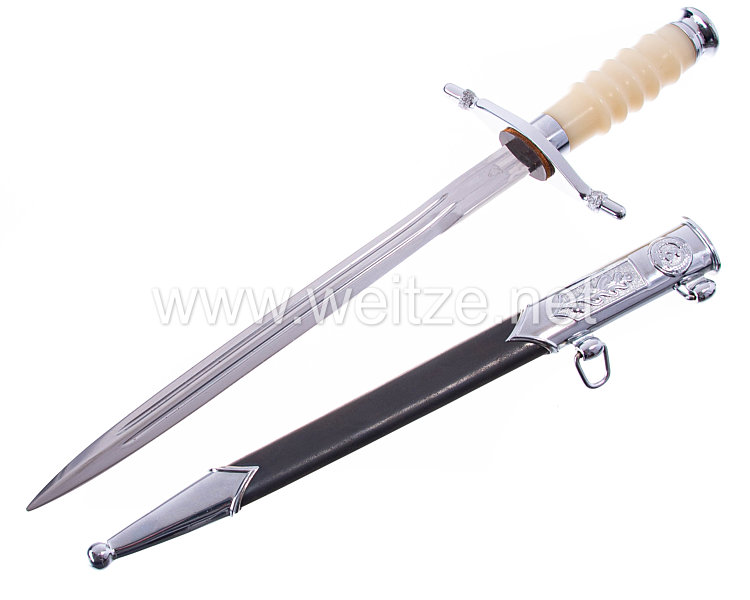
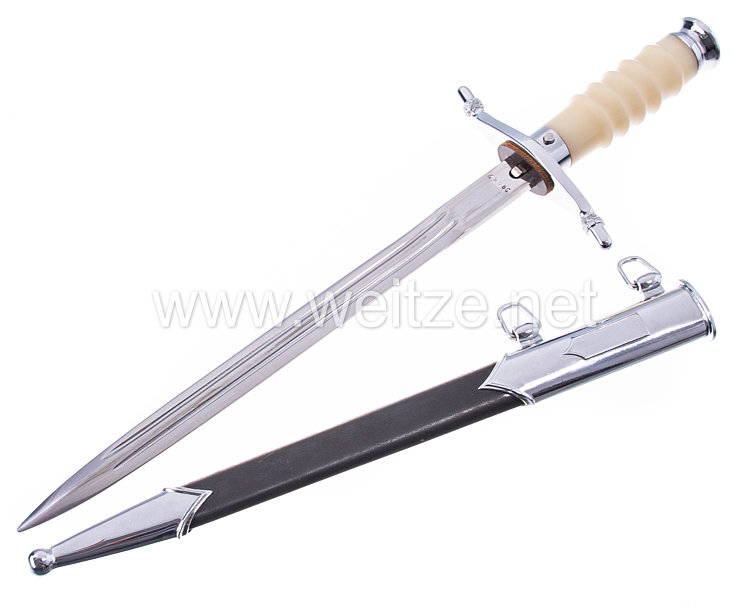
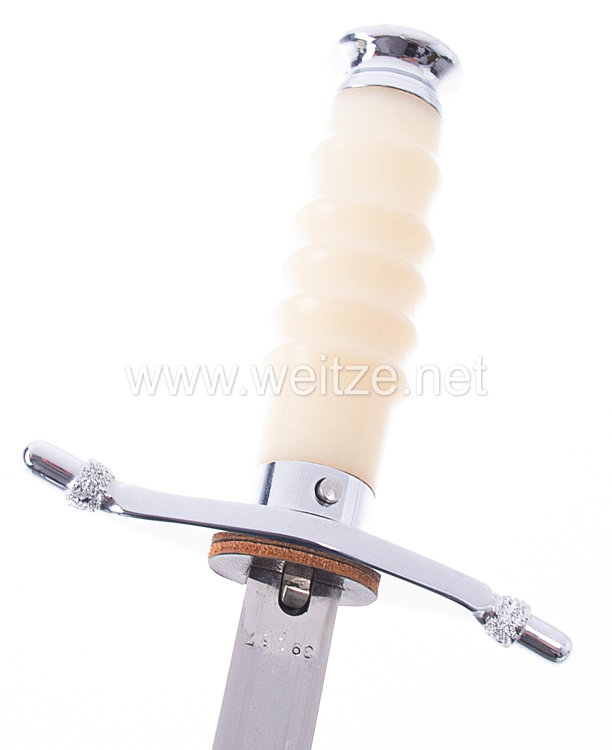
The Land Forces officer's dagger described here was worn according to NVA uniform regulations and represents the typical design of this edged weapon. The plain blade without etching or engraving (apart from serial number and acceptance stamp) corresponded to the sober, functional design approach of GDR militaria. The white plastic grip was characteristic of the Land Forces and thus differed from versions of other service branches. The Volksmarine (People's Navy), for example, used daggers with different grip colors, while the Air Force/Air Defense had their own variants.
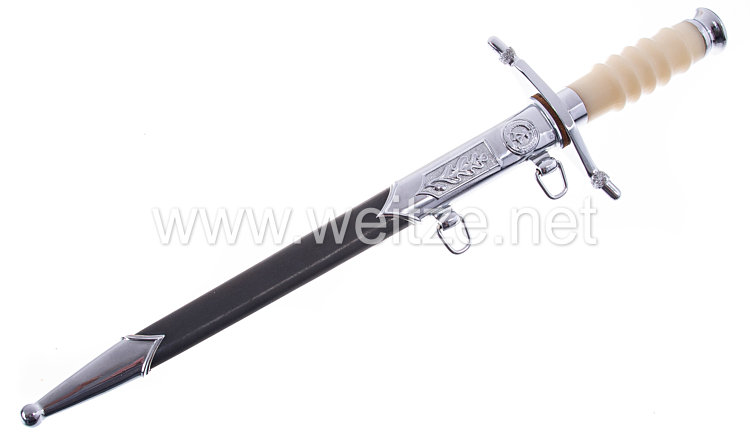
The chrome-plated fittings and blued scabbard body demonstrate the typical manufacturing quality of NVA edged weapons. The stamped serial number 39057 and the acceptance stamp document the military registration and quality control. Each dagger was inspected by appropriate service departments before issue and marked with an acceptance stamp confirming compliance with technical standards.
The hanger with belt carrying loop enabled regulation-compliant wearing on the belt of the parade uniform. The manner of wearing was precisely defined in NVA uniform regulations and varied according to occasion and rank. Officers wore the dagger at parades, official receptions, and special military ceremonies. Authorization to wear it was strictly regulated and tied to officer rank.
The production of NVA edged weapons took place in various state-owned enterprises of the GDR. Manufacturing was subject to strict quality standards and state control. The choice of materials - plastic for grips instead of expensive natural materials - reflects both economic considerations and socialist production philosophy, which prioritized functionality over ostentation.
The "unworn" condition of this specimen is remarkable and suggests that this dagger was possibly stored as reserve stock or never issued to an officer. After the reunification of Germany in 1990 and the dissolution of the NVA, large stocks of uniform parts and equipment were stored or sold. Many daggers thus came into collectors' hands without ever having been worn in active service.
The historical significance of such objects today lies primarily in their documentary value. They are material witnesses to a vanished state and its armed forces. For military historians and collectors, NVA daggers offer insights into the self-presentation and tradition-building of the GDR armed forces, which on one hand embodied socialist ideology, but on the other hand deliberately connected to older German military traditions.
In the context of GDR armed forces history, the officer's dagger represents the ambivalence between revolutionary aspirations and traditional military culture. While the NVA understood itself as the army of a socialist workers' and peasants' state, it maintained traditional forms of military representation through elements such as edged weapons, parades, and military ceremonial.
The technical characteristics of these daggers - the plain blade, plastic grip, and functional scabbard - embody the East German approach to military equipment: practical, economical, yet maintaining ceremonial dignity. The numbering system and acceptance stamps reflect the bureaucratic thoroughness characteristic of the GDR state apparatus, where every item was registered, inspected, and controlled.