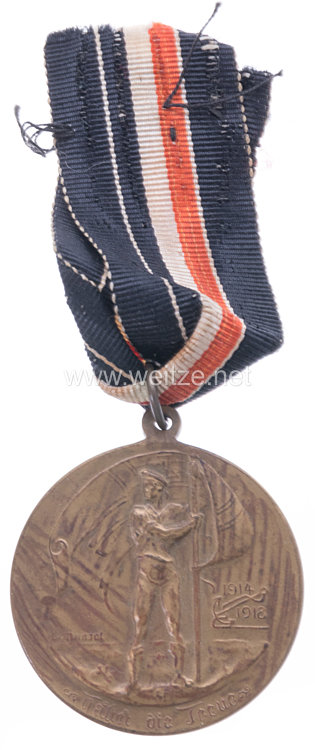
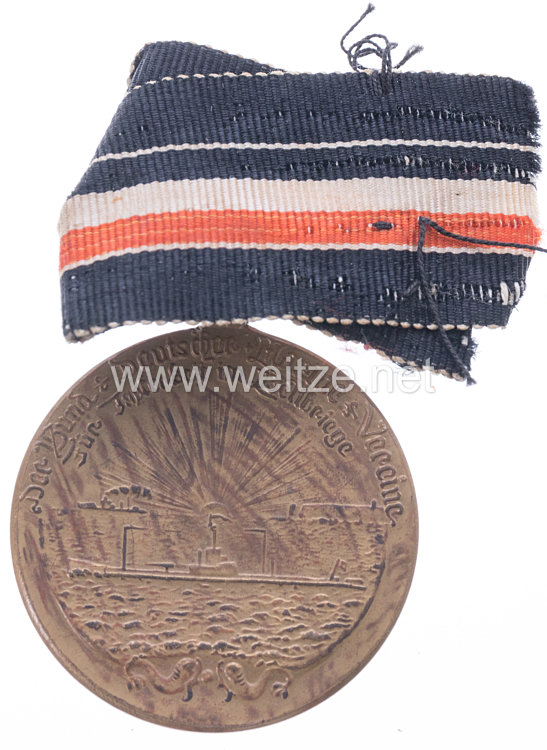
Bund Deutscher Marine Vereine Medal “For Bravery in the World War 1914/18”

Base metal, complete with rare original ribbon. Condition 2.
326466
120,00

Bund Deutscher Marine Vereine Medal “For Bravery in the World War 1914/18”

The Medal “For Bravery in the World War 1914/18” of the Federation of German Naval Associations (Bund Deutscher Marine Vereine) represents a fascinating testament to German naval history and the veterans' movement of the interwar period. This award was not instituted by the German state but by a private veterans' organization, making it a special example of the commemorative culture of the Weimar Republic.

The Bund Deutscher Marine Vereine emerged after World War I as an amalgamation of various local naval associations dedicated to maintaining the traditions of the Imperial Navy. Following the dissolution of the Imperial Navy in November 1918 and the establishment of the Reichsmarine, former naval personnel sought ways to maintain their comradeship and preserve memories of their service. The Federation served as an umbrella organization for these regional associations and became one of the most significant naval organizations of the Weimar era.

The institution of this bravery medal likely occurred in the early 1920s, when many veterans' organizations created their own commemorative and honorary badges. Unlike state decorations, these private medals were not subject to official Reich regulations, but were highly valued within the veteran community. The medal was intended to honor those naval personnel who had distinguished themselves through exceptional bravery during World War I, 1914-1918.

The design of such association medals typically followed maritime motifs and symbols of the Imperial Navy. They commonly featured anchors, naval crowns, warships, or other nautical elements. The inscription “For Bravery in the World War 1914/18” makes the purpose of the decoration unmistakably clear and directly connects it to the war events.

The ribbon of this medal is of particular significance. Association awards often featured specific color combinations that either referenced the Imperial War Ensign, the naval flag, or other maritime traditions. The presence of the original ribbon significantly increases the historical and collectible value of such a piece, as many of these medals have lost their original ribbons over the decades.

The German Navy in World War I played a complex and often controversial role. While the High Seas Fleet fought only a few major naval battles – the most famous being the Battle of Jutland from May 31 to June 1, 1916 – U-boats were active in unrestricted submarine warfare. Smaller units conducted coastal operations, and naval personnel fought on land, especially in the Naval Infantry and Marine Corps in Flanders. All these services could provide grounds for awarding such bravery decorations.

The manufacture from base metal was typical for association medals of the postwar period. During the economically difficult years of the Weimar Republic, precious metals were hardly affordable for private organizations. Base metal alloys such as bronze, brass, or copper-nickel compounds offered a cost-effective alternative while still allowing dignified design.

The historical context of this medal is inseparably linked to the development of German naval associations after 1918. These organizations not only fostered comradeship but also maintained a specific historical narrative that honored the Navy's achievements and often portrayed the 1918 defeat as undeserved. They organized meetings, commemorative ceremonies, and supported needy comrades and their families.

As the 1920s progressed into the early 1930s, many of these naval associations became increasingly politicized. With the Nazi seizure of power in 1933, they were gradually incorporated into National Socialist organizations or dissolved. However, many of their traditions and symbols were adopted into NS naval propaganda.

For collectors and historians, such association medals offer important insights into the commemorative culture and social history of the interwar period. They document how veteran communities processed their war experiences and which values they considered worth preserving. The relative rarity of such pieces, especially with original ribbons, makes them sought-after collector's items.

Today, these medals serve as reminders of a complex epoch in German history, when processing the war defeat, maintaining military traditions, and searching for new national identity shaped society.