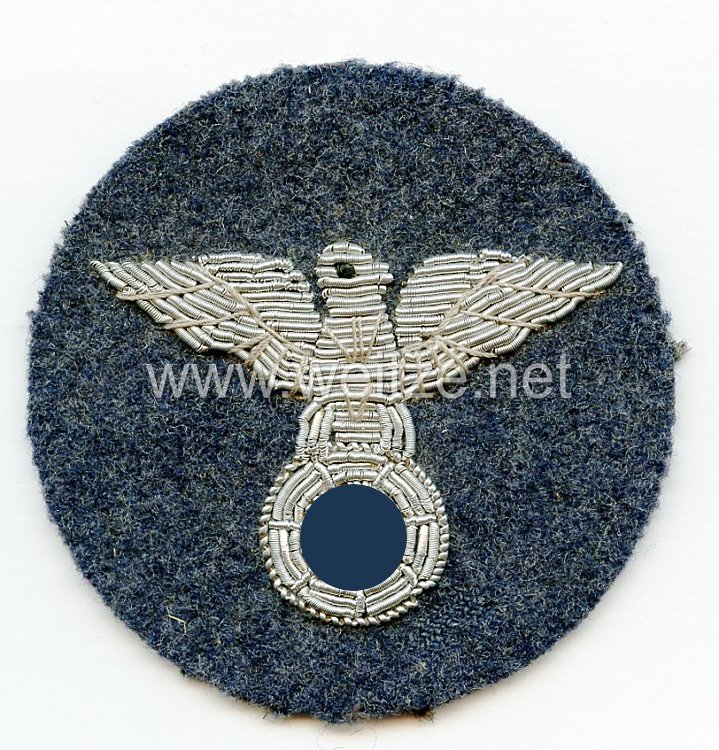
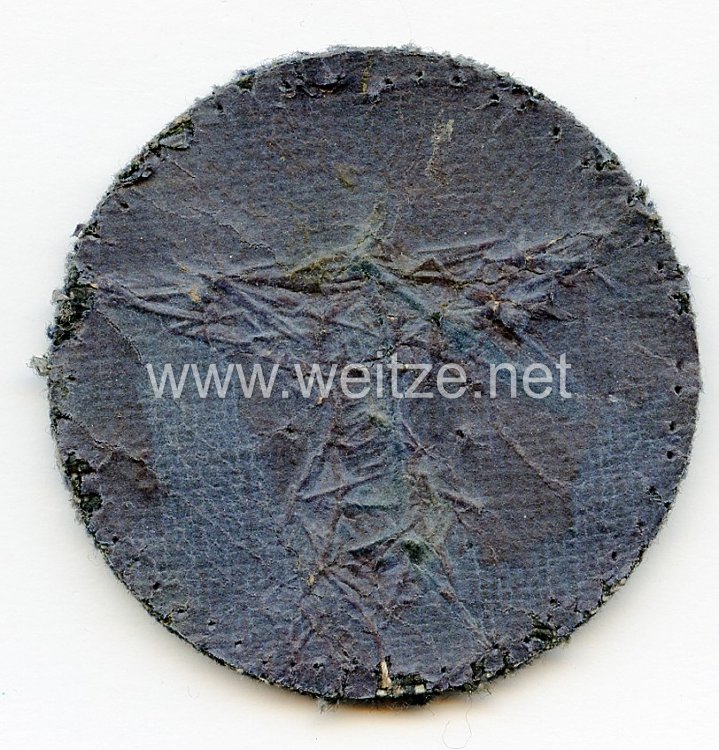
German Air Sports Association (DLV) Officer's Sleeve Eagle

Hand-embroidered execution in metallic thread, condition 2.
393961
135,00

German Air Sports Association (DLV) Officer's Sleeve Eagle

The Deutscher Luftsportverband (DLV) Sleeve Eagle for Officers represents a significant document of German aviation history in the early 1930s. This hand-embroidered badge executed in metal thread embodies the transitional phase between civilian flight training and the development of what would become the Luftwaffe.

The German Air Sports Association was founded on March 25, 1933, and served as a cover organization for military pilot training in Germany. Following the provisions of the Treaty of Versailles from 1919, Germany was prohibited from maintaining an air force. The DLV provided the opportunity to conduct paramilitary flight training under the guise of civilian aviation sports. The organization was led by Hermann Göring and was officially established on April 1, 1933.

The DLV's uniforming was strongly oriented toward military models. Officers wore special rank insignia and decorations, including the characteristic sleeve eagle. This was worn on the right upper arm of the uniform and indicated membership in the association as well as the wearer's officer rank.

The metal thread hand-embroidered execution described here was typical for officer insignia of this era. This elaborate manufacturing technique clearly distinguished the officer versions from the machine-made or woven badges of enlisted ranks. The embroidery was executed with fine metal threads, usually aluminum or silver-plated wire, on a backing of felt or fine cloth. The handwork guaranteed high quality and individual execution of each piece.

The eagle motif itself followed traditional German heraldry, with the DLV eagle depicted with spread wings and head turned to the right. The talons frequently held a wreath containing the swastika, the official symbol of National Socialist Germany. The detailed working of the feathers and the three-dimensional effect of the metal embroidery gave the badge particular dignity.

The DLV reached its peak between 1933 and 1935 and at times comprised over one million members. The organization was divided into various departments, including glider pilots, powered aircraft pilots, model aircraft enthusiasts, and parachutists. Training followed military standards, although officially it was referred to as civilian aviation sports.

On March 1, 1935, the Luftwaffe was officially announced as an independent branch of the armed forces, making the disguise no longer necessary. However, the DLV continued to exist in parallel and was only incorporated into the National Socialist Flying Corps (NSFK) in 1937. Many DLV members transferred directly to the newly founded Luftwaffe, where they formed the backbone of the officer corps.

DLV uniform insignia are today sought-after collectibles and important contemporary historical documents. They document a brief but significant period of German military history. The quality of execution, particularly for hand-embroidered officer insignia, varied depending on the manufacturer. Well-known manufacturers such as BEVO and various ateliers in Berlin and Munich produced these badges in different quality grades.

The condition of such historical textiles is of great importance to collectors and historians. Metal thread embroideries are particularly susceptible to oxidation and mechanical damage. A well-preserved example with intact embroidery and without major losses is correspondingly valuable for historical research.

These badges must be understood in the context of their time. They were part of a system that concealed Germany's remilitarization and prepared the development of a powerful air force. For historical research, they offer important insights into the organizational structure, uniform regulations, and symbolism of the paramilitary organizations of the early Nazi period.

r