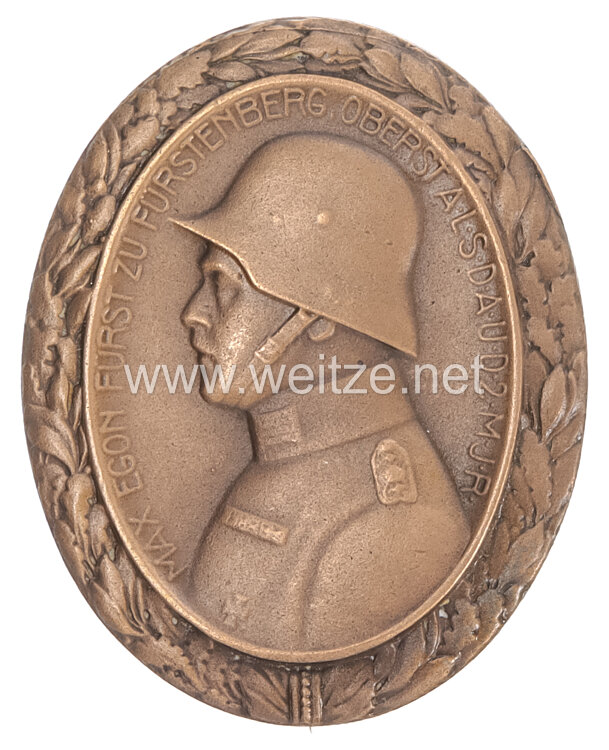
WWI Portable Badge “Max Egon Fürst zu Fürstenberg” as German Officer

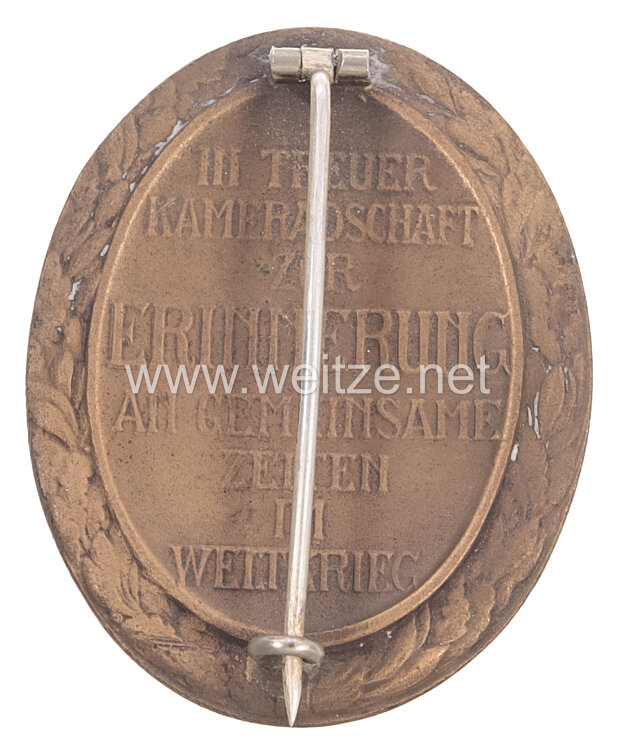
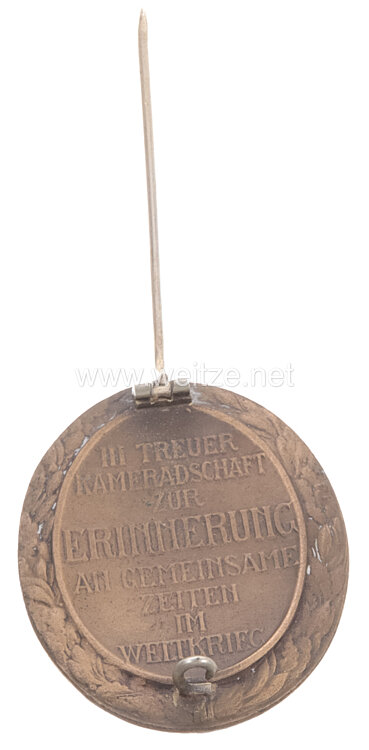
Tall oval bronzed pin badge made of zinc, approx. 45x35 mm, reverse inscribed “In treuer Kameradschaft zur Erinnerungen gemeinsame Zeiten im Weltkrieg” (In loyal comradeship in memory of shared times in the World War). Design by O. Thiede 1917. With these plaques bearing his portrait as a German and Austrian officer, the Prince presented officers and enlisted men with whom he had fought a personal commemorative badge, thereby evoking the intensely experienced comradeship of the war years.
467460
385,00

WWI Portable Badge “Max Egon Fürst zu Fürstenberg” as German Officer

This portable badge from World War I represents a remarkable example of private commemorative culture that developed within the German and Austro-Hungarian armed forces. The high-oval, bronzed zinc pin badge depicts Max Egon Prince zu Fürstenberg in German officer's uniform and was designed by O. Thiede in 1917.

Max Egon II Prince zu Fürstenberg (1863-1941) belonged to an important South German noble family with extensive estates in Baden and Bohemia. As a mediatized prince, he embodied both German and Austro-Hungarian loyalties - a position of particular significance during World War I. The Prince served actively in the war and used his position to commission personal commemorative tokens for his comrades.

The reverse inscription “In treuer Kameradschaft zur Erinnerung gemeinsame Zeiten im Weltkrieg” (In loyal comradeship in memory of shared times in the World War) clarifies the purpose of these plaques: they were meant to document and preserve the bonds forged between officers and enlisted men during the war. Such privately commissioned commemorative badges were not uncommon in World War I, though they differed fundamentally from official state decorations and orders.

The material used - bronzed zinc - was typical of the war years, particularly from 1916/17 onward, when metal shortages necessitated the use of substitute materials. While genuine bronze was needed for war-essential purposes, zinc with bronze plating enabled the production of presentable badges at reasonable cost. The dimensions of approximately 45x35 mm correspond to standard formats for pin badges of this period.

O. Thiede's 1917 design dates to a phase of the war when, despite increasing material hardship and military setbacks, the cultivation of comradeship and fighting morale assumed central importance. The year 1917 marked a turning point: America's entry into the war, the exhaustion of the Central Powers, and initial signs of disintegration made symbolic gestures of solidarity all the more important.

Particularly noteworthy is that the Prince apparently had two different variants of these plaques produced: one bearing his likeness as a German officer and one as an Austrian officer. This dual role reflected his transnational position and symbolized the brotherhood-in-arms between the two main powers of the Triple Alliance. Such personal commemorative tokens bridged formal hierarchies and created an emotional connection between the high-noble donor and recipients of all ranks.

The tradition of private commemorative badges had a longer history in German military culture but experienced its heyday during World War I. Unlike official orders and decorations, whose bestowal was subject to strict regulations, such private foundations could be designed and distributed with relative freedom. They complemented the official awards system and contributed to identity formation within smaller units or combat communities.

After the war, such memorabilia gained additional significance as material witnesses to a vanished world. The monarchies had collapsed, the old armies dissolved, and many bearers of such badges found themselves in a completely transformed social order. The plaques became focal points of memory for shared experiences and lost comradeships.

For military-historical research, such private commemorative badges offer valuable insights into the history of mentalities during World War I. They document how military communities constructed their identity, how social differences were meant to be bridged through shared war experience, and how commemorative culture was cultivated even during the war itself. The choice of materials, design, and distribution of such objects allow conclusions about resource conditions, aesthetic concepts, and social practices of their time.

The Fürstenberg badge thus represents more than a mere collectible - it is a tangible artifact of the complex social dynamics, material constraints, and commemorative practices that characterized the final years of imperial Germany and Austria-Hungary.

r