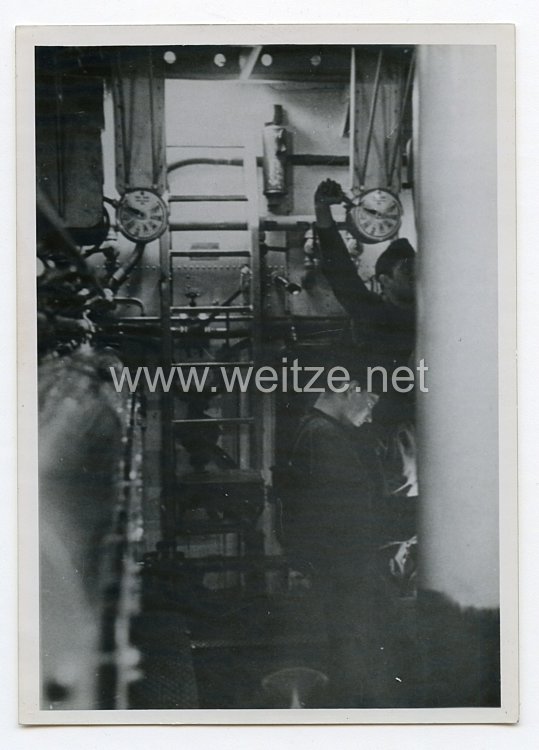
Kriegsmarine Press Photo: Sailors in the Engine Room

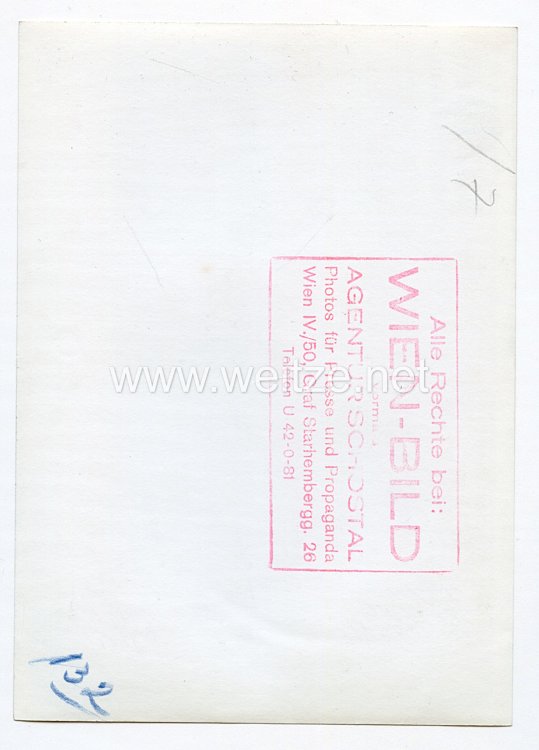
Dimensions approximately 18 x 13 cm, verso without inscription. Used condition.
347259
15,00

Kriegsmarine Press Photo: Sailors in the Engine Room

This press photograph from the Kriegsmarine showing sailors at work in the engine room of a German warship represents an important contemporary historical document from the World War II era. Measuring approximately 18 x 13 cm, it corresponds to the standard format for press photos of that time, produced by the Wehrmacht's Propaganda Company (PK) and other official agencies for distribution in newspapers, magazines, and propaganda purposes.

The Kriegsmarine was the official designation of the German Navy from 1935 to 1945. After the Nazi seizure of power in 1933, the naval forces, previously known as the Reichsmarine, were renamed and massively expanded as part of general rearmament. Under the command of Grand Admiral Erich Raeder (until 1943) and later Karl Dönitz, the Kriegsmarine developed into a significant naval force, although it never reached the strength of the British Royal Navy.

Press photographs like this one served several important functions in Nazi Germany. They were used for public relations and were intended to convey a positive image of the Wehrmacht to the population. The depiction of sailors working in the engine room corresponded to the propaganda image of the diligent, technically proficient German soldier. Such photographs were carefully staged and taken by professional photographers from the Propaganda Companies who were specially trained for this task.

The engine room of a warship was the technical heart of the vessel. Highly specialized machinists, stokers, and technicians worked here under often extreme conditions. Temperatures in the engine room could reach up to 50 degrees Celsius, especially in tropical waters. Crew members were responsible for operating steam turbines, diesel engines, or other propulsion systems. They had to monitor boiler systems, perform lubrication work, and execute quick repairs in case of battle damage.

The technical training of Kriegsmarine personnel was comprehensive and demanding. Machinists underwent several years of training that included both theoretical and practical components. The Kriegsmarine's training facilities, such as the Naval Academy Mürwik in Flensburg for officers or various technical schools for non-commissioned officers and enlisted men, were considered high quality and provided solid technical knowledge.

In the context of naval warfare, the reliable functioning of ship machinery played a crucial role. Especially for the U-boat arm, which became the most important component of the Kriegsmarine under Dönitz, technical reliability was vital for survival. But also on surface vessels such as cruisers, destroyers, and large battleships like the Bismarck or Tirpitz, the engine room personnel were indispensable.

The use of such press photos was strictly controlled. The High Command of the Wehrmacht (OKW) and the Reich Ministry of Public Enlightenment and Propaganda under Joseph Goebbels supervised photographic coverage. Photos were censored and only released after approval. Stamps and inscriptions on the reverse typically provided information about the photographer, date, press service, and censorship number, which are absent in this specimen.

The format of approximately 18 x 13 cm was typical for press prints of the 1930s and 1940s. These dimensions allowed for easy handling and were ideal for reproduction in print media. The photos were usually developed on baryta paper, a paper coated with barium sulfate known for its good tonal range and durability.

Today, such Kriegsmarine press photographs are important historical sources for researching naval history, the propaganda methods of the Nazi regime, and the living conditions of soldiers. They document not only technical details of the ships but also uniforms, equipment, and working conditions on board. For collectors and historians, they are valuable period documents that provide insight into the visual representation of the Kriegsmarine during World War II.

When historically contextualizing such objects, the propaganda context must always be considered. The images show a staged reality and were intended to convey certain messages. Nevertheless, they offer authentic insights into equipment, technology, and daily life in the Kriegsmarine when analyzed critically.

r