SS-Porcelain Manufactory Allach Plate "Julfest 1942"

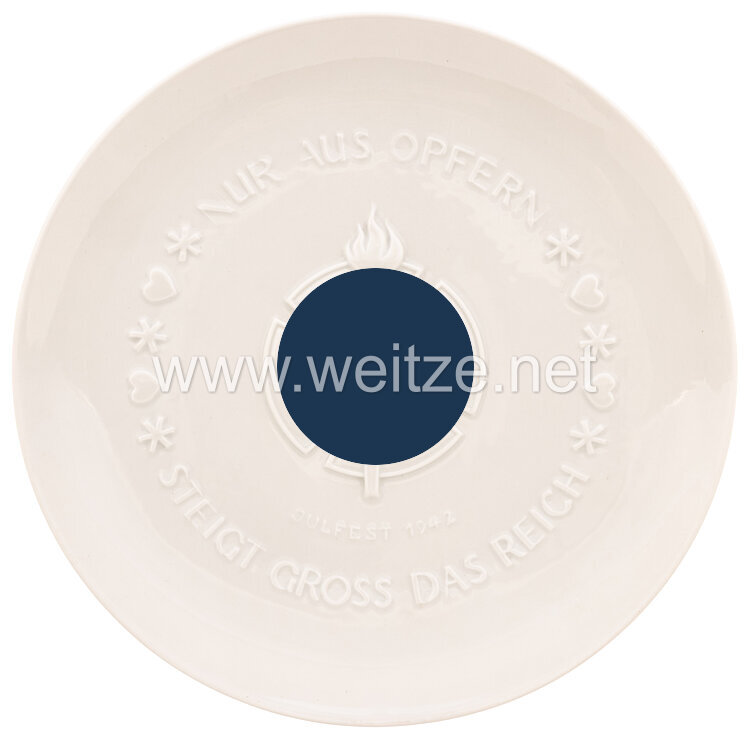
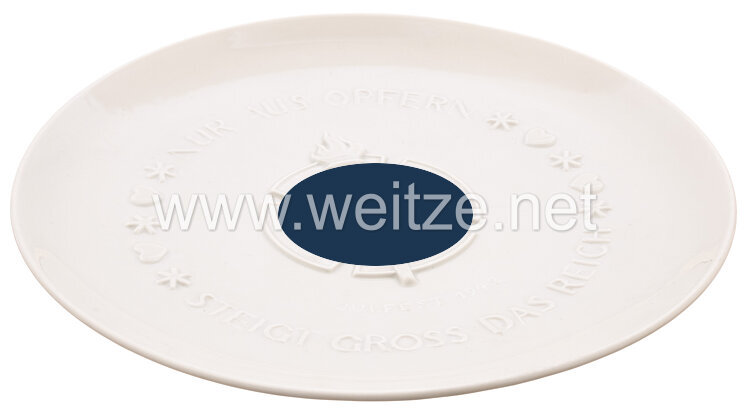
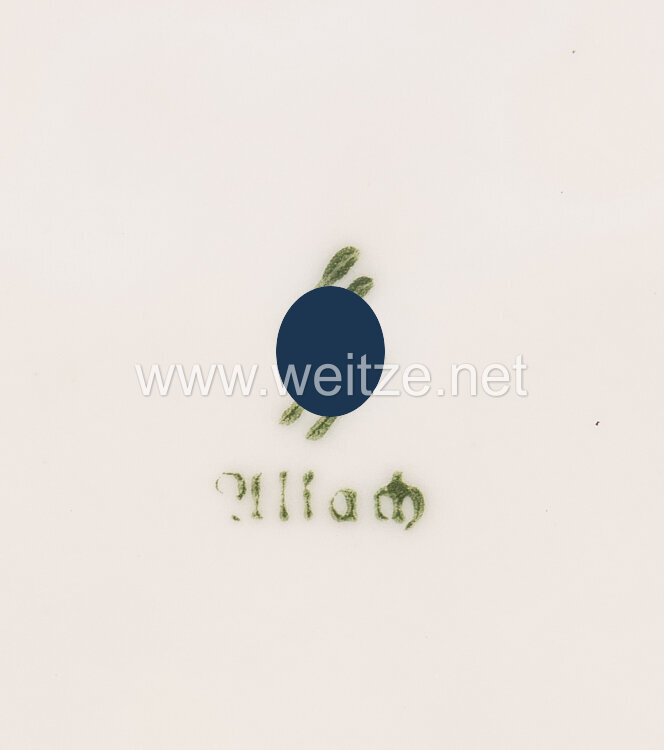
White glazed, depicting torch before sun wheel "Nur aus Opfern steigt groß das Reich" (Only from Sacrifices Does the Reich Rise Great), green Allach mark under glaze on reverse, undamaged, condition 2+
458258

SS-Porcelain Manufactory Allach Plate "Julfest 1942"

The SS-Porzellanmanufaktur Allach Julfest Plate of 1942 represents one of the most unusual cultural-political projects of the Nazi regime: the attempt to replace Christian traditions with an ideologically driven, supposedly Germanic-pagan festival culture. This white-glazed porcelain object with a diameter of approximately 250 mm was produced during one of the darkest chapters of German history and embodies the perverse connection between craftsmanship and forced labor.

The Porzellan Manufaktur Allach was established in 1935 in the Munich suburb of Allach with the stated goal of producing high-quality porcelain representative of Germanic culture. After its first year of operation, the manufactory came under direct SS control and became one of Heinrich Himmler's favorite projects. In October 1937, production was moved to a facility at Dachau concentration camp. From 1941 onwards, approximately 50 prisoners from Dachau, together with German civilians, were used as forced labor in production. This connection between aesthetic aspiration and brutal exploitation characterizes the SS economic enterprises during the war years.

In 1936, Himmler introduced a system of approved holidays based on supposed pagan traditions. The Julfest was intended to replace Christian Christmas rites and formed part of this ideological program. The Julfest plates were material manifestations of this neo-Germanic substitute religion. The 1942 plate was produced during World War II, when Germany was engaged in total war and the industrial machinery of extermination in the concentration camps was already in full operation.

The central design of the plate shows a torch in front of a Sonnenrad (sun-wheel swastika), surrounded by decorative elements including hagal runes and hearts. The inscription reads “Nur aus Opfern steigt groß das Reich” (Only from great sacrifice will the Reich rise) together with “Julfest 1942” in relief. This message acquired a particularly cynical meaning in 1942, after the first devastating setbacks on the Eastern Front. The elements are rendered in raised relief on the white porcelain.

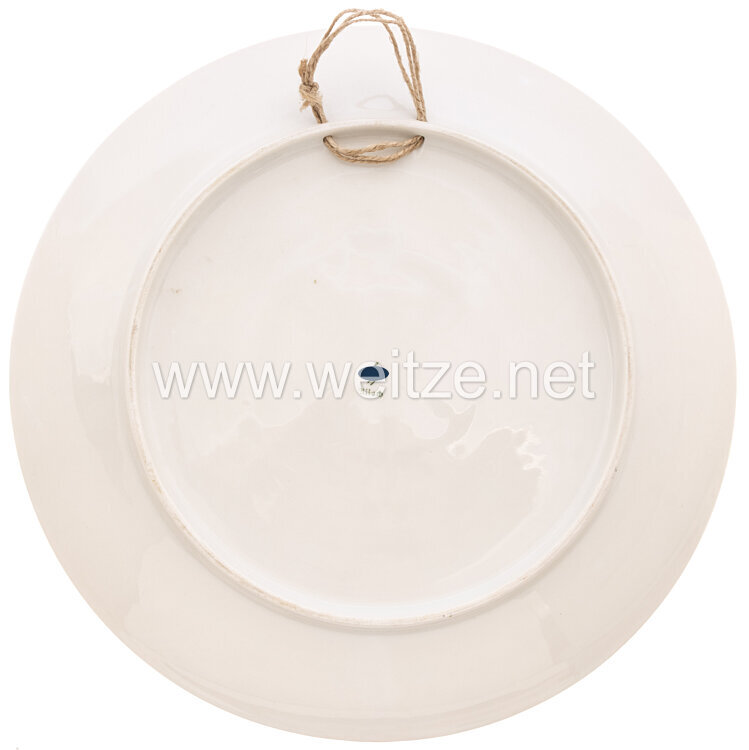
On the reverse, the plate bears the characteristic green Allach manufacturer's mark under the glaze, showing SS runes in an octagon. A crucial feature for identifying the variant is that this Himmler variant does not bear the inscription “Julgabe des SS-Wirtschafts-Verwaltungshauptamtes” that characterizes the alternative Pohl variant.

Indeed, two distinct variants of the 1942 Julfest plate exist. The present Himmler variant is all-white glazed porcelain with relief decoration showing the torch and Sonnenrad. It was presented personally by Reichsführer-SS Heinrich Himmler. The second variant, the Pohl variant, was white glazed with colored decoration of Schneegloeckchen (snowdrop) flowers and bore on the reverse the inscription “Julgabe des SS-Wirtschafts-Verwaltungshauptamtes.” It was presented by SS-Obergruppenführer Oswald Pohl, head of the SS-Wirtschafts-Verwaltungshauptamt (WVHA), which was established in February 1942 to manage SS economic enterprises, finances, and concentration camp administration. Himmler produced five yearly versions (1940-1944), while Pohl produced four colored versions (1941-1944).

These plates were not commercially available and could not be purchased. The Himmler variant was presented exclusively to specially selected personalities to whom Heinrich Himmler wished to express special favor during the Christmas or Yule season. Recipients were individuals on Himmler's personal lists. The plates were used in the celebration of Christmas and the Winter Solstice as part of SS Julfest ritual, intended to replace Christian rites with neo-pagan Germanic traditions.

Production ceased in 1945 with the fall of Nazi Germany and the liberation of the concentration camps. The Allach factory was abandoned, and its molds were destroyed or confiscated by Allied forces. Oswald Pohl was captured in May 1946, tried at Nuremberg in the Pohl Case (NMT Case 4), convicted of war crimes, crimes against humanity, and membership in a criminal organization, and executed by hanging on June 8, 1951.

Today, Allach porcelain including Julfest plates are rare and controversial collector's items, handled by museums and collectors as historical evidence rather than glorified memorabilia. A reference plate is documented on page 84 of Tony Oliver and Michael Passmore's book “Allach Porcelain.”

r