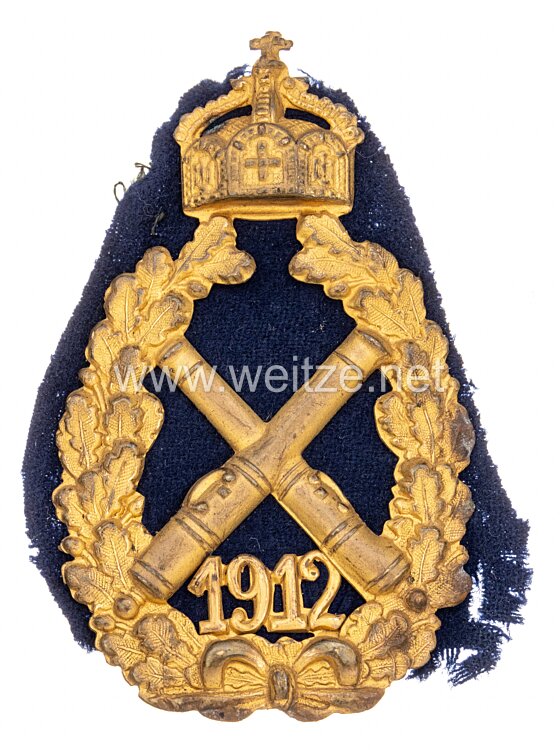
German Empire Kaiser Shooting Prize for Artillery 1912

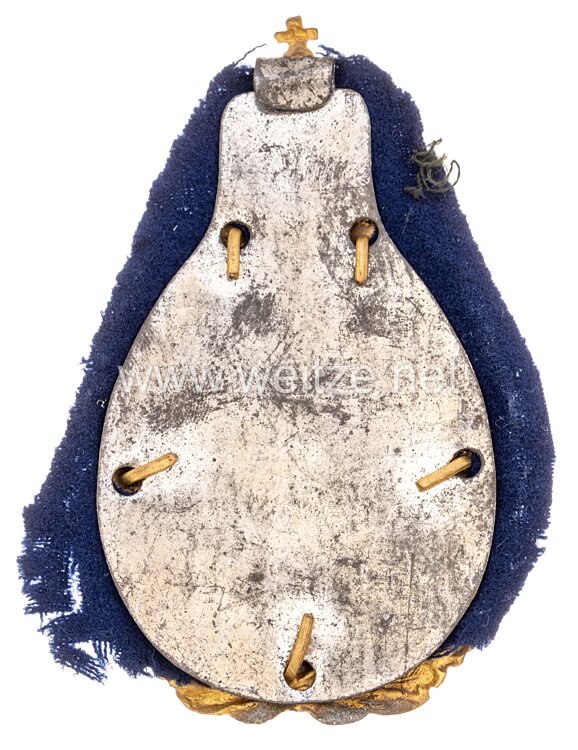
Sleeve badge, gilt, complete with dark blue cloth backing and backplate. Condition 2.
458058
300,00

German Empire Kaiser Shooting Prize for Artillery 1912

The Kaiser's Shooting Prize for Artillery of 1912 represents a significant example of the military award culture of the German Empire. These sleeve badges were awarded as performance distinctions for outstanding shooting achievements in the artillery troops and embodied the high importance that Kaiser Wilhelm II placed on military training and marksmanship.

The institution of the Kaiser's Shooting Prizes was established in the German Empire to promote the shooting proficiency of the troops and create a competitive spirit among the units. For the artillery, considered one of the most technically demanding branches of service, accuracy was of crucial strategic importance. The awarding of such prizes followed strict criteria within the framework of shooting competitions regularly conducted at divisional and corps levels.

The year 1912 marks a significant phase in the military development of the German Reich. During this period before World War I, the Empire invested considerably in modernizing its armed forces. The artillery underwent significant technical innovations, including the introduction of modern recoil systems and improved aiming devices. The Kaiser's Shooting Prizes served not only as motivation for soldiers but also as an instrument for standardizing and improving shooting training.

The design of the sleeve badge followed the strict aesthetic and heraldic conventions of the Wilhelmine era. The gilt-finished execution signified the high status of the award. The dark blue cloth backing corresponded to the uniform colors of the Prussian and German artillery, which traditionally wore dark blue branch colors. The backing plate served for stable attachment to the uniform sleeve while simultaneously protecting the uniform cloth.

The wearing system of these awards was precisely regulated in the uniform regulations of the Empire. Sleeve badges were typically worn on the left upper arm and were widely visible signs of military achievement. They thus differed from orders and decorations worn on the chest, forming their own category of performance awards.

The awarding of the Kaiser's Shooting Prize was subject to strict conditions. Participating artillery units had to achieve exceptional performance in shooting competitions, evaluated according to an established point system. Not only accuracy was assessed, but also the speed of target acquisition, coordination of gun crew operations, and other tactical aspects.

In the military-historical context, these awards are important testimonies to the military culture of the Empire. They reflect the importance that Wilhelmine Germany placed on military excellence and the merit principle. Simultaneously, they illustrate the central role that the Kaiser played as supreme war lord in all aspects of military life.

For collectors and military historians, such sleeve badges are valuable study objects today. They provide insights into the organizational structures, training methods, and value systems of the Imperial Army. The state of preservation, material quality, and craftsmanship reveal information about manufacturing practices and quality standards of the period.

The Kaiser's Shooting Prizes became obsolete with the end of the monarchy in 1918, and their production was discontinued. In the Weimar Republic and later under National Socialism, other forms of shooting awards were introduced. However, the imperial awards remained as mementos of a past epoch and were sometimes continued to be worn by veterans, insofar as the respective uniform regulations permitted.

The historical significance of these objects lies not only in their function as military awards but also in their value as material witnesses to an era characterized by military traditions, hierarchical structures, and a specific culture of honor. They represent tangible connections to the military practices and values of the German Empire in its final years before the catastrophe of World War I fundamentally transformed European military culture.