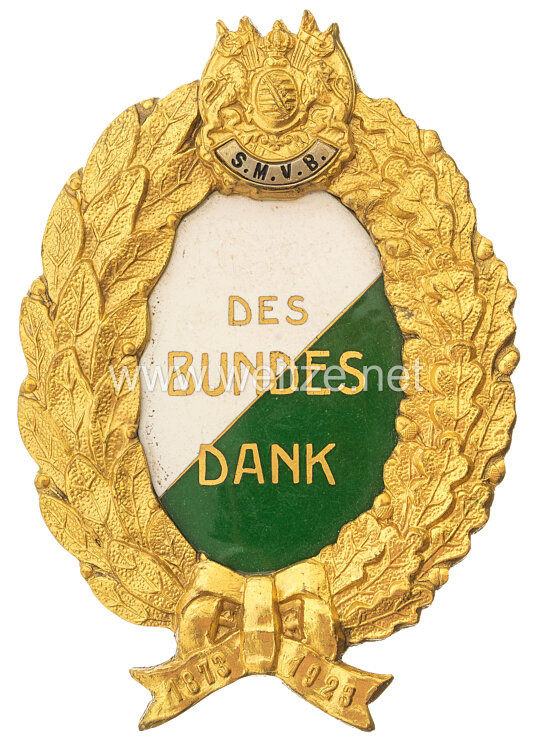
Saxony Military Veterans Association S.M.V.B. Badge of Honor “Des Bundes Dank” 1923

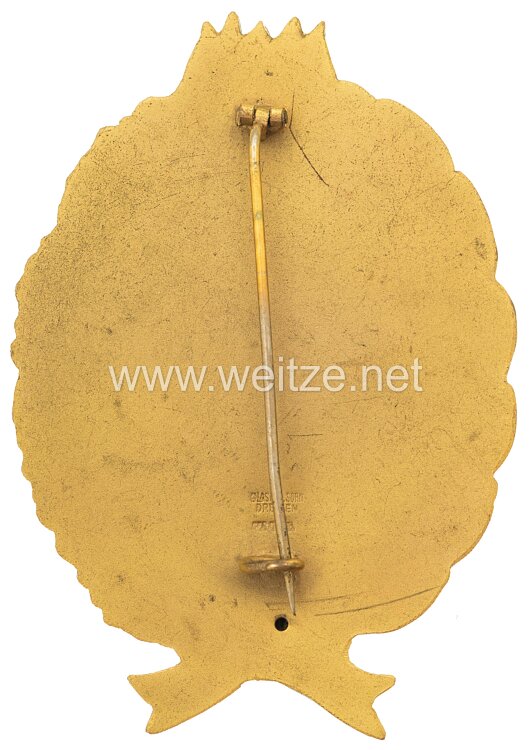
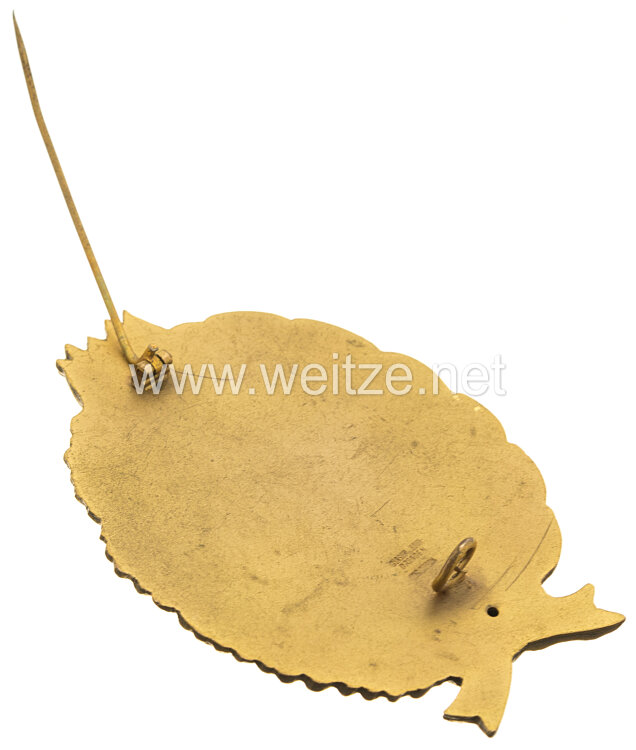
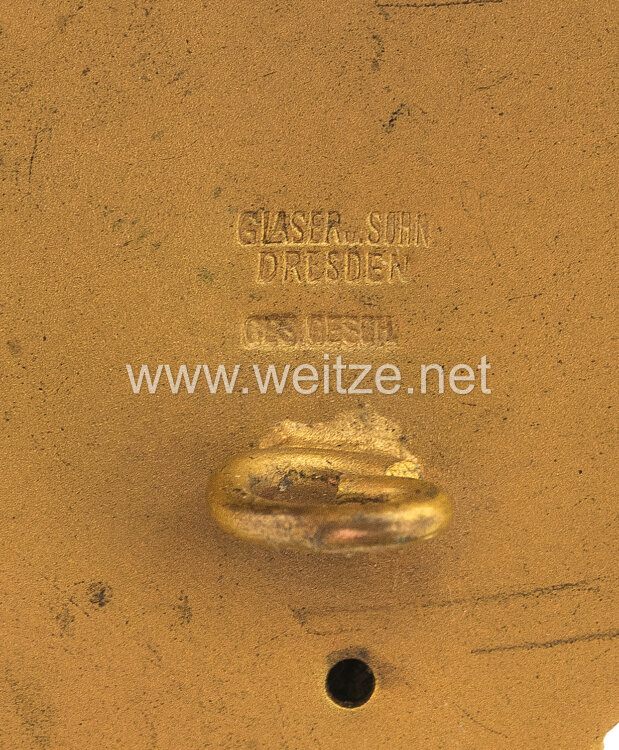
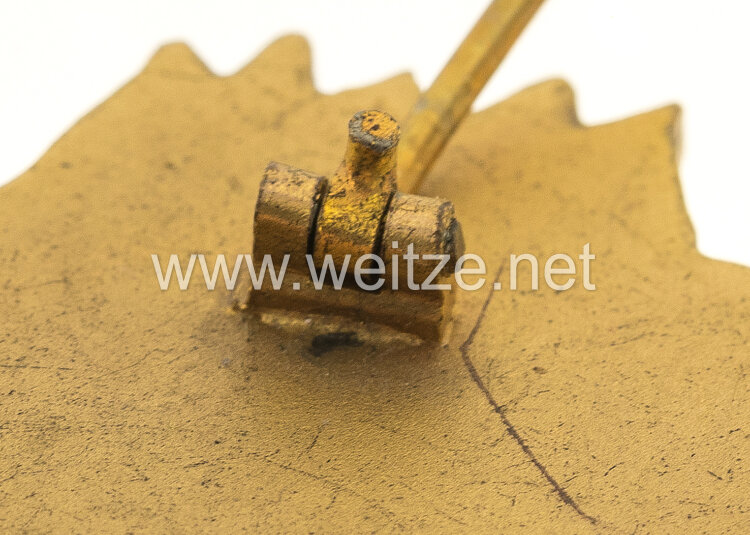
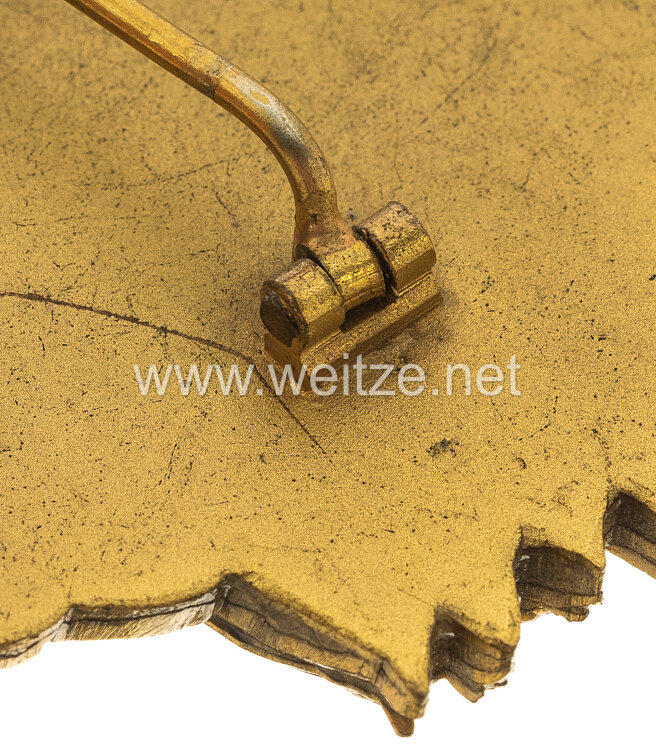
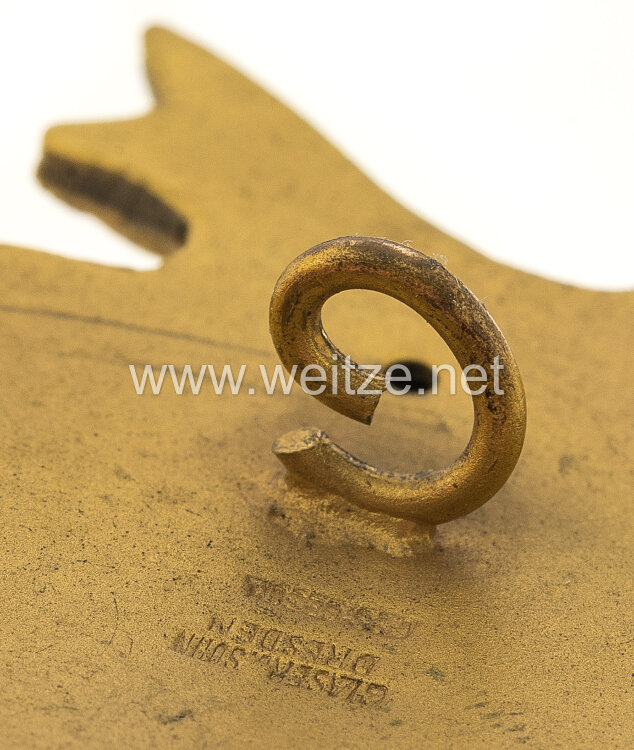
Large stickpin badge, gilt, the center enameled green/white, reverse marked with maker “Glaser u. Sohn Dresden ges. gesch.”, with long pin, condition 2.
459256
650,00

Saxony Military Veterans Association S.M.V.B. Badge of Honor “Des Bundes Dank” 1923

The Honorary Badge “Des Bundes Dank” (The Federation's Gratitude) of the Saxon Military Association League (S.M.V.B.) from 1923 represents a significant testimony to German veterans' culture during the Weimar Republic. This award system developed during a time of profound social upheaval, when former soldiers of World War I and previous members of the Saxon army attempted to preserve their comradeship and traditions within the new republican order.

The Saxon Military Association League was founded after the end of World War I to unite the numerous local military and veterans' associations in the Free State of Saxony under one umbrella organization. These veterans' organizations had a long tradition in the Kingdom of Saxony, dating back to the 19th century. Following the dissolution of the independent Saxon army as a consequence of the Treaty of Versailles in 1919, these associations gained new significance as custodians of military traditions and as social networks for former soldiers.

The present badge was manufactured by the renowned firm Glaser & Sohn in Dresden, one of the leading producers of military decorations and association badges in Saxony. The workshop had already established its reputation before World War I and produced both official military orders and association badges of the highest quality. The manufacturer's mark on the reverse “ges. gesch.” (legally protected) indicates the design's protected status.

The design of the badge is characteristic of the early 1920s. The gilded pin badge features green and white enameling at its center, with this color combination referencing the Saxon state colors. Green and white had been the official colors of the Kingdom of Saxony since the 19th century and were continued by the Free State of Saxony after 1918. The use of these colors emphasized regional identity and connection to the Saxon homeland.

The designation “Des Bundes Dank” refers to the recognition character of this award. It was presumably awarded to members who had rendered special services to the Military Association League, whether through years of loyalty, special organizational achievements, or financial support. The year 1923 marks a significant point in German history: it was the year of hyperinflation, the French occupation of the Ruhr, and the failed Hitler-Ludendorff Putsch in Munich. During this time of political and economic instability, veterans' associations offered their members stability and social security.

The long pin on the reverse of the badge indicates that it was worn on clothing, presumably on the left breast at association events, memorial ceremonies, or patriotic gatherings. These pin badges were widespread in the 1920s and served as visible signs of membership in a particular organization and as expressions of conservative, often monarchist sentiment.

The Saxon Military Association League was part of a larger movement of veterans' organizations in the Weimar Republic. While some of these associations remained apolitical and focused on fostering comradeship and supporting war invalids, others increasingly became gathering places for anti-republican and nationalist currents. The Saxon military associations moved within this tension between tradition preservation and political positioning.

The craftsmanship quality of the badge with its gilding and precise enameling testifies to the high technical skill of the Dresden manufactory. The enamel technique required specialized knowledge and multiple firing processes at high temperatures. The use of green and white enamel on a gilded background created an attractive contrast and made the badge a valued possession.

After the Nazi seizure of power in 1933, many traditional veterans' associations were coordinated or dissolved and transferred into NS organizations such as the Reichskriegerbund (Kyffhäuserbund). This also ended the independent existence of the Saxon Military Association League. Badges like the present one became historical testimonies of a vanished organizational landscape.

Today, such honorary badges are important collector's items and historical sources for researching veterans' culture, regional identity, and social developments in the Weimar Republic. They document how former soldiers attempted to process their experiences and preserve their traditions in a fundamentally changed world.

r