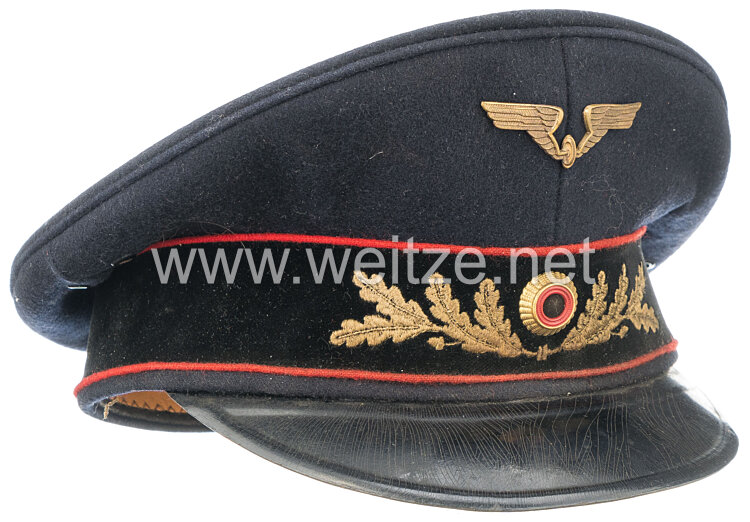
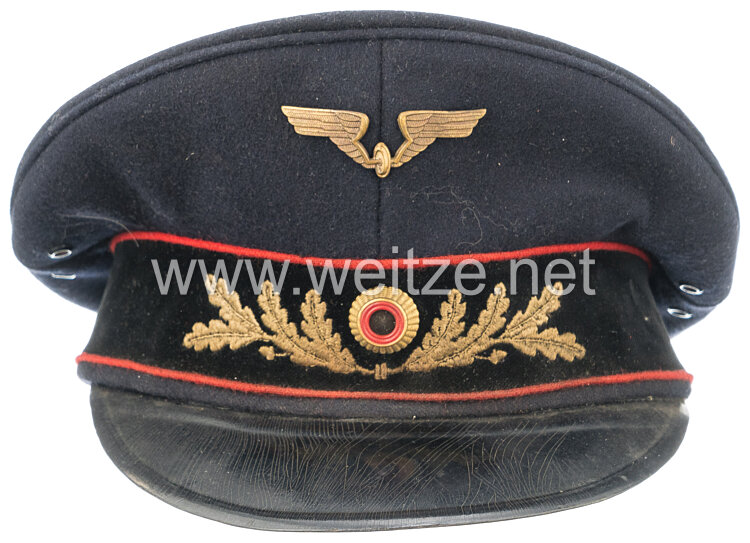
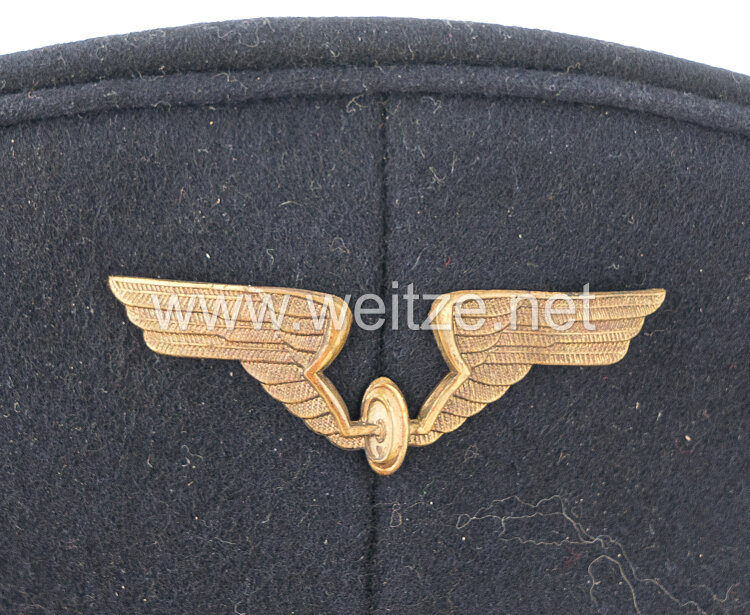
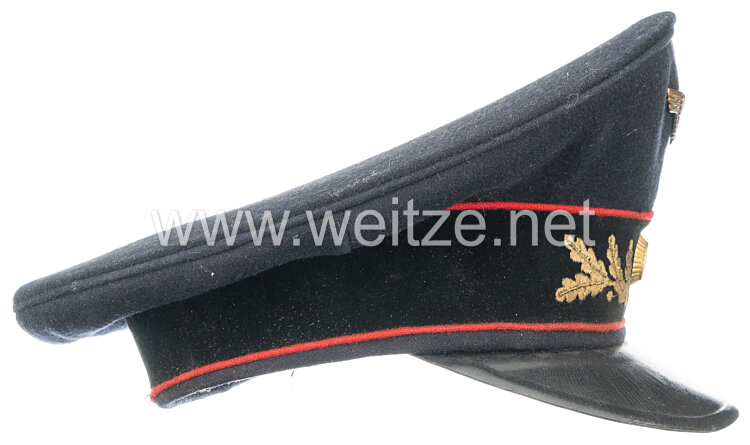
Federal Republic of Germany (FRG) Deutsche Bundesbahn (DB) Visor Cap for an Official of Pay Grade 11 to 7a

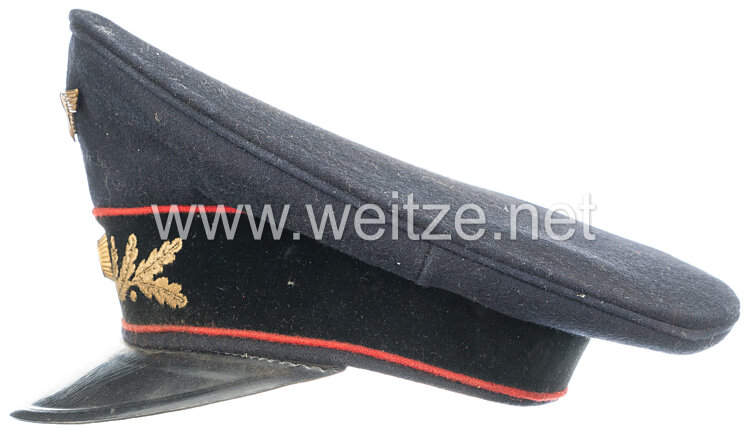
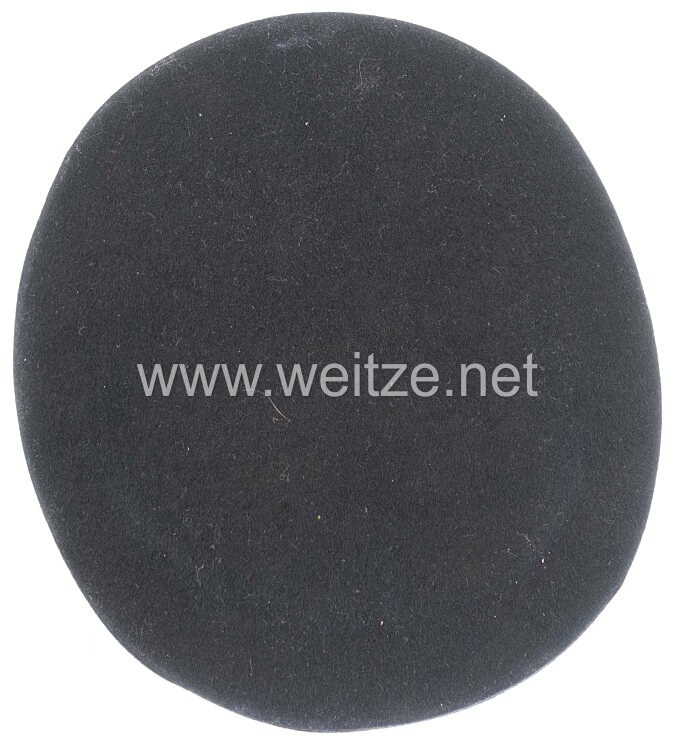
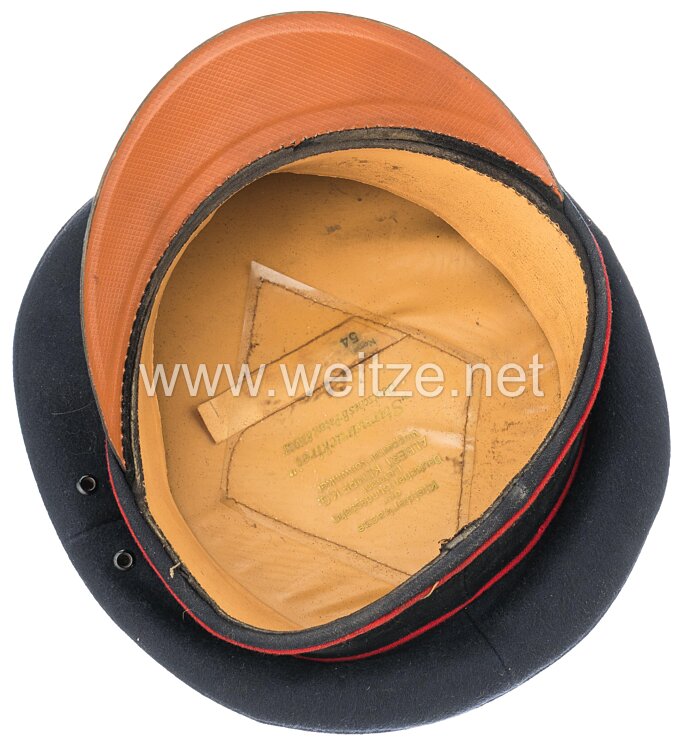
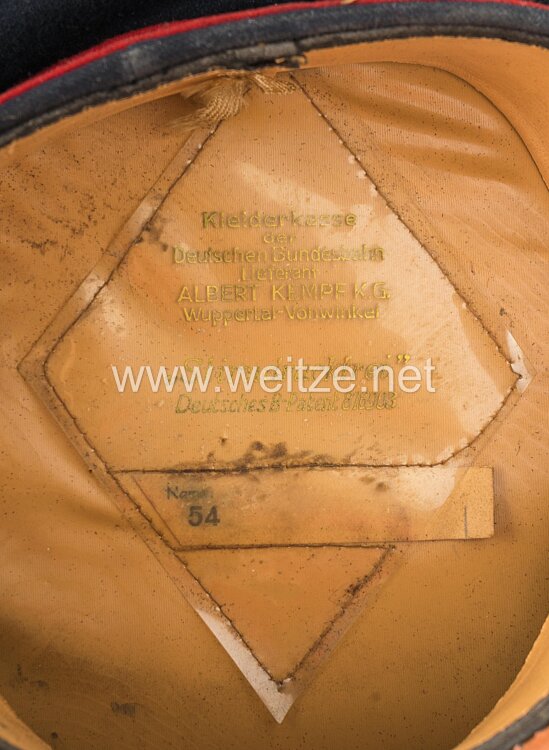
from 1952 to 1958, fine blue cloth, red piping, cap band with oak leaf embroidery on black velvet, interior with cap trapezoid marked “Kleiderkasse des Deutschen Bundesbahn Lieferant Albert Kempf K.G., Wuppertal-Vohwinkel”, size 54. Condition 2.
455154
180,00

Federal Republic of Germany (FRG) Deutsche Bundesbahn (DB) Visor Cap for an Official of Pay Grade 11 to 7a

This service cap of the Deutsche Bundesbahn (DB) represents a significant piece from the early history of the Federal Republic of Germany after World War II. As headwear for an official in salary grades 11 to 7a, it documents not only the strict hierarchy and dress code of the German railway administration, but also the reconstruction and modernization of German transportation in the 1950s.

Following the establishment of the Federal Republic of Germany in 1949, the Deutsche Bundesbahn was founded on September 7, 1949, as a special fund of the federal government. It took over the railway infrastructure of the western occupation zones and quickly developed into one of the most important employers and economic factors of the young state. In the 1950s, the DB employed several hundred thousand civil servants and employees who were uniformed according to a strictly regulated service dress system.

The uniforming of Bundesbahn officials followed a long German tradition of railway uniforms dating back to the 19th century. The peaked cap as headwear was established as early as the Imperial era as a characteristic identifying mark for railway employees and was maintained through all political system changes. The present example dates from the period 1952 to 1958, a phase of consolidation and standardization of DB uniforms.

The fine blue cloth of the cap corresponds to the traditional coloring of German railway uniforms. Blue had been chosen since the founding of the first German railway companies as a color symbolizing seriousness, trustworthiness, and state authority. The red piping served as a distinguishing feature and identified specific service areas or rank levels within the complex civil service hierarchy.

Particularly noteworthy is the cap band with oak leaf embroidery on black velvet. The oak as a German national symbol was deliberately retained, as it historically stood for strength, permanence, and reliability – qualities that were also to be embodied by the Bundesbahn. The use of black velvet as a background for the embroidery emphasizes the high quality of the uniform and the elevated status of officials in salary grades 11 to 7a.

The salary structure of the Bundesbahn was based on the general federal salary law. Salary grades 11 to 7a comprised middle to upper-level civil service positions, including operations assistants, station masters, train conductors, and inspectors. These officials bore substantial responsibility for safe and punctual railway operations and enjoyed corresponding social prestige.

The inner sweatband bears the inscription “Kleiderkasse des Deutschen Bundesbahn Lieferant Albert Kempf K.G., Wuppertal-Vohwinkel”. This refers to the organized procurement system of the DB. The Kleiderkasse (clothing fund) was an institution through which officials could obtain their prescribed uniform items, often with installment payment options. The company Albert Kempf K.G. from Wuppertal-Vohwinkel was among the approved suppliers who manufactured according to precise Bundesbahn specifications. Wuppertal was traditionally a center of the German textile industry, and many uniform manufacturers were based there.

The indicated size 54 corresponds to the German hat sizing system, in which head circumference is measured in centimeters. This was the standard method for sizing headwear in German-speaking regions.

The period 1952 to 1958 was a phase of intensive reconstruction for the Deutsche Bundesbahn. Many routes, stations, and facilities had been destroyed in the war and had to be rebuilt. At the same time, modernization began: electrification was advanced, new locomotives were acquired, and passenger traffic experienced an upswing in the course of the “economic miracle.” The railway was the most important means of transport for commuters, business travelers, and freight transport, long before mass motorization and the expansion of highways challenged its dominance.

The uniform, and especially the service cap, was for railway officials not just work clothing but also an expression of their professional identity and pride. Correct wearing of the uniform was strictly prescribed and monitored. It symbolized membership in an important state institution and conveyed security and confidence to passengers.

Today, such uniform pieces from the early years of the Federal Republic are sought-after collector's items that document an important chapter of German post-war history. They remind us of a time when the railway formed the backbone of German mobility and its employees were regarded as respected representatives of reliable public service.

r