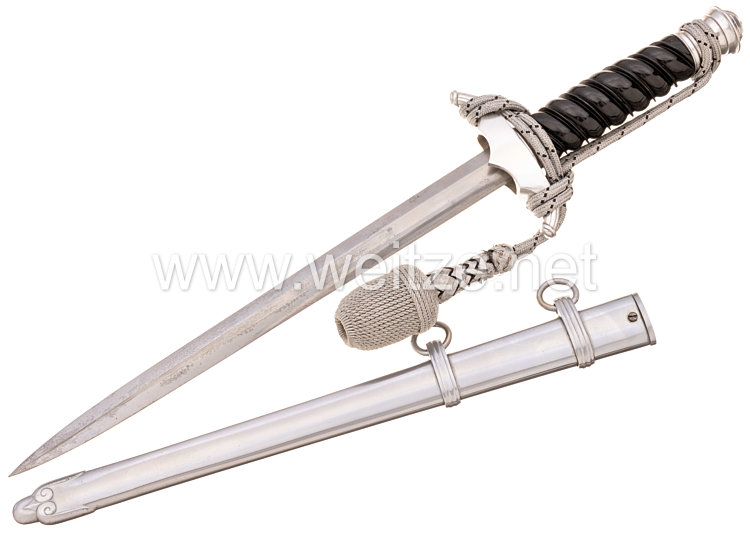
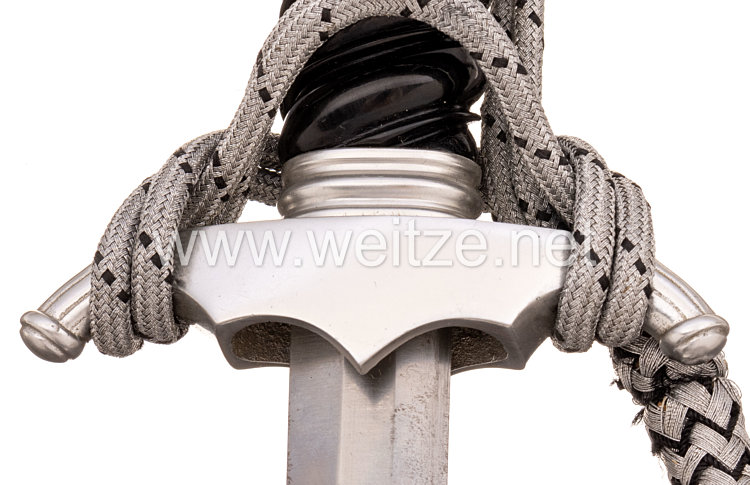
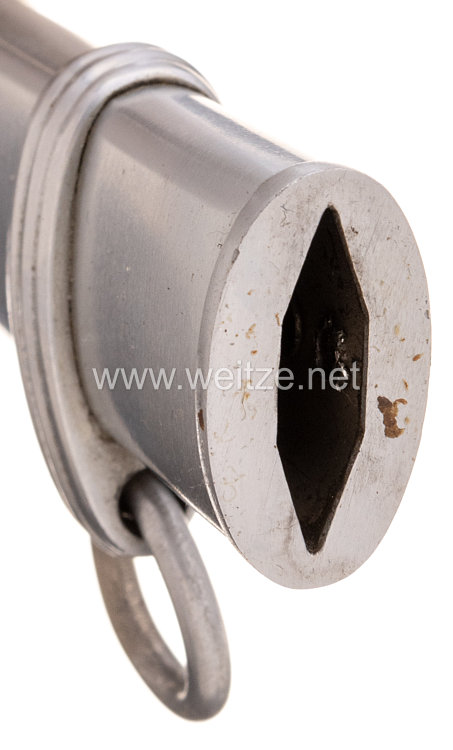
Third Reich Railway Protection Dagger for Leader.
The Bahnschutz (Railway Protection) Leader's Dagger of the Third Reich represents a specialized piece of equipment from an often-overlooked security organization of the Nazi era. The Bahnschutz was a paramilitary formation established in 1935 with the responsibility of monitoring and protecting German railway infrastructure.
The Deutsche Reichsbahn (German State Railway) recognized early on the strategic importance of the railway network for military and economic purposes. On March 15, 1935, the Bahnschutz was officially founded as an independent organization subordinated to the Reich Ministry of Transport. Its primary duties included protecting railway stations, bridges, tunnels, and other critical infrastructure elements, as well as monitoring freight traffic.
The rank structure of the Bahnschutz was modeled after military organizations. Leaders (Führer) were officers or non-commissioned officers of middle rank who commanded units typically consisting of 30 to 50 men. Ranks were distinguished by various insignia and uniform elements, with the dagger serving as a status symbol and badge of honor.
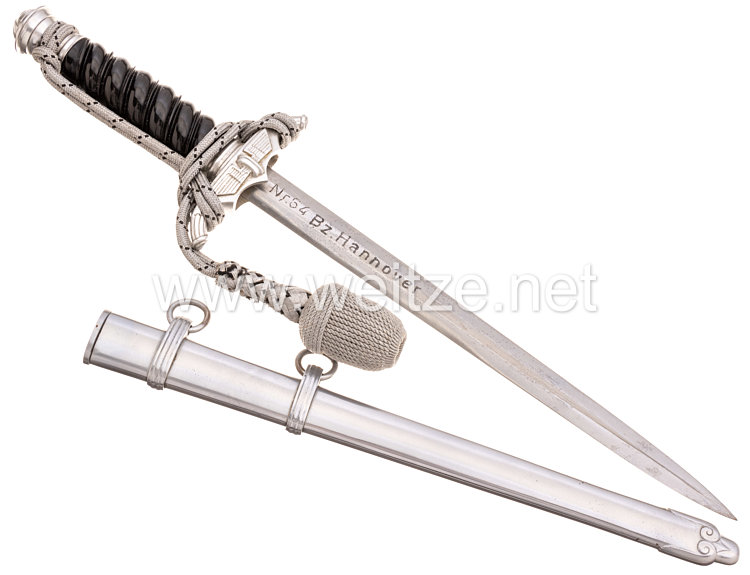
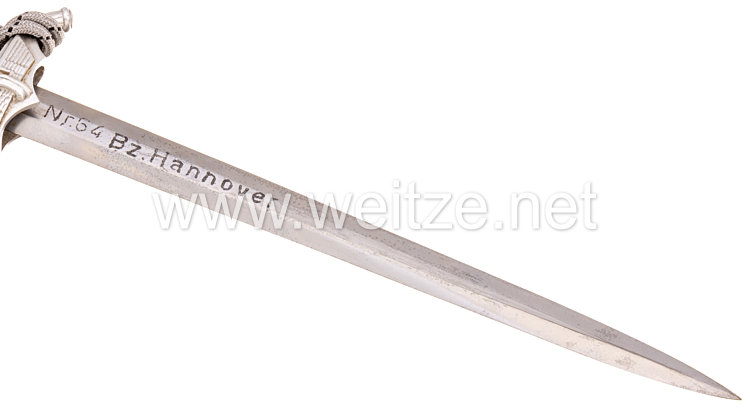
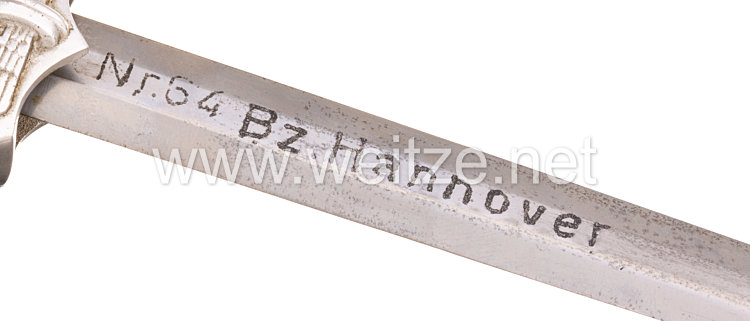
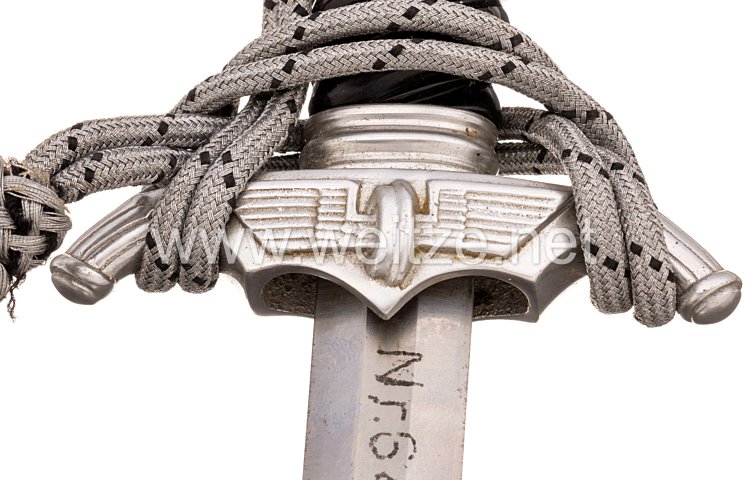
The dagger described here bears the engraving “Nr.64 Bz.Hannover”, indicating assignment to the Hannover district. The Reichsbahndirektion Hannover was one of the most important administrative units, controlling an extensive railway network in northern Germany. The numbering suggests a systematic inventory system where each issued dagger was registered.
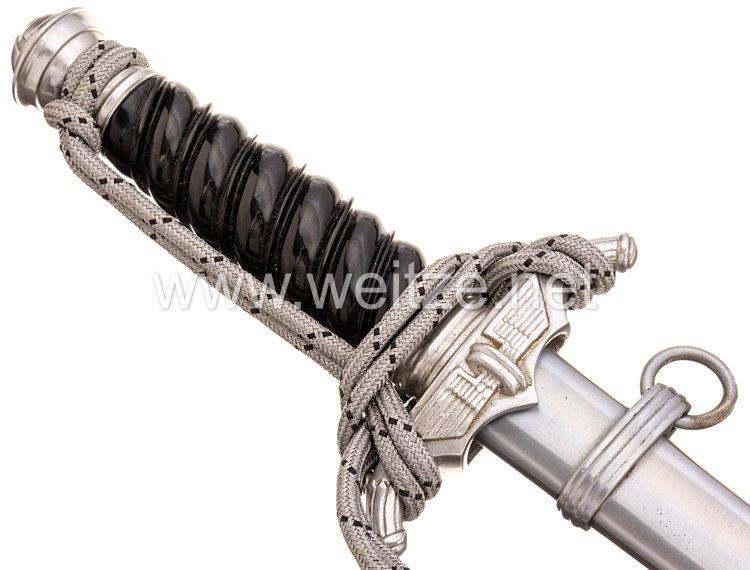
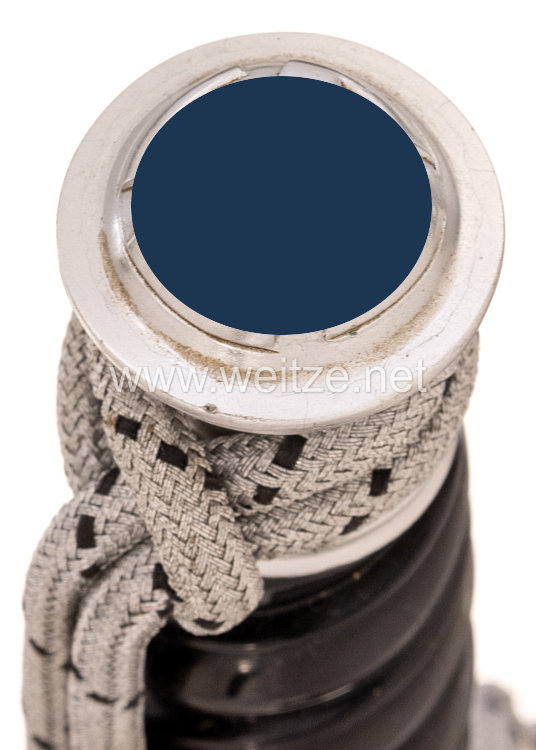
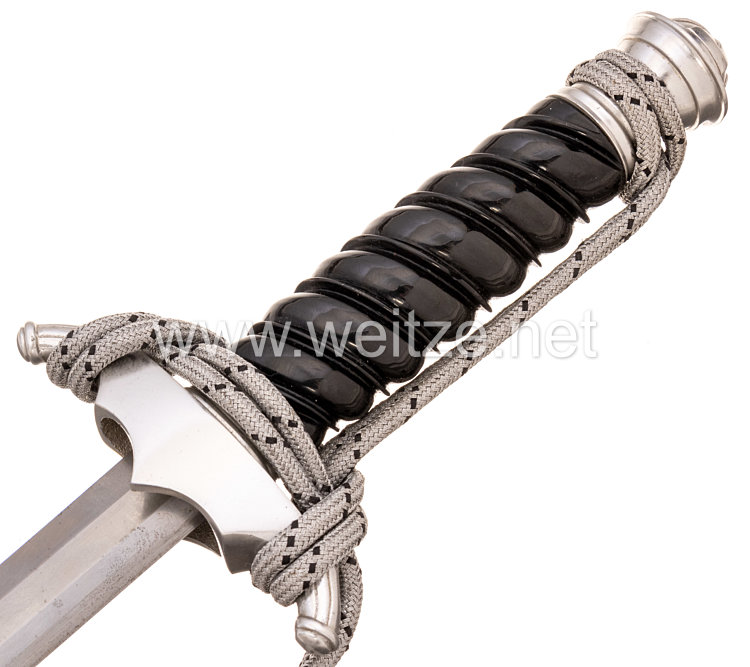
The technical characteristics of this dagger are typical of the second half of the 1930s. The pommel and crossguard made of aluminum were characteristic of later production versions, as aluminum was more cost-effective and more readily available compared to nickel-plated brass. The black plastic grip replaced earlier variants made of wood or Bakelite and was increasingly used from approximately 1937/38 onwards.
The steel scabbard without a manufacturer's mark is not unusual, as many supplier companies produced during the rearmament phase without marking their products. Quality control was conducted by the Reichsbahn administration itself, which imposed strict requirements on materials and workmanship.
The accompanying Portepee (sword knot) was an essential component of the wearing method. For Bahnschutz officers, it typically consisted of silver-colored or aluminum-colored braids with black weavings, signaling affiliation with the organization. The Portepee was attached to the dagger's grip through a special knot when entering service.
The wearing regulations for the Bahnschutz dagger were precisely defined in service instructions. It was worn on the left side of the belt and was part of the dress uniform as well as for official occasions. In daily service, the dagger was typically not worn, as it had a more ceremonial character.
With the outbreak of World War II, the Bahnschutz gained increasing military significance. The organization was substantially expanded in personnel and entrusted with additional tasks, including defense against sabotage acts and partisan attacks in occupied territories. Many Bahnschutz members were also deployed in the East, where they cooperated with the Wehrmacht.
After 1942, due to material shortages and wartime economic priorities, hardly any new daggers were produced. Existing specimens remained in use and were passed on to new bearers when necessary. The numbering and district assignment enabled precise tracking of equipment items.
The preservation of this piece as “lightly worn” suggests that it was actually used in service, but not over an extremely long period or under particularly harsh conditions. The condition indicates careful treatment by the original bearer.
Today, Bahnschutz daggers are sought-after collector's items that document a specific aspect of German militaria history. They are rarer than Wehrmacht or SS daggers and therefore of particular historical interest. The traceable provenance through engravings such as the district designation significantly increases the documentary value.
These artifacts serve as tangible reminders of the extensive organization required to maintain Germany's strategic railway infrastructure during the Nazi period, and represent an important category within the broader study of Third Reich edged weapons and organizational history.