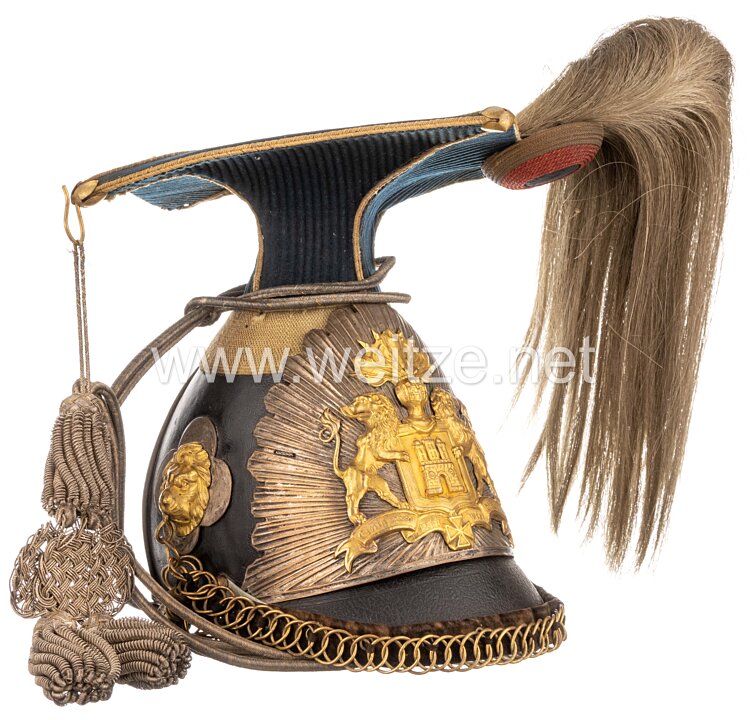
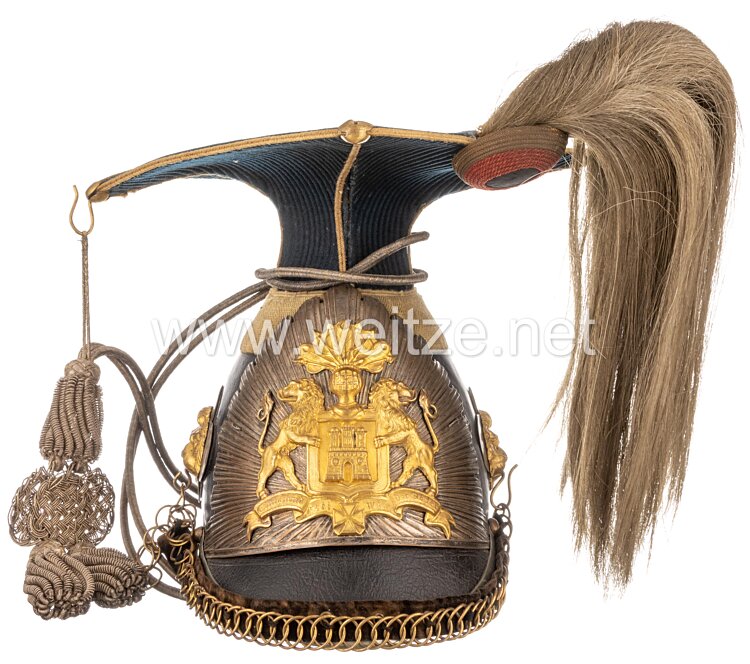
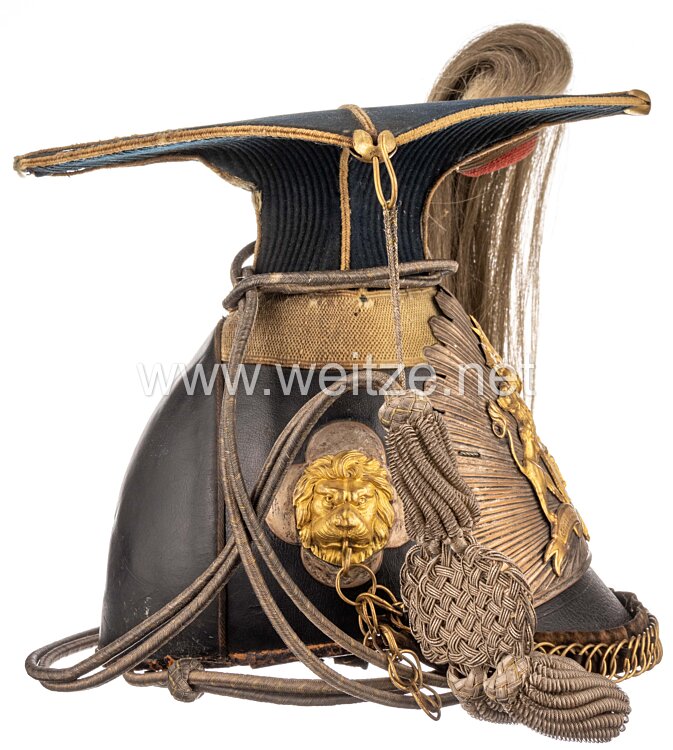
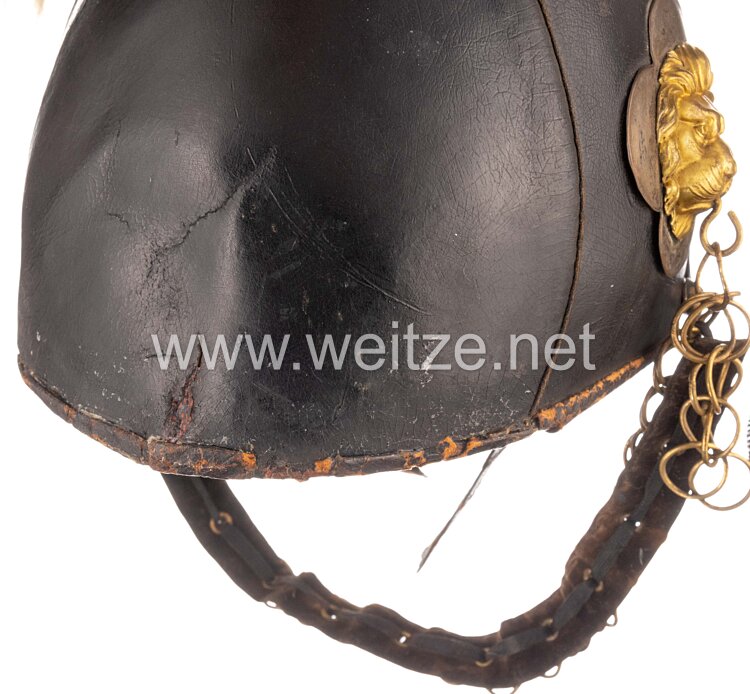
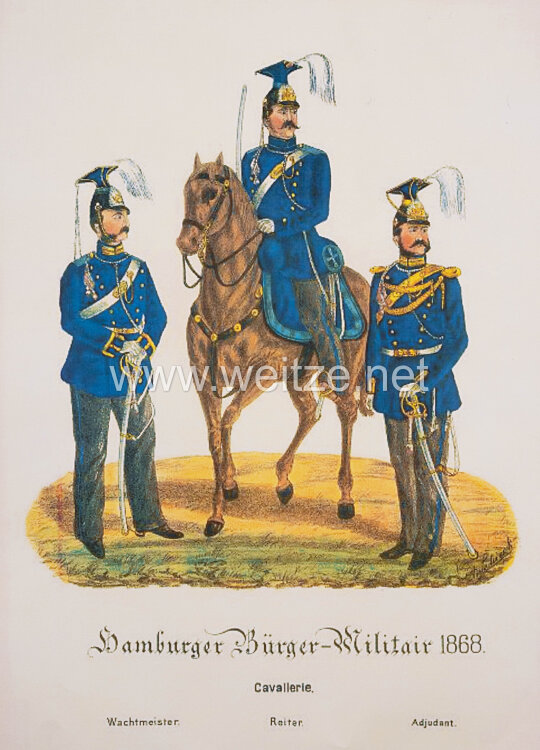
Hamburg Czapka for Officer of the Uhlans in the Cavalry Corps of the Hamburg Citizens' Militia

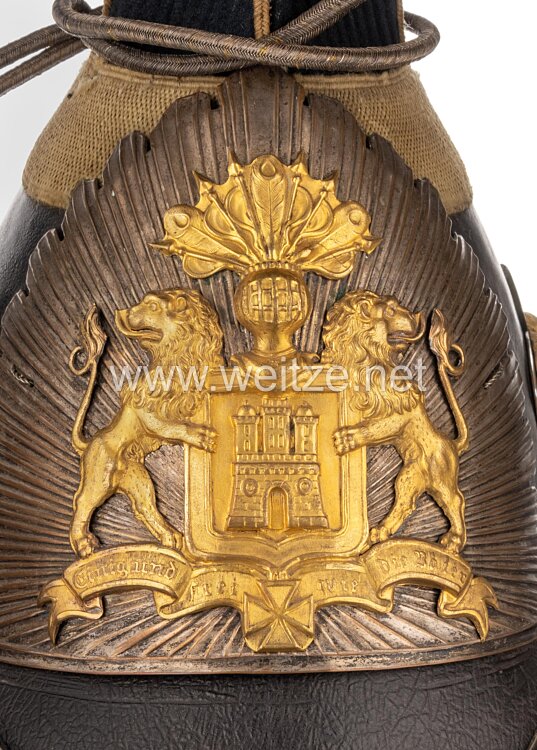
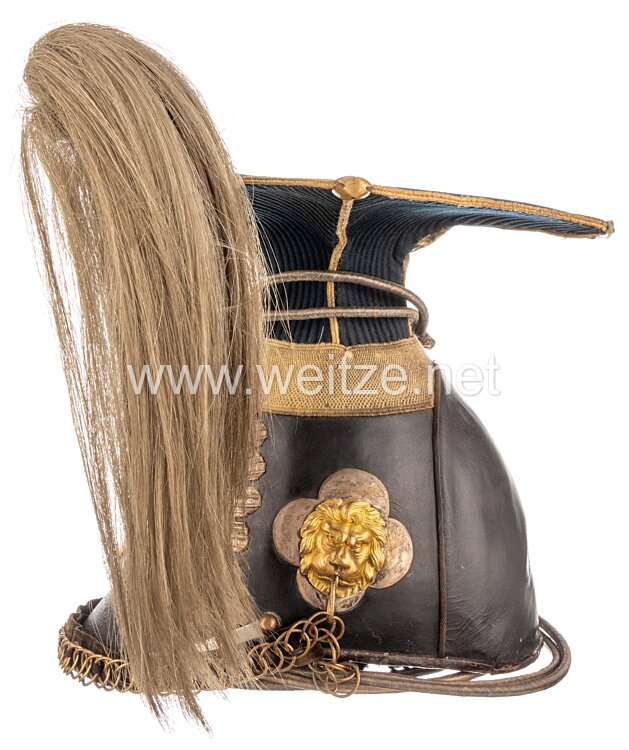
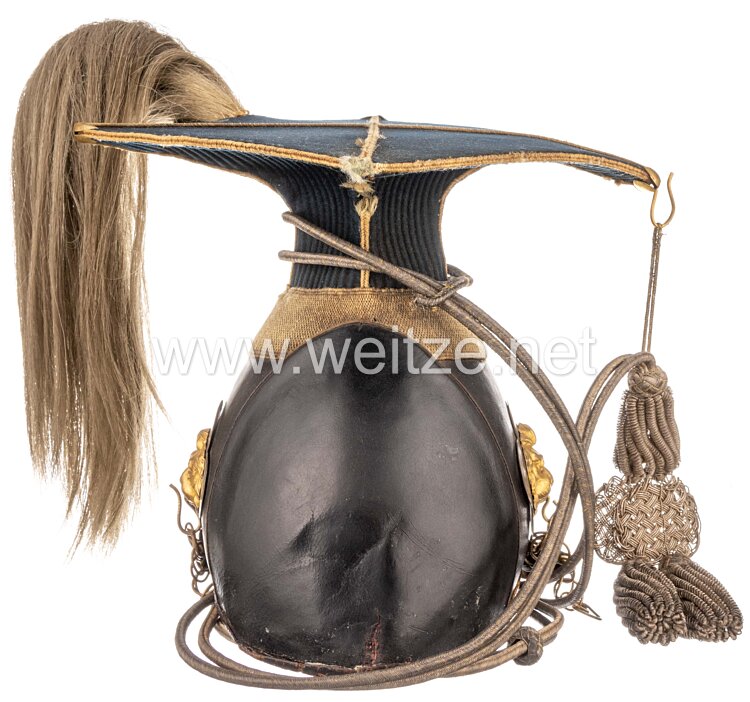
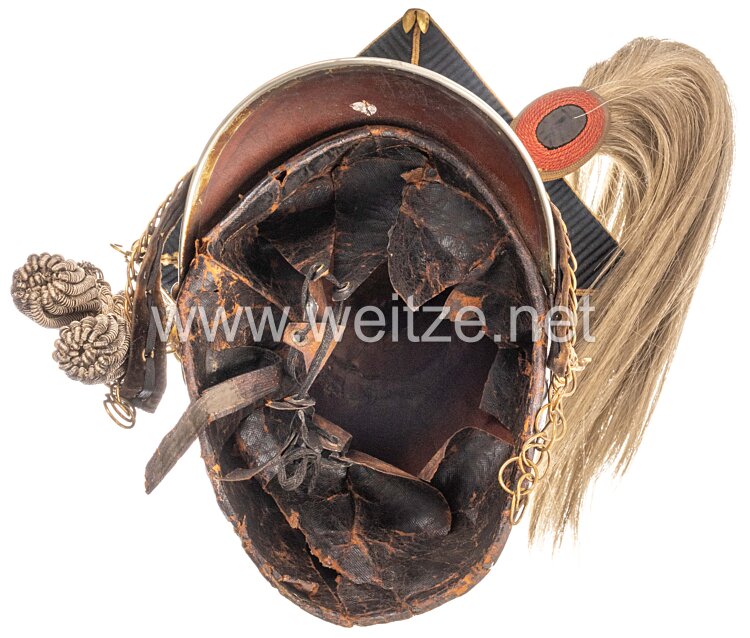
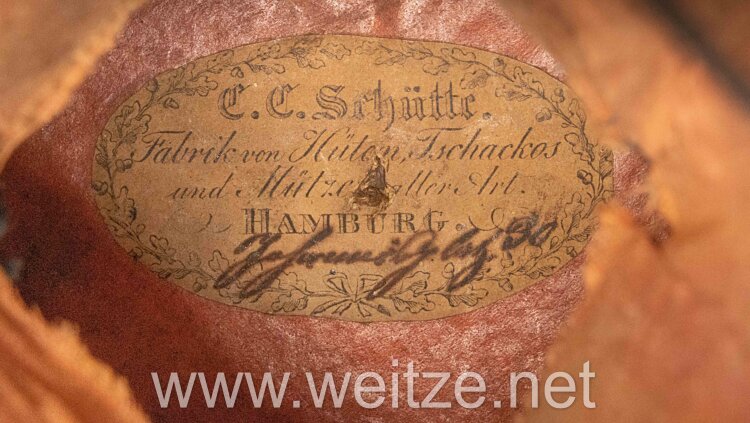
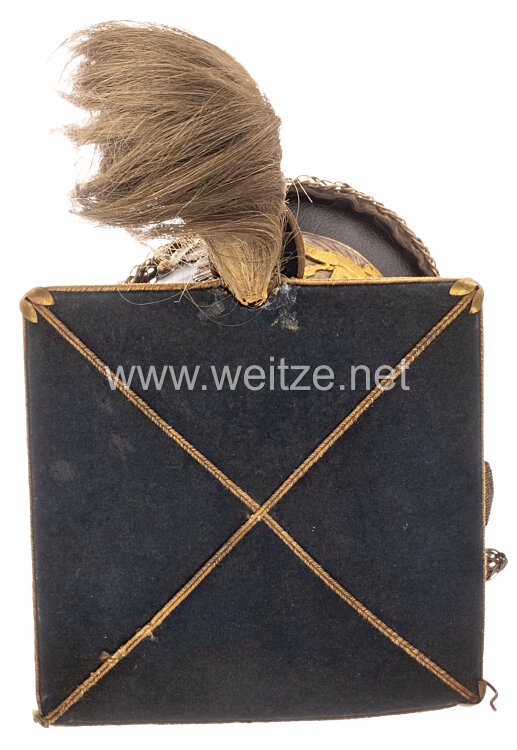
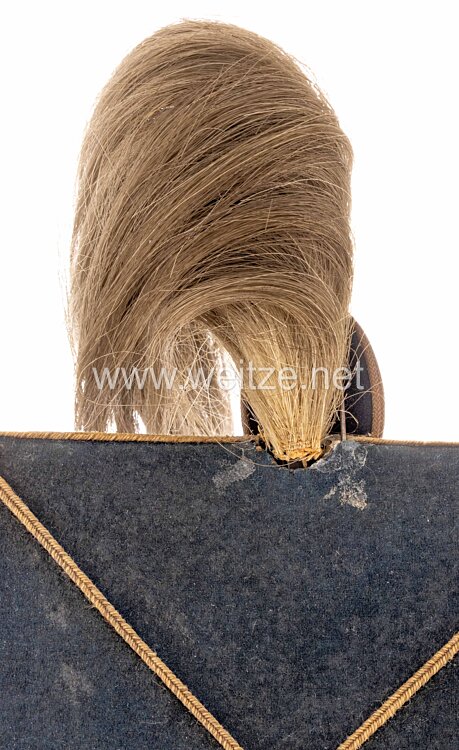
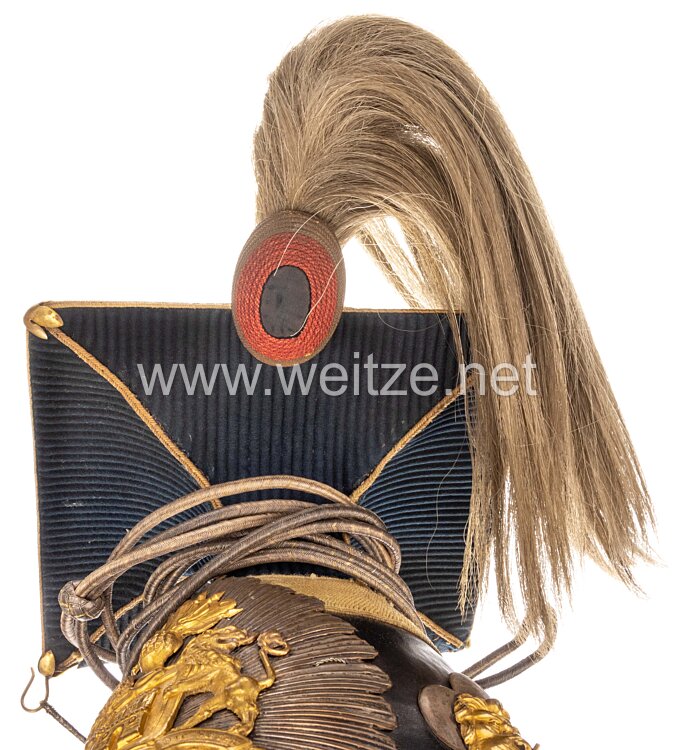
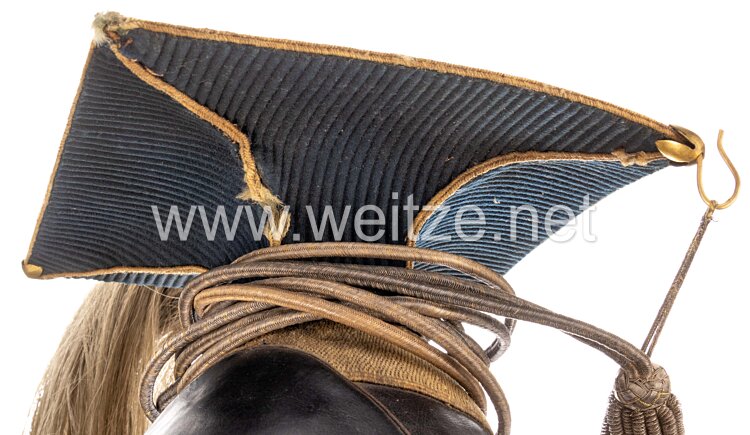
Circa 1860. Tall czapka in the English style, the body and front visor made of black lacquered leather, the front visor with nickel silver trim and brass buttons, on the front the gilt coat of arms of the City of Hamburg with the motto “United and Free as Our Fathers” on a nickel silver sunburst plate, the chin strap made of velvet fabric with brass rings, attached at the sides to large lion head mounts on trefoil-shaped fittings, the square top covered with dark blue fabric, with yellow braid running around the base, decorated with yellow cords. Complete with the field insignia in the colors black-red-gold, the parade plume of light horsehair, and the sword knot. Interior with fine varnished leather lining, label in the crown “C.C. Schütte Fabrik von Hüten, Tschakos und Mützen ... Hamburg”. Size approximately 55. With minor wear and age marks. Condition 2.

Very rare! The Cavalry Corps was approximately the size of a squadron. The Corps was mainly composed of the sons of wealthy citizens who could afford a horse and the uniform. The Hamburg Citizens' Militia distinguished itself on various occasions. In 1867 Hamburg joined the North German Confederation. In 1868 the Citizens' Militia was disbanded.
449652

Hamburg Czapka for Officer of the Uhlans in the Cavalry Corps of the Hamburg Citizens' Militia

The Hamburg Czapka for Officers of the Uhlans from around 1860 embodies a significant chapter in German military history and represents the final years of the Hamburg Bürgermilitär, a citizen militia that traced its origins to the Wars of Liberation against Napoleon. This magnificent headgear stands symbolically for the democratic ideals of a citizen army that would yield to the Prussian-dominated military system only a few years after this piece was created.

The Hamburg Citizen Militia was established in 1814 and 1815 following the Wars of Liberation and was based on universal military obligation for citizens between the ages of 20 and 45. The organization consisted of several infantry battalions, a Jäger battalion, an artillery battalion, and a cavalry corps. This cavalry unit, partly equipped as Uhlans, had approximately the strength of one squadron with about 110 men and was composed mainly of the sons of wealthy Hamburg citizens. Service in this unit required considerable financial means, as soldiers had to pay for their own equipment and uniforms, including the maintenance of a horse.

The czapka itself was a characteristic headgear of Uhlan regiments and was distinguished by its distinctive square top. The present example was manufactured by C.C. Schütte Fabrik von Hüten, Tschakos und Mützen in Hamburg, as evidenced by a label inside. The body and front visor were made of black lacquered leather, while the square top was covered with dark blue cloth. Particularly noteworthy is the gilded coat of arms of the city of Hamburg mounted on a nickel-silver sunburst plate at the front. The velvet chin strap was fitted with brass rings and attached at the sides to large lion head fittings on cloverleaf-shaped plates. Yellow trim and cords decorated the base of the square top. The complete outfit included field insignia in the colors black-red-gold, a parade plume of light horsehair, and a sword knot.

Service in the Bürgermilitär was closely connected to citizenship rights in Hamburg and constituted an obligation for all male citizens between 20 and 45 years of age. The Hamburg Bürgermilitär proved itself on various occasions and became a symbol of civic self-determination. The organization represented the last witness to the idea of a democratic defense constitution in Germany that had been born in the Wars of Liberation.

The end of the Hamburg Bürgermilitär came with the political reorganization of Germany. Hamburg was among the founding members of the North German Confederation, whose constitution took effect on July 1, 1867. With this accession, the Free and Hanseatic City of Hamburg surrendered its military sovereignty. The Bürgermilitär no longer fit into the new Prussian-dominated military system. Despite a remarkable petition with over 14,000 signatures collected within just ten days, the Hamburg Senate voted by a narrow majority to dissolve the militia. On July 30, 1868, the Hamburg Bürgermilitär was officially abolished. Hamburg's regular contingent forces were absorbed into the newly created Infantry Regiment Hamburg (2nd Hanseatic) Nr. 76.

After the dissolution of the Hamburg Bürgermilitär, such uniform items became historical artifacts. The czapka represents a very rare object category, as the cavalry corps comprised only about 110 men and correspondingly few officer czapkas were produced. Each surviving example documents not only the military tradition of an important Hanseatic city but also the transition from civic self-governing structures to the centralized nation-state of the late nineteenth century. This headgear in size approximately 55 shows slight wear and age traces and is in condition grade 2, underscoring its authentic use by an officer of the Hamburg cavalry corps.

r