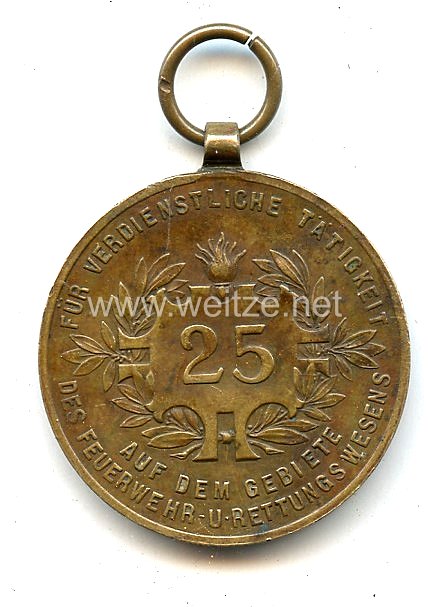
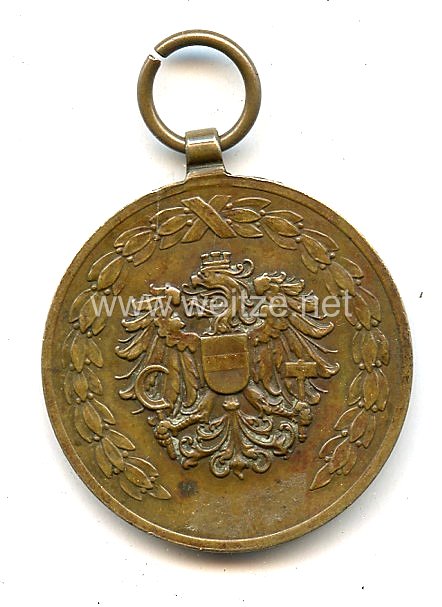
25 Year Long Service Medal for Fire Brigade/Rescue Service

gilt finish, without ribbon, condition 2.
370950
25,00

25 Year Long Service Medal for Fire Brigade/Rescue Service

The 25-Year Service Medal for Fire Brigade and Rescue Services represents a significant category of German decorations dedicated to honoring the service of firefighters and rescue personnel. These medals were awarded in various German states and later in the Federal Republic of Germany to recognize long-term, faithful, and selfless work in this vital area of public safety.

Historical Development of Fire Service Honors

The tradition of decorating firefighters for their service developed in German-speaking regions during the 19th century. Following the establishment of the first organized volunteer fire brigades from the 1840s onward, there was increasing recognition of the need to appropriately honor the voluntary commitment of these men and women. The first Fire Service Honor Badges were introduced in various German states including Prussia, Bavaria, Saxony, and Württemberg.

In the Kingdom of Prussia, for example, the first fire service honor badge was established in 1842. Other states followed this example throughout the 19th century. These decorations were typically graduated according to years of service, with 25 years representing a particularly significant threshold marking a quarter-century of faithful duty.

Design and Symbolism

The gilt finish of such a medal emphasizes the special appreciation for long-term service. Typically, these honor badges displayed fire service symbols such as crossed fire hooks, helmets, ladders, or firefighting equipment. State coats of arms, crowns, or other sovereign symbols were also frequently incorporated, emphasizing official recognition by the respective government.

The medals were usually worn on a colored ribbon, whose colors often reflected the state colors of the awarding authority. In the present case, the medal is without its ribbon, which is not uncommon for collector's pieces, as ribbons were frequently lost or damaged through wear or storage.

Award Criteria and Significance

The awarding of a 25-year medal generally required uninterrupted, active service in a recognized fire brigade or rescue organization. Recipients had to have distinguished themselves through dedication, reliability, and exemplary conduct. The decoration honored not only the duration of service but also the associated dangers and hardships to which firefighters were regularly exposed.

In many regions, a hierarchy of honor badges existed: after 10, 15, 25, 40, and sometimes even 50 years of service, various grades of decoration could be awarded. The 25-year medal often represented the most frequently awarded higher decoration, as not all firefighters could meet the physical requirements for 40 or more years of active service.

Development After 1945

After World War II, both the Federal Republic of Germany and the German Democratic Republic (GDR) introduced their own systems of fire service honor badges. In the Federal Republic, the Fire Service Honor Badge was introduced in 1954 in various grades and continues to be awarded today. The GDR created its own socialist decorations for fire and rescue services.

Collector Value and Preservation

The condition grade 2 (very good) of this medal indicates a well-preserved decoration with slight signs of use. The gilding is largely intact, which is remarkable for pieces of this age. Such medals are now sought-after collector's items that possess not only military-historical but also social-historical value. They document the history of public safety and volunteerism in Germany and commemorate the brave men and women who dedicated their lives to protecting their fellow citizens.

Cultural and Social Significance

These service medals represent more than mere decorations; they embody the spirit of community service and civic duty that has characterized German fire brigades for over 150 years. The 25-year milestone particularly reflects the extraordinary commitment required to maintain active service through changing times, technologies, and personal circumstances. For the recipients and their families, these medals were sources of great pride, symbolizing sacrifice, courage, and dedication to the common good.