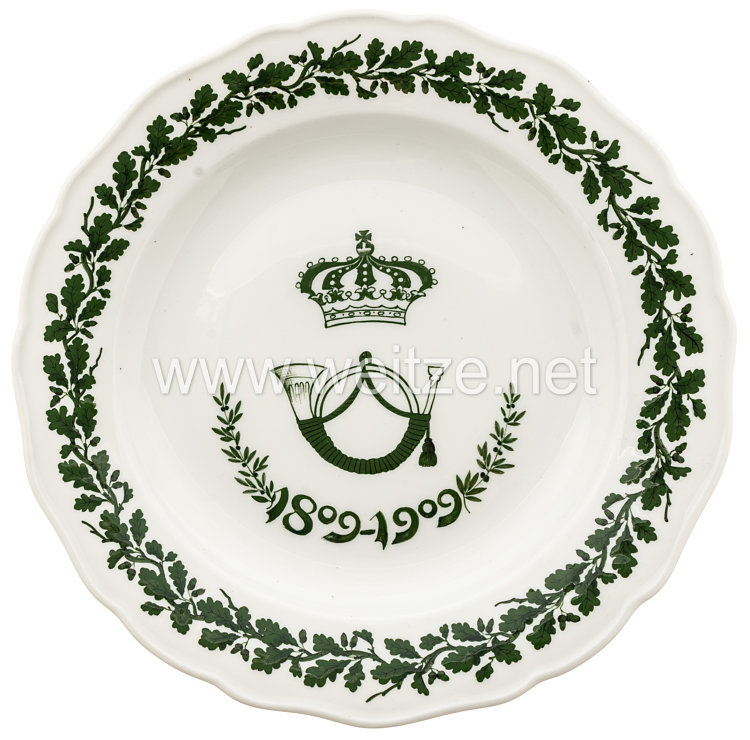
This Meissen porcelain plate commemorates the centennial anniversary of three significant Saxon military units in 1909. The Meissen Porcelain Manufactory, Europe's oldest porcelain manufacturer, produced numerous military commemorative objects for the Kingdom of Saxony, which today serve as valuable historical testimonies to the kingdom's military traditions.
The Schützen (Fusilier) Regiment Prince Georg No. 108 and the 1st and 2nd Jäger Battalions No. 12 and 13 were all established in 1809, a period of profound military reforms in the Kingdom of Saxony. Following the Napoleonic Wars and the defeats of 1806-1807, Saxony was compelled to reorganize its armed forces. The formation of these units occurred in a context where Saxony, as an ally of France, was required to maintain significant troop strength.
The three units shared the common symbol of the horn under the crown, which is centrally depicted on the plate. The horn was traditionally the insignia of light infantry, particularly Jäger (riflemen) and Schützen (marksmen) troops. These units were known for their mobility, marksmanship, and tactical skills in difficult terrain. The Fusiliers originally formed a distinct troop category between Musketeers and Grenadiers, but evolved during the 19th century into regular infantry units.
The oak leaf decoration on the plate's rim symbolizes strength, endurance, and German military tradition. The oak had been a national symbol of German cultural identity since the 19th century and was particularly prominent in military decorations and honors.
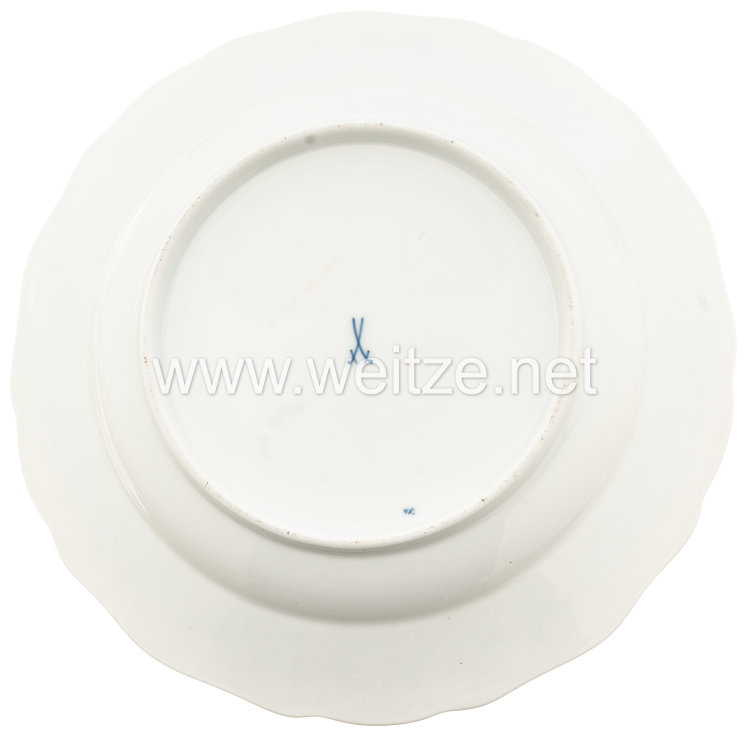
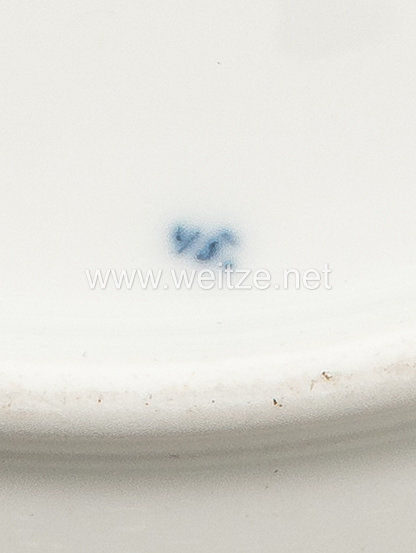
The crossed swords mark on the reverse definitively identifies this piece as a product of the Royal Saxon Porcelain Manufactory Meissen. These crossed swords in underglaze blue have been the manufactory's trademark since 1722 and represent one of the world's oldest registered trademarks. Military commemorative objects from Meissen porcelain were frequently produced for jubilees, upon the retirement of officers, or as honorary gifts.
The year 1909 marked a period of relative stability in the German Empire. The Saxon Army was an integral component of the German armed forces, yet maintained its independent organizational structure and traditions. Jubilee celebrations such as this served to strengthen esprit de corps and foster connections between active soldiers, veterans, and the civilian population.
Such commemorative plates were produced in limited editions and distributed to officers, non-commissioned officers, and distinguished enlisted men. They found their place in officers' messes, veterans' associations, and private collections. The quality of Meissen porcelain work made these objects prized collectibles that represented military pride and regional identity.
The historical significance of such objects today lies not only in their artistic craftsmanship but also in their documentary value. They provide insights into the military culture of the Imperial era, the importance of tradition and continuity, and the complex relationships between regional and national identity in the federal system of the German Reich.
After World War I and the end of the monarchy in 1918, these regiments lost their traditional designations. Many veterans, however, preserved such mementos as testimonies to a bygone era, making them important historical sources for research into the military history of the Kingdom of Saxony.