HJ Knife, Gift from Emil Voos to His Son with Etched Damascus Blade

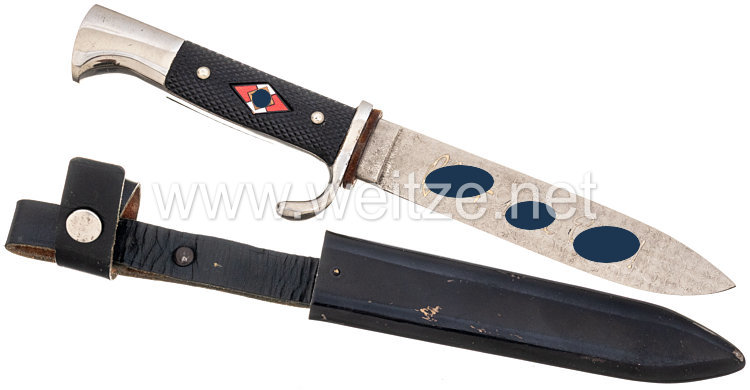
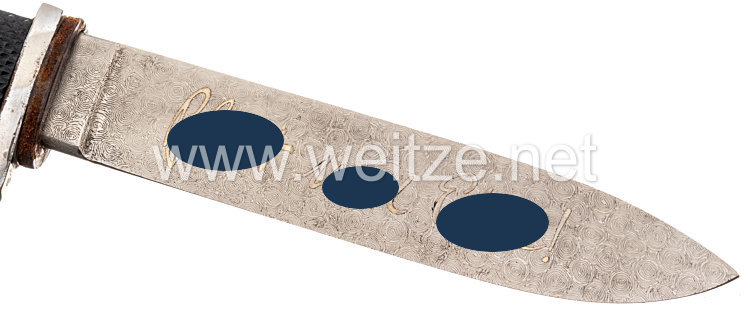
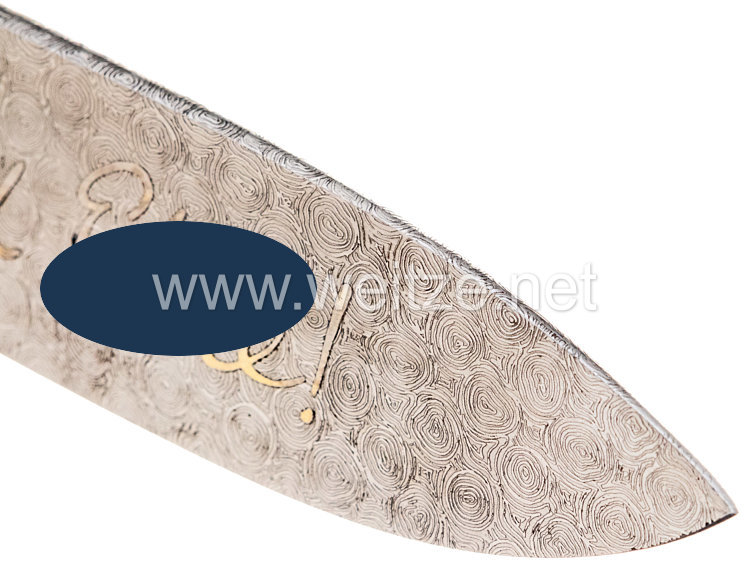
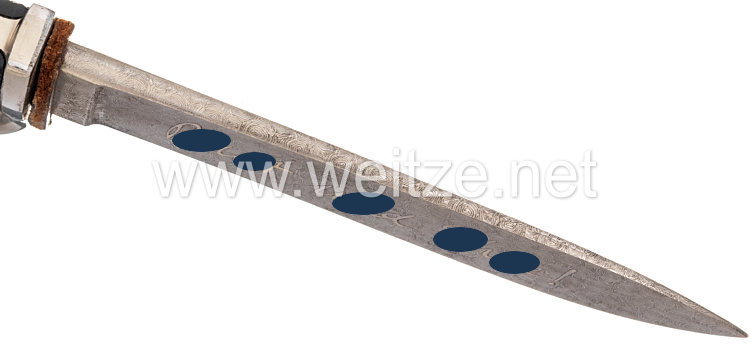
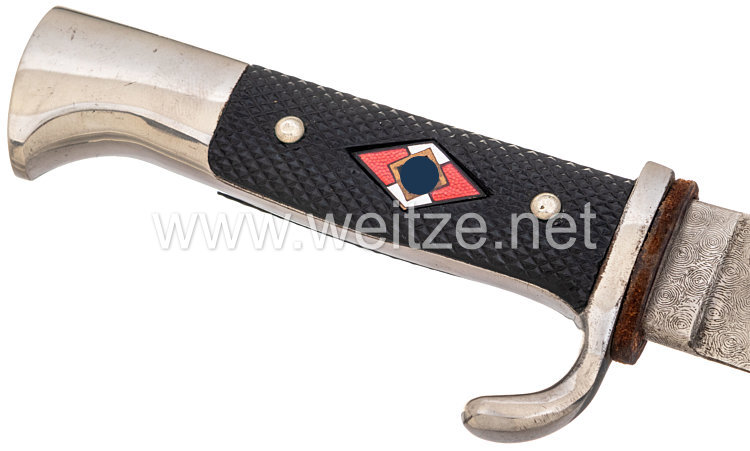
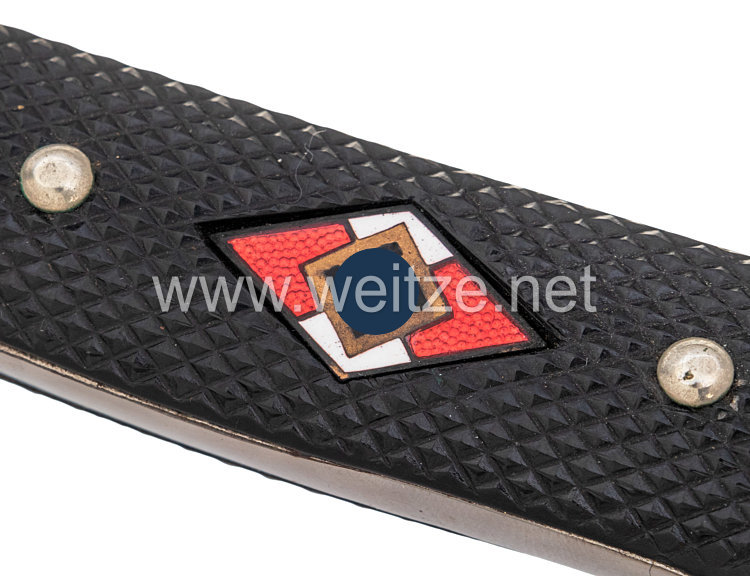
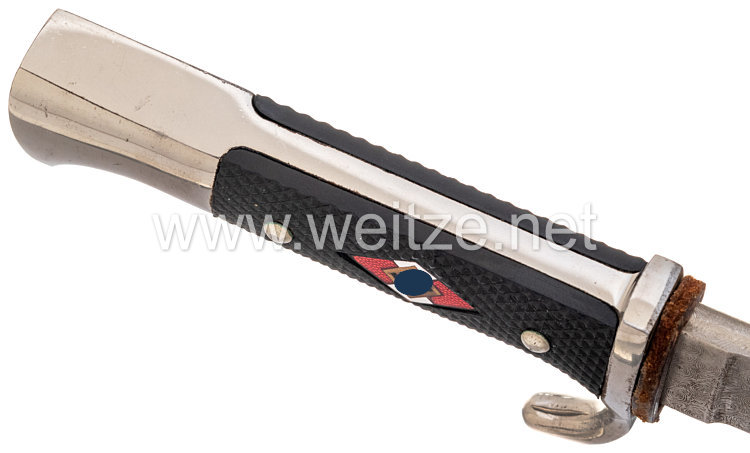
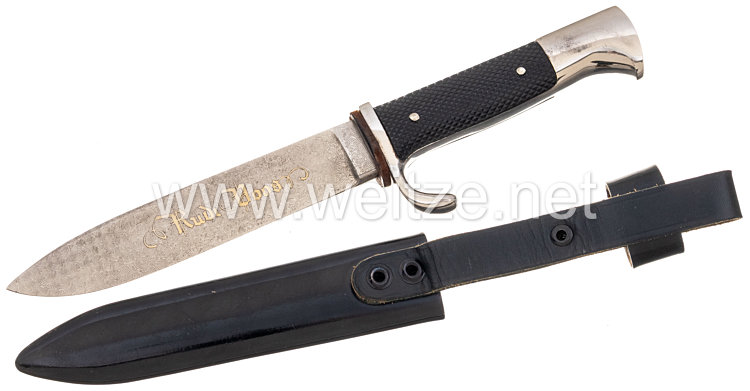
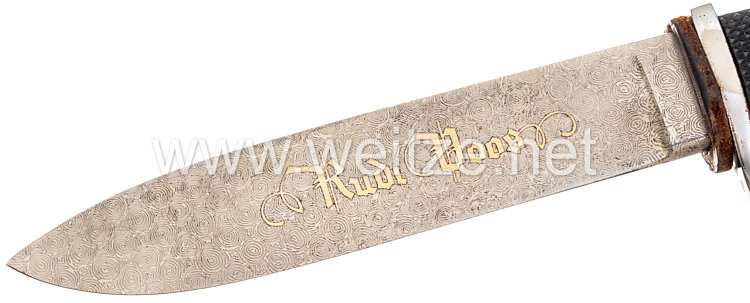
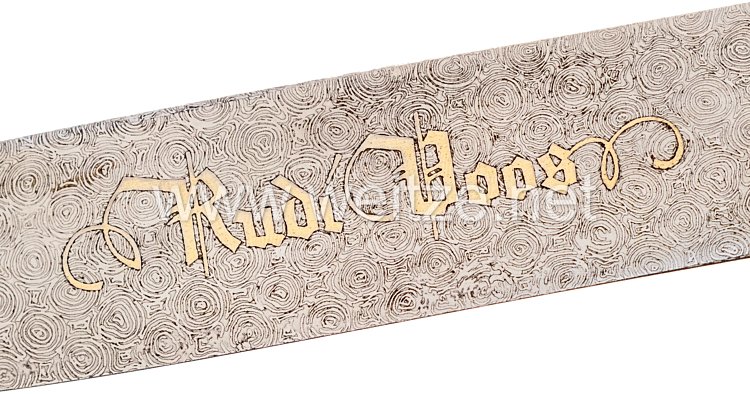
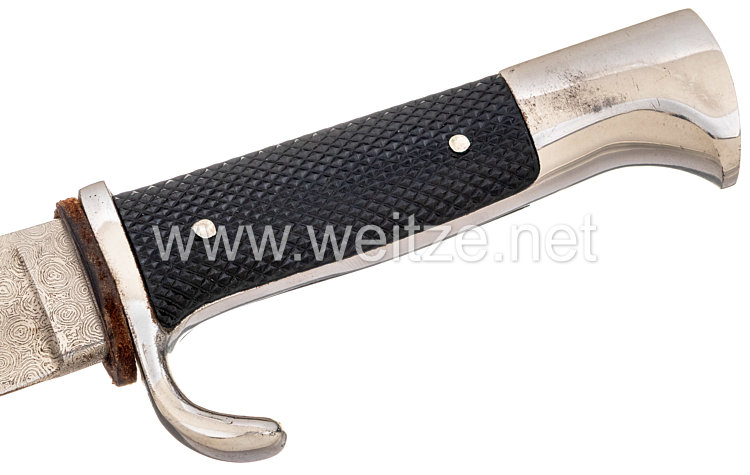
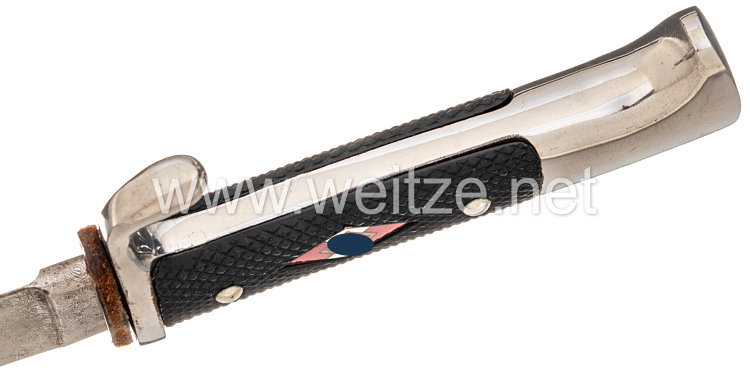
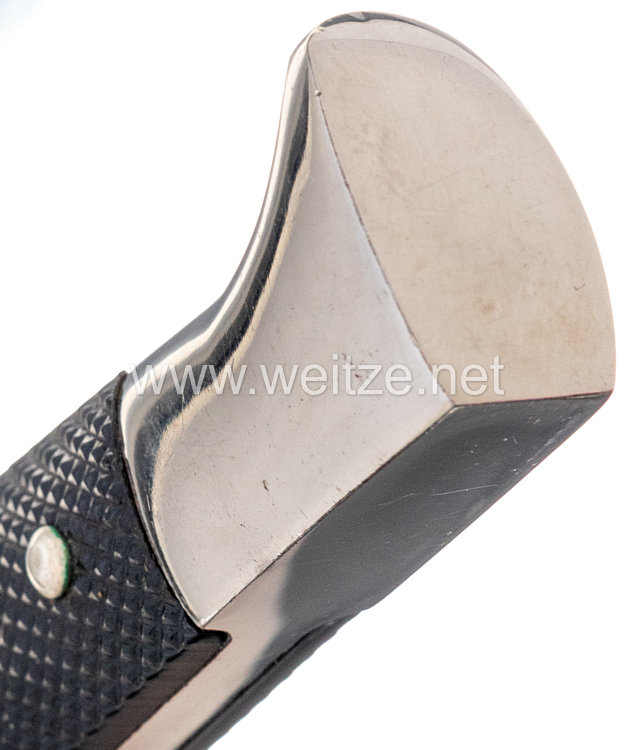
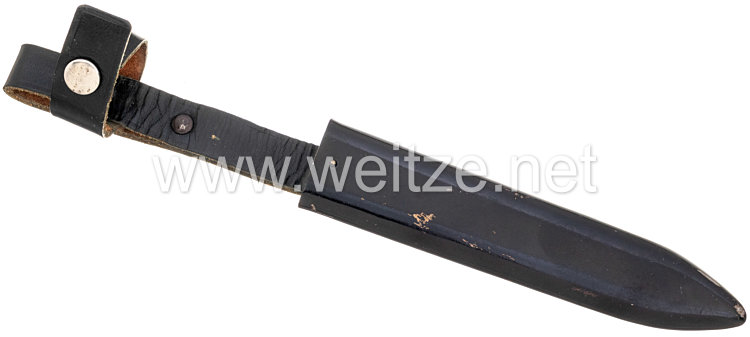
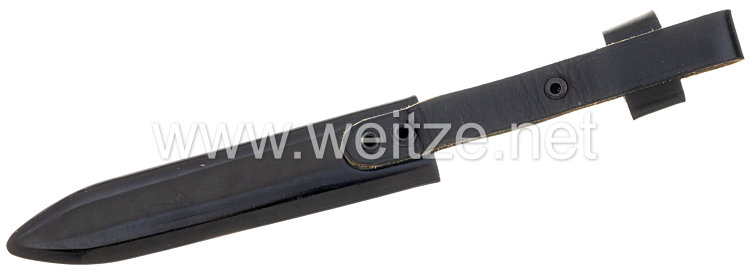
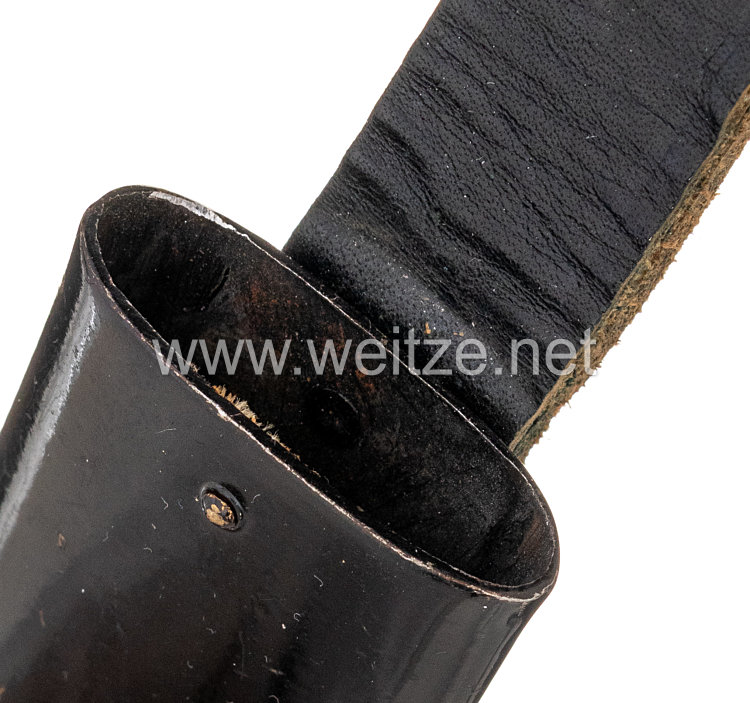
This is a particularly fine example manufactured by the firm Emil Voos Solingen, circa 1936. Nickel-plated iron hilt, black checkered grip scales, the HJ emblem undamaged. The blade with double-sided etched Damascus “small roses” pattern, on the obverse with raised etched motto “Blut und Ehre!” (Blood and Honor), on the reverse with the son's name “Rudi Voos” also raised etched, beneath the crossguard with black collision leather, without maker's mark. The scabbard retains approximately 95% of the original black lacquer finish, the black leather hanger loop with snap fastener in perfect condition. Minimally worn, condition 2+.

A truly exceptional unique piece made by one of the most renowned edged weapon manufacturers as a personal gift to his son, probably for his birthday. No other HJ knife with Damascus blade is known worldwide.
389949

HJ Knife, Gift from Emil Voos to His Son with Etched Damascus Blade

The HJ Fahrtenmesser (Hitler Youth Knife) represents one of the most widely recognized and distributed pieces of equipment from the Third Reich. Introduced in early 1933 as the first officially sanctioned blade weapon by the NSDAP, it became a central symbol of the National Socialist youth organization.

The origins of the Hitler Youth trace back to the Jugendbund der NSDAP in March 1922. After several renamings—first to Großdeutsche Jugendbewegung in April 1924—the organization officially received the name Hitler Jugend Bund der deutschen Arbeiterjugend on July 4, 1926. In 1935, it was standardized as the state youth organization. Membership numbers grew dramatically: from over 25,000 in 1930 to 107,956 by the end of 1932, then explosively to 2,300,000 by the end of 1933 and over 5 million by December 1936. The Law of December 1, 1936 made membership mandatory; by 1940, the organization counted 8 million members. As a paramilitary organization under SA control, the HJ focused on pre-military training and National Socialist ideological indoctrination.

The Fahrtenmesser was not compulsory, but only full members were permitted to wear it. Boys received the HJ knife after passing minor exams or state examinations. It was worn on the left side of the belt with both summer and winter uniforms. At its introduction, the knife cost 2.88 Reichsmarks, later rising to 3.70 to 4 RM for a single purchase in authorized RZM shops. The knife served as a dress sidearm and functional camping tool during Fahrten—multi-day hikes and camping expeditions. Although issued relatively dull, the knives were commonly sharpened by their young owners.

Production of the Fahrtenmesser can be divided into three distinct periods. The Early Period (1933-1936/1938) was characterized by thinner blades, magnetic hilts, low or no ricasso, maker-marked with commercial logos, and the motto “Blut und Ehre!” (Blood and Honor) etched on the blade. Fittings were made of nickel-silver, and scabbard hangers were anodized or brown leather. The Transitional Period (1936-1938/1939) introduced thicker blades and high ricassos; both maker name/logo and RZM designation with date were present, and the motto was retained. The Late Period (1938-1942) brought high ricassos, RZM marking without maker's mark, no motto, nickel-plated zinc hilts, painted scabbards, and black leather hangers. The motto was officially discontinued in August 1938, though existing stocks bearing the motto continued to be sold.

Approximately 150 manufacturers produced variants of the knife. Emil Voos Waffenfabrik, founded in 1925 in Solingen and registered with the Solingen Chamber of Commerce in 1930, received RZM license M7/2 in 1935. The company specialized in hunting, hiking, and sporting knives and became one of the largest manufacturers of Hitler Youth knives during the Third Reich. The knife's form was modeled after traditional German hunting knives and Gewehr 98 bayonets. All HJ knives featured the diamond-shaped Hitler Youth emblem—a red and white quartered diamond with black swastika—inset into the obverse grip plate. The blade measured typically 140 millimeters in length, with an overall length of approximately 245-255 millimeters with scabbard.

Production of HJ knives ceased around 1942-1943. On February 20, 1943, the RZM announced that manufacture would be discontinued as material was needed for other purposes. An estimated several million specimens were manufactured between 1933 and 1945. After 1945, HJ knives were confiscated and destroyed as part of denazification. Possession of Nazi memorabilia was prohibited in the immediate post-war period. Many knives were buried, hidden, or destroyed by their owners. The Allied forces permanently disbanded the Hitler Youth after the war. Post-war, some manufacturers continued using their production facilities to make knives for Boy Scouts, replacing Nazi symbols with scout emblems. The basic form influenced the design of old German Bundeswehr field knives.

The example presented here represents an exceptional private production variant outside standard production specifications. With its Damascus blade etched on both sides with a pattern and a personal inscription on the reverse, it documents a special relationship between the manufacturer Emil Voos and his son. The retention of approximately 95 percent of the original black lacquer on the scabbard and the perfect condition of the carrying strap attest to the extraordinary care with which this unique piece has been preserved. The Damascus pattern and raised relief etching of both the motto and the name represent exceptional craftsmanship far beyond standard production examples.