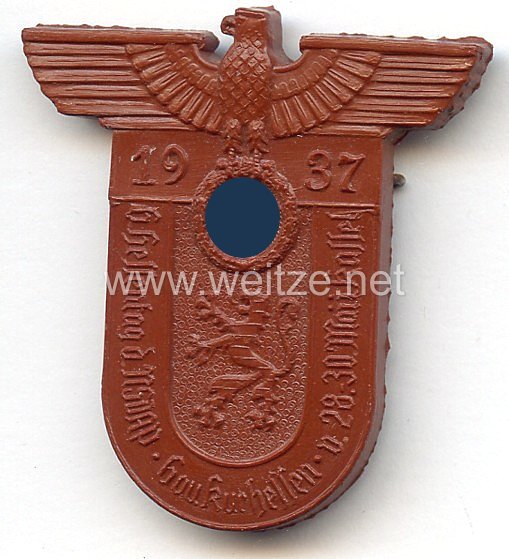
NSDAP - 6th Hessentag of the NSDAP Gau Kurhessen March 28-30, 1937 in Kassel

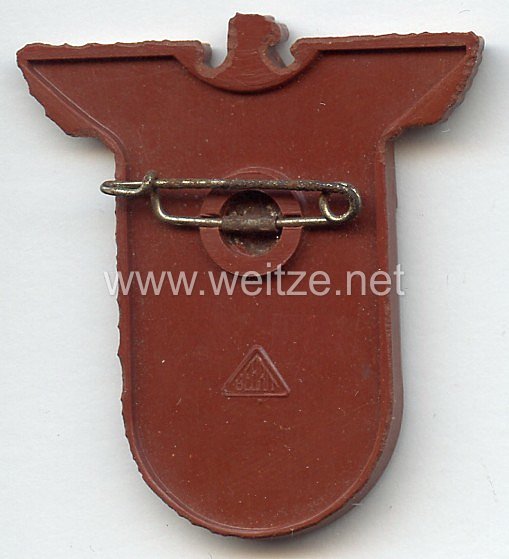
Plastic badge, with pin, maker: Bebrit, condition 2.
363148
65,00

NSDAP - 6th Hessentag of the NSDAP Gau Kurhessen March 28-30, 1937 in Kassel

The badge described here documents the 6th Hessentag of the NSDAP, which took place from March 28-30, 1937 in Gau Kurhessen in the city of Kassel. Such regional party rallies were important instruments of Nazi propaganda and mass mobilization, serving to consolidate party rule at the local and regional levels.

Gau Kurhessen was one of the 43 administrative units of the NSDAP in the German Reich. These Gaue were established as territorial organizational structures of the party and played a central role in the Nazi power architecture. Gau Kurhessen essentially comprised the territory of the former Electorate of Hesse with its center in Kassel. From 1934, the Gau was led by Karl Weinrich as Gauleiter, a position he held until 1943.

The so-called Hessentage were annual large-scale events lasting several days that combined various elements: mass marches, political rallies, cultural performances, sporting events, and exhibitions. They served as self-staging opportunities for the party and were intended to emotionally bind the population to the regime. The sixth Hessentag in March 1937 took place during a phase when the Nazi regime had already largely consolidated its power and was increasingly pursuing its expansionist goals.

The badge described was manufactured by Bebrit, a company specialized in the production of plastic products. The use of plastic for such badges was quite common in the 1930s and reflected the technological progress of the time. Plastic badges were more cost-effective for mass production than metal badges and could still be designed with appealing colors. Bebrit was one of many manufacturers that produced badges, plaques, and other propaganda materials on behalf of the NSDAP and its affiliated organizations.

Such event badges were typically issued or sold to participants of the respective event. They served multiple purposes: First, they functioned as identification marks for participants and documented membership in the National Socialist movement. Second, they were souvenirs intended to strengthen the emotional connection to the event and the party. Third, they also had a financial function, as their sale generated revenue for the party.

The year 1937 was characterized domestically by the progressive Gleichschaltung (coordination) of all areas of life. In foreign policy, the Nazi regime was preparing its expansionist plans. Regional party rallies like the Hessentag also served to prepare the population for coming developments and create an atmosphere of national unity.

The city of Kassel as the venue had special significance for Gau Kurhessen. As a traditional royal residence and industrial center, it offered the necessary infrastructure for large-scale events. The city had wide streets for marches, large squares for rallies, and sufficient accommodation for participants from throughout the Gau.

The pin construction of the badge allowed it to be attached to clothing, typically on the lapel of a jacket. This was the standard attachment method for such event badges and enabled easy attachment and removal.

From today's perspective, such badges are important historical documents that provide insight into the propaganda machinery of the Nazi regime. They document the systematic organization of mass events and the importance of regional structures for Nazi rule. For historians and collectors of military-historical objects, they are witnesses to a dark period of German history.

The preservation and scientific documentation of such objects serves historical research and memorial culture. They help understand the mechanisms of totalitarian rule and serve as warnings to remain vigilant against similar developments. In Germany, the handling of Nazi memorabilia is subject to strict legal regulations designed to prevent the glorification or trivialization of the Nazi dictatorship.