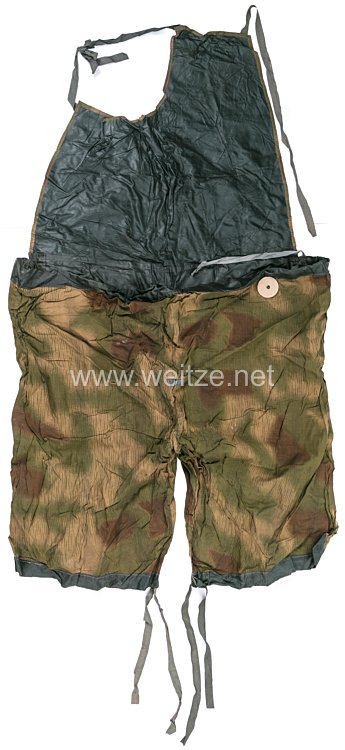
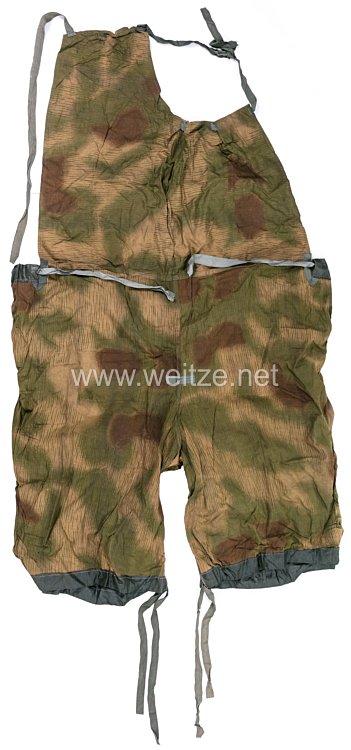
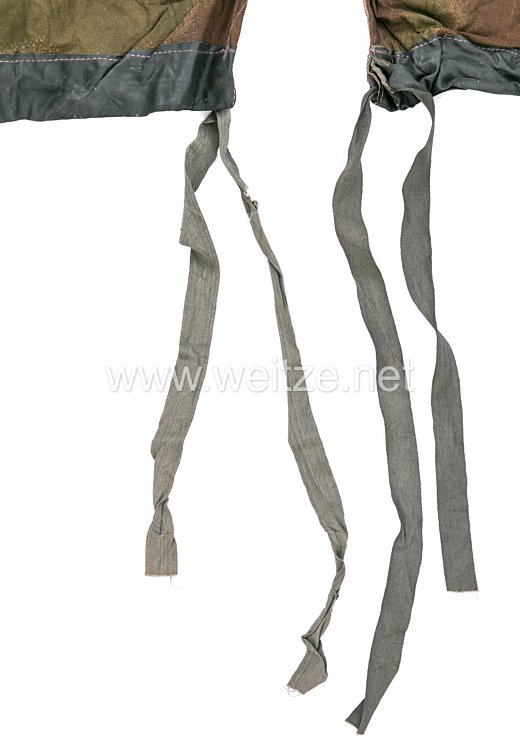
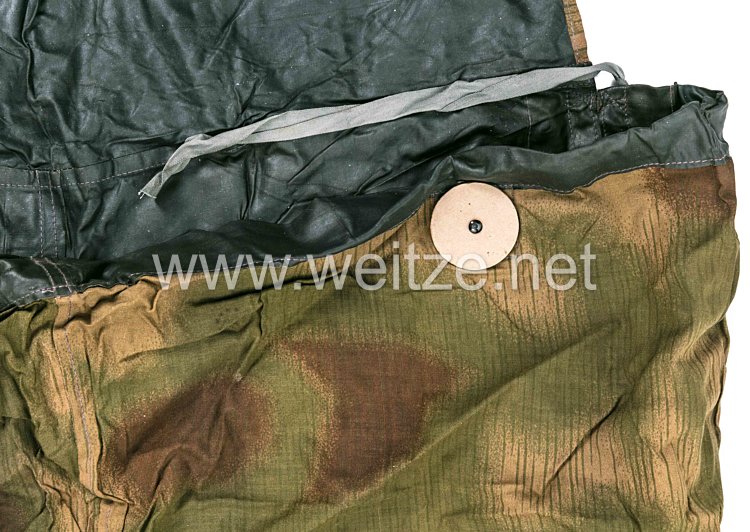
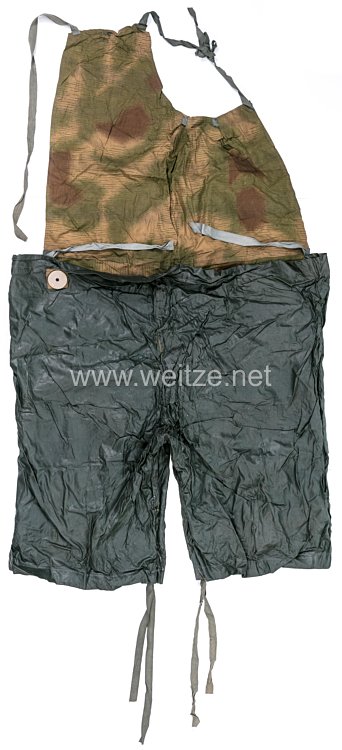
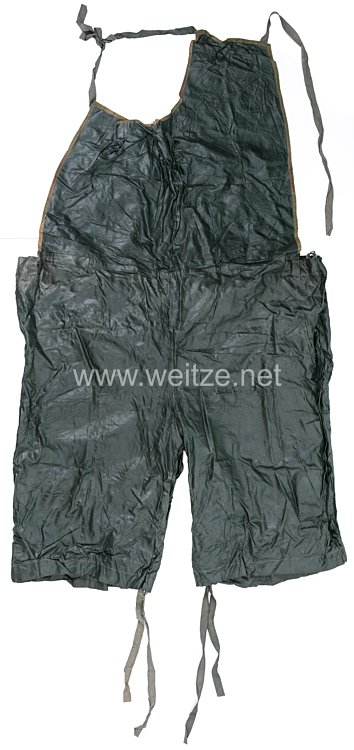
Wehrmacht Gas Protection Trousers in Marsh Camouflage Pattern
The Wehrmacht Gas Protection Trousers in Marsh Camouflage Pattern represent a fascinating example of German military equipment development during World War II. This specialized form of protective clothing combines two essential aspects of German warfare: protection against chemical agents and tactical camouflage in various terrain types.
The development of gas protection equipment had a long tradition in Germany, dating back to the traumatic experiences of World War I. The massive use of poison gas on the Western Front between 1915 and 1918 had prompted all warring parties to develop comprehensive protective systems. Although chemical weapons were ultimately not used on a large scale in World War II, the fear of renewed gas warfare persisted, leading to the development and stockpiling of extensive gas protection equipment.
The Sumpftarnmuster (marsh camouflage pattern), also known as swamp pattern, was introduced around 1943 and represented one of the later German camouflage patterns. It was characterized by irregular, flowing spots in various shades of green and brown, specifically designed for use in swampy and wooded areas. This pattern differed significantly from earlier patterns such as the Splittertarnmuster (splinter pattern) or the Eichenlaubmuster (oak leaf pattern) and was particularly intended for the Eastern Front and other wet combat zones.
The construction of these gas protection trousers was technically demanding. The garment consisted of a carrier fabric coated with rubber to create a gas-tight barrier. The exterior was printed in the characteristic marsh camouflage pattern, while the interior was typically colored dark green. This two-tone design served both practical and tactical purposes: the dark interior prevented light reflection and show-through, while the camouflaged exterior reduced the wearer's visibility in the field.
The rubberized coating was the core of the gas protection. It was designed to prevent liquid or vaporous chemical agents from penetrating to the wearer's skin. However, this coating brought considerable disadvantages: the material was heavy, inflexible in low temperatures, and offered virtually no breathability. Soldiers wearing such equipment in the field often suffered from overheating and restricted mobility. This meant that gas protective clothing was only worn when there was a concrete threat from chemical agents or during appropriate training exercises.
The production of camouflaged gas protection equipment was complex and resource-intensive. The combination of rubberization and multi-color camouflage printing required specialized manufacturing facilities and materials that became increasingly scarce as the war progressed. This explains why such equipment items were not produced in the same quantities as standard uniform pieces.
The absence of stamps on this specimen is not unusual but can have various reasons. While regularly manufactured Wehrmacht equipment was normally marked with manufacturer stamps, size specifications, and sometimes dates, markings were sometimes omitted toward the end of the war to save time and materials. Alternatively, stamps may have faded through use, storage, or chemical exposure.
The use of marsh camouflage pattern on gas protective clothing suggests production in the period from 1943 to 1945. During this phase of the war, the Wehrmacht fought increasingly defensively, especially on the Eastern Front, where swampy terrain sections were common. The combination of camouflage and gas protection demonstrates efforts to provide multifunctional equipment that could address various threat scenarios.
Such gas protection trousers were worn as part of a complete gas protection suit, which also included a jacket, gloves, overboots, and of course the gas mask. The complete system was heavy and cumbersome but theoretically offered comprehensive protection against most chemical agents known at the time.
Today, such equipment pieces are important witnesses to military history. They document not only the technical capabilities and priorities of that era but also the constant fear of chemical warfare that shaped military planning throughout World War II. The condition grade 2 indicates a well-preserved specimen that has retained its historical significance as an object of study.