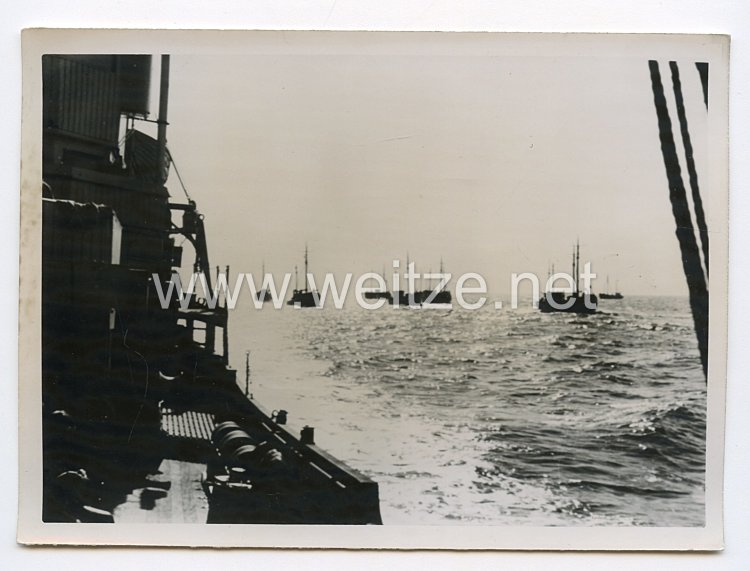
Kriegsmarine Press Photo: On Minesweeping Operation 21.10.1940

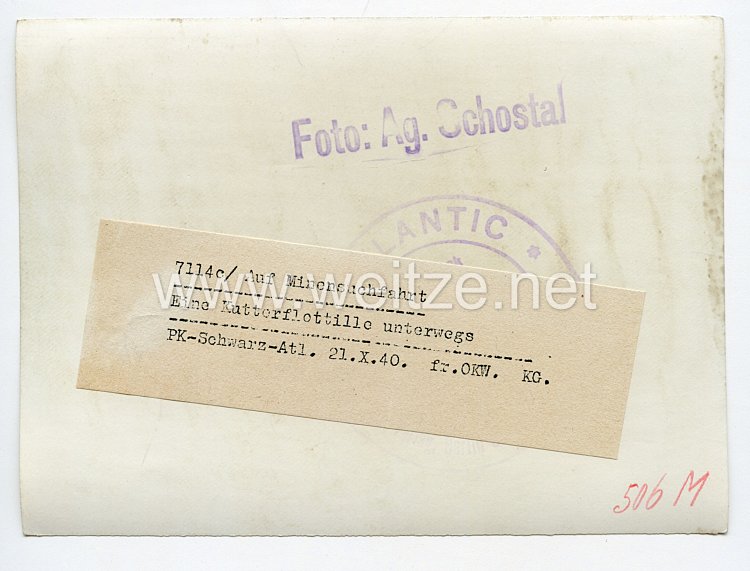
Dimensions approx. 13 x 18 cm, with inscription on reverse. Used condition.
346646
15,00

Kriegsmarine Press Photo: On Minesweeping Operation 21.10.1940

Kriegsmarine Press Photography: Minesweeping Operations in World War II

This Kriegsmarine press photograph dated October 21, 1940, documents a minesweeping operation and represents an important aspect of German naval warfare during World War II. Such photographs served propaganda purposes and documented military operations for public consumption.

The Kriegsmarine and Its Press Operations

During World War II, the Kriegsmarine maintained an extensive propaganda apparatus that worked closely with the Oberkommando der Wehrmacht (OKW) and the Reich Ministry of Public Enlightenment and Propaganda under Joseph Goebbels. Naval press photographers, known as Kriegsberichter (war correspondents), were stationed on ships and at naval bases to document daily life and operations of the Kriegsmarine. These photographs were then distributed to newspapers, magazines, and newsreels to influence public opinion and maintain morale on the home front.

Mine Warfare in 1940

In October 1940, Germany was in its second year of war. Following the successful Western Campaign and the occupation of France, the Netherlands, Belgium, and Norway, the Wehrmacht controlled large portions of the European coastline. The Battle of Britain was in full swing, and the Kriegsmarine played a crucial role in securing sea routes and blockading Great Britain.

Mine warfare was one of the most important forms of maritime combat at this time. Both the Kriegsmarine and the Royal Navy extensively laid sea mines to block enemy shipping routes and disrupt supply lines. German magnetic mines, first deployed in autumn 1939, posed a particularly serious threat to British merchant shipping.

Minesweepers and Their Crews

The Kriegsmarine's minesweepers (Räumboote) were small, specialized vessels designed for the dangerous task of mine clearance. These ships were typically between 40 and 50 meters long and equipped with special gear for detecting and neutralizing sea mines. The most common types were the R-boats (Räumboote) and the larger Minesweepers 1935, 1940, and 1943.

The crews of these vessels performed one of the most dangerous duties in the Kriegsmarine. Clearing minefields required utmost concentration, technical skill, and courage. The men were constantly exposed to the danger of being killed or seriously injured by exploding mines. Despite these dangers, minesweeping was indispensable for keeping German ports and shipping lanes open.

Technical Aspects of Minesweeping

In 1940, German minesweepers employed various methods for mine clearance. Against moored mines, they used sweep cutters—serrated wires towed behind the boat that cut through the mooring cables of mines. The mines would then float to the surface where they were destroyed by gunfire. Against ground mines, especially the more dangerous magnetic and acoustic mines, Sperrbrecher (auxiliary minesweepers) and specially equipped minesweepers with degaussing equipment were deployed.

Propaganda Significance

Press photographs like this one from October 21, 1940, served several propaganda purposes. They were intended to demonstrate the efficiency and professionalism of the Kriegsmarine, highlight the heroism of the crews, and assure the population that sea routes were secure. Such images typically showed determined-looking sailors at their work, often with dramatic composition to emphasize the danger and importance of their mission.

The reverse side of such press photographs usually bore stamps and handwritten notes indicating date, location, image content, and sometimes the photographer's name. These inscriptions served archival purposes and ensured correct attribution when distributed to the press.

Historical Context

The date of October 21, 1940, falls during a phase when Germany was at the height of its military successes but already experiencing the first limits of its power. The failed invasion of Britain (Operation Sea Lion) had forced the Kriegsmarine to adapt its strategy. Focus now shifted increasingly to commerce raiding, submarine warfare, and securing occupied coastal areas.

Today, such press photographs are important historical documents providing insight into war propaganda, technical aspects of naval warfare, and the daily life of Kriegsmarine personnel. They are valued by historians, collectors, and museums as primary sources and contribute to understanding this dark period of German history.